Key takeaways:
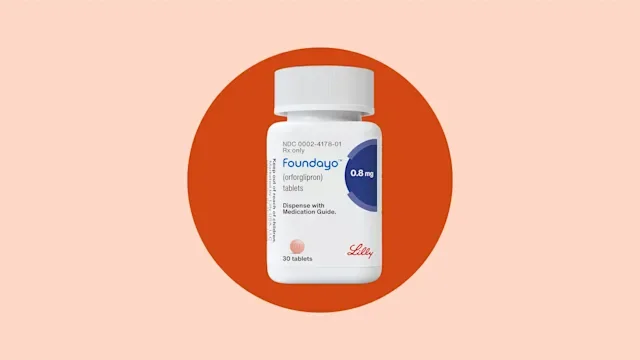
Orforglipron (Foundayo) is FDA approved for weight loss. Tirzepatide is approved as Mounjaro for Type 2 diabetes and as Zepbound for weight loss and obstructive sleep apnea.
Orforglipron and tirzepatide act like the gut hormone glucagon-like peptide-1 (GLP-1). But tirzepatide also acts like another hormone: glucose-dependent insulinotropic polypeptide (GIP).
Orforglipron is a once-daily oral pill, while tirzepatide is a once-weekly injection. Both work well for weight loss and share many common side effects. But they have unique drug interactions to consider.
There are ways to save on Zepbound, Mounjaro, and Foundayo. If you’re eligible, a manufacturer savings card could help you get Zepbound, Mounjaro, or Foundayo for as little as $25 per prescription. Subscribers to GoodRx for Weight Loss can also access FDA-approved brand-name GLP-1 medications like Zepbound and Foundayo.
Save on related medications
There has been a lot of research recently into new weight-loss medications. This has led to the FDA approval of products such as tirzepatide (Mounjaro, Zepbound) and orforglipron (Foundayo).
But when there are multiple medications available that have similar uses, it’s common to wonder how they compare. So how is orforglipron different from tirzepatide?
Orforglipron vs. tirzepatide at a glance
To compare medications, it helps to have all the details about them side by side. The table below highlights the main similarities and differences between orforglipron and tirzepatide.
| Orforglipron | Tirzepatide | |
|---|---|---|
| Brand name | Foundayo | Mounjaro, Zepbound |
| Approved uses |
|
Mounjaro:
Zepbound:
|
| Medication class | Glucagon-like peptide-1 (GLP-1) receptor agonist | Dual glucose-dependent insulinotropic polypeptide (GIP) / GLP-1 receptor agonist |
| Dosage form | Oral pill | Injection |
| Dosage | Take by mouth once a day | Inject under the skin once a week |
| Common side effects |
|
|
| Notable interactions | Dozens of substances and medications, including:
|
|
Below are six things to keep in mind when comparing orforglipron versus tirzepatide.
1. Orforglipron and tirzepatide have different FDA-approved uses
One of the biggest differences between orforglipron and tirzepatide is what they’re FDA approved to treat. Orforglipron is approved for weight loss among adults who are considered obese. It’s also approved for weight loss among adults considered overweight who also have at least one weight-related health condition, such as high cholesterol or high blood pressure.
Tirzepatide is approved as two brand-name medications:
Mounjaro for Type 2 diabetes among people ages 10 and older
Zepbound for weight loss and obstructive sleep apnea (OSA) among adults considered obese. It’s also approved for weight loss for adults considered overweight who also have at least one weight-related health condition.
2. Orforglipron and tirzepatide work in slightly different ways
Another difference between orforglipron and tirzepatide is how they work. Both medications act like the gut hormone GLP-1. But tirzepatide also acts like a second gut hormone: GIP.
Despite this slight difference, both orforglipron and tirzepatide have the following effects in the body:
Signaling the pancreas to release insulin when you eat
Reducing the amount of new glucose (sugar) your liver makes
Slowing the passage of food through your digestive tract, helping you feel fuller longer
Targeting areas of your brain that help regulate appetite and food cravings
Counteracting certain hunger hormones that affect weight gain
Tirzepatide may also help reduce inflammation that contributes to OSA. It’s unknown whether orforglipron has this effect.
3. Orforglipron is a once-daily pill, and tirzepatide is a once-weekly injection
Dosage forms are another difference to consider. Orforglipron is a pill, and tirzepatide is an injection.
Orforglipron is an oral pill that you take once a day. Unlike other GLP-1 pills, such as Wegovy (semaglutide), you don’t need to time your dose around meals. You can take orforglipron with or without food, at any time of day. But make sure to take it around the same time every day.
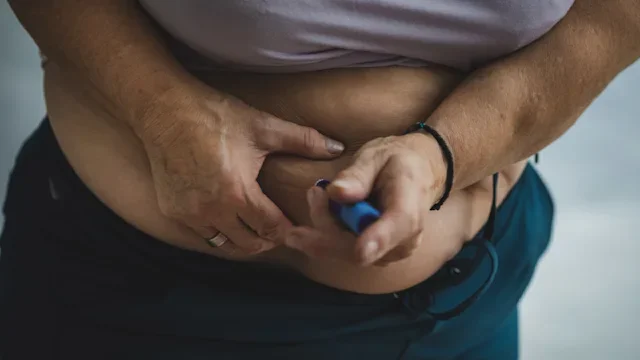
Tirzepatide is an injection that you give to yourself once a week. It comes as both single-use and multi-use injector pens and single-use vials. You can inject tirzepatide with or without food at any time of day. But you should inject your dose on the same day each week.
4. Orforglipron and tirzepatide both work well for weight loss
Orforglipron and tirzepatide both lead to significant weight loss.
Tirzepatide is one of the most effective weight-loss medications available. People using tirzepatide in clinical trials lost an average of 15% to 21% of their starting body weight over 72 weeks (about 16.5 months).
Orforglipron also works well for weight loss. People in clinical trials lost an average of 7% to 11% after 72 weeks (16.5 months). It’s one of the more effective oral weight-loss medications.
Orforglipron may also be helpful for people switching from an injectable GLP-1 medication to an oral version. Studies found that people using either Zepbound or Wegovy were able to maintain the weight they lost after switching to orforglipron.
5. Orforglipron and tirzepatide have similar common side effects
Because orforglipron and tirzepatide act like GLP-1, they share many common side effects. These mainly affect the digestive tract and include:
Nausea
Upset stomach
Vomiting
Burping
Stomach pain
Orforglipron’s and tirzepatide’s labels also contain warnings for rare but serious side effects and risks. These include:
Gallbladder problems, including gallstones
Reports of pancreatitis (swelling of the pancreas)
Kidney damage if vomiting or diarrhea is severe
Severe gastrointestinal complications, such as gastroparesis (delayed stomach emptying)
Hypoglycemia (low blood sugar)
Allergic reactions
Orforglipron and tirzepatide also have a boxed warning (the FDA’s strictest warning for medications) for thyroid C-cell tumors. These tumors were seen in animal studies of the medication. This risk hasn’t been confirmed in human studies. But to be safe, you shouldn’t use tirzepatide if you have a personal or family history of medullary thyroid cancer. You also shouldn’t use it if you have multiple endocrine neoplasia syndrome type 2 (MEN 2).
6. Orforglipron and tirzepatide have different interactions
Orforglipron and tirzepatide have a low risk of causing low blood sugar. But if you also take certain diabetes medications, such as insulin, you’re more likely to experience this side effect.
Beyond this, other drug interactions vary with orforglipron and tirzepatide. It’s a good idea to share a complete medication list with your prescriber and pharmacist before starting either orforglipron or tirzepatide. Be sure to include both prescription and over-the-counter medications, as well as vitamins and supplements, on this list.
Tirzepatide interactions
Notably, tirzepatide can make oral birth control pills less effective. It’s recommended to use a non-oral form of birth control, such as the patch, for at least 4 weeks after starting or raising your dose of tirzepatide.
Tirzepatide can also change how your body absorbs other oral medications. This could be problematic if you take medications where a small change in dose can have large effects on its safety or effectiveness. Examples of these types of medications include warfarin (Coumadin, Jantoven) and digoxin (Lanoxin). Your prescriber may suggest extra monitoring to make sure these medications stay at ideal levels in your body.
Orforglipron interactions
Orforglipron interacts with the cholesterol medication simvastatin (Zocor, FloLipid). Orforglipron can significantly raise levels of simvastatin, which may raise your risk of side effects. It’s recommended to take a lower simvastatin dosage to manage this orforglipron interaction.
Your liver breaks down orforglipron using certain enzymes (proteins). There are many medications and substances that slow down or speed up how this protein works. Depending on how medications affect this liver protein, orforglipron could cause more side effects or be less effective.
Examples of medications and substances that interact with orforglipron include:
Clarithromycin
Medications that contain ritonavir (Norvir), such as Paxlovid
Grapefruit juice
Carbamazepine
St. John’s wort
Fluconazole
This isn’t a full list of all possible orforglipron interactions. Check with your prescriber and pharmacist to make sure you can safely combine your medications.
Can you take orforglipron and tirzepatide together?
No, you shouldn’t take orforglipron and tirzepatide together. Both medications work in somewhat similar ways and have the same side effects. Combining them can raise your risk for or worsen existing side effects.
If orforglipron or tirzepatide isn’t working well enough on its own, talk to your prescriber. They can work with you to develop a plan that works for your needs.
How to save on Mounjaro, Zepbound, and Foundayo
There are ways to save on Mounjaro, Zepbound, and Foundayo, which are available as brand-name medications. All three have copay savings programs available from the manufacturer. If you have commercial insurance, you may be eligible to pay as little as $25 per prescription for Mounjaro, Zepbound, or Foundayo.
If your plan doesn’t cover Zepbound, you may still be able to save with the copay card, but prices vary by formulation. You can access Zepbound KwikPen through GoodRx starting at $299 per month. You can also access Foundayo through GoodRx starting at $149 per month. Subscribers to GoodRx for Weight Loss can access FDA-approved, brand-name GLP-1 medications like Zepbound and Foundayo.
Lower-cost single-dose Zepbound vials and KwikPens are available through LillyDirect for $299 (2.5 mg), $399 (5 mg), and $449 (7.5 mg, 10 mg, 12.5 mg, and 15 mg) per month. Foundayo is also available through LillyDirect for $149 (0.8 mg), $199 (2.5 mg), and $299 (5.5 mg, 9 mg, 14.5 mg, and 17.2 mg).
The bottom line
Orforglipron (Foundayo) and tirzepatide have a number of differences to consider. Tirzepatide is FDA approved as Mounjaro for Type 2 diabetes among people ages 10 and older. It’s also approved as Zepbound for weight loss and obstructive sleep apnea among certain adults. Orforglipron is approved for weight loss among adults with larger bodies.
Orforglipron and tirzepatide work in slightly different ways. But they have similar effects on your body. Orforglipron is a once-daily oral pill, while tirzepatide is a once-weekly injection. Both work well for weight loss, and they have similar common side effects. But they have unique drug interactions to consider before starting either medication.

Why trust our experts?



References
Eli Lilly and Company. (2025). Lilly’s orforglipron helped people maintain weight loss after switching from injectable incretins to oral GLP-1 therapy in first-of-its-kind phase 3 trial.
Eli Lilly and Company. (2026). Foundayo (orforglipron) tablets, for oral use [package insert].
Eli Lilly and Company. (2026). Mounjaro- tirzepatide injection, solution [package insert].
Eli Lilly and Company. (2026). Zepbound.
Eli Lilly and Company. (2026). Zepbound- tirzepatide injection, solution [package insert].
Wen, J., et al. (2025). Exploring the effects of tirzepatide on obstructive sleep apnea: A literature review. Cureus.
Wharton, S., et al. (2025). Orforglipron, an oral small-molecule GLP-1 receptor agonist for obesity treatment. New England Journal of Medicine.
Zepbound. (2026). Zepbound (tirzepatide) savings. Eli Lilly and Company.