Key takeaways:
Small studies show that certain supplements, like berberine, curcumin, and ginseng, may boost glucagon-like peptide-1 (GLP-1) levels.
Eating more fiber, lean protein, healthy fats, and water-rich fruits and vegetables can also increase GLP-1 levels naturally, supporting weight loss.
Although you can increase your GLP-1 levels naturally, medications designed to increase GLP-1 keep levels higher for a longer period of time.
Save on related medications
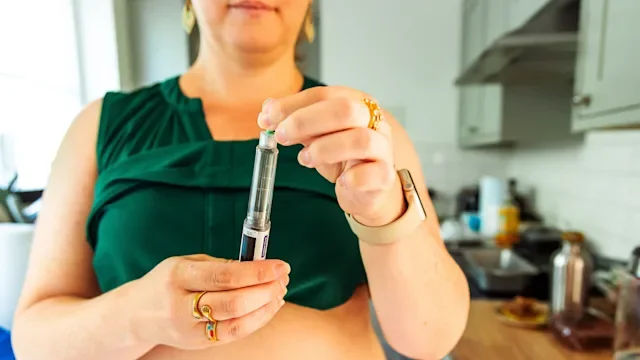
These days, it seems like more people are taking GLP-1 (glucagon-like peptide-1) receptor agonist medications, like Wegovy and Ozempic, to lose weight. These medications work by increasing your GLP-1 levels, which naturally curbs appetite and lowers blood sugar. But not everyone wants to take medication to manage their weight. And these medications can be expensive and cause unwanted side effects. Fortunately, there are ways to naturally boost your GLP-1 levels.
How does GLP-1 help with weight loss?
GLP-1 is a hormone your body makes naturally. It works in several different ways to help with blood sugar control and weight management:
It slows how fast your stomach empties, so you feel full longer.
It increases how much insulin your pancreas makes, which naturally lowers your blood sugar.
It sends signals to your brain that reduce hunger and appetite.
Many prescription medications can increase GLP-1 levels, including:
Wegovy (semaglutide)
Ozempic (semaglutide)
Victoza (liraglutide)
Saxenda (liraglutide)
Mounjaro (tirzepatide)
Zepbound (tirzepatide)
Only Wegovy, Zepbound, and Saxenda are FDA-approved for weight loss. But the other medications are often used “off-label” for weight loss, even for people who don’t have diabetes.
6 supplements that increase GLP-1
The following six supplements may help your body increase its GLP-1 levels. Just keep in mind that there’s not a lot of research showing whether these supplements work in humans. Most of the research was done in animals or in a laboratory.
1. Psyllium
Psyllium is one of the best sources of soluble fiber, which we’ll discuss a little bit more in the following section. In addition to eating foods with soluble fiber, taking psyllium daily (either in husk or powder form) can help boost your GLP-1 levels. Just remember to drink plenty of water so you don’t get constipated.
2. Berberine
Berberine is a plant-based compound that has been used for thousands of years. Social media often refers to berberine as “nature’s Ozempic,” with claims that it’ll help you lose a lot of weight. But that’s just not the case.
Studies in rats suggest that berberine increases GLP-1 secretion. But it’s not clear how well it works in humans. One review showed that people lost about 4 lbs when taking berberine regularly (500 mg daily). Another review of several studies found that higher doses (over 1,000 mg daily) had more variable results. But on average, berberine supplements were still associated with small amounts of weight loss. It also seemed to improve insulin and cholesterol levels.
3. Yerba mate (Llex paraguariensis)
Yerba mate is found in certain teas. But you can also buy it in extract form. It seems to reduce body fat in several different ways, including by increasing GLP-1 production in your body. Most of the research has been done in rats or mice. But small human studies suggest that yerba mate (or green mate, which contains the same active compound) may help reduce appetite and body fat.
In the existing research, people took 1 g of yerba mate extract 3 times per day (3 g total per day).
4. Curcumin
Curcumin is a compound found in turmeric, a yellow spice commonly used in cooking. Studies in animals show that curcumin can improve blood sugar control by increasing GLP-1 release. One small study in people with Type 2 diabetes showed that taking 1,500 mg of curcumin daily reduced weight and blood sugar. These effects may be related to curcumin’s effect on GLP-1.
5. Ginseng
Ginseng has been used for energy, focus, immunity, and even hot flashes. It may also help increase GLP-1 levels. One study in rats showed that ginseng compounds improved blood sugar and cholesterol levels and boosted GLP-1 release after 4 weeks of supplementation.
In human studies, ginseng did seem to improve blood sugar control in people with diabetes, but larger and longer studies are needed.
6. Wild bitter gourd (Momordica charantia)
Momordica charantia extract seems to increase GLP-1 levels in both animals and people. One preliminary study of 42 people with metabolic syndrome showed that wild bitter gourd extract improved several health markers. After taking wild bitter gourd for 3 months, participants experienced:
Decreased waist size
Improved blood sugar control
Better cholesterol numbers
In this study, participants took 4.8 g per day of dried wild bitter gourd powder. More research is needed before this supplement can be recommended more strongly.
7. Probiotics
This one isn’t a surprise. Probiotics are known to have multiple benefits for weight loss. Multiple research studies have shown that probiotics can help lower weight, waist size, and body mass index (BMI).
The relationship between the gut microbiome and weight is complex. But one of the ways probiotics might help is by increasing GLP-1 levels. One small study showed the probiotic supplements increased GLP-1 secretion after eating. A larger study showed that adults who are considered obese who regularly consumed probiotic yogurt had higher GLP-1 levels and lower fasting blood sugar over the course of 10 weeks.
3 types of foods that increase GLP-1
A healthy diet is the best and least expensive way to increase GLP-1 levels naturally. As a bonus, these foods are very nutritious and can lower your risk for heart disease and cancer. There are three main types of foods that can raise your GLP-1 levels.
1. Healthy fats
Certain fats are better for your heart and your waistline. These fats naturally increase GLP-1 levels and include:
Monounsaturated fatty acids (MUFAs)
Omega-3 fatty acids
You can find these fats in foods like:
Certain fish
Avocado and avocado oil
Olives and olive oil
Flaxseeds and flaxseed oil
In contrast, saturated fats and omega-6 fatty acids don’t seem to increase GLP-1 levels as effectively. When possible, choose olive or avocado oil instead of butter. If you eat fish, try to eat fatty fish at least once or twice a week.
2. Lean protein
Lower-fat sources of protein can increase GLP-1 levels and help maintain muscle mass. This is important because GLP-1 medications often cause loss of muscle mass along with body fat. Eating protein can help reduce this effect.
Some high-protein foods include:
Fish
Chicken
Turkey
Eggs
Lean beef
Tofu and soybeans
A high-protein diet may also naturally reduce your appetite. “High protein” is generally defined as about 30% of your daily calories. For example, if you eat 2,000 calories a day, a high-protein diet would consist of 150 g of daily protein.
To give you an idea of typical protein amounts:
3 eggs give you 18 g of protein
2 oz of cooked turkey is 14 g of protein
1 cup of Greek yogurt is 17 g of protein
Bonus tip: Calcium, along with protein, seems to further enhance GLP-1 production in your body. If you can tolerate dairy, this may be a good source of both.
3. Soluble fiber
There are two types of fiber: soluble and insoluble. Soluble fiber is the type that naturally increases GLP-1 levels. It’s found in many nutritious foods, including:
Fruits
Vegetables
Whole grains (like barley and oatmeal)
Legumes (like beans and lentils)
Flaxseeds
Chia seeds
Soluble fiber absorbs water and forms a gel-like substance in your body. So, it’s important to drink plenty of water throughout the day when consuming a lot of soluble fiber. It’s also best to gradually increase your fiber intake over time to minimize digestive upset.
Frequently asked questions
Research in mice suggests that coffee increases the release of GLP-1. Researchers looked into this after noticing that coffee seemed to decrease the risk of Type 2 diabetes. The increase in GLP-1 may be one of the ways that coffee does this. But it’s likely due to compounds in coffee called polyphenols, not the caffeine specifically.
There’s a small amount of research that suggests certain teas, like green tea and yerba mate, may increase GLP-1 levels. Many of these studies were done in a lab or in animals using high concentrations of certain compounds in these teas. So, it’s still unclear whether drinking green tea or yerba mate has a significant effect on GLP-1 levels in humans.
Researchers have been interested in the nutritional benefits of cinnamon for a long time. One of those benefits may be its effects on insulin sensitivity and blood sugar control. It’s possible that cinnamon helps blood sugar by increasing GLP-1 levels. But more research is needed to know exactly how cinnamon affects people with diabetes and weight-related conditions.
Research in mice suggests that coffee increases the release of GLP-1. Researchers looked into this after noticing that coffee seemed to decrease the risk of Type 2 diabetes. The increase in GLP-1 may be one of the ways that coffee does this. But it’s likely due to compounds in coffee called polyphenols, not the caffeine specifically.
There’s a small amount of research that suggests certain teas, like green tea and yerba mate, may increase GLP-1 levels. Many of these studies were done in a lab or in animals using high concentrations of certain compounds in these teas. So, it’s still unclear whether drinking green tea or yerba mate has a significant effect on GLP-1 levels in humans.
Researchers have been interested in the nutritional benefits of cinnamon for a long time. One of those benefits may be its effects on insulin sensitivity and blood sugar control. It’s possible that cinnamon helps blood sugar by increasing GLP-1 levels. But more research is needed to know exactly how cinnamon affects people with diabetes and weight-related conditions.
The bottom line
If you want to lose weight, you don’t necessarily need to take prescription medication. There are natural ways to mimic the GLP-1 effects of popular weight-loss medications. Start with a balanced diet that includes enough protein, soluble fiber, and healthy fats. These foods can help you feel fuller and improve the way your body regulates blood sugar. If you want to try a supplement to increase your GLP-1, consider psyllium, curcumin, or yerba mate.

Why trust our experts?



References
Alkhatib, A., et al. (2017). Yerba maté (Ilex paraguariensis) metabolic, satiety, and mood state effects at rest and during prolonged exercise. Nutrients.
Asbaghi, O., et al. (2020). The effect of berberine supplementation on obesity parameters, inflammation and liver function enzymes: A systematic review and meta-analysis of randomized controlled trials. Clinical Nutrition ESPEN.
Beysen, C., et al. (2002). Interaction between specific fatty acids, GLP-1 and insulin secretion in humans. Diabetologia.
Bodnaruc, A. M., et al. (2016). Nutritional modulation of endogenous glucagon-like peptide-1 secretion: A review. Nutrition & Metabolism.
Chen, W., et al. (2019). Review of ginseng anti-diabetic studies. Molecules.
FoodData Central. (n.d.). Which fish is the richest in Omega-3s? U.S. Department of Agriculture.
Fujii, Y., et al. (2015). Ingestion of coffee polyphenols increases postprandial release of the active glucagon-like peptide-1 (GLP-1(7–36)) amide in C57BL/6J mice. Journal of Nutritional Science.
Gambero, A., et al. (2015). The positive effects of yerba maté (Ilex paraguariensis) in obesity. Nutrients.
Hajipoor, S., et al. (2021). Consumption of probiotic yogurt and vitamin D-fortified yogurt increases fasting level of GLP-1 in obese adults undergoing low-calorie diet: A double-blind randomized controlled trial. Food Science & Nutrition.
Hodaei, H., et al. (2019). The effect of curcumin supplementation on anthropometric indices, insulin resistance and oxidative stress in patients with Type 2 diabetes: A randomized, double-blind clinical trial. Diabetology & Metabolic Syndrome.
Huang, T., et al. (2013). Role of GLP-1 in the hypoglycemic effects of wild bitter gourd. Evidence-Based Complementary and Alternative Medicines.
Kato, M., et al. (2017). Curcumin improves glucose tolerance via stimulation of glucagon-like peptide-1 secretion. Molecular Nutrition and Food Research.
Kawatra, P., et al. (2015). Cinnamon: Mystic powers of a minute ingredient. Pharmacognosy Research.
Kim, S., et al. (2015). Anti-obesity effects of Yerba Mate (Ilex Paraguariensis): A randomized, double-blind, placebo-controlled clinical trial. BMC Complementary Medicine and Therapies.
Kolb, H., et al. (2021). Coffee and lower risk of Type 2 diabetes: Arguments for a causal relationship. Nutrients.
Liu, C., et al. (2013). Increased glucagon-like peptide-1 secretion may be involved in antidiabetic effects of ginsenosides. The Journal of Endocrinology.
Liu, C., et al. (2014). Effects of green tea extract on insulin resistance and glucagon-like peptide 1 in patients with Type 2 diabetes and lipid abnormalities: A randomized, double-blinded, and placebo-controlled trial. PLoS One.
MacDonald, P. E., et al. (2002). The multiple actions of GLP-1 on the process of glucose-stimulated insulin secretion. Diabetes.
Mozaffarian, D., et al. (2006). Fish intake, contaminants, and human health: Evaluating the risks and the benefits. JAMA.
National Center for Complementary and Integrative Health. (2025). Asian ginseng. National Institutes of Health.
Qin, B., et al. (2010). Cinnamon: Potential role in the prevention of insulin resistance, metabolic syndrome, and Type 2 diabetes. Journal of Diabetes Science and Technology.
Simon, M., et al. (2015). Intake of lactobacillus reuteri improves incretin and insulin secretion in glucose-tolerant humans: A proof of concept. Diabetes Care.
Thombare, K., et al. (2017). Long chain saturated and unsaturated fatty acids exert opposing effects on viability and function of GLP-1-producing cells: Mechanisms of lipotoxicity. PLoS One.
Tsurutani, Y., et al. (2018). Increased serum dihomo-γ-linolenic acid levels are associated with obesity, body fat accumulation, and insulin resistance in Japanese patients with Type 2 diabetes. Internal Medicine.
Watkins, J. D., et al. (2021). Protein- and calcium-mediated GLP-1 secretion: A narrative review. Advances in Nutrition.
Yu, Y., et al. (2010). Modulation of glucagon-like peptide-1 release by berberine: In vivo and in vitro studies. Biochemical Pharmacology.
Zamani, M., et al. (2022). The effects of berberine supplementation on cardiovascular risk factors in adults: A systematic review and dose-response meta-analysis. Frontiers in Nutrition.