Key takeaways:
Impetigo is a highly contagious bacterial skin infection that spreads easily through close contact and shared items.
With antibiotic treatment, you’re no longer contagious after 24 hours and can return to school or work.
Without treatment, impetigo can remain contagious until sores fully dry and heal, which may take between 1 and 3 weeks.
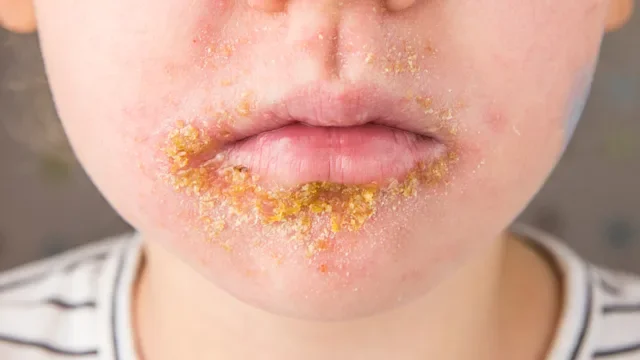
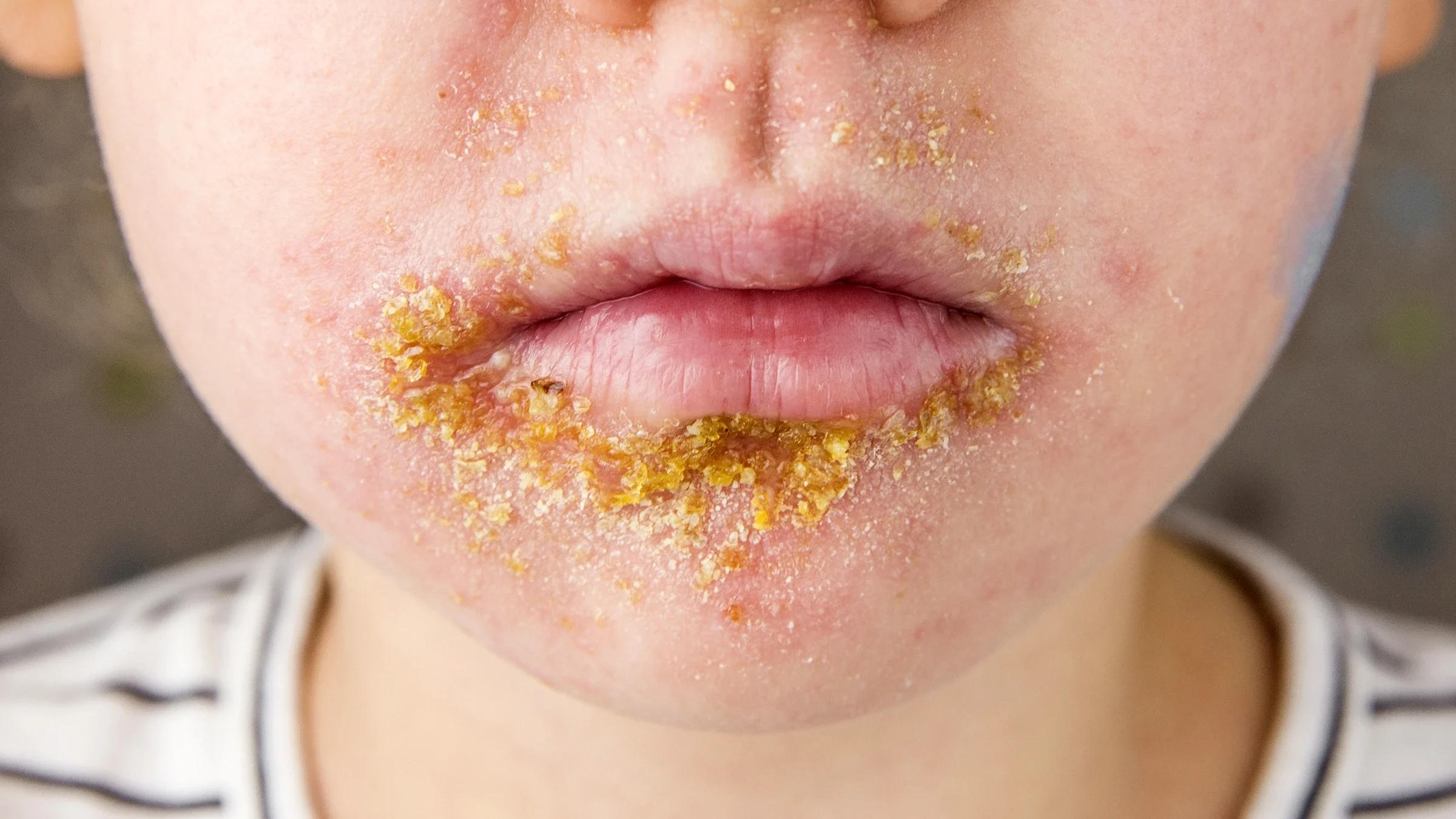
Impetigo is a skin infection caused by two common bacteria: group A Streptococcus and Staphylococcus aureus. Impetigo is easy to spot because it looks like a red rash that scabs over with a yellow crust.
Impetigo is very contagious. It can spread rapidly in day cares, schools, dorms, and military facilities. If someone in your household comes down with impetigo, the rest of your family may get it, too.
Here’s what you need to know about how long you’re contagious with impetigo and when it’s safe to go back to your daily routine.
Search and compare options
How long is impetigo contagious?
How long impetigo remains contagious depends on whether or not it’s treated with antibiotics. Since impetigo is a bacterial infection, antibiotics can cure it. So, people who get antibiotic treatment stop being contagious faster than people who don’t get antibiotic treatment.
With antibiotic treatment
You’re no longer contagious with impetigo after you’ve used antibiotics for 24 hours. Then, you can safely go about your usual routine without passing the bacteria to others.
But your rash won’t go away after 24 hours. It’ll take a few days for the rash to completely fade. To be extra safe, you can cover your rash with clothing or a bandage until it starts to fade. But you can still go back to work and school, even if you can’t cover the rash.
Without antibiotic treatment
Impetigo will usually improve on its own in about 2 to 3 weeks without antibiotic treatment. But you'll also be contagious until your rash starts fading and has completely dried out. This can take up to 3 weeks. Covering your rash lowers the risk of spread, but it doesn’t completely remove the risk.
You may need to stay out of work or school while you’re contagious because you can spread the infection to others, even if you keep your rash covered.
What are the symptoms of impetigo?
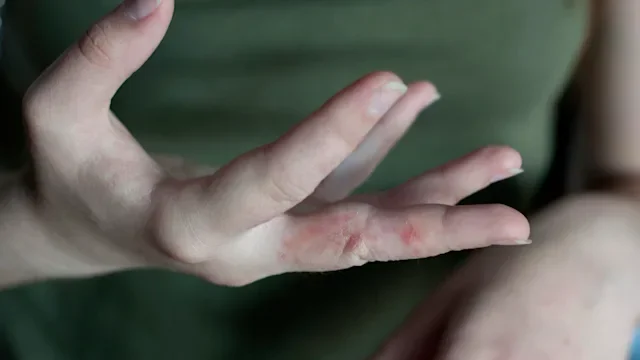
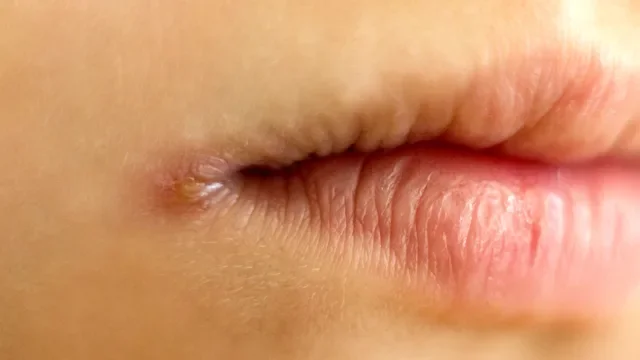
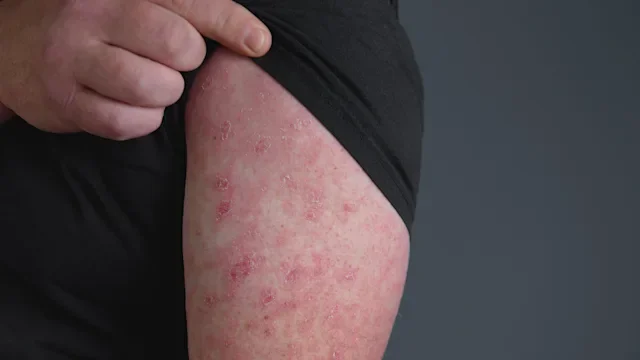
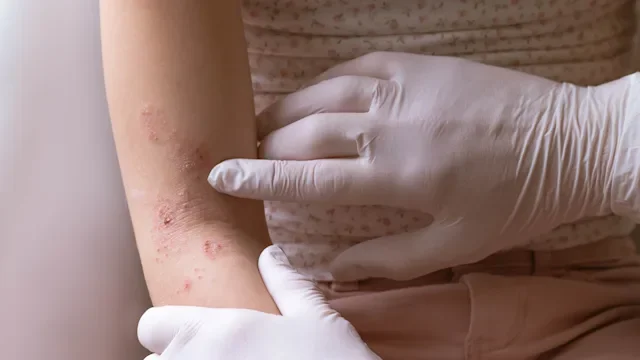
You can develop impetigo on any part of your body. But most people develop impetigo:
Around the nose
Around the mouth
On hands
On forearms
In the diaper area (infants and toddlers)
Symptoms of impetigo include:
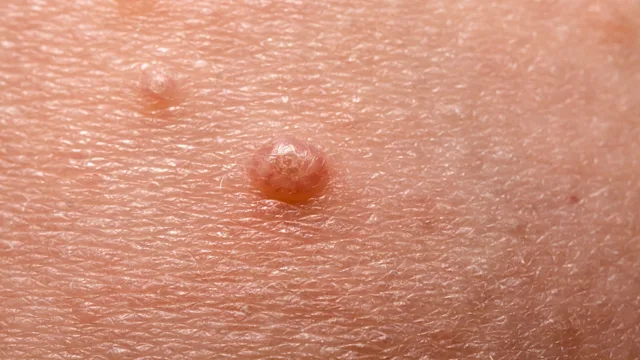
Small red bumps
Itchy crusts or scabs that often have a yellow color
Painful blisters
What are the types of impetigo?
There are two main types of impetigo:
Nonbullous impetigo: This is the most common type of impetigo. It starts as small, red, fluid-filled blisters. The blisters break open after a few days and leak fluid. Yellow-, brown-, or tan-colored crusts form over the blisters as they heal.
Bullous impetigo: This type of impetigo causes large, fluid-filled blisters. These blisters are less likely to break but may leak fluid. People may also experience weakness, fever, and enlarged lymph nodes.
How do you treat impetigo?
Topical antibiotics, like mupirocin or retapamulin, can treat impetigo. You’ll need to apply antibiotic ointments 3 times a day for 5 days.
You may need to take oral antibiotics if you have many blisters or the rash is spreading to other areas of your body. If so, you’ll need to take oral antibiotics for about a week.
Oral antibiotics that can treat impetigo include:
Most people notice that their skin starts to clear up within 3 days of starting antibiotic treatment. But it can take at least a week for your skin to heal completely. Remember, you’ll stop being contagious after 24 hours of antibiotic treatment. Children can go back to school or daycare after 24 hours of antibiotic therapy, even if they still have a rash.
What causes impetigo to spread?
The bacteria that causes impetigo spreads from person to person through touch. You can come in contact with impetigo-causing bacteria through direct contact, including:
Hugging
Kissing
Changing diapers
Helping with bathing
The bacteria can also spread to other parts of your own body through touch. For example, if you touch impetigo on your face and then scratch your leg, you can spread the bacteria to that part of your body.
You can also come in contact with the bacteria from sharing items with someone with impetigo, such as:
Towels
Clothes
Toys
Gym equipment
Impetigo spots start to appear about 10 days after you come in contact with the bacteria. So, if you’ve been around someone who has impetigo and you develop any new spots on your skin within that timeframe, chances are you also have impetigo.
How do you prevent the spread of impetigo?
You can keep impetigo from spreading to the rest of your friends and family by taking these steps:
Start treatment right away. The sooner you start antibiotics, the quicker you’ll stop being able to spread impetigo. Your primary care provider or pediatrician can usually diagnose impetigo by looking at your rash. So, you may be able to get an antibiotic prescription through a virtual health visit.
Keep your rash clean and covered. Wash your rash with regular soap and water two to three times a day. This helps wash off extra bacteria. Cover your rash to block the bacteria from getting onto other people and surfaces. Consider wearing long sleeves or pants.
Wash your hands — especially if you touch your rash. It’s best to avoid touching your rash. But, if you do touch it, wash your hands right away, so you don’t accidentally spread it to other parts of your body. Always wash your hands after you put antibiotic ointment on your rash.
Wash clothing, towels, and bedding with hot water. Any clothing, towels, or linens that touch your skin should be washed in hot water. This will kill all the bacteria that might be on the fabric.
Disinfect commonly touched surfaces. Bacteria that cause impetigo can live on surfaces for more than 24 hours. You should regularly disinfect commonly touched surfaces until you’re no longer contagious. This will lower the risk that your fellow household members will pick up the bacteria.
Avoid skin-to-skin contact and don’t share personal items. Don’t share towels, clothes, or razors until you're no longer contagious. Make sure your rash doesn’t directly come into contact with other people’s skin through hugging or kissing.
Frequently asked questions
There’s no isolation period for impetigo. But people should stay home from daycare, school, or work until they’ve received at least 24 hours of antibiotic treatment. People are no longer contagious after receiving 24 hours of antibiotic treatment.
Bullous and non-bullous impetigo usually heal without scarring. Scratching and picking at impetigo blisters or crusts can increase the risk of scarring by causing skin trauma.
The bacteria that causes impetigo can spread to surfaces, like shower floors and walls, towels, and soap. People with impetigo should still shower. It’s important to keep the rash clean and remove extra bacteria. To reduce the risk of spreading impetigo, clean and disinfect shared surfaces, like showers, after use. Don’t share personal items, like towels and soap, while the infection is contagious.
There’s no isolation period for impetigo. But people should stay home from daycare, school, or work until they’ve received at least 24 hours of antibiotic treatment. People are no longer contagious after receiving 24 hours of antibiotic treatment.
Bullous and non-bullous impetigo usually heal without scarring. Scratching and picking at impetigo blisters or crusts can increase the risk of scarring by causing skin trauma.
The bacteria that causes impetigo can spread to surfaces, like shower floors and walls, towels, and soap. People with impetigo should still shower. It’s important to keep the rash clean and remove extra bacteria. To reduce the risk of spreading impetigo, clean and disinfect shared surfaces, like showers, after use. Don’t share personal items, like towels and soap, while the infection is contagious.
The bottom line
Impetigo spreads easily through close contact, but antibiotic treatment makes a big difference. Once you’ve been on antibiotics for 24 hours, you’re no longer contagious and can safely return to school, work, or daycare — even if some rash remains. People who don’t get treatment can spread impetigo until their rash fades. This can take up to 3 weeks.

Why trust our experts?



References
Cole, C., et al. (2007). Diagnosis and treatment of impetigo. American Family Physician.
Edge, R., et al. (2017). Topical antibiotics for impetigo: A review of the clinical effectiveness and guidelines. Canadian Agency for Drugs and Technologies in Health.
Healthdirect Australia. (2021). Impetigo.
Healthychildren.org. (2015). Impetigo.
Kosar, L., et al. (2017). Management of impetigo and cellulitis: Simple considerations for promoting appropriate antibiotic use in skin infections. Canadian Family Physician.
National Health Service. (2023). Impetigo. NHS Inform.
Nemours KidsHealth. (2023). Impetigo.