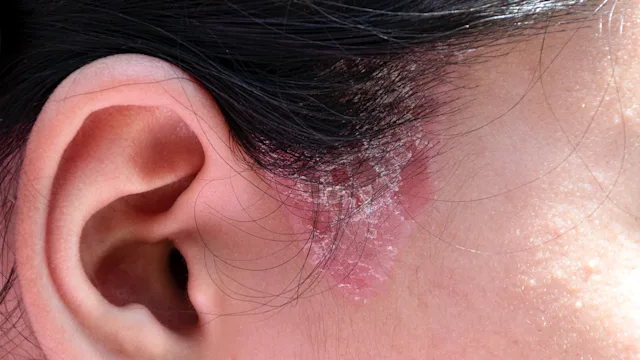
Luckily, if topical therapies don’t bring relief, you have more options.
“The treatment of psoriasis depends on multiple things,” says Michelle Henry, MD, Dermatologist. The two biggest factors are the severity and location of your psoriasis symptoms.
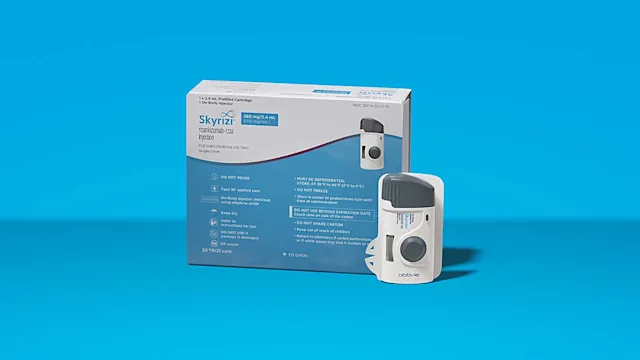
Treatments for psoriasis range from lifestyle changes for psoriasis (including a good skincare routine) to biologics, a medication that inhibits the immune response that causes psoriasis inflammation.
Generally speaking, the more aggressive a treatment option, the greater the side effect profile. “We always try to do the least aggressive treatments if we can, so the topical treatments are really common with psoriasis,” says Dr. Henry.
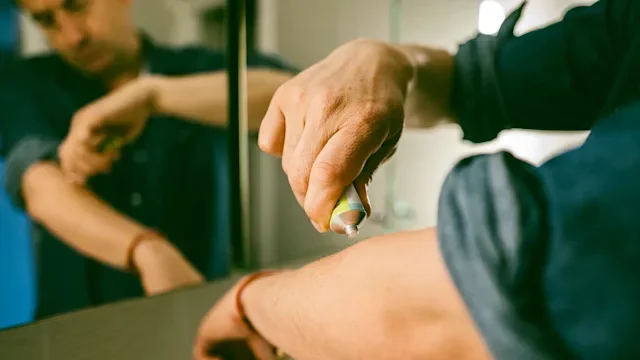
Topical therapies for psoriasis are one step more aggressive than just following a good skincare routine. They include corticosteroids, vitamin D analogs, and retinoids. For example, corticosteroids work by reducing inflammation and regulating the excess skin cell turnover that causes psoriasis plaques, according to Dr. Henry.
Many people with psoriasis are able to find relief from symptoms with topical therapies, especially when combined with lifestyle changes. However, when topical therapies don’t work, your dermatologist may recommend “walking up the ladder” to more aggressive treatment options, says Dr. Henry. (For example, learn more about the ideal candidate for biologics for psoriasis.)
How do you know if topical therapies are working?
There are a few ways doctors might gauge the success of a topical treatment for psoriasis:
Presence of plaques: Most obviously, the topical therapy is deemed unsuccessful if the psoriasis plaques don’t go away. It may take about two to four weeks for a topical therapy for psoriasis to show improvements.
Plaque surface area: Topical therapies work best when plaques are small or localized to a smaller surface area of the body. When you have numerous large plaques throughout the body, the psoriasis is “too large to be maintained with just a topical medication,” says Dr. Henry. Oral medications for psoriasis are usually more appropriate in these situations.
Chronic reliance: “We really don’t want you using topical steroids chronically for life,” says Dr. Henry. Long-term reliance on topical steroids have some side effects, such as skin thinning and stretch marks.
Adherence: Some patients have a hard time sticking to the routine of applying topical therapies. This might be reason to switch to an alternative treatment option.
“If we’re seeing any of these things, [or] we’re seeing any side effects of the medication, that might be a reason to transition to using an oral medication,” says Dr. Henry.
Worried that your topical treatment for psoriasis might not be bringing you the results you were hoping? There’s reason to stay optimistic: “We’re really in a great time that if you have psoriasis, there is hopefully a treatment for you, because we have a wide range of treatments that are quite effective,” says Dr. Henry.
Dr. Henry is a board-certified dermatologist and dermatologic surgeon in New York City, and a clinical instructor at Weill Cornell Medical College.
References
National Psoriasis Foundation. (2024). Over-the-counter (OTC) topicals.
National Psoriasis Foundation. (n.d.). Topicals.
Feldman, S.R., et al. (2024). Treatment of psoriasis in adults. UpToDate.

Why trust our experts?