Key takeaways:
Menopause is a natural process during which estrogen levels decline. This can lead to hot flashes, mood changes, sleep issues, and weight gain.
There are many benefits of exercising during menopause. These benefits include more muscle mass, stronger bones, boosted mood, better sleep, and improved sexual function.
The best types of exercise for menopause symptoms include strength training, aerobic conditioning, balance exercises (like yoga or tai chi), pelvic floor exercises, and breathing exercises.
Menopause marks an important transition in a woman’s life that brings both good changes, like no more periods, and not-so-good changes, such as hot flashes, weight gain, and mood shifts. The good news is that there are several treatment options for menopause symptoms, including menopausal hormone therapy.
Exercise can also help you manage menopause symptoms. Research has found that there are specific types of exercise that can help women feel their best during and after this transition.
The following six types of exercise are the most beneficial for menopause symptoms.
1. Strength training
A 2023 review showed that strength training had many positive effects on menopause symptoms. It found that these exercises improved strength, bone density, heart rate, and blood pressure in menopausal women. The moves also increased lean muscle mass, which can increase metabolism.
Make it a goal to do a full-body strength training routine twice a week. Examples of some of the exercises you might incorporate include:
You can use free weights, resistance bands, or weight machines at the gym during your strength-training routines. You can even use your own body weight, so you don’t even need equipment.
2. High-impact exercise
Although it’s not for everyone, many women should also consider high-impact exercises. A 2023 review of studies found that high-intensity, high-impact exercises were good for bone density in postmenopausal women.
Examples of high-impact exercise include:
High-intensity interval training (HIIT) workouts
Running
Basketball
Circuit training
Tennis
If you’re new to this type of exercise, it’s important to speak with your primary care provider first, to be sure it’s safe for you to try. People with osteoporosis and certain conditions like arthritis should avoid high-impact activities.
3. Cardio (aerobic exercise)
Aim to do moderate-intensity exercise at least 30 minutes a day, 5 days a week. This will burn calories, strengthen your cardiovascular system, and improve your blood pressure. There are several types of cardio exercise.
High-impact cardio exercises include:
Running
Jumping rope
Tennis
Lower-impact cardio exercises are easier on the joints and include:
Swimming
Walking
Dancing
Working out on an elliptical or stair-step machine
If you aren’t sure where to start with cardio, walking is an excellent choice. Research suggests walking programs can help relieve menopause symptoms. You can start with just 15 minutes a day, and then work your way up to 30 minutes (or more). Make sure you’re walking fast enough to get your heart pumping and maybe even work up a sweat.
4. Pelvic floor exercises
Research has shown pelvic floor exercises help improve sexual function, as well as bladder symptoms. Kegel exercises (squeezing and relaxing your pelvic floor muscles) are the most well-known way to strengthen this area. But there are also bladder training exercises that work your pelvic floor. As strengthening this area can sometimes be tricky, you can also see a pelvic floor physical therapist for help.
5. Tai chi, yoga, and Pilates
Balance exercises can improve your stability and prevent falls. One great exercise is tai chi, which can be described as a combination of yoga (slow and sustained postures) and meditation. It not only helps improve balance, it increases flexibility and strengthens your muscles. The meditation component also helps relieve stress and anxiety.
Yoga is another exercise option to help ease menopause symptoms, especially those related to mood. Much like tai chi, yoga helps improve balance, flexibility, strength, and stress. The sustained postures also help improve core strength, as well as pelvic floor strength.
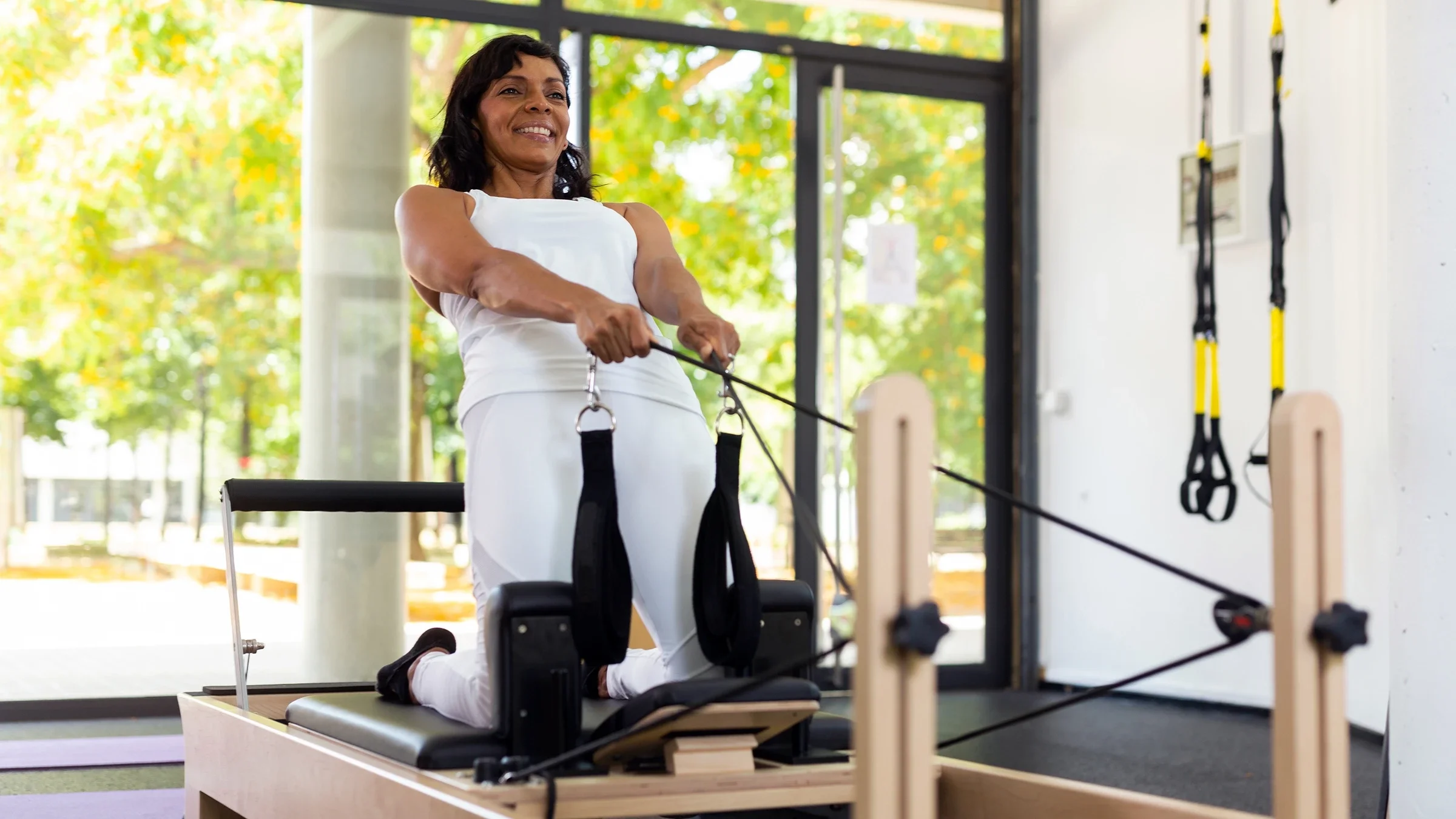
Pilates is another low-intensity exercise that improves strength, flexibility, and balance. It can be done on a special machine, called a reformer, or without the machine, called mat Pilates. A 2016 study found that an 8-week Pilates exercise program improved symptoms such as mood, hot flashes, and fatigue in postmenopausal women.
6. Relaxation exercises
Relaxation exercises can also help with some menopause symptoms, such as fatigue and poor sleep. Progressive muscle relaxation involves tensing one muscle or muscle group at a time while inhaling, followed by exhaling while releasing the muscle.
Activities such as deep breathing and meditation may help lower stress and the severity of hot flashes. Practicing mindfulness regularly can also reduce stress and improve focus, among other mental health benefits.
Are there any exercises to avoid during menopause?
People with certain health conditions should avoid some exercises during menopause. For example, it’s best for people with osteoporosis to avoid high-impact exercises. If you have high blood pressure or another heart condition, talk with a healthcare professional before starting an exercise program. You want to be sure your heart is ready to take on more activity.
If you have any of the following, stop what you’re doing and talk with a healthcare professional:
Pain or discomfort with any exercise
Chest pain
Severe shortness of breath
Nausea or vomiting
Dizziness
It’s important to listen to your body and not overdo it. Generally, this means starting slowly and gradually increasing the duration and intensity of your workouts. It’s also a good idea to talk with your primary care provider about your target heart rate.
Benefits of exercise during menopause
You probably know about the general benefits of regular exercise. However, it’s even more important to stay active as you age. Exercise can help lessen many of the most common menopause symptoms. Here’s how exercise during menopause helps:
Improves heart health: Regular exercise can keep your heart healthy during and after menopause. It helps manage cholesterol and lowers your blood pressure. Exercise also reduces your risk of heart attack and stroke.
Increases bone mass: Since estrogen helps to keep your bones strong, declining levels put you at risk for osteoporosis. You can protect your bone density with resistance exercises. Strength training or high-impact exercise (running or jumping rope, for example) can preserve and build up bone density.
Reduces depression symptoms and improves mood: If you feel anxious or depressed during menopause, know that you aren’t alone. Declining estrogen may affect serotonin, a chemical that regulates your mood. A 2021 study found that regular exercise can help boost the mood of postmenopausal women.
Improves sleep: Sleep disturbances and insomnia are common during menopause and can affect your quality of life. Being active, however, can help. A 2023 systematic review found that exercise can help improve sleep quality during menopause.
Improves sexual function: Weakened pelvic floor muscles are common during menopause. And this can affect sexual function. Pelvic floor exercises, like Kegels, strengthen these muscles. These exercises can help improve sexual function.
Improves bladder control: Weaker pelvic floor muscles can also lead to bladder issues, such as urinary incontinence, during menopause. Improving your pelvic floor strength with exercises can help improve your bladder control.
Prevents menopause-related weight changes: Many women notice changes in their weight and shape during menopause. Part of this is related to a drop in muscle mass that happens after the age of 30. But doing strength or resistance training can help you keep and even gain muscle mass.
Frequently asked questions
Many women gain weight during menopause, often around the middle of the body as belly fat. Exercise plays an important role in lowering body fat and building muscle. But you can’t spot reduce fat in your belly or anywhere else in your body.
There’s no single best exercise for menopause belly fat. Pick an exercise routine that you enjoy and can stick to. Any exercise that raises your heart rate helps to burn calories and, over time, reduce fat — including belly fat. Cardio exercises and even walking on a regular basis can help. Resistance training can also help you lose fat and gain muscle during menopause. You can try lifting weights, using resistance bands, or practicing Pilates and some types of yoga.
Frozen shoulder causes pain, stiffness, and limited motion. Menopause doesn’t cause frozen shoulder, but women are more likely to be affected around the time of menopause. This is due to lower levels of estrogen. If you have frozen shoulder during menopause, it’s best to work with a physical therapist on an exercise plan. They may recommend exercises to improve range of motion and strength as well as stretching.
Hormone changes during menopause affect the cartilage in your joints, muscle strength, and bone density. And these changes can lead to joint pain and stiffness. If you have hip pain, consider doing targeted stretches and low-impact exercises, like walking, swimming, or yoga. Hip-strengthening exercises include glute bridges, side-lying straight leg raises, clamshells, and chair squats. Since some exercises can worsen hip pain, it’s a good idea to first consult a physical therapist if your hip pain is severe.
Many women gain weight during menopause, often around the middle of the body as belly fat. Exercise plays an important role in lowering body fat and building muscle. But you can’t spot reduce fat in your belly or anywhere else in your body.
There’s no single best exercise for menopause belly fat. Pick an exercise routine that you enjoy and can stick to. Any exercise that raises your heart rate helps to burn calories and, over time, reduce fat — including belly fat. Cardio exercises and even walking on a regular basis can help. Resistance training can also help you lose fat and gain muscle during menopause. You can try lifting weights, using resistance bands, or practicing Pilates and some types of yoga.
Frozen shoulder causes pain, stiffness, and limited motion. Menopause doesn’t cause frozen shoulder, but women are more likely to be affected around the time of menopause. This is due to lower levels of estrogen. If you have frozen shoulder during menopause, it’s best to work with a physical therapist on an exercise plan. They may recommend exercises to improve range of motion and strength as well as stretching.
Hormone changes during menopause affect the cartilage in your joints, muscle strength, and bone density. And these changes can lead to joint pain and stiffness. If you have hip pain, consider doing targeted stretches and low-impact exercises, like walking, swimming, or yoga. Hip-strengthening exercises include glute bridges, side-lying straight leg raises, clamshells, and chair squats. Since some exercises can worsen hip pain, it’s a good idea to first consult a physical therapist if your hip pain is severe.
The bottom line
Menopause is a natural stage in which a woman’s body gradually makes less estrogen. The hormone changes during menopause cause unpleasant symptoms, including hot flashes, sleep disturbances, sexual dysfunction, and mood changes. Exercise, like strength training and cardio, can help relieve these physical symptoms. Balance and meditative exercises, like yoga, Pilates, and tai chi, can be beneficial both physically and mentally.

Why trust our experts?




References
Alblooshi, S., et al. (2023). Does menopause elevate the risk for developing depression and anxiety? Results from a systematic review. Australasian Psychiatry.
Amanzai, H., et al. (2022). The impact of walking programs on reduction of menopausal symptoms: A systematic review. Canadian Nurse Practitioner Journal.
Capel-Alcaraz, A. M., et al. (2023). The efficacy of strength exercises for reducing the symptoms of menopause: A systematic review. Journal of Clinical Medicine.
Chan, H. B. Y., et al. (2017). Physical therapy in the management of frozen shoulder. Singapore Medical Journal.
Gao, H. L., et al. (2016). Effects of walking on body composition in perimenopausal and postmenopausal women: a systematic review and meta-analysis. Menopause.
López-Pérez, M. P., et al. (2023). Pelvic floor muscle exercises as a treatment for urinary incontinence in postmenopausal women: A systematic review of randomized controlled trials. Healthcare.
Manaye, S., et al. (2023). The role of high-intensity and high-impact exercises in improving bone health in postmenopausal women: A systematic review. Cureus.
Martins Sá, K. M., et al. (2023). Resistance training for postmenopausal women: systematic review and meta-analysis. Menopause.
Nazarpour, S., et al. (2017). Effects of sex education and kegel exercises on the sexual function of postmenopausal women: A randomized clinical trial. The Journal of Sexual Medicine.
Qian, J., et al. (2023). The effect of exercise intervention on improving sleep in menopausal women: A systematic review and meta-analysis. Frontiers in Medicine.
Sucu, C., et al. (2024). The effect of progressive muscle relaxation exercises on postmenopausal sleep quality and fatigue: a single-blind randomized controlled study. Menopause.
Volpi, E., et al. (2004). Muscle tissue changes with aging. Current Opinion in Clinical Nutrition and Metabolic Care.
Wang, H., et al. (2025). The effectiveness of yoga on menopausal symptoms: A systematic review and meta-analysis of randomized controlled trials. International Journal of Nursing Studies.
Yılmaz, S., et al. (2021). The effect of physical activity and depressive mood on menopausal symptoms in postmenopausal women. International Journal of Clinical Practice.