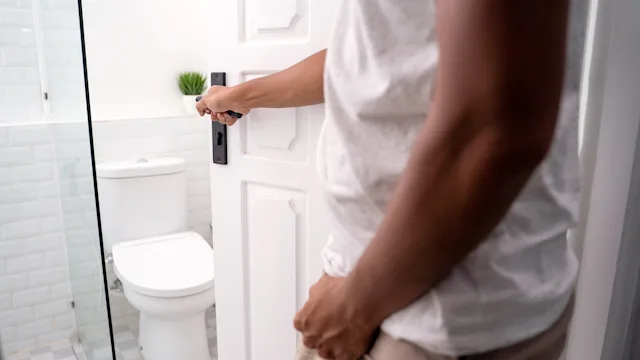
When it’s your fourth time waiting in line for the bathroom in one afternoon, your first instinct might be to dump out your water bottle. (Hold up! Here’s how much water you should drink if you have overactive bladder.) Before risking dehydration, you may want to try a different approach: bladder training.
A healthy bladder can typically hold urine for two to four hours before sending the brain a signal to go. This usually happens when the bladder is about halfway full, giving you plenty of warning so you can scope out a restroom in time.
But if you have overactive bladder, you may feel a strong urge to go more frequently—even when your bladder isn’t full. In some cases, you may even have leaks. This constant “gotta go” feeling can be embarrassing — or at least disruptive — and one common behavioral tweak your doctor might recommend is bladder training. (Here are other lifestyle changes for OAB you might find helpful.)
Sure, it doesn’t sound very glamorous, but think of bladder training like potty training for adults. In short, you’re teaching your mind and body to use the bathroom on a schedule to help your bladder hold pee longer, with the hopes that you won’t feel quite so rushed to abandon a meeting or make a pit stop in the car.
Here’s how to do bladder training to help your symptoms of overactive bladder.
Keep a bladder diary. Jot down when and how much you drink, as well as when and how much you pee. You should also track if and when you have accidental leaks, how strong the urge to go was, and what you were doing at the time. Psst...You can print a sample bladder diary here.
Go to the bathroom at specific intervals during the day, and increase those intervals slowly until you can wait three or four hours between bathroom breaks. For example, if you currently feel a need to go every 30 minutes, start using the bathroom every 45 minutes—even when you don’t feel a need to. (Compare this to a sleep schedule and how you try to go to bed around the same time even if you’re not tired.)
When you feel an urge before your scheduled time to pee, distract yourself and do your best to hold it. Try kegel exercises, counting backward from 100, or crossing your legs. You could even try counting meditation, if you have the time.
Once you master one interval without having urges or leaks, increase your interval by half an hour. If you can go every hour, try to make it 90 minutes, for example. Stick with one interval for at least a week before upping it more, until you can go three or four hours between bathroom breaks.
Don’t get frustrated if you have to stay on one interval for more than a week. Experts estimate that bladder training can take anywhere from four to 12 weeks, so go easy on yourself and celebrate each improvement.
For more tips on managing OAB, here are tips for talking to your doctor about incontinence. And avoid these foods that make overactive bladder worse.
Preeti Parikh, MD is the Executive Medical Director at GoodRx and served as the Chief Medical Officer of HealthiNation.
References
American Urogynecologic Society. (2016). Pelvic Floor Muscle Exercises and Bladder Training.
Atlantic Health System. (N.D.). Bladder Retraining at Atlantic Urogynecology Associates.
Cleveland Clinic. (2022). Overactive Bladder: Management and Treatment.
National Association for Continence. (N.D.). Bladder Retraining.

Why trust our experts?