Melanoma Guide: Causes, Symptoms, and Treatments
Comprehensive information for you or a loved one — including treatment options and discounts on popular medications.

Melanoma is the most serious type of skin cancer. It starts when melanocytes — special cells that give skin its color — grow out of control. Most melanoma develops on the skin. But sometimes it forms in other areas — like your eye, genitals, or inside your mouth.
Melanoma is much less common than other skin cancers, but it’s more dangerous. That’s because, without treatment, it’s more likely to spread to other parts of the body. Over the last 10 years, cases of invasive melanoma diagnosed each year have increased by 42%. This year in the U.S., there will be about 100,000 new cases of invasive melanoma. Over 8,000 people will die from it.
Anyone can get melanoma, but it’s more likely to occur in older people with light skin. Melanoma can also develop in young people. In fact, it’s one of the most common cancers in people younger than age 30. When melanoma develops in skin of color, it’s often more advanced and harder to treat.
Melanoma is highly curable when caught early. Knowing the basics about melanoma and what signs to look for can help you catch it early, when it’s easier to treat.


A main cause of melanoma is exposure to ultraviolet (UV) light — from the sun and tanning beds. It’s likely there are other causes too.
When UV light hits your skin, it can damage the skin cells’ DNA (the genetic code that tells your cells how to function). At first, the body can repair this DNA damage. But when the damage is more than your body can repair, it can cause melanoma. The most common gene mutation in melanoma is the BRAF oncogene, which occurs in about half of all melanomas.
Sometimes, people inherit a gene mutation from a parent that can increase their risk of developing melanoma. These changes affect the body’s ability to repair DNA damage. And when someone’s body can’t repair DNA damage effectively, they’re more likely to develop cancer.
Knowing about gene mutations is important because some medications work by targeting specific mutations (more on this in the treatment section).
Different risk factors can increase your chance of getting melanoma. Having one (or more) risk factors doesn’t mean you’ll get melanoma. But knowing about them can help you change certain ones to decrease your risk of developing melanoma. It can also help you figure out if you should get screened with a full skin check.
Here are the main risk factors for melanoma:
Too much UV exposure (sun or tanning beds)
History of blistering sunburns
Fair skin (especially light eyes and blond or red hair)
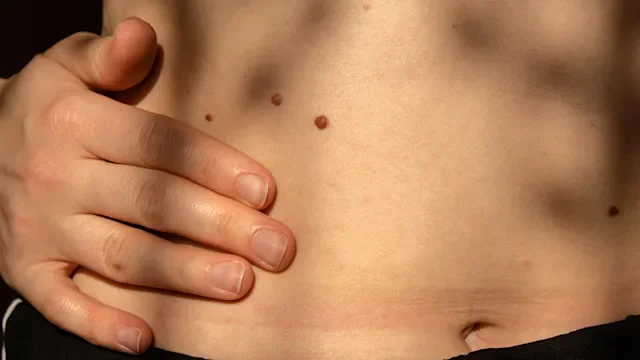
Many moles, atypical moles, or large moles
History of melanoma or other skin cancer
Weakened immune system
Certain genes (melanoma can run in families)
Age 50 and older (although some people develop melanoma younger)
Certain medical conditions (like xeroderma pigmentosum)
Compare prices and information on the most popular Melanoma medications.
Melanoma is most common on sun-exposed skin. But it also develops in areas that don’t get sun (like the genitals or inside the mouth). Between 20% and 30% of melanomas develop in a mole. The rest start on normal-looking skin. In people of color, melanoma often appears on the palms, soles of the feet, or in the nails.
Here are some melanoma signs to look for:
A new dark or unusual-looking spot on your skin
A mole that changes in size, shape, or color
A mole that looks different from your other moles (the “ugly duckling sign”)
Melanoma is often brown or black. But it can also be blue, pink, or the color of your skin. It can be flat, bumpy, or elevated. Sometimes, these spots have symptoms, like itching or pain. There’s a helpful acronym that can help you remember what to watch for. When looking at your moles, look for these ABCDE changes to help spot melanoma:
Asymmetry: a mole where one half doesn’t look like the other
Border: a mole that has a bumpy or irregular border
Color: a spot has many different colors (like tan, black, white, or pink)
Diameter: a mole that’s larger than a pencil eraser
Evolving: any change in an existing mole or skin lesion
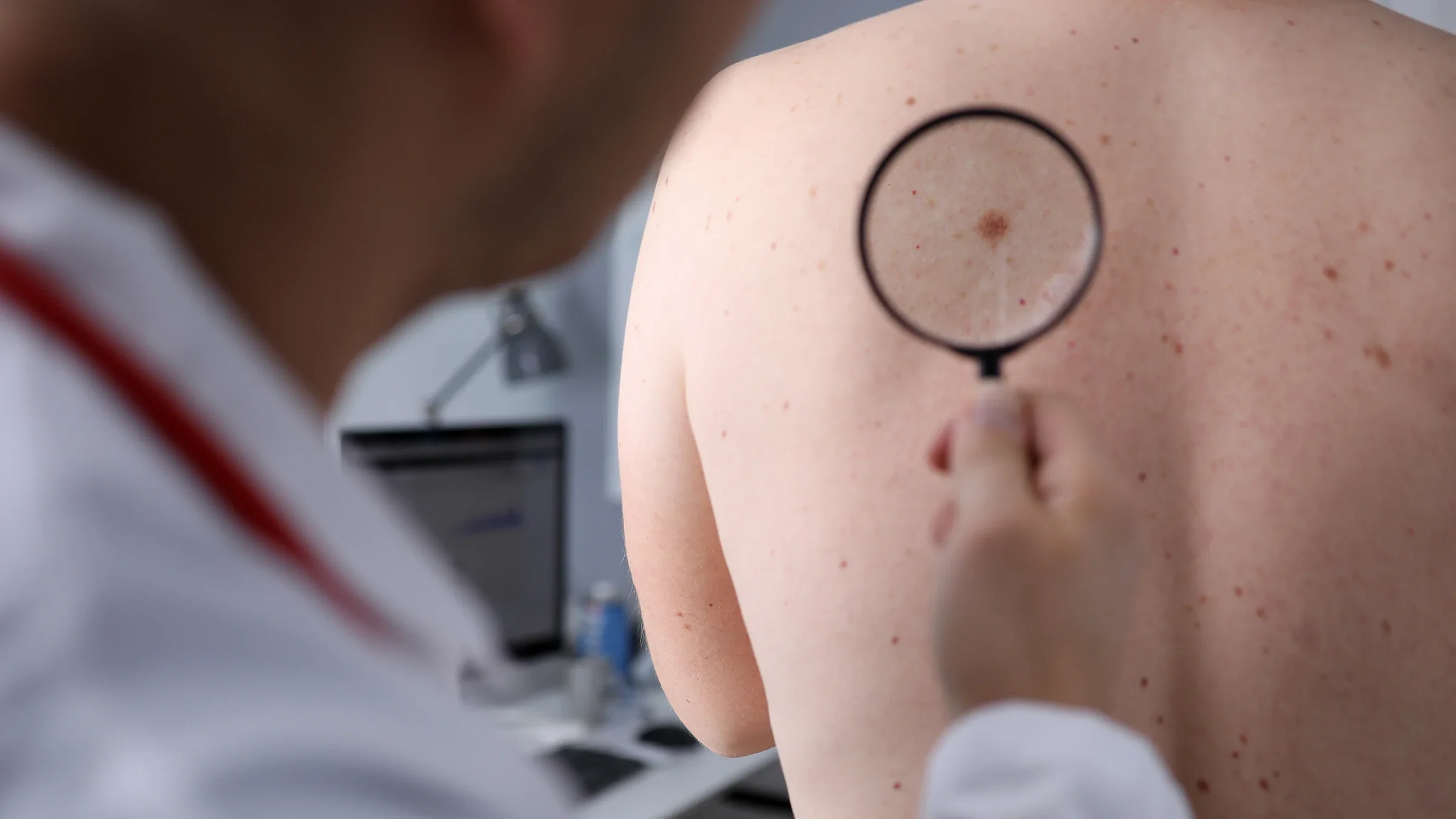
To diagnose melanoma, a healthcare professional usually does a skin check and a skin biopsy. This is usually done by a dermatologist. But your primary care provider can also do it. Here’s what these tests are and what to expect with each one:
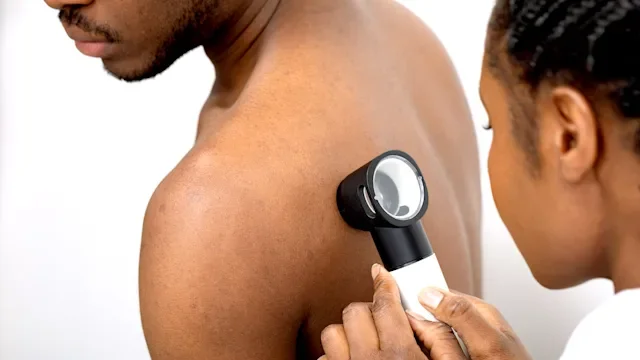
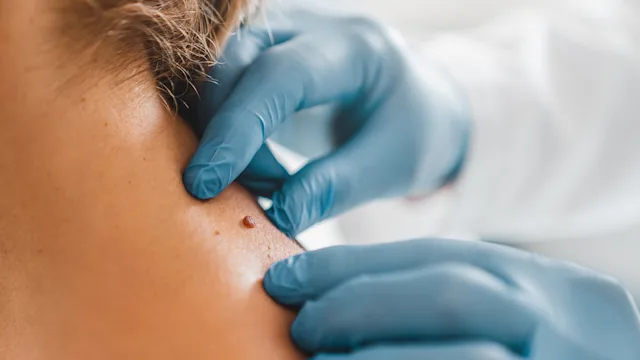
Skin examination: The healthcare professional will look at your skin for signs of melanoma. If there’s a concerning spot, they’ll do a skin biopsy to confirm the diagnosis.
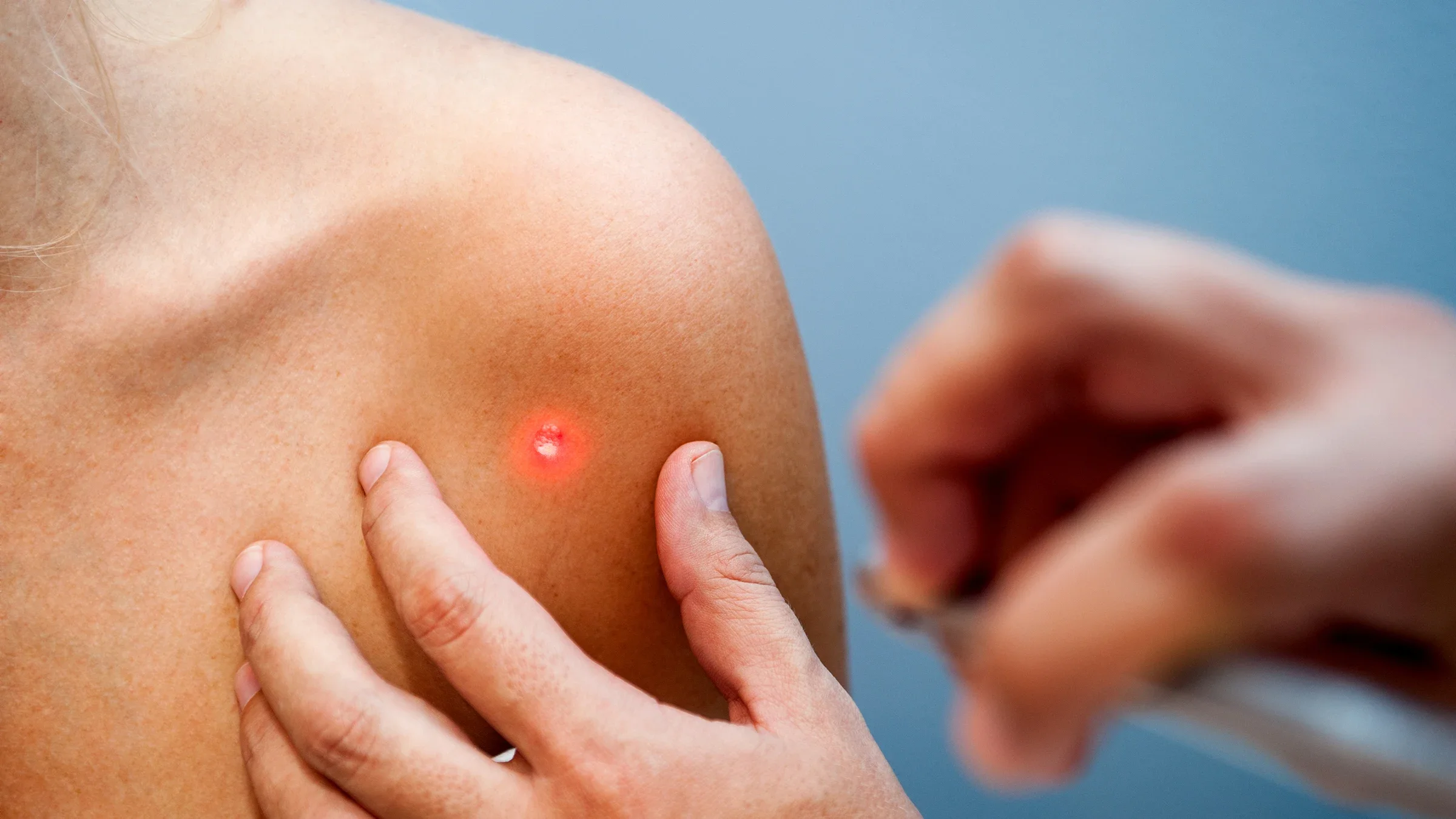
Skin biopsy: This is a minor surgical procedure done at your doctor’s office. They numb your skin with a small needle and use a small blade that’s flat or circular to remove the spot. Then they send the tissue to a lab, where a pathologist evaluates it for melanoma. Depending on the biopsy type, you may have some stitches after the procedure.
If the biopsy shows melanoma, the next step is to figure out its stage (how advanced it is). This helps determine prognosis and the best treatment option. The melanoma stage depends on a few factors, like:
Melanoma thickness: The earliest stage (“melanoma in situ”) is when the melanoma stays in the top layer of skin (the epidermis). When the melanoma is thicker (deeper in the skin), it’s more serious.
Ulceration (or skin breakdown) above the melanoma: If a melanoma is ulcerated, it tends to do worse.
Possible melanoma spread to lymph nodes: A sentinel lymph node biopsy can check for possible spread to the lymph nodes.
Possible melanoma spread outside of the skin: Imaging studies, like a CT scan or PET scan, can check for this.
Melanoma treatment depends on a few factors, like its stage, if there are any genetic mutations, and the person’s health and preferences. For people with early-stage melanoma, removal with surgery may be the only treatment they need.
A healthcare professional can usually do the surgery in their office or at a surgical center. This can depend on the melanoma size and if you need a sentinel lymph node biopsy.
The goal of surgery is to remove the entire melanoma with a margin of normal skin around it. A pathologist evaluates the tissue to make sure the cancer is out (the margins are clear).
Radiation therapy uses high-energy waves or particles (like X-rays) to kill cancer cells. Radiation therapy can treat melanoma in certain situations. For example, it can treat lymph nodes or areas where melanoma has come back.
More advanced melanoma may need additional treatment, like with one of these medications:
Immunotherapy medications help your immune system recognize and kill cancer cells. Examples include immune checkpoint inhibitors, like pembrolizumab (Keytruda) and nivolumab (Opdivo).
Targeted therapy medications target parts of melanoma cells that aren’t on normal cells. For example, vemurafenib (Zelboraf) and dabrafenib (Tafinlar) target proteins from the BRAF mutation.
Chemotherapy medications kill cancer cells directly. These aren’t usually the first-choice treatment since other therapies are more effective.
You can’t entirely prevent melanoma, but you can definitely lower your chances of getting it. The most important way to do this is to protect yourself from UV rays and to examine your skin regularly.
Here are some steps you can take to lower your melanoma risk:
Find the shade between 10AM and 4PM
Avoid tanning and tanning beds
Use sunscreen daily
Avoid sunburns
Wear sun-protective clothing, like a wide-brimmed hat and long sleeves
Check your skin regularly
Visit a dermatologist to get a skin screening if you have risk factors for melanoma
And if you’re worried about a spot on your skin, it’s a good idea to trust your instincts and get it checked out.
No. Melanoma is highly curable when caught early. In fact, people with early-stage melanoma who get treatment have a 99% chance of surviving after 5 years. That’s why early detection is so important with melanoma.
No. Melanoma is highly curable when caught early. In fact, people with early-stage melanoma who get treatment have a 99% chance of surviving after 5 years. That’s why early detection is so important with melanoma.
It can be, but it isn’t always. Melanoma can also have some other symptoms, like:
Pain or tenderness
Redness or swelling
Bleeding, oozing, or a sore that doesn’t heal
But keep in mind: Many times melanoma won’t have any symptoms. If you’re worried about a new or changing mole, you should get it checked out — even if it doesn’t have symptoms.
Melanoma is the most serious form of skin cancer. If it’s caught early, it can be cured (99% of people survive after 5 years). But when it progresses, it can spread to other parts of the body and even lead to death. When the melanoma spreads to other organs, only about 30% of people will survive after 5 years.
Sometimes, melanoma grows so slowly that people don’t realize it’s changing or that it’s atypical. An example is lentigo maligna, which is a very early form of melanoma. It grows in the outer skin layer (the epidermis) before growing deeper and becoming invasive. Lentigo maligna tends to grow slower than other types of melanoma. In fact, it can take 10 years or more before it becomes invasive (meaning it grows into the skin or beyond).
If you have any new or worrisome spots, the best thing is to see a dermatologist to get the right diagnosis.
American Academy of Dermatology Association. (n.d.). Skin cancer types: Melanoma causes.
American Academy of Dermatology Association. (n.d.). What to look for: ABCDEs of melanoma.

Prescription savings
Stop paying too much for your prescriptions. Compare prices, get pharmacy coupons, and save up to 80%. Find expert answers to your health questions so you can make the best decisions for yourself and your family.
Health conditions
Medications & treatment
Access & affordability
Medication discounts