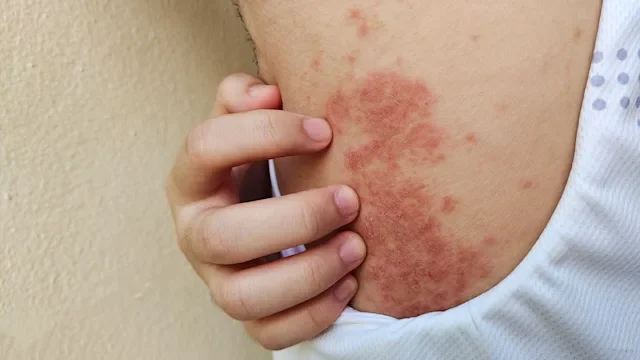
Severe eczema may happen if you are repeatedly scratching at your rashes. Eczema can also become severe if you’re continuously exposed to a trigger for flares without realizing it, according to Nkem Ugonabo, MD, Dermatologist in New York City.
Dr. Ugonabo is a board-certified dermatologist at UnionDerm in New York City and an Assistant Professor at the Albert Einstein College of Medicine’s Division of Dermatology.
References
American Association of Dermatology. (n.d.). Can anything relieve severe atopic dermatitis?.
Küster, D., et al. (2018). Effects of systemic immunosuppressive therapies for moderate‐to‐severe eczema in children and adults. Cochrane Database of Systematic Reviews.
Lee, J. H., et al. (2016). A comprehensive review of the treatment of atopic eczema. Allergy, Asthma & Immunology Research.
National Eczema Association. (n.d.). Prescription injectables.
National Eczema Association. (n.d.). Prescription phototherapy.
Schonmann, Y., et al. (2020). Atopic eczema in adulthood and risk of depression and anxiety: A population-based cohort study. The Journal of Allergy and Clinical Immunology: In Practice.

Why trust our experts?



Search and compare options