Key takeaways:
Self-pay dental care means using your own resources without insurance for dental services. This includes preventive care, such as cleanings, and other treatment.
Even if you have dental insurance, you can still use self-pay dental options. This is common for services that your plan may not cover, such as braces or teeth whitening.
Sometimes paying cash for dental care instead of using your dental plan can save you money.
Dental insurance is typically separate from health insurance. Many people who have a medical plan don’t have dental coverage. This is true for people with original Medicare, which doesn’t provide routine dental care — though some Medicare Advantage plans offer this benefit. Medicaid covers comprehensive dental care for children, but adult dental benefits are optional.
Many people hesitate to visit the dentist because they think the cost won’t align with their budgets.
Even without health insurance, you can access healthcare. In fact, you can use your own resources, which is called cash-pay healthcare.
Search and compare options
What is self-pay dental care?
Self-pay dental care means accessing dental services without insurance. It’s also known as cash-pay dental care or out-of-pocket dental care. It means you’re using your own financial resources to pay for care, such as:
Cash
Check
Credit card
Debit card
Flexible spending account (FSA) funds
Health savings account (HSA) funds
You can access discounted dental care with a GoodRx Companion subscription. The program also includes benefits to help you cut your self-pay costs, such as lower prices for online care visits, prescriptions, and other health services.
Is it less costly to have dental insurance or pay cash?
How you pay for dental care depends on a several factors, including:
Whether you have a dental plan
Using a dentist who accepts your insurance
Your plan’s negotiated rates
Your cost sharing with insurance
Cash-pay prices
If you get routine cleanings and don’t anticipate needing additional dental care, the cost of two self-pay dental cleanings in 1 year may be less than the cost of dental insurance premiums for 12 months.
Keep in mind that insurance covers more than dental cleanings. Having a plan can provide a financial buffer if you need more costly care. For example, the average cost of a dental crown can be $800 to $2,500 without insurance.
How much is a self-pay dental cleaning?
The cost of a dental cleaning can be about $100 without insurance. This service is recommended twice a year. The price can vary depending on the dental practice, so shop around if you’re paying cash. You may also need other care during your cleaning, such as an X-ray, which can increase the price.
Sometimes, you may need a deep dental cleaning. This could take several hours and cost $150 to $300 or more if you self-pay. If you require anesthesia for this service, the cost may be higher.
Other cash-pay dental care
Self-pay dental options can sometimes result in lower out-of-pocket costs than using insurance. And you may need to pay cash if your insurance doesn’t cover the care you need — or if you can’t find a dentist who accepts your insurance plan.
Here are some self-pay cost ranges for common dental care:
Braces
Braces costs vary greatly. The type, complexity, and length of your orthodontic treatment influence how much you pay. At a consultation with an orthodontist, you’ll get a better idea of what needs to be corrected and how much the treatment will cost.
As a general guideline, braces can average $3,000 to $7,000 or more for full treatment. The retainer to keep your teeth in place after treatment may cost extra.
The cost for Invisalign, a brand of clear plastic dental aligners that are an alternative to traditional braces, can range from $1,800 to $9,500 per treatment.
Bridges and crowns
Dental crowns are made with metal, ceramic, or a combination of these materials. A crown is designed to look and act like a tooth. Crowns can be used as a replacement for missing teeth on their own, as well as in combination with a dental implant or a dental bridge.
Depending on the materials used, a dental crown can average $800 to $2,500. A bridge can cost $2,000 to $5,000 or more.
Other services related to getting a crown or bridge, such as the extraction of problem teeth or bone grafts, will cost extra.
Dentures
Dentures provide a natural-looking replacement for missing teeth. But costs vary greatly depending on the type, materials used, and other factors. A full set of permanent dentures can cost $1,000 to more than $25,000.
There are three primary types of full dentures:
Traditional
Immediate
Implant supported
Traditional dentures are the least costly option for a full set. Implant-supported dentures can cost more than $25,000.
Partial dentures typically cost less than full dentures. They’re attached to your natural teeth by a special framework that keeps them in place. The cost of partial dentures without insurance largely depends on the material.
Extraction
The cost of a tooth extraction will depend on several factors. A simple extraction can cost $75 to $250 per tooth without insurance. But if you need a surgical extraction for a tooth that’s impacted or stuck under the gums, the price can rise to $300 or more. Anesthesia may be an additional cost.
Filling
A filling is a way to repair a cavity or an area of tooth decay. Ignoring cavities can lead to serious dental issues, so getting a cavity cleaned and filled is important.
The cost for a filling will depend on the material. Common types of materials include:
Amalgam
Composite resin
Gold
Porcelain
The most popular filling type is composite resin. It costs about $200 per tooth, on average, without insurance. Using porcelain, which comes with the highest price, can cost an average of $1,050 per tooth.
It’s important to consult with your dentist to ensure the filling is necessary, determine the best type of filling for the tooth, and get an estimate for the self-pay dental price.
Implant
One way to restore a missing tooth is with an implant. This solution is quite costly. On average, a single tooth implant can cost $3,000 to $7,000, without insurance. Insurance typically limits benefits for dental implants, so be prepared to self-pay some of the cost even with coverage.
Root canal
A root canal is a nonsurgical procedure that repairs a damaged tooth. This is one way to preserve a natural tooth. The cost depends on the tooth’s location and the amount of restoration needed. A root canal can cost $1,200 on average, but expect to pay more if the tooth is a molar. Other factors can increase the cost. These include using an endodontist, having an emergency procedure, or needing a crown.
Veneers
Veneers are a cover on the surface of the teeth that can replace cracked, misshapen, or discolored enamel. Considered purely cosmetic, veneers are typically not covered by insurance. Depending on the material, veneers can cost about $800 to more than $2,000 per tooth. Composite resin veneers are the most affordable, followed by porcelain and ultrathin porcelain laminate. You may be able to get a discount if you’re getting veneers on more than one tooth.
Whitening
The many options to achieve a more brilliant smile range from over-the-counter products to professional teeth treatments under a dentist’s supervision. You’ll pay about $500, on average, to get your teeth whitened at a dentist’s office. This service is often not covered by insurance because it’s considered a cosmetic procedure.
You may be able to pay less if your dentist offers a custom take-home teeth-whitening kit. Opting for a professional in-office teeth whitening can cost $500 to $1,000.
Wisdom teeth removal
Removal of wisdom teeth — a third set of molars — is one of the most common dental surgeries. They often emerge as the last teeth in the back of the mouth in a person’s late teens. The price depends on several factors. If you have all four wisdom teeth removed at once, the price can be $1,200 to more than $4,000.
If a single wisdom tooth removal is a simple extraction, this can cost $300 on average. Complications such as an impacted tooth or an infection can increase the price.
Can you see a dentist without insurance?
Yes, you can go to the dentist without insurance. Most dentists offer self-pay options for people who don’t have dental insurance or prefer to pay cash. It’s best to call the dental practice and get an estimate for your visit before your appointment.
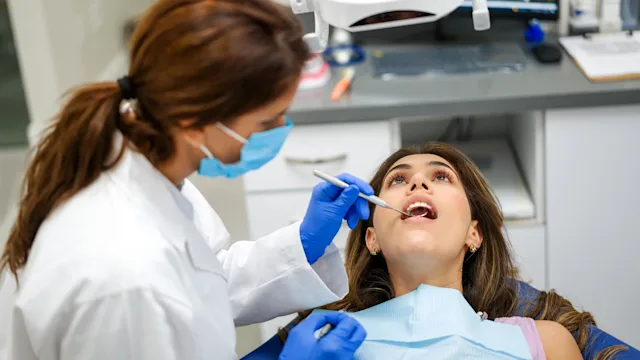
A basic dental checkup includes an exam, cleaning, and possibly X-rays.
Some dentists offer a free consultation or an evaluation for specific types of dental work. Check with the dental practice to determine what you need to bring to the office visit. For example, if you already have X-rays, they may be sufficient and recent enough for the dentist to use. Also, ask for discounts to help you save money on dental care without insurance.
Can you receive free dental care without insurance?
There may be options near you to access free or low-cost dental care without insurance.
For instance, dentistry schools, dental hygiene programs, and dental assisting programs have training clinics that offer free or heavily discounted care to the public. You will be treated by a supervised dental student or resident or a faculty dentist. This can provide savings — up to 50% at one dentistry school — on a variety of dental services.
Another option is visiting a community health center, which may offer affordable dental care on a sliding scale based on income. This Find a Health Center tool can help you locate a site that offers dental care.
If you can’t afford dental care, you may be able to access services through the Dental Lifeline Network of volunteer dentists and laboratories offering donated comprehensive dental treatment across the U.S. It’s important to note that there can be a long wait after applying for help, depending on where you live.
You may also have a health account such as an HSA or FSA with funds you can spend on dental services.
The bottom line
Self-pay dental options can help you save money, even if you have dental insurance. What you pay will depend on where you live, the dental care you need, and the type of dental professional. It’s best to shop around before scheduling an appointment to find the best price. You may have access to lower-cost options, such as dentistry school clinics and community health centers.
You can access discounted dental care with a GoodRx Companion subscription. The program includes other benefits to cut your self-pay costs, such as lower prices for online care visits, prescriptions, and other health services.

Why trust our experts?



References
American Association of Oral and Maxillofacial Surgeons. (2019). Wisdom teeth FAQ.
American Student Dental Association. (n.d.). U.S. dental schools.
Cigna. (n.d.). What happens during a dental check-up?
Commission on Dental Accreditation. (n.d.). Search for dental programs.
Delta Dental. (n.d.). How often should I see my dentist?
Dental Lifeline Network. (n.d.). Apply for help.
Dental Lifeline Network. (n.d.). What we do.
HRSA Data Warehouse. (n.d.). Find a health center. Health Resources & Services Administration.
Medicare.gov. (n.d.). Dental services. Centers for Medicare & Medicaid Services.
Schroeder, A., et al. (2022). Estimated cumulative incidence of wisdom tooth extractions in privately insured US patients. Frontiers in Dental Medicine.
The University of Alabama at Birmingham School of Dentistry. (n.d.). Billing & insurance.
Vance, E. (2026). A cavity doesn’t always need a filling. The New York Times.