Key takeaways:
Fluoride treatment can help to get rid of an early cavity. Other treatments — like fillings, crowns, or a root canal — can help when your cavity is more advanced.
Some natural home remedies, like clove oil and green tea, can help to strengthen teeth, prevent cavities, and reduce tooth pain.
Early detection and treatment, along with a dedicated oral hygiene routine, can give you the best chance to reverse or stop the progression of cavities.
What are cavities?
A cavity, also known as tooth decay, is a common dental issue affecting many people. It starts as damage to the outer layer of the tooth that eventually creates a hole. If not treated early, it can progress to the inner layers of the tooth, causing sensitivity and pain.
Good oral hygiene is important for preventing and addressing cavities in the early stages. But you may be wondering what you can do to reverse or stop the cavity from getting worse. Let’s take a closer look at treatment options and natural remedies that can help you to get rid of a cavity.
Is it possible to get rid of a cavity?
The simple answer is yes, it’s possible to heal a cavity, in certain cases. But, unfortunately, this is only in rare cases — when the cavity is in the early demineralization stage. This is also known as the pre-cavity stage, when the cavity is still in the first layer of your tooth. This is the only stage where the damage from a cavity can be reversed or stopped.
Search and compare options
Remineralizing a cavity at this stage is possible, but it takes a dedicated hygiene routine with toothpaste products that have fluoride. Other ways of supporting the remineralization phase include:
Increasing saliva production
Drinking more water and fewer acidic drinks
Chewing sugar-free gum that contains xylitol
Eating a calcium-heavy diet that includes cheeses, yogurts, milk, and vegetables, like kale and collard greens
Once a cavity progresses and reaches the second layer of your tooth, there’s no way to heal it on your own. At this point, you’ll need a trip to your dentist to fix your cavity.
How do you treat a cavity once it’s formed?
The best treatment for a cavity depends on its severity and your overall health. Here are four common treatment options to get rid of a cavity.
1. Fluoride treatment
If your cavity is still in the early stages, there may still be time to stop it in its tracks. A professional fluoride treatment will help add minerals back to your tooth enamel and could even reverse the cavity.
For the best type of fluoride treatment, you’d have to visit a dentist. A fluoride application done at the dentist will have a higher amount of fluoride than what’s found in tap water, mouthwash, or toothpaste.
2. Filling
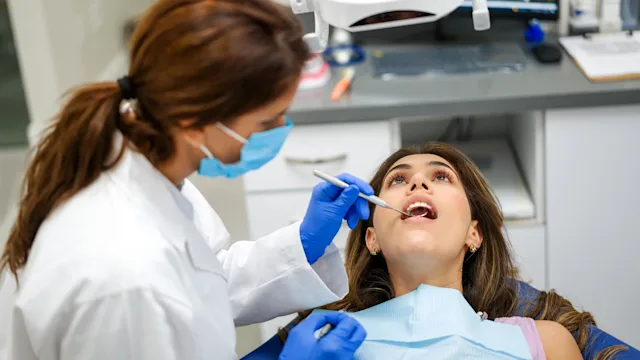
A filling is the primary treatment option for a cavity. A filling is a material that’s used to “fill” and strengthen a tooth that’s been damaged by a cavity. It also helps to restore the normal function of the tooth.
Fillings can be completed with a variety of materials that vary in cost and durability. Some filling materials can blend perfectly with your natural tooth shade, but they’re generally more expensive.
3. Crowns
If the cavity has damaged more than half of the tooth, your dentist may suggest a crown as the best treatment option. A crown will act as a custom-fitted cover for your tooth. It’s usually made of porcelain or a type of metal material, like gold. Strong materials like these will provide enough structural integrity to the tooth and reduce the risk of fracture.
4. Root canal
In some cases, the nerve may be compromised by the cavity. A root canal helps to restore and save a damaged or infected tooth. During this procedure, the dentist will remove the infected nerve and fill the area with a plastic material. A custom-made crown is then placed on the tooth after your root canal procedure to seal the tooth from any further damage.
5. Minimally Invasive Treatments
There are some alternative treatments that are sometimes used to treat cavities under certain circumstances. These cavity treatments are minimally invasive and don’t require a drill:
Silver diamine fluoride (SDF): When applied by a dental provider this liquid can stop a cavity from progressing. It’s a great option for children, when behavior will not allow other treatments to be completed.
Atraumatic restorative treatment (ART): With this technique, only hand instruments are used to remove the decay. Then, a special material called glass ionomer is applied to the tooth. This is a great option in more rural areas where there’s no electricity and the drill can’t be used.
Air abrasion: This process uses a stream of small abrasive particles to remove tooth decay material without the use of a drill. This method tends to be messy and tedious. It isn’t used by many dental providers.
Hard-tissue laser: This method uses a focused light for cavity removal. It’s great for patients who don't like the sound of the drill and have small cavities.
How long can a cavity go untreated?
How long a cavity can go untreated depends on many factors. In cases where teeth are kept very clean and free from excess bacteria, a cavity may take years to progress. But it’s best to keep in mind that this is rare.
In general, the sooner you take action, the better. Regular dental checkups help you understand how your dental health is doing. If you find a cavity early and get it fixed, you’ll save money and avoid more serious problems and pain.
Are there natural remedies to help fight cavities at home?
Visiting the dentist and getting your cavity properly treated will be effective, there are several natural remedies that you can try in the meantime. These dental home remedies may help to slow the growth of cavities and reduce the possibility of pain. And they may help to prevent further decay from forming on other teeth.
Let’s review three home remedies you can try to help with cavities.
1. Xylitol
Xylitol is a natural sweetener that comes from plant fibers. It can help stop the spread of bacteria in your mouth. It does this by increasing saliva and preventing the bacteria from producing the acidic environment it needs to survive. In turn, xylitol can help create a healthy barrier to prevent cavities from forming in your teeth.
Xylitol is found in some toothpastes and chewing gums. Regularly chewing gum with xylitol for at least 3 weeks can decrease the levels of cavity-causing bacteria.
2. Clove oil
Clove oil is a natural remedy that has been widely used to treat tooth pain. One active ingredient in clove oil is eugenol, a chemical that may have natural anesthetic and antiseptic properties.
You should always visit a dentist if you think you have a cavity and you have tooth pain. They’ll need to figure out if your pain is from a cavity or other dental issues.
In the meantime, a small amount of clove oil may help to control your pain until your dental visit. You could apply one to two drops of oil directly on the area of the cavity with a cotton swab. The oil will soak into the cavity and produce a numbing effect. This can be done every 2 to 3 hours, as needed.
3. Green tea
Unsweetened green tea naturally contains fluoride. This can help to strengthen your teeth and make them more resistant to cavity-causing acids. Fluoride can also be found in other common everyday household items, like tap water, certain toothpastes, and mouth rinses.
How do you know if a cavity needs treatment?
Consulting your dentist is always a good first step for diagnosing a cavity and getting the best treatment plans. But there are signs and symptoms that can help you know that it’s time for treatment. These can include:
Sudden discomfort while chewing
Increased sensitivity to cold and hot temperatures
Any brown or black spots on your teeth (Those spots may also be textured.)
Food getting stuck in unusual places
Holes or pits in your teeth that you can see
Throbbing tooth pain that comes and goes
What to do for a cavity that’s causing pain?
Over-the-counter (OTC) pain medications can help treat your tooth pain from a cavity. Nonsteroidal anti-inflammatory drugs (NSAIDs), like ibuprofen (Motrin) or naproxen (Aleve), tend to be more effective than prescription pain medication. You can also combine these with other OTC pain relievers, like acetaminophen (Tylenol), for added pain relief.
You should make an appointment with your dentist if you’re having significant pain from a cavity. They can help confirm the diagnosis and make sure there’s no other reason for your tooth pain. In some cases, your dentist may need to prescribe antibiotics to treat your cavity pain as well.
Frequently asked questions
Cavities are caused by frequently drinking and eating foods that are high in sugars and not maintaining good oral hygiene at home. It’s important to brush and floss at least twice daily to remove the plaque left behind from the foods we eat. When plaque is allowed to remain on the teeth it produces an acidic bacteria that can damage the teeth and cause cavities.
Having a well-balanced diet is important in cavity prevention. Consuming these foods will help:
Fruits
Vegetables
Whole grains
Lean protein
Water
Make sure to limit food and drinks that contain lots of sugar. It’s a good idea to reserve these types of foods for special occasions and celebrations.
The best way to heal a cavity once it’s developed is to see your dental care provider. Once the decay-forming bacteria has penetrated the surface layer of the tooth and caused a hole, home remedies may not work. An assessment of the damage will determine the best way to treat the cavity. Minimally invasive treatment may be an option, if found early enough.
Cavities are caused by frequently drinking and eating foods that are high in sugars and not maintaining good oral hygiene at home. It’s important to brush and floss at least twice daily to remove the plaque left behind from the foods we eat. When plaque is allowed to remain on the teeth it produces an acidic bacteria that can damage the teeth and cause cavities.
Having a well-balanced diet is important in cavity prevention. Consuming these foods will help:
Fruits
Vegetables
Whole grains
Lean protein
Water
Make sure to limit food and drinks that contain lots of sugar. It’s a good idea to reserve these types of foods for special occasions and celebrations.
The best way to heal a cavity once it’s developed is to see your dental care provider. Once the decay-forming bacteria has penetrated the surface layer of the tooth and caused a hole, home remedies may not work. An assessment of the damage will determine the best way to treat the cavity. Minimally invasive treatment may be an option, if found early enough.
The bottom line
Regular dental checkups are important for finding cavities early on, before they become severe. Seeking care as early as possible can help you get rid of a cavity if it’s in its early stages. It can also help prevent a serious or more costly cavity repair. In some cases, home remedies, like chewing gum with xylitol, may also help prevent a cavity from worsening. If you’re concerned that you may have a cavity, visit your dentist. They can confirm if you have a cavity and give you guidance on the next steps you should take.

Why trust our experts?




References
American Dental Association. (2023). Silver diamine fluoride.
American Dental Association. (2023). Xerostomia (dry mouth).
American Dental Association. (2024). Oral analgesics for acute dental pain.
Eram, A., et al. (2024). Air-abrasion in dentistry: A short review of the materials and performance parameters. Journal of Biomedical Physics and Engineering.
Leal, S., et al. (2018). Atraumatic restorative treatment: Restorative component. Monographs in Oral Science.
LiverTox: Clinical and Research Information on Drug-Induced Liver Injury. (2019). Eugenol (clove oil). National Institute of Diabetes and Digestive and Kidney Diseases.
Mark, A. M. (2019). Dealing with tooth pain. The Journal of the American Dental Association.
Medjedovic, E., et al. (2015). Impact of fluoride on dental health quality. Materia Socio-Medica.
Mouth Healthy. (n.d.). Root canals. American Dental Association.
National Institute of Dental and Craniofacial Research. (2024). Tooth decay. National Institutes of Health.
Nayak, P. A., et al. (2014). The effect of xylitol on dental caries and oral flora. Clinical, Cosmetic and Investigational Dentistry.
Regelson, S., et al. (2021). Evaluation of fluoride levels in commercially available tea in the United States. General Dentistry.
Sachelarie, L., et al. (2024). Laser technology in dentistry: From clinical applications to future innovations.
World Health Organization. (2020). Healthy diet.