Key takeaways:
Coffee has tannins that stick to dental enamel, which can stain teeth. The stains don’t present a medical risk, but some people prefer to avoid them.
There are many ways to remove coffee stains from your teeth, including whitening toothpaste, whitening strips, and professional whitening treatments. But be sure to carefully follow the product instructions, as frequent use of certain agents can be harmful to your gums and teeth.
To prevent stains, you can brush your teeth and rinse after drinking coffee. Using a straw when you drink coffee can also help to avoid stains.
Coffee can be a great “pick-me-up,” and it has many health benefits. It’s no wonder why it’s so popular — more than half of people in the U.S. drink at least one cup of coffee every day. But it also comes with some downsides — it interferes with sleep, causes bowel movements, and stains teeth. Some of these side effects are unavoidable. But there’s a lot you can do to keep your teeth free of stains without giving up your coffee and its redeeming qualities.
Let’s take a closer look at how to remove coffee stains from your teeth and how to prevent them from starting.
Why does coffee stain teeth?
Tannins are the primary culprit for coffee-stained teeth. Tannins are in tea and red wine too, which is why these drinks can also stain teeth.
Search and compare options
Enamel is the hard covering of teeth that protects them from decay and damage. But there are tiny pores in enamel, so small substances — like tannins — can get stuck in them. Tannins are brown. So when they get stuck in pores, your teeth can start to look a yellowish-brown color.
Before you completely ban them from your life, keep in mind that tannins have redeeming qualities. Tannins are a type of polyphenol, a plant-based antioxidant. So tannins are an important source of coffee’s health-promoting qualities.
What are the 5 best ways to remove coffee stains from teeth?
There are different things you can try to remove coffee stains from your teeth. We’ll cover the top five approaches here.
1. Whitening toothpaste
Whitening toothpastes contain abrasives. These abrasives work by scrubbing the stains off your teeth and restoring the natural color. The downside of this method is that the abrasive will also scrape off some of your protective enamel. To avoid this, many whitening toothpastes use softer abrasives, like sodium bicarbonate and calcium carbonate. But these softer abrasives may not be strong enough to remove the stains on your teeth.
Whitening toothpastes might also include other ingredients that can brighten your smile, like citrate or peroxide.
2. Whitening strips
Another popular option for removing stains from teeth are over-the-counter whitening strips. Despite the name “bleaching strips” — whitening strips do not contain bleach (which is a good thing, because ingesting it would be harmful).
Many strips contain hydrogen peroxide, which is the agent that removes stains. Research shows that hydrogen peroxide strips are more effective than whitening toothpaste. But the hydrogen peroxide can cause dental sensitivity and changes in your oral microbiome (bacteria).
Using strips too frequently can cause permanent damage to your teeth. If you choose peroxide whitening strips, try to limit how often you use them and aim for lower concentrations of peroxide.
There are also newer whitening agents on the market, like phthalimide peroxy caproic acid (PAP) white strips. Because they are newer, there’s not as much information available on how safe they are for long-term use.
3. Prescription overnight treatments
Your dentist can also prescribe at-home whitening treatments. These treatments use carbamide peroxide — a special gel — and a mouthguard. Because treatments contain peroxide, they carry the same risks of dental sensitivity. But the results last longer than those from at-home white strips.
4. Professional dental whitening
Your dentist may also offer in-office whitening with hydrogen peroxide or calcium peroxide. Your dentist can use higher concentrations of these ingredients, so changes to your dental color can last much longer. But because the concentrations are high, a professional needs to do these treatments to make sure you don’t develop dental or mouth damage.
5. Quality oral hygiene
Any dental professional will tell you that quality oral hygiene is the most important thing you can do for your teeth. This means brushing and flossing, along with regular dental cleanings and checkups. Oral care may not solve all of your teeth staining concerns, but it will keep your teeth and gums healthy. And keeping your enamel strong is important for preventing dental discoloration.
Keep in mind that these treatments don’t work for everyone. And many people need more than one treatment in order to remove all of the coffee stains from their teeth.
Is it safe to use teeth-whitening treatments every day?
Research shows that frequent exposure to hydrogen peroxide, especially in high concentrations, can damage your teeth. It can weaken your enamel, cause tooth sensitivity, and harm the gums and tissue around your teeth.
The safest way to use teeth-whitening products is to follow the instructions on the product. If the product didn’t give you the results you wanted, make sure you wait the recommended time before trying the product (or another whitening product) again. Also check to make sure the product is approved by the American Dental Association (ADA).
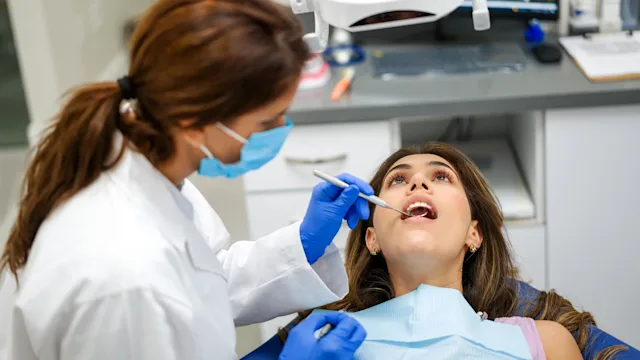
Talk to your dentist about the best options for you. Your dentist can also help determine if the cause of your teeth’s color change is from something more than just coffee.
What are the best ways to prevent coffee from staining teeth?
Removing coffee stains from your teeth can be time consuming and expensive. Fortunately, preventing coffee-stained teeth is much easier:
Use a straw: Consider drinking coffee through a straw. It helps limit the coffee’s contact with your teeth.
Brush after drinking coffee: Brushing within 30 minutes of drinking coffee helps get tannins off your enamel before they have a chance to stick to pores.
Rinse after drinking coffee: If you can’t brush after drinking coffee, try rinsing. While it won’t get as much tannins off your enamel, it’s still better than nothing! You can use mouthwash or plain water.
Chew gum: Chewing gum increases saliva production, which may prevent tannins from sticking to enamel.
Add milk or cream: If you like your coffee black but hate the stains, then you may want to reconsider adding milk or cream. One study found that adding milk to black tea significantly reduced staining. While researchers didn’t study coffee, tea may cause even more stains than coffee because it has more tannins. Another study also showed that black coffee stained dental composites more than coffee with milk or cream.
The bottom line
Coffee can discolor your teeth. Tannins in coffee stick to your enamel, giving your teeth a yellow-brownish color. There are many ways to remove coffee stains from your teeth, including whitening toothpaste, whitening strips, and professional whitening treatments. You may need more than one treatment to completely remove coffee stains from your teeth. It’s possible to prevent at least some coffee staining by using a straw and brushing right after drinking coffee.

Why trust our experts?



References
American Dental Association. (2020). Home oral care.
American Dental Association. (2020). Whitening.
Del Real García, J. F., et al. (2019). In vivo evaluation of the genotoxicity and oxidative damage in individuals exposed to 10% hydrogen peroxide whitening strips. Clinical Oral Investigations.
Dental Health Society. (2021). What is carbamide peroxide teeth whitening?
Epple, M., et al. (2019). A critical review of modern concepts for teeth whitening. Dentistry Journal.
Korać, S., et al. (2021). The effect of bleaching on the basic colour and discoloration susceptibility of dental composites. Acta Medica Academica.
Joiner, A. (2010). Whitening toothpastes: A review of the literature. Journal of Dentistry.
Lee, R. J., et al. (2014). Prevention of tea-induced extrinsic tooth stain. International Journal of Dental Hygiene.
Monteiro, M. J. F., et al. (2019). Evaluation of the genotoxic potential of different delivery methods of at-home bleaching gels: A single-blind, randomized clinical trial. Clinical Oral Investigations.
Naidu, A. S., et al. (2020). Over-the-counter tooth whitening agents: A review of literature. Brazilian Dental Journal.
National Center for Biotechnology Information. (2022). PubChem compound summary for CID 14779, calcium peroxide.
National Center for Complementary and Integrative Health. (2013). Antioxidants: In depth.
National Coffee Association. (2020). NCA releases atlas of American coffee.
Pandey, K. B., et al. (2009). Plant polyphenols as dietary antioxidants in human health and disease. Oxidative Medicine and Cellular Longevity.
Qin, J., et al. (2019). A bio-safety tooth-whitening composite gels with novel phthalimide peroxy caproic acid. Composites Communications.
Sulieman, M., et al. (2004). The effect of hydrogen peroxide concentration on the outcome of tooth whitening: An in vitro study. Journal of Dentistry.
U.S. Forest Service. (n.d.). Tannins.