Key takeaways:
Colon polyps are growths within the colon. Most polyps aren’t dangerous, but some can turn into colon cancer over time.
The best way to know if you have colon polyps is to have a colonoscopy. Preventive screening is particularly important because colon polyps often don’t cause symptoms.
Removal is the definitive treatment for colon polyps, and it can prevent you from developing colon cancer. In many cases, a healthcare professional can remove polyps during a colonoscopy.
Finding out you have a colon polyp can be a scary experience. Fortunately, most colon polyps are noncancerous (benign). But you shouldn't ignore them or delay getting your colonoscopy when recommended. If left untreated, some polyps can turn into cancer over time.
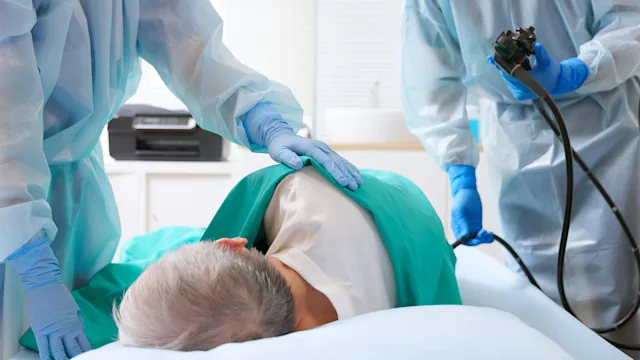
In most cases, a healthcare professional can find and remove colon polyps during a colonoscopy to treat them. This also allows a tissue specialist (pathologist) to carefully inspect the polyp tissue to make sure there’s no cancer.
Let’s take a closer look at what causes colon polyps, how they’re treated, and what happens if a colon polyp happens to be cancerous when it’s removed.
What is a colon polyp?
Colon polyps are abnormal growths of tissue inside the lining of the colon. When they develop, polyps can grow to be different sizes and shapes.
The shape or histology — how the tissue looks under a microscope — will determine the type of polyp you have. A healthcare professional performing your colonoscopy can assess the shape of the polyp at the time of removal. But a pathologist will have to inspect the tissue after it’s been sent to the lab to find out if cancer is present. You’ll get the pathology results of your exam within 1 to 2 weeks of your colonoscopy.
What are the different types of polyps?
There are two major types of polyps based on shape: sessile and pedunculated.
Sessile polyps are flat and grow along the inner lining of the colon wall. Certain types of sessile polyps (serrated) tend to grow in hard-to-reach areas and frequently turn into cancer.
Pedunculated polyps grow on a short stalk, like a mushroom. This can cause these types of polyps to stick out inside the colon. They tend to be easier to see and remove, and so they aren’t as likely to become cancerous.
After examining the polyp under a microscope, the pathologist can further classify the polyp. Polyps may be one of the following:
Adenomatous: Adenomatous polyps, or adenomas, are growths that look much like normal colon tissue. But these polyps are precancerous and should be removed.
Hyperplastic: These polyps are benign growths and don’t typically become cancerous.
What are the causes and risk factors for colon polyps?
Experts aren’t entirely sure what causes colon polyps to grow. But some people are at increased risk. Risk factors for colon polyps include:
Smoking
Heavier body weight
Heavy alcohol intake
High-fat diet (including lots of red meat)
History of inflammatory bowel disease (IBD)
Genetics can also play a role in the growth of colon polyps. If you have a family history of colon polyps, be sure to visit a healthcare professional for a checkup.
What are the symptoms of colon polyps?
Most people with colon polyps have no symptoms and don’t know they have them. But if you have symptoms — like rectal bleeding, blood in your stools, or other bowel changes — you should get a checkup.
What are the signs that polyps may be cancerous?
There may be some clues that it may be cancerous based on how the polyp looks during the colonoscopy. But keep in mind, the only way to know a colon polyp has cancer for sure is to look at it under a microscope.
Here’s what a cancerous polyp may look like and signs that your polyps may be cancerous.
1. Large size
The size of your polyp matters. The bigger the size of the polyp, the greater the chance there’s cancer hiding within the mass, along with an increased risk of death. This is especially true if your polyps are 1 cm in size or larger.
But small polyps can also contain cancer. A microscopic exam is the definitive way to know if there’s cancer.
2. Fixed or depressed
Polyps that are fixed or depressed in the center may be an ominous sign. A fixed colon polyp is one that’s stuck to the lining of the colon and unable to move. It’s more likely to be malignant. A depressed polyp may also have an increased risk of a deeper cancer, even when it’s a smaller size. A fixed or depressed polyp may be difficult (or impossible) to remove during the colonoscopy.
3. Blockage of stool
If a polyp becomes too large, it can cause the colon to have a narrower passageway. This can lead to a blockage of stool. If you have polyps that prevent feces from passing, you may have symptoms of constipation.
4. Bleeding
If the outer lining of the polyp is very fragile, it may bleed. This may be a sign of a cancerous polyp. If you have a bleeding polyp, you’ll either have blood in your stools or tar-like, black stools.
How long does it take for polyps to turn into cancer?
Colon cancer grows quite slowly. Once a polyp develops within the colon, it can take up to 15 years for it to turn into cancer. For this reason, colon cancer is preventable. And once you completely remove the polyp, there’s no risk of it turning into cancer.
After removal, it’s very rare for a polyp to come back. But up to 50% of people develop new polyps. This is why it’s so important that you follow up using the timeline your healthcare team sets.
If you have multiple polyps, you may need to repeat the colonoscopy in 3 to 5 years. This will depend on the pathology of the polyps removed.
How are colon polyps diagnosed?
In most cases, screening for colon polyps is like checking for colon cancer. The current guidelines recommend screening for people between ages 45 and 75. This is if you have an average risk of developing colon cancer. If you have a higher risk for colon cancer, screening may happen sooner.
There are several options for screening techniques. Stool studies can check for bleeding that may be due to colon cancer or polyps. Tests can also treat and remove colon polyps or cancers. The most common screening methods include:
Stool-DNA (FIT-DNA): This test picks up blood or abnormal DNA that could be due to a large polyp or cancerous growth. You may do this screening every 3 years.
Fecal immunochemical (FIT) test: A FIT test uses antibodies to detect blood in the stool. It’s a yearly screening.
Fecal occult blood test: This test uses chemicals to detect blood in the stool. It’s usually done yearly.
Flexible sigmoidoscopy: This test uses a thin camera to look at the lower part of the colon and rectum. It’s performed every 5 to 10 years with a yearly stool test.
Colonoscopy: This looks at every part of the colon and rectum and is the gold standard for diagnosing colon polyps and colon cancer. It’s done every 10 years, or more often if necessary.
Your healthcare team will help you figure out which test is best for you. Your medical history and risk factors will help to guide this decision.
What options are available for colon polyp treatment?
Removal is the definitive treatment for colon polyps. A colonoscopy is the best test for identifying colon polyps. In most cases, a healthcare professional can remove the polyps during the procedure. If your polyps are big, you may be referred to a surgeon to discuss polyp removal using a bigger and more invasive procedure.
If your polyps are found to be pre-cancerous, you’ll also likely need to have more frequent colonoscopies. This will give your healthcare team the chance to see if new polyps are forming and remove them early before they develop into cancerous polyps.
What happens if the colon polyps removed are cancerous?
If you have colon polyps removed that turn out to be cancerous, you’ll often need further testing to figure out if cancer has spread to other areas of the body. You’ll also need to see a colorectal cancer surgeon, who’ll determine if further treatment or surgery is needed. They’ll also decide how often you need to get a follow-up colonoscopy, based on the type of cancerous polyp that was removed.
What happens if you don’t treat polyps?
If you don’t remove your colon polyps in a timely manner, you run the risk of complications. Leaving the masses in place may give precancerous polyps time to turn into cancer. Other risks include bleeding polyps or large polyps that block your stool from passing.
How do you prevent colon polyps?
There’s no way to completely prevent colon polyps. But research shows that you can reduce your risk by following some healthy behaviors such as:
Eating plenty of high-fiber foods like fruits, vegetables, legumes, and whole grains
Avoiding processed meats like bacon, sausages, and anything with chemical additives
Limiting red meat
Maintaining a healthy weight
Not smoking tobacco
It’s also important to stay up-to-date on colon screenings. If a polyp is removed early, you have the best chance of a good outcome.
Frequently asked questions
The most likely way to stop polyps from growing in the colon is to remove them. Most polyps that are seen on a colonoscopy should be removed so that they can’t continue to grow.
A 30 mm polyp is considered to be a large polyp. Polyps over 20 mm are more likely to be cancerous. A 30 mm polyp carries a higher risk of being cancerous. Also, the large size can block the colon.
You shouldn’t be worried if polyps are found during your colonoscopy. About half of people over age 50 have at least 1 polyp found by a colonoscopy. Only about 5% of those are found to be cancerous. Your surgeon will help you understand your risk based on the size, your risk factors, and what your polyp looks like under the microscope.
The most likely way to stop polyps from growing in the colon is to remove them. Most polyps that are seen on a colonoscopy should be removed so that they can’t continue to grow.
A 30 mm polyp is considered to be a large polyp. Polyps over 20 mm are more likely to be cancerous. A 30 mm polyp carries a higher risk of being cancerous. Also, the large size can block the colon.
You shouldn’t be worried if polyps are found during your colonoscopy. About half of people over age 50 have at least 1 polyp found by a colonoscopy. Only about 5% of those are found to be cancerous. Your surgeon will help you understand your risk based on the size, your risk factors, and what your polyp looks like under the microscope.
The bottom line
While colon polyps can cause worry, most of the time they’re benign and not dangerous. But some polyps do have the ability to become cancerous over time. They also rarely have symptoms. That’s why it’s so important to have a colonoscopy if you meet the screening requirements. If you’re concerned you may be at risk for polyps, talk to a healthcare professional for further guidance.

Why trust our experts?




References
American Cancer Society. (2023). Your colon or rectal pathology report: Polyps (including serrated adenomas).
American Cancer Society. (2024). American Cancer Society Guideline for colorectal cancer screening.
American Cancer Society. (2024). Can colorectal polyps and cancer be found early?
American Cancer Society. (2025). What to know if polyps were found during your colonoscopy.
American College of Gastroenterology. (2010). Colon polyps.
American Society for Gastrointestinal Endoscopy. (n.d.). Polyps and their treatment.
American Society of Colon and Rectal Surgeons. (n.d.). Polyps of the colon and rectum.
Centers for Disease Control and Prevention. (2025). Screening for colorectal cancer.
Hao, Y., et al. (2020). Risk factors for recurrent colorectal polyps. Gut and Liver.
Loke, S. S., et al. (2022). Factors associated with colorectal polyps in middle-aged and elderly populations. International Journal of Environmental Research and Public Health.
Markarian, E., et al. (2021). Large polyps: Pearls for the referring and receiving endoscopist. World Journal of Gastrointestinal Endoscopy.
Meseeha, M., et al. (2022). Colon polyps. StatPearls.
National Institute of Diabetes and Digestive and Kidney Diseases. (2017). Eating, diet, & nutrition for colon polyps.
National Institute of Diabetes and Digestive and Kidney Diseases. (2017). Symptoms and causes of colon polyps.
National Institute of Diabetes and Digestive and Kidney Diseases. (2017). Treatment for colon polyps.
Shaukat, A., et al. (2020). Endoscopic recognition and management strategies for malignant colorectal polyps: Recommendations of the US Multi-Society Task Force on colorectal cancer. Gastroenterology.
Zessner-Spitzenberg, J., et al. (2024). Polyp size is associated with colorectal cancer death across histologic polyp subtypes: A retrospective study of a screening colonoscopy registry. Endoscopy.