Key takeaways:
Changes in stool shape, color, or frequency can sometimes be a sign of colon cancer. But most people with colon cancer don’t have symptoms.
Screening for colon cancer is important, even if you don’t have changes in your stool. Talk with your primary care provider about when and how you should get screened.
In its early stages, colon cancer is treatable. This is why early detection — through regular screening or at the first sign of symptoms — is so important.
Changes in your stool (poop) can sometimes be the first sign of colon cancer. Colon cancer is one of the most common causes of death from cancer in the U.S. But it’s treatable when caught early.
Most people don’t have stool changes in early stages of colon cancer. In fact, early colon cancer doesn’t cause any symptoms, which is why screening is so important. But it’s still good to know what to look for and what to do if you notice any symptoms.
What stool changes may be a sign of colon cancer?
Colon cancer can affect your colon in different ways. It can lead to narrowing of your colon, bleeding, and make it harder for your body to absorb nutrients. Sometimes, these changes can affect your stool, leading to:
Stool that’s thin (like a pencil), flat, or ribbon-like
New diarrhea (loose stools) or constipation that doesn’t go away
Changes in how often you have a bowel movement
Keep in mind that having these changes doesn’t automatically mean you have colon cancer. But if you develop any of them, it’s important to notify your healthcare professional so they can diagnose the underlying cause.
Other symptoms associated with colon cancer
Stool changes aren’t the only possible symptoms of colon cancer. Here are some other signs and symptoms to watch out for:
Unintentional weight loss
Abdominal pain
Fatigue
It’s important to know that most people with colon cancer don’t have symptoms at first. People can go a long time without knowing cancer is in their colon. This is why screening for colon cancer is so important.
How do you screen for colon cancer?
For most people, colon cancer screening should start at the age of 45. There are many different screening tests available, including:
Fecal immunochemical test (FIT) test: Checks for blood in your stool
DNA stool test: Checks your stool for DNA (genetic material) from cancerous or precancerous cells
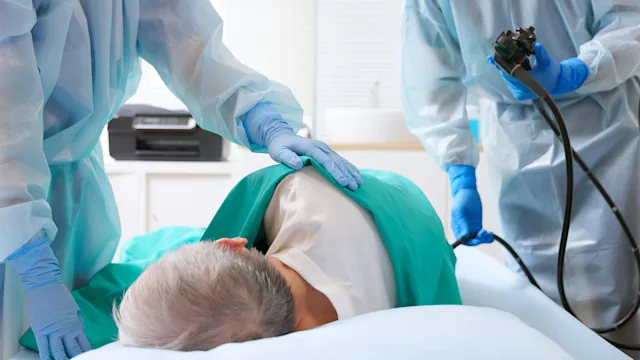
Colonoscopy: A procedure that uses a long, flexible tube with a camera to look inside your entire colon (requires bowel prep and sedation)
Sigmoidoscopy: Similar to a colonoscopy, but only looks at the bottom of your colon (sedation usually isn’t required)
Virtual colonoscopy (or CT colonography): Uses a CT scan to take pictures of the colon to see if there are any unusual changes that may suggest cancer
Your doctor can help you find the best option for you based on your symptoms, medical history, and risk factors (if any).
Do only people with stool changes need to be checked for colon cancer?
Definitely not. People with early colon cancer don’t usually have stool changes or any other symptoms. This is why it’s important to get the recommended colon cancer screening starting at age 45 (or earlier if you have risk factors).
You shouldn’t wait until you have symptoms to get screened. But if you notice stool changes or other symptoms, make sure you get medical attention right away.
Do only people with a family history get colon cancer?
No. Colon cancer can happen to anyone. Over 75% of all new colon cancers happen in people who don’t have a family history of it. If you do have a family history of colon cancer, you may need to start screening for colon cancer before the age of 45. And you may need to do it more frequently.
Which other conditions can cause changes to the stool like colon cancer?
There are other conditions that can cause bloody stool or changes in the size or frequency of stool. These include:
Infection (like Clostridiodes difficile (C. diff) colitis)
Inflammatory bowel disease (like Crohn’s disease or ulcerative colitis)
It can sometimes be hard to know what’s causing stool changes. If you’re having symptoms, speak with your healthcare professional about appropriate testing.
When to get medical attention for stool changes
If you have any changes in your stool or bowel habits, you should talk to your healthcare professional. They’ll use your medical history, a physical exam, and lab tests to look for the source of the changes. If your symptoms are concerning for colon cancer or you have risk factors, they may recommend a screening test.
Frequently asked questions
Stool tests for colon cancer look for cancer DNA or blood in your stool. But they aren't as accurate (FIT 73% and FIT-DNA 92%) for detecting colon cancer as a colonoscopy (95%). And they may even provide false-positive results. This is when the stool test says you have possible colon cancer, but you don’t. Newer versions of stool DNA tests may have fewer false positive results, but they’re still possible. It’s always a good idea to discuss testing options and results with your healthcare team.
Yes, federal law requires that both Medicare and private insurance plans cover colon cancer screening, but Medicaid coverage varies by state. Private insurance may not cover all the types of screenings for colon cancer. For example, it may cover a colonoscopy but not a home stool DNA test. Consult with your insurance plan and physician to see what the best option is for you.
If you don’t have insurance, there may be some free colon cancer screening programs in your area, and various financial assistance programs online. If you don’t have access to screening services, you may also be eligible for a free at-home screening kit.
Stool tests for colon cancer look for cancer DNA or blood in your stool. But they aren't as accurate (FIT 73% and FIT-DNA 92%) for detecting colon cancer as a colonoscopy (95%). And they may even provide false-positive results. This is when the stool test says you have possible colon cancer, but you don’t. Newer versions of stool DNA tests may have fewer false positive results, but they’re still possible. It’s always a good idea to discuss testing options and results with your healthcare team.
Yes, federal law requires that both Medicare and private insurance plans cover colon cancer screening, but Medicaid coverage varies by state. Private insurance may not cover all the types of screenings for colon cancer. For example, it may cover a colonoscopy but not a home stool DNA test. Consult with your insurance plan and physician to see what the best option is for you.
If you don’t have insurance, there may be some free colon cancer screening programs in your area, and various financial assistance programs online. If you don’t have access to screening services, you may also be eligible for a free at-home screening kit.
The bottom line
People with colon cancer don’t usually have any symptoms. But changes in the shape, texture, or color of your stool may be a sign that something is going on. Other possible symptoms include unexplained weight loss, abdominal pain, or new diarrhea or constipation that doesn’t go away. If you have changes in your stool or bowel habits, talk to your healthcare professional so they can look for a cause. Early detection of colon cancer saves lives.

Why trust our experts?




References
American Cancer Society. (2024). American Cancer Society guideline for colorectal cancer screening.
American Cancer Society. (2024). Expanding access in cancer care: American Cancer Society and color health to provide free at-home colorectal cancer screening in underserved rural communities.
American Cancer Society. (2025). Colorectal cancer risk factors.
American Cancer Society. (2025). Insurance coverage for colorectal cancer screening.
American Society of Colon & Rectal Surgeons. (n.d). Myths about colorectal cancer.
Colorectal Cancer Alliance. (n.d.). Financial assistance.
Ebell, M. H., et al. (2014). Accuracy of fecal DNA and fecal immunochemical test for colorectal cancer detection. American Family Physician.
Kavalukas, S. (n.d.). Colonoscopy versus FIT-Fecal DNA for colon cancer screening. American College of Surgeons.
OSF Healthcare. (2025). What does colon cancer in stool look like?
Schoenfeld, P. (2024). Multi-target stool DNA test for CRC screening: How accurate is the new version? Evidence-Based GI: An ACG Publication.
UC Davis Health. (2024). Colonoscopy vs. at-home colon cancer screening: Which is best for you?