Key takeaways:
Detecting cancer early makes people more likely to survive the disease.
The American Cancer Society (ACS) recommends regular screenings for certain conditions, even without symptoms. People at higher risk may need to be screened more frequently or in a variety of ways.
Free cancer screenings take place at state health departments, local health centers, free clinics, and other locations.
According to the CDC, cancer causes 1 in 4 deaths in the U.S. Of the different types, lung, colorectal, and pancreatic cancers have the highest mortality rates.
Detecting cancer early can make a major difference in the success of your treatment. For instance, 5-year survival rates for breast cancer are 99% for cancer found in the localized stage, 86% for regional stage, and 29% for distant stage.
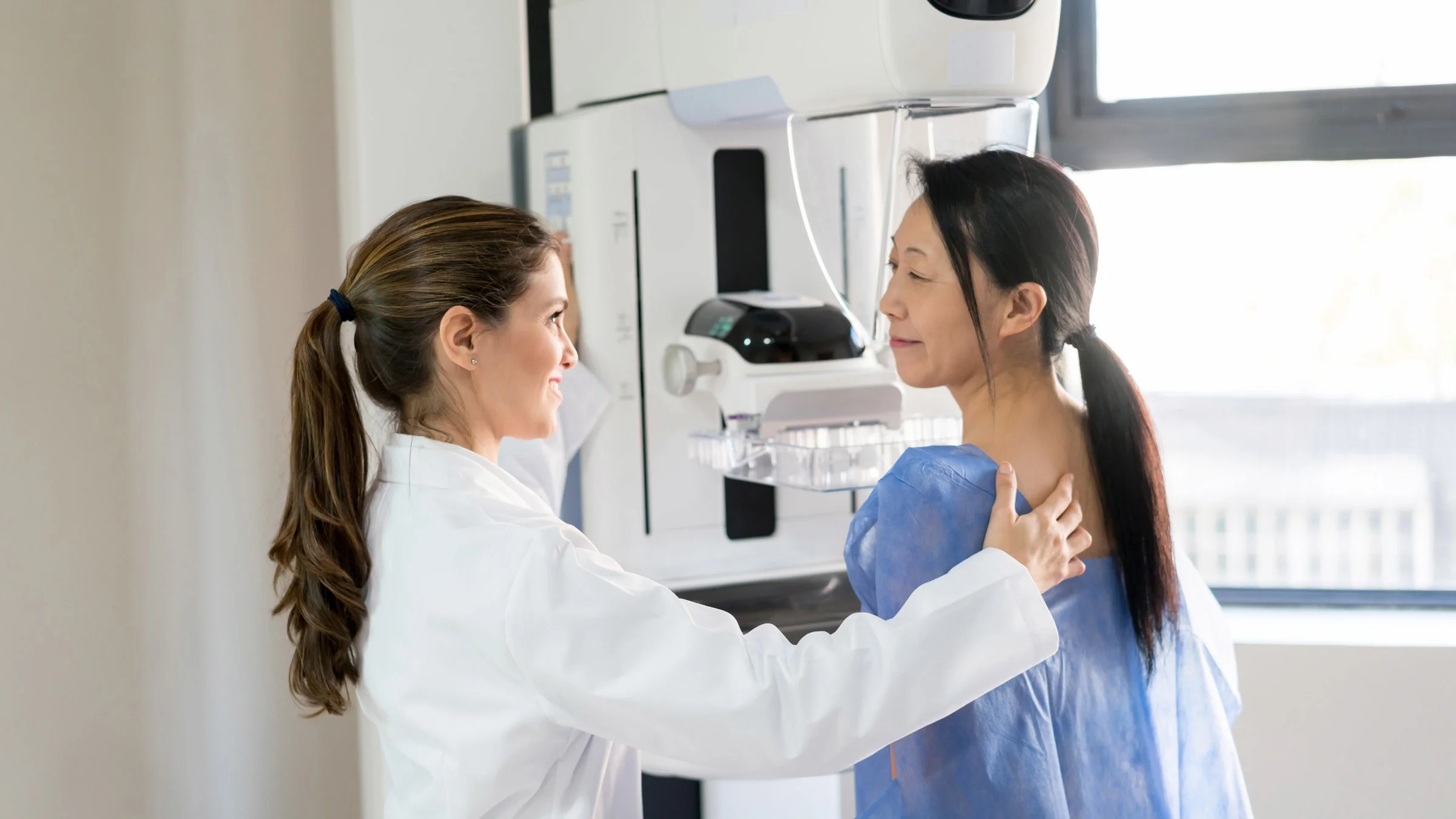
Screening mammograms are typically the first imaging tools used to detect breast cancer. Typically, Medicare and health plans governed by the Affordable Care Act fully cover annual screening mammograms as preventive care. So there is often no out-of-pocket cost if you have health coverage.
Diagnostic mammograms are subsequent tests that a healthcare provider orders if a patient has an abnormal result on their screening mammogram. In some cases, a person may need to have an ultrasound in addition to a diagnostic mammogram. The extra tests raise costs, especially if you’re uninsured or underinsured.
The Susan G. Komen Foundation looked at price differences for breast imaging in various states. Below is a snapshot of Texas-based self-reported sample prices from 2019.
| Status | Screening mammogram | Diagnostic mammogram | Breast ultrasound | |
|---|---|---|---|---|
| Without insurance | $65, $170 | $638, $1,046 | $140, $250, $550 | |
| On Medicare | No cost if prescribed | 20% of the Medicare-approved amount | 20% of the Medicare-approved amount | |
| On Medicaid | No cost | No cost | No cost | |
| With private insurance | BCBS PPO | Typically no cost for insured patients over 40 | $336, $836 | $550 |
| Cigna PPO | $430 | $350 | ||
| Other | $360 | $210 | ||
But if you’re one of the millions of Americans without health insurance, a mammogram may not be affordable. And being screened for multiple types of cancer would get expensive.
Fortunately, many health organizations offer free or low-cost screenings for several common cancers. In this article, we’ll help you find those screenings in your community.
How do I know if I need cancer screening?
Cancers don’t always have symptoms. But you may want to get checked out if you have one or more of these seven cancer warning signs:
1. Changes in bowel or bladder habits
2. A sore throat that won’t heal
3. Unusual bleeding or discharge
4. A lump or thickening in the breast or other body part
5. Persistent indigestion or trouble swallowing
6. Any change in a mole or wart
7. Nagging cough or hoarseness
If you are experiencing these or other worrisome symptoms, ask your local health department about a free or low-cost cancer screening. If you don’t have a regular healthcare provider, look into area health centers. Many charge patients for care according to a sliding-fee scale.
Which types of cancer should I be screened for?
Even if you have no symptoms, the ACS recommends regular screenings for early detection and treatment of:
These resources can direct you to free or low-cost screenings near you:
For breast cancer: Free Mammograms and the CDC’s National Breast and Cervical Cancer Early Detection Program (NBCCEDP)
For cervical cancer: NBCCEDP and Planned Parenthood
For colorectal cancer: the CDC’s Colorectal Cancer Control Program (CRCCP) and the Colorectal Cancer Alliance
When should you or family members start cancer screenings? How often should you have them? The answers to these questions depend on your age and risk level for various cancers. (For example, if you spend a lot of time outdoors, you may benefit from a free skin cancer screening.)
If possible, talk with a healthcare provider about the potential benefits, risks, or uncertainties associated with testing. False positives and false negatives do occur. Some cancer screenings — such as those for prostate and lung cancer — are recommended only if a healthcare provider feels they’re necessary.
Where do free cancer screenings take place?
Free cancer screenings are held at various community locations, including:
Community health centers (CHCs)
Migrant health centers
Healthcare facilities for the homeless
Health centers for residents of public housing
Rural health clinics (RHCs)
Hospitals or clinics in your area may also sponsor events that include free cancer screenings.
How long will cancer screenings and results take?
This table shows the type of test typically used to screen for certain cancers,, how long the test takes, and how long it should take to get your results back.
| Type of cancer | Screening method | Length of test | Wait for results |
|---|---|---|---|
| Cervical cancer | Pap smear | 10 to 20 minutes | Up to 3 weeks |
| Breast cancer | Mammogram | 20 minutes | Up to 10 days |
| Prostate cancer | Blood test or digital rectal exam | A few minutes | At least 1 to 3 days if biopsied |
| Skin cancer | Visual exam | 10 minutes | 7 to 10 days if biopsied |
| Colon cancer | Colonoscopy | 30 to 60 minutes | Up to 2 weeks |
By themselves, cancer screenings don’t enable healthcare providers to diagnose cancer. Rather, they indicate whether you need diagnostic tests. For example, healthcare providers may decide to follow up an abnormal Pap test with a colposcopy, an inconclusive breast screening with more mammogram images or an ultrasound, or an unusual prostate exam with a biopsy.
If the diagnostic tests come back positive, a provider may request more tests, using tools like CAT scans and MRIs, to determine the cancer’s spread and stage. Speak to your healthcare provider to understand your results, treatment options, and best next steps. Look online for emotional and financial support resources. If you don’t have health insurance, you may be able to receive free treatment through your hospital’s charity care program.
The bottom line
Cancer screenings are important for early detection and successful treatment. Which cancer screenings you should have and when depend on your sex, age, and risk factors. If you don’t have insurance, you can get free cancer screenings through many locally available programs.
Co-contributor: Carrie Weiner Campbell

Why trust our experts?



References
American Academy of Dermatology Association. (n.d.). Find a free skin cancer screening.
American Cancer Society. (n.d.). Cancer screening guidelines by age.
American Cancer Society. (2021). American Cancer Society guidelines for the early detection of cancer.
American Cancer Society. (2021). How to get screened for cancer if you don’t have a doctor.
American Cancer Society. (2022). Survival rates for breast cancer.
Centers for Disease Control and Prevention. (2021). Cancer statistics at a glance.
Centers for Disease Control and Prevention. (2021). Find a screening program near you.
Centers for Disease Control and Prevention. (2021). How is prostate cancer diagnosed?
Centers for Disease Control and Prevention. (2021). The CRCCP award recipients.
Centers for Medicare & Medicaid Services. (2017). CASPER report 0006D name and address listing for rural health clinic based on current survey.
College of American Pathologists Foundation. (n.d.). See, test & treat.
Free Mammograms. (n.d.). Home.
Health Resources and Services Administration. (n.d.). Find a health center.
Kaiser Permanente. (2015). Cancer warning signals.
National Association of County and City Health Officials. (n.d.). Directory of local health departments.
National Cancer Institute. (2020). Cancer screening overview (PDQ®)–patient version.
Planned Parenthood. (n.d.). Women’s services.
Susan G. Komen. (2019). Understanding cost & coverage issues with diagnostic breast imaging.
The National Association of Free & Charitable Clinics. (n.d.). Find a clinic.
USA.gov. (n.d.). State health departments.
ZERO—The End of Prostate Cancer. (n.d.). Test centers.