Key takeaways:
Tonsil stones (tonsilloliths) are white or yellow deposits that can develop on the tonsils. They can cause bad breath (halitosis), sore throat, and discomfort with swallowing.
Most tonsil stones fall out on their own, but there are home remedies that can help speed up the process. You can gargle with warm salt water or apple cider vinegar to get rid of tonsil stones. Rinsing with alcohol-free mouthwash can also help remove tonsil stones.
Don’t try to dig out your tonsil stone with anything sharp or pointy. This can cause serious injury and bleeding.
Tonsil stones (tonsilloliths) are white or yellowish deposits that build up in the folds of your tonsils. They’re made up of a mix of old cells, minerals from saliva, and bacteria. Tonsil stones start off soft and then harden over time as more material builds up.
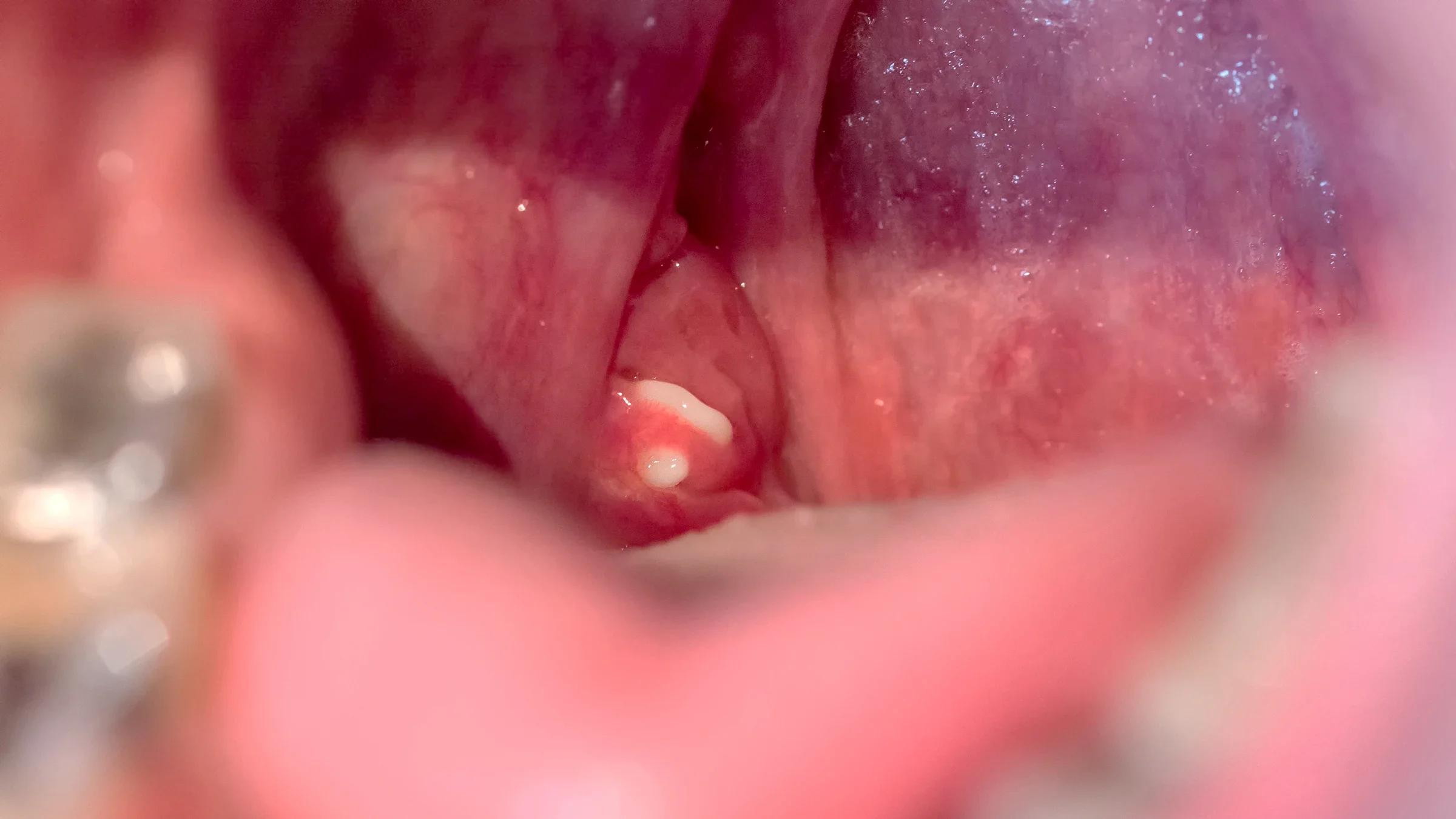
Most tonsil stones don’t cause any symptoms, and people don’t even realize they have them. But, as tonsil stones get bigger, they may cause bad breath and discomfort with swallowing. Some people also develop a feeling like something is caught in their throat.
Most people want to get rid of bothersome tonsil stones as fast as possible. The good news is that most tonsil stones fall out on their own. But, if you have a stubborn stone that won’t come out, there are ways to speed up the process at home
Search and compare options
Here are five at-home remedies to get rid of tonsil stones that you can try right now.
1. Alcohol-free mouthwash
Twice-daily gargles with mouthwash can help dislodge your tonsil stone. Mouthwash also helps kill the bacteria living on and around your stone. Removing this bacteria stops your stone from growing and can help with bad breath. It may also stop other stones from forming in the future.
Make sure to use an alcohol-free mouthwash. Most mouthwashes contain high levels of ethanol. Concentrated ethanol is a powerful antiseptic, but it also dries out the back of your throat. This can cause your stones to get harder, and it can also encourage new stones to develop.
Instead, look for mouthwash that’s alcohol-free and contains one these active ingredients:
Hydrogen peroxide
Sodium perborate
Cetylpyridinium chloride
These active ingredients kill bacteria and keep them from creating tonsil stones without drying out your throat.

How to prevent tonsil stones: You can avoid tonsil stones by brushing your teeth daily and staying hydrated. Learn more prevention strategies, here.
Do saltwater gargles really work? Yes, gargling with salt water can help ease pain from a sore throat and lessen inflammation and bacteria.
What a white tongue means: Your tongue can turn white for different reasons, but it’s often from a buildup of bacteria on your tongue’s surface.
2. Warm saltwater gargles
Saltwater gargles made with warm water can help dislodge your tonsil stone. They can also soothe inflammation your stone may be causing along your tonsils.
To make saltwater gargles:
Add 1 tsp of regular table salt to 1 cup of warm water.
Stir the salt with a spoon until it dissolves completely.
Take a mouthful of your salty solution and tip your head back, gargle for 10 seconds, and then spit out the water.
Repeat the process until you’ve used up most of the cup. This should take you about 5 minutes.
- Promethazine DMGeneric Pherazine DM
- Bromfed DMBrompheniramine/Dextromethorphan/Pseudoephedrine
- HyosyneHyoscyamine
You can use saltwater gargles as often as you’d like throughout the day. But try to use them at least 2 or 3 times a day.
3. Water flosser
A water flosser is a device that creates a pulsing stream of water. Water flossers, like a Waterpik, are a popular alternative to regular string floss. But they have other uses too. If you have a water flosser at home, you can use it to encourage your tonsil stone to pop out.
Here’s how to do it:
Aim your water flosser toward your tonsil stone and turn on the water for about 20 seconds.
Start out on the lowest possible setting.
If after 20 seconds, you haven’t had any success, stop and try again in a few minutes.
It also helps to lean over a sink while you’re irrigating. That way, if you dislodge the stone, it will fall forward into your mouth or the sink instead of back into your throat.
If you don’t own a water flosser, you can try a low-pressure manual irrigator or irrigation kit. These look like a small tube that you can fill with water. Then you squeeze the tube and the water comes out of the tip. You can buy these products at your local pharmacy or online. You can also use a syringe with a curved tip.
Irrigators and water flossers work best on soft, small tonsil stones. Larger and harder stones will be more difficult to move.
4. Apple cider vinegar rinse
Apple cider vinegar is a popular natural remedy and health supplement. It may also help dissolve your tonsil stone. The acid in apple cider vinegar can help dissolve the minerals around a hard tonsil stone, making it softer and more likely to pop out on its own.
To make an apple cider vinegar rinse:
Stir 1 tbsp of apple cider vinegar into a cup of warm water.
Take a mouthful of your rinse, tilt your head back, and gargle for 10 to 15 seconds and then spit it out.
Repeat this process 5 to 6 times.
It’s best to limit apple cider vinegar rinses to twice a day so you don’t irritate the back of your throat.
5. Coughing
Sometimes, coughing is enough to dislodge your tonsil stone. Since you already have everything you need for this home remedy, there’s no downside to giving it a try.
Cough 6 to 10 times in a row and see if that’s enough to bring out your tonsil stone. If you notice that your stone moved but isn’t completely out, try another couple of coughs. Coughing doesn’t work for everyone. But when it does work, it’s safe and free!
What causes tonsil stones?
Tonsil stones develop when bits of food, dead cells, and oral flora (good bacteria that live in your mouth) get stuck in tonsil crevices and harden.
Food, dead cells, and bacteria can be found in everyone’s mouth. But not everyone gets tonsil stones. Scientists still don’t know why some people develop tonsil stones and others don’t.
There’s some evidence that people who develop frequent tonsil infections or inflammation (tonsillitis) may be at higher risk for developing tonsil stones. Frequent infection and inflammation can make tonsil crevices bigger. This makes it easier for debris to get trapped inside and develop into tonsil stones.
Tonsil stones develop when saliva gets stuck or pools on the tonsils. This can happen if your salivary ducts — the tubes that connect your salivary glands to the inside of your mouth — open closer to your tonsils.
How to prevent tonsil stones
Tonsil stones form when bacteria or food pieces build up in the tonsils. And certain habits can make this more likely, including smoking and drinking alcohol.
Here are some home remedies that can help stop tonsil stones from coming back:
Brush and floss daily.
Use a tongue scraper daily.
Rinse with alcohol-free mouthwash.
Gargle with salt water.
Drink plenty of water to stay hydrated during the day.
Avoid alcohol and smoking.
Getting treatment for tonsillitis.
When should you see a healthcare professional about tonsil stones?
Tonsil stones rarely cause any health issues. And they usually go away on their own. But there are times when you should see a healthcare professional about your tonsil stone.
Get medical attention if your stone is causing you pain or trouble swallowing and you can’t get it out on your own. You should also see a healthcare professional right away if you think you have a tonsil infection (tonsillitis) along with your tonsil stone.
A healthcare professional may recommend antibiotics if they suspect you have a tonsil infection. They may also prescribe pain medication to keep you comfortable.
Your primary care provider may recommend that you see an otolaryngologist — an ear, nose, and throat doctor (ENT). They can remove your tonsil stone with advanced tools, like ultrasound, laser, or surgery.
Frequently asked questions
Recurrent tonsil stones can happen if your mouth is consistently dry. Smoking, dehydration, and alcohol use can all play a role in how much saliva you make.
It’s a good idea to see a healthcare professional if you follow the prevention strategies listed above and you continue to get tonsil stones. They can help you figure out the cause and recommend treatment options.
Yes, many tonsil stones go away on their own. So you may not even know that you have one before it goes away.
You shouldn’t try to squeeze a tonsil stone. Using strong force or a sharp tool can lead to bleeding and injury. If you have a stubborn tonsil stone that’s bothering you, connect with a healthcare professional for guidance on next steps.
Tonsil stones aren’t typically painful. Large stones may cause discomfort with swallowing or a feeling like something is caught in your throat. Occasionally, large stones can cause irritation in your tonsils, which may cause sore throat or throat discomfort. Seek care if you have pain from tonsil stones. You may have another condition — like tonsillitis — that’s causing your pain. Your healthcare team can also help remove the stone that’s causing discomfort.
Recurrent tonsil stones can happen if your mouth is consistently dry. Smoking, dehydration, and alcohol use can all play a role in how much saliva you make.
It’s a good idea to see a healthcare professional if you follow the prevention strategies listed above and you continue to get tonsil stones. They can help you figure out the cause and recommend treatment options.
Yes, many tonsil stones go away on their own. So you may not even know that you have one before it goes away.
You shouldn’t try to squeeze a tonsil stone. Using strong force or a sharp tool can lead to bleeding and injury. If you have a stubborn tonsil stone that’s bothering you, connect with a healthcare professional for guidance on next steps.
Tonsil stones aren’t typically painful. Large stones may cause discomfort with swallowing or a feeling like something is caught in your throat. Occasionally, large stones can cause irritation in your tonsils, which may cause sore throat or throat discomfort. Seek care if you have pain from tonsil stones. You may have another condition — like tonsillitis — that’s causing your pain. Your healthcare team can also help remove the stone that’s causing discomfort.
The bottom line
Tonsil stones (tonsilloliths) are white or yellowish deposits that develop on the tonsils. Tonsil stones are usually harmless. But they can cause symptoms like bad breath, discomfort with swallowing, and a feeling like something’s caught in your throat. Most tonsil stones will fall out or go away on their own. But you can also treat tonsil stones at home with things like warm saltwater gargles, apple cider vinegar rinses, and alcohol-free mouthwash rinses.
Sometimes, tonsil stones also fall out if you cough. Seek medical care if you have a stone that won’t come out. There are other treatment options they can try to get your tonsil stone out. Don’t try to dig out your tonsil stone with a sharp object. This can lead to serious injury and infections.

Why trust our experts?



References
Alfayez, A., et al. (2018). A giant tonsillolith. Saudi Medical Journal.
Da Conceição, M. D., et al. (2015). Evaluation of a new mouthwash on caseous formation. Brazilian Journal of Otorhinolaryngology.
De A. Werner, C. W., et al. (2009). Are alcohol containing mouthwashes safe? British Dental Journal.
Ferguson, M., et al. (2014). Halitosis and the tonsils: A review of management. Otolaryngology, Head and Neck Surgery.
Government of Alberta. (2024). Tonsil stones: Care instructions.
Perkl, I., et al. (2015). Large tonsillolith associated with the accessory duct of the ipsilateral submandibular gland: Support for saliva stasis hypothesis. Dento Maxillo Facial Radiology.
Smith, K. L., et al. (2023). Tonsillitis and tonsilloliths: Diagnosis and management. American Family Physician.
Togni, L., et al. (2019). Unusual conditions impairing saliva secretion: Developmental anomalies of salivary glands. Frontiers in Physiology.