Key takeaways:
A sun allergy causes a rash that can be itchy and painful after exposure to the sun.
Sunlight can also trigger a rash in people who have photosensitivity from medical conditions or medications.
People with sun allergies and photosensitivity can protect their skin by putting on sunscreen, hats, and protective clothing when they’re outdoors.
Some people can’t wait to get out into the sunshine and soak up vitamin D, especially after a long winter. But for people with a sun allergy, a sunny day isn’t always a cause for celebration. Painful, itchy rashes can start within minutes of sun exposure and can last for days.
Here’s what you should know about sun allergies and how to manage them so you can still enjoy your time outdoors.
What causes a sun allergy?
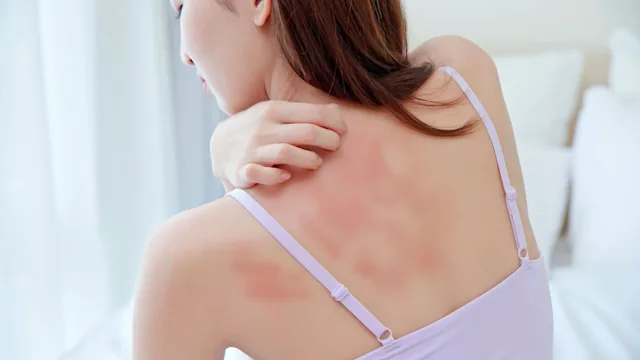
A sun allergy is not a true allergy to the sun. Rather, it’s a type of immune reaction that’s triggered by ultraviolet (UV) light. A sun allergy can lead to an itchy or painful rash that develops after being in the sun.
Search and compare options
There are a few different types of sun allergy. Here’s a closer look at some of the more common ones.
Types of sun allergies
Polymorphous light eruption (PMLE)
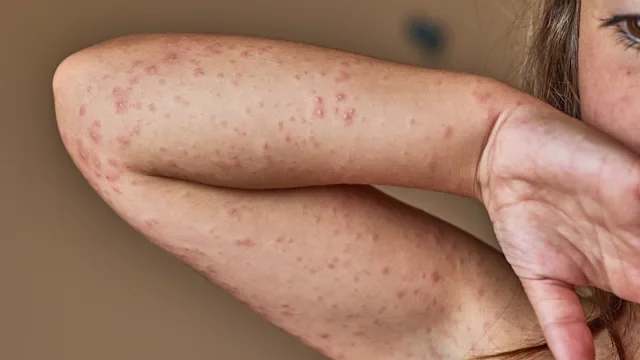
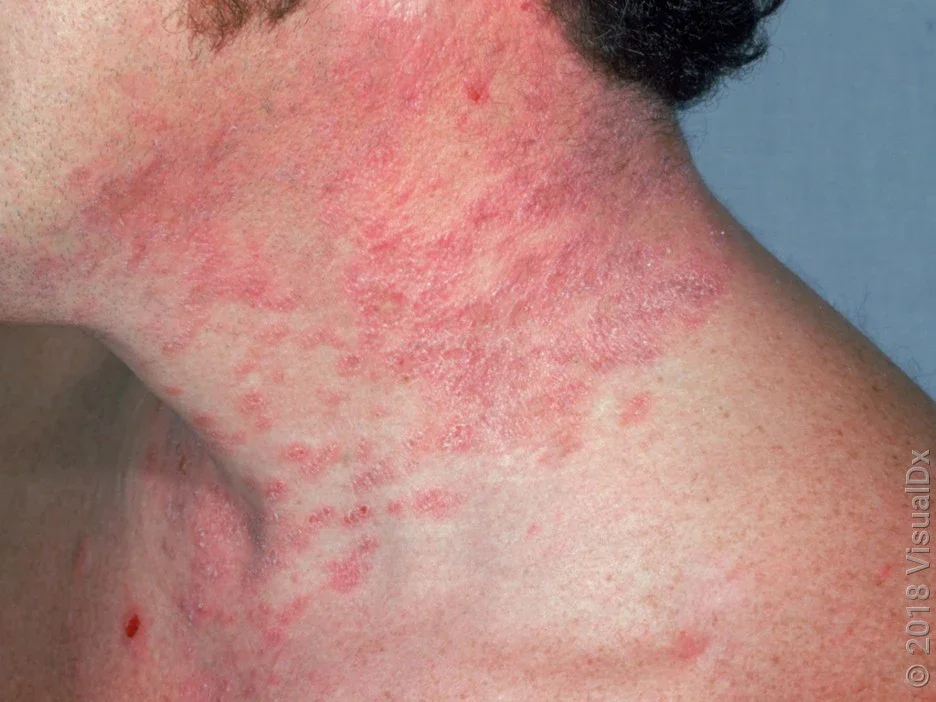
Polymorphous light eruption (PMLE) is the most common type of sun allergy, affecting up to 20% of people. Sometimes people call it “sun poisoning.”
PMLE can happen in any skin tone and at any age, but it’s most common in fairer skin and women between 20 and 40 years old. It usually starts hours to a couple of days after sun exposure and is most common during spring months (March to June).
PMLE usually affects both sides of the body and is common on the:
Arms
Neck
Upper chest
Lower legs
Solar urticaria
Solar urticaria is an uncommon type of sun allergy. It causes you to develop hives a few minutes after you’re exposed to the sun or UV light. People of any age can get solar urticaria, but the average age to develop it is around 35 years old. Solar urticaria may show up on areas of skin that are intermittently exposed to the sun (like your back), but it doesn’t usually appear on skin that’s consistently exposed to the sun (like your face).
Actinic prurigo
Actinic prurigo is a very itchy rash that develops hours to days after sun exposure. It can affect all skin tones, but it’s most common in people of Latin American and American Indian descent. It can affect people of all ages, but 30% of the time it develops in children, especially before puberty.
Actinic prurigo is common on the following areas of the body:
Face (like the cheeks, nose, forehead, and lips)
Earlobes
Neck and chest
Conjunctiva of the eye
Symptoms of a sun allergy
People with a sun allergy have a sun intolerance that causes an itchy or painful rash. Depending on the type of allergy, you may experience any of the following on skin that’s exposed to the sun:
Crops of tiny bumps that are pink or red (in fairer skin) or skin colored (in darker skin tones)
Fluid-filled blisters that can crust over
Dry, discolored patches
Pink, red, or skin-colored smooth bumps (welts)
When solar urticaria affects a large area of skin, you may also notice some of the following symptoms:
Swelling of the eyes and mouth
Nausea
Feeling faint
Trouble breathing
Anaphylaxis, a life-threatening allergic reaction (this is very rare)
What does a sun allergy rash look like?
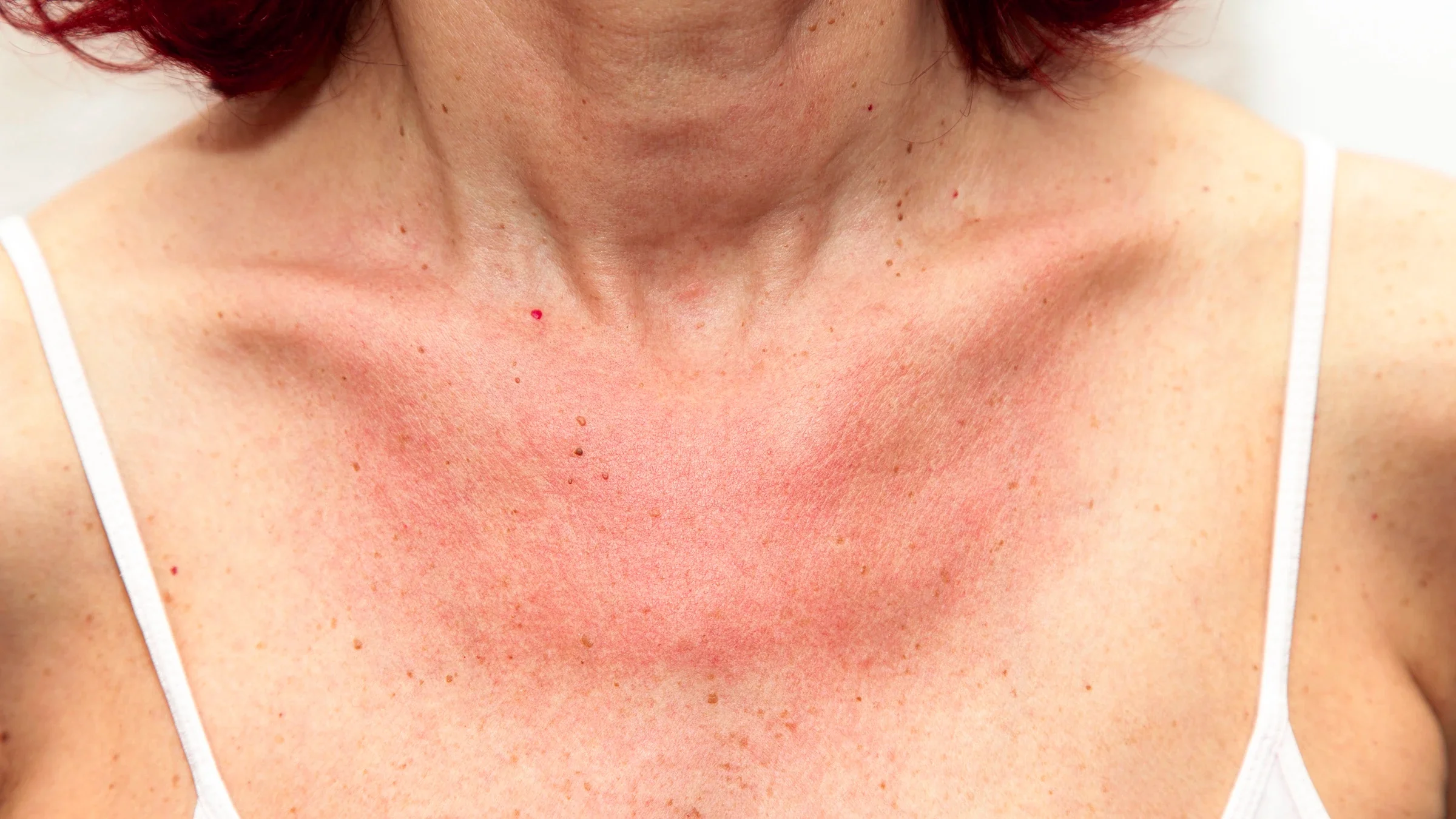
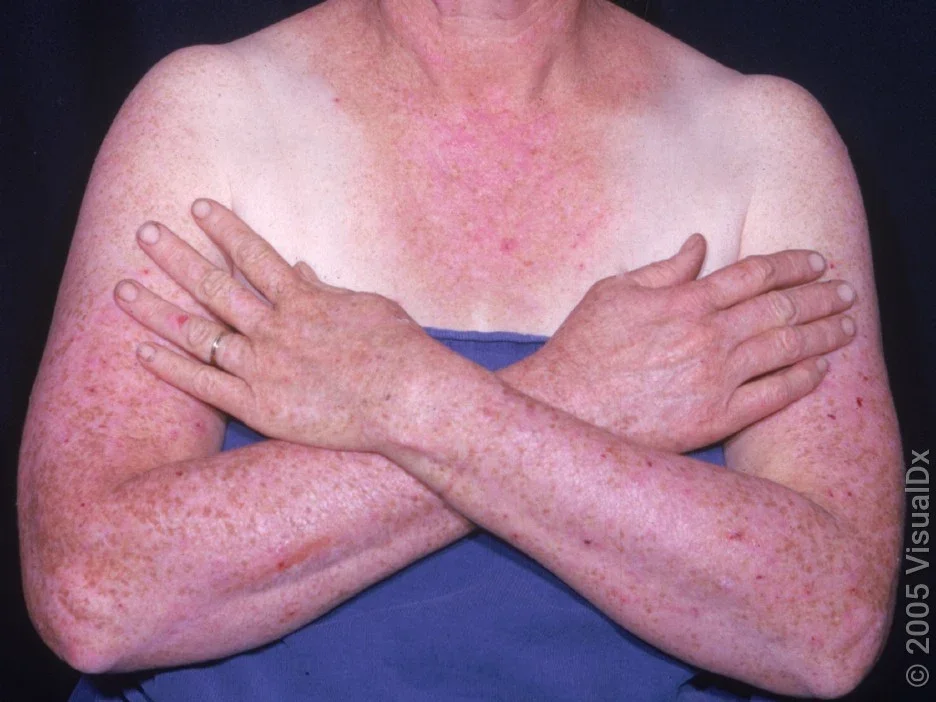
Here are some photos of polymorphous light eruption (PMLE), one of the most common types of sun allergy rash.
How do you treat sun allergies?
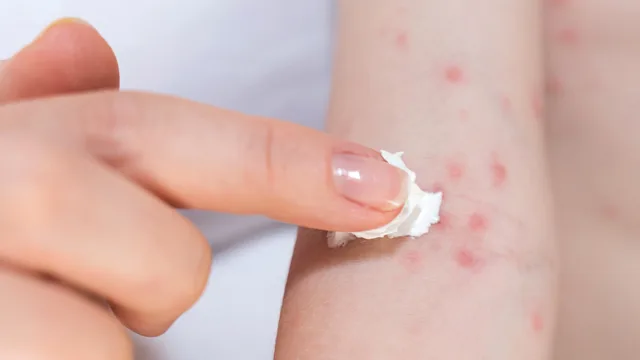
The best treatment for sun allergies is actually prevention. In short, that means avoiding sun exposure. Depending on what type of sun allergy you have, here are some treatments that may help to get rid of a sun rash:
Corticosteroids (either pills or creams)
Omalizumab (a biologic medication)
Phototherapy (controlled exposure to UV light to help your skin build tolerance)
How do you diagnose sun allergies?
Most people can tell they have a sun allergy because they develop a rash within a few minutes of being in sunlight. But sometimes the rash develops a few days later, so the connection isn’t as clear.
A dermatologist or other healthcare professional can usually confirm a sun allergy based on your symptoms and what your rash looks like. Sometimes additional testing, like phototesting (a type of allergy test) or skin biopsy are needed to confirm the diagnosis.
Phototesting
In phototesting, a healthcare professional will shine a light source that gives off UVA and UVB light on a small patch of your skin. If you have a sun allergy, you’ll develop a rash on that part of your skin.
The test can also tell if you’re sensitive only to a specific wavelength of light. It can also help figure out how long you can stay in sunlight before developing a rash. This information can be very helpful as you plan outings.
Photopatch testing
A dermatologist may recommend photopatch testing if they think an allergen may be contributing to your symptoms. For example, they may want to check if you’re allergic to a specific sunscreen or another product you use on your skin. Here’s what to expect in a photopatch test:
A healthcare professional puts an allergen on the left and right side of your back.
After a couple of days, they cover one side with a material that blocks UV light while exposing the other side to UVA light.
They’ll check to see how your skin responded. A sun allergy is possible if you have a reaction only on the side exposed to UV light. A skin reaction on both sides means that you’re allergic to that specific allergen alone.
Skin biopsy (sample)
If it’s not clear whether your rash is from sunlight exposure, a healthcare professional may recommend a skin biopsy. This lets a pathologist look at a sample of your skin under a microscope to confirm whether your rash is a sun allergy rash or another medical condition.
Preventing sun allergies
The best way to prevent sun allergy is to avoid the sun. But, of course, that’s impossible (and not desirable). Instead, focus on avoiding too much sun exposure. Here are some tips to lower your risk:
Spend less time outdoors on sunny days.
Wear broad-spectrum sunscreen that protects against UVA and UVB light.
Wear a wide-brim hat to protect your scalp, face, ears, and neck.
Cover your skin with clothing as much as possible when outside.
Add UV filters or shades to windows.
Frequently asked questions
A sun allergy is one type of photodermatosis — a type of rash that develops from sun exposure. It’s different from sun sensitivity (photosensitivity). If you have photosensitivity, you can develop red, painful, and sometimes itchy rashes that look like a sun allergy rash. But the causes are different.
Some people are born with medical conditions that make them sensitive to UV light. These conditions are rare but can lead to painful rashes that can scar. People can also develop photosensitivity from medical conditions like lupus, porphyrias, dermatomyositis, and psoriasis.
Medications can also trigger photosensitivity, including certain antibiotics, metformin, retinoids, and St. John’s wort. Certain plants and fruits can also trigger photosensitivity if the extracts or juices are in direct contact with your skin.
Yes, ice can help relieve symptoms from different types of sun allergy rash by reducing itching and lowering inflammation. But don’t put ice directly on your skin. To avoid damaging your skin, wrap the ice in a thin towel or use a cold compress.
No. Sun allergies don’t lead to skin cancer. But sun allergies and skin cancer are both caused by the same thing: unprotected sun exposure. Using sunscreen and other forms of sun protection can lower your risk of developing sun allergies and skin cancer.
Yes, it’s possible to develop a sun allergy later in life. If it feels like you are suddenly allergic to the sun — no matter what age you are — talk with a healthcare professional to get the right diagnosis.
Polymorphous light eruption (PMLE) is considered an “immune-mediated disease.” Scientists believe that the immune cells of people with PMLE get triggered by the rays of the sun. These cells then attack the body’s tissues (skin), which results in a rash. But scientists still don’t understand the exact processes at play in PMLE, so it isn’t officially considered an autoimmune disease.
A sun allergy is one type of photodermatosis — a type of rash that develops from sun exposure. It’s different from sun sensitivity (photosensitivity). If you have photosensitivity, you can develop red, painful, and sometimes itchy rashes that look like a sun allergy rash. But the causes are different.
Some people are born with medical conditions that make them sensitive to UV light. These conditions are rare but can lead to painful rashes that can scar. People can also develop photosensitivity from medical conditions like lupus, porphyrias, dermatomyositis, and psoriasis.
Medications can also trigger photosensitivity, including certain antibiotics, metformin, retinoids, and St. John’s wort. Certain plants and fruits can also trigger photosensitivity if the extracts or juices are in direct contact with your skin.
Yes, ice can help relieve symptoms from different types of sun allergy rash by reducing itching and lowering inflammation. But don’t put ice directly on your skin. To avoid damaging your skin, wrap the ice in a thin towel or use a cold compress.
No. Sun allergies don’t lead to skin cancer. But sun allergies and skin cancer are both caused by the same thing: unprotected sun exposure. Using sunscreen and other forms of sun protection can lower your risk of developing sun allergies and skin cancer.
Yes, it’s possible to develop a sun allergy later in life. If it feels like you are suddenly allergic to the sun — no matter what age you are — talk with a healthcare professional to get the right diagnosis.
Polymorphous light eruption (PMLE) is considered an “immune-mediated disease.” Scientists believe that the immune cells of people with PMLE get triggered by the rays of the sun. These cells then attack the body’s tissues (skin), which results in a rash. But scientists still don’t understand the exact processes at play in PMLE, so it isn’t officially considered an autoimmune disease.
The bottom line
Sun allergies cause red, itchy, and sometimes painful rashes. There are different types of sun allergy, but polymorphous light eruption (PMLE) is the most common type. If you think you might have a sun allergy, always wear sunscreen and spend less time in sunlight. You should also talk with a healthcare professional. They may be able to test you for a sun allergy and recommend prescription treatment options.

Why trust our experts?



Images used with permission from VisualDx (www.visualdx.com).
References
Coulson, I. (2021). Phytophotodermatitis. DermNet.
Gramp, P. (2022). Polymorphic light eruption. DermNet.
Gruber-Wackernagel, A., et al. (2014). Polymorphous light eruption: clinic aspects and pathogenesis. Dermatologic Clinics.
Komarow, H. D., et al. (2015). Solar urticaria. The Journal of Allergy and Clinical Immunology: In Practice.
Lehmann, P., et al. (2011). Photodermatoses: Diagnosis and treatment. Deutsches Ärzteblatt International.
Ludmann, P. (2022). What is a skin biopsy? American Academy of Dermatology Association.
Lusby, F. W., et al. (2025). Conjunctiva. MedlinePlus.
Ngan, V. (2006). Actinic prurigo. DermNet.
Ngan, V. (2006). Solar urticaria. DermNet.
Ross, H., et al. (2023). Phototesting. DermNet.
Sathe, N. C., et al. (2026). Polymorphic light eruption. StatPearls.
Yashar, S. S., et al. (2003). Classification and evaluation of photodermatoses. Dermatologic Therapy.