Key takeaways:
The virus that causes COVID-19 spreads through air droplets from a person with the infection.
The risk of getting COVID from a surface that’s been contaminated with droplets is low. And you won’t get COVID from food.
Staying up to date on vaccinations and staying home when you don’t feel well are the best ways to prevent the spread of COVID.
At the start of the COVID-19 pandemic, there was a lot of uncertainty about how the virus spread. Many people were concerned that you could get infected by touching surfaces or objects that had the virus on them.
Scientists now know that COVID spreads through airborne droplets of saliva or mucus that contain the virus. A person who’s infected can spread these droplets when they exhale, cough, or sneeze. To get infected, these droplets need to come into contact with your mucus membranes (eyes, nose, lips, or mouth).
What happens when those droplets land on surfaces like food or clothing? Even if a virus can live on a surface for hours or days, that doesn’t mean it can still cause an infection. It’s possible for a virus to be detectable but no longer infectious. In short, there’s minimal risk of getting COVID from a surface that’s been contaminated with droplets.
How long does the virus that causes COVID live on surfaces?
Early in the pandemic, researchers wanted to learn how long coronaviruses could live on surfaces. Early studies suggested that the virus could survive for hours to days.
But there are a few things to keep in mind about these studies. First, they were done in highly controlled lab settings using larger amounts of virus than you would typically encounter in real life. And researchers didn’t factor in other things like temperature, humidity, and sunlight, which can affect how long a virus survives on surfaces.
Since then, researchers have discovered that contaminated surfaces aren’t a major cause of COVID infections. In a 2023 study, people hospitalized with COVID coughed directly onto steel, cardboard, plastic, and their own hands. Scientists found that infectious particles from COVID didn’t survive on any of these surfaces.
So even when virus particles are found on a surface, that doesn’t mean they can spread the disease. Virus particles on surfaces aren’t likely to reach someone’s respiratory tract, which is how most COVID infections begin.
COVID survival times by surface
In laboratory-controlled settings, COVID can survive for hours or days on common surfaces. But in real-world conditions, factors like sunlight and heat break down the virus much more quickly.
Even in lab studies, survival times varied based on the conditions used. That said, researchers have found that the COVID virus lasts longer on smooth, hard surfaces like plastic and stainless steel than on porous materials like cardboard or paper. Below is a rough overview of how long COVID lives on surfaces in a lab setting.

COVID vs. the common cold: COVID and the common cold can feel similar, but there are some important differences in symptoms, how long they last, and what you can expect when you’re recovering.
How long are you contagious with COVID? On average, people are contagious with COVID for 5 to 10 days. Learn what factors — like vaccination status — make a difference.
Recovering quickly from COVID: We’ll break down what the science says about home remedies, prescription medications, and supplements that may help you get better fast.
Material | Survival times |
|---|---|
Copper (coins) | Up to 4 hours |
Up to 3 hours | |
Cardboard | Up to 24 hours |
Plastic | Up to 3 days |
Stainless steel | Up to 3 days |
Glass | Up to 4 days |
Cotton | Up to 2 days |
How long can COVID live on clothes and fabric?
There’s no evidence that the COVID virus can live on clothing outside of lab settings. Researchers believe the COVID virus is unlikely to survive on fabric. That’s because respiratory droplets dry out quickly when they’re absorbed by the fibers.
Even so, the CDC has helpful general recommendations on when and how to clean clothing to lower risk of infections in general. These preventive steps can help keep you and your family healthy:
Use the warmest water setting that’s safe for your clothes. Dry everything completely.
You can safely wash the laundry from someone who is sick. It’s OK to wash their clothes with others in the same load. Just make sure to wash your hands after.
Remember to clean and disinfect laundry hampers.
Can COVID spread through food or food packaging?
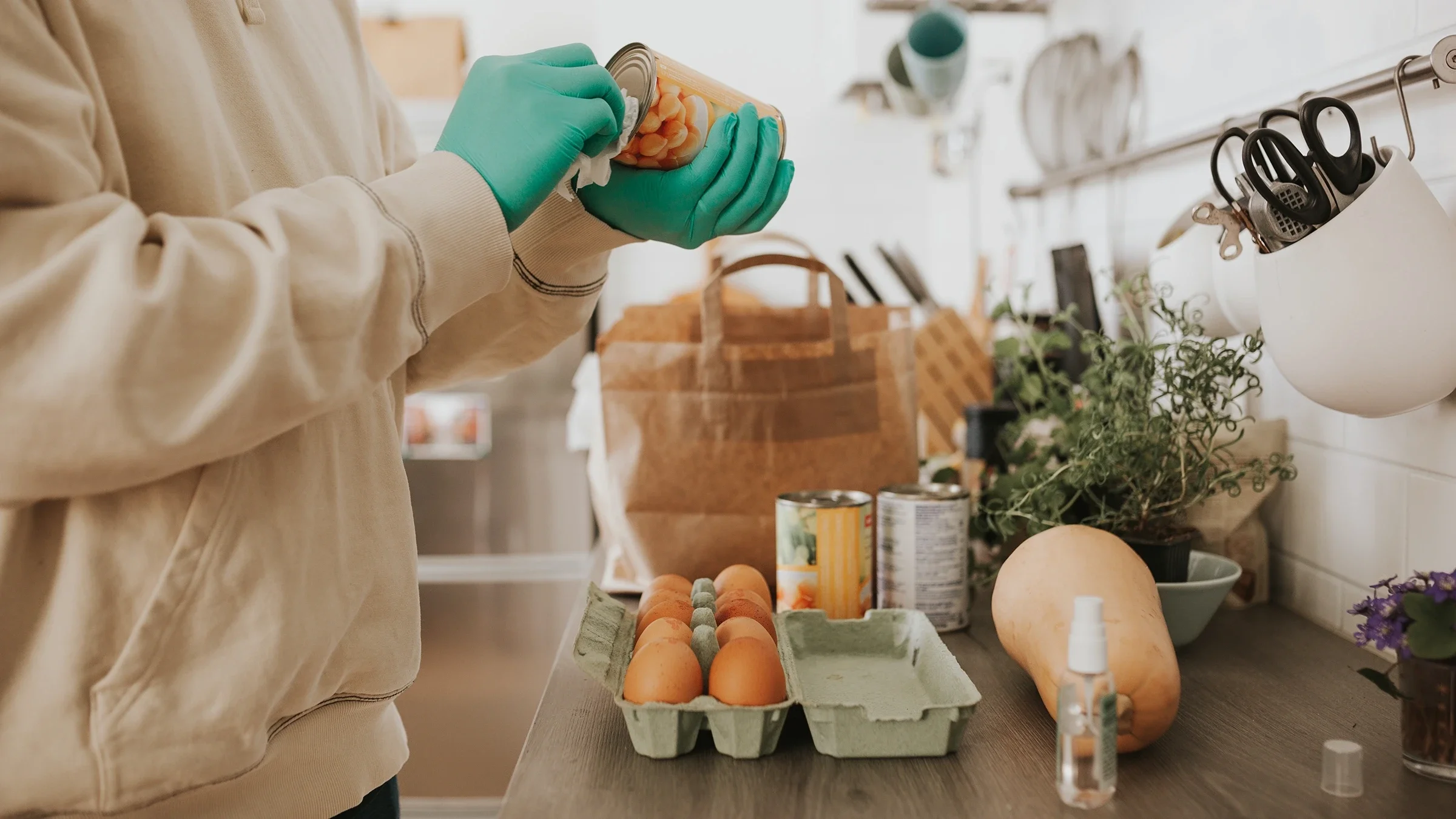
There’s no evidence that you can get COVID from food or food packaging. In fact, research suggests that the virus that causes COVID is destroyed as it passes through the lower digestive system.
Still, it’s a good idea to follow FDA recommendations on food safety practices:
Wash your hands with warm, soapy water for 20 seconds before and after handling food.
Clean your utensils, plates, glassware, countertops, and other cooking tools with warm, soapy water.
Wipe the lids of canned food before opening them.
Rinse fruits and vegetables before eating.
Can you catch COVID from eating food handled or prepared by others?
The virus that causes COVID is not a foodborne virus. That means the virus doesn’t survive in the digestive system and can’t spread through contaminated food. As noted above, there’s no evidence that shows you can get COVID from eating food handled or prepared by someone with COVID.
Can you share dishes with others if you have COVID infection?
If you have COVID, you can spread the virus to others through your respiratory droplets. So you should avoid sharing objects that come into contact with your saliva, like cups, glasses, dishes, and other utensils. While the risk of spreading the virus through these objects is minimal, it’s best not to share dishes when you’re sick.
How to reduce the risk of transmitting COVID
When you’re contagious with COVID, it’s important to take steps to prevent passing on the infection to others. The CDC recommends the following strategies to reduce the risk of transmitting COVID to others:
Stay home and away from others: This is especially true for those at high risk for severe infection.
Take steps for cleaner air: This can mean opening the windows, using an air purifier, or spending more time outdoors.
Practice good hygiene: Remember to cover your coughs and sneezes, wash or sanitize your hands often, and clean frequently touched surfaces.
Wear a well-fitting mask: This is especially helpful in crowded settings or if you spend time with someone at higher risk of severe disease.
Physical distancing: Stay further away from others when you have active symptoms of infection.
Frequently asked questions
Most people who have COVID are contagious for about 10 days from the start of their illness. But some people can be contagious for much longer. This is true for people who have a more severe infection or a weakened immune system.
After recovering from COVID — or any contagious illness — clean your surroundings by disinfecting frequently touched surfaces. And wash sheets, towels, and clothes.
You don’t need to throw anything out since COVID is rarely spread through surfaces. But it may be a good idea to change out personal hygiene products like toothbrushes and certain makeup and skin care products.
COVID virus particles on surfaces will eventually die on their own. The virus can live on surfaces for hours to days, depending on the type of surface. But this doesn’t mean it will cause an infection. It isn’t likely that a live virus on a surface will reach someone’s respiratory tract and cause infection.
How long COVID can survive in a car depends mostly on the temperature and the type of surface. In warmer conditions — around 72°F (22°C) or higher — the virus typically becomes inactive within 5 to 30 minutes. In cooler temperatures, it may survive longer. COVID tends to last the longest on smooth, nonporous surfaces like metal or plastic on dashboards and door handles, and breaks down faster on porous materials like fabric seats.
Reinfecting yourself with COVID within a week would be very unlikely, but it’s not impossible. After recovery, your body usually develops immunity to the specific strain you had. That protection can last from several months to about a year. But if you’re exposed to a different variant, you could get infected again sooner. People with weakened immune systems may not build strong immunity, making reinfection more likely.
Most people who have COVID are contagious for about 10 days from the start of their illness. But some people can be contagious for much longer. This is true for people who have a more severe infection or a weakened immune system.
After recovering from COVID — or any contagious illness — clean your surroundings by disinfecting frequently touched surfaces. And wash sheets, towels, and clothes.
You don’t need to throw anything out since COVID is rarely spread through surfaces. But it may be a good idea to change out personal hygiene products like toothbrushes and certain makeup and skin care products.
COVID virus particles on surfaces will eventually die on their own. The virus can live on surfaces for hours to days, depending on the type of surface. But this doesn’t mean it will cause an infection. It isn’t likely that a live virus on a surface will reach someone’s respiratory tract and cause infection.
How long COVID can survive in a car depends mostly on the temperature and the type of surface. In warmer conditions — around 72°F (22°C) or higher — the virus typically becomes inactive within 5 to 30 minutes. In cooler temperatures, it may survive longer. COVID tends to last the longest on smooth, nonporous surfaces like metal or plastic on dashboards and door handles, and breaks down faster on porous materials like fabric seats.
Reinfecting yourself with COVID within a week would be very unlikely, but it’s not impossible. After recovery, your body usually develops immunity to the specific strain you had. That protection can last from several months to about a year. But if you’re exposed to a different variant, you could get infected again sooner. People with weakened immune systems may not build strong immunity, making reinfection more likely.
The bottom line
The chances of getting COVID-19 from surfaces like food or clothing are low to none. The virus that causes COVID spreads primarily through respiratory droplets. The FDA still recommends that you follow food safety guidelines. This includes washing your hands with warm, soapy water and regularly cleaning countertops. If you or someone in your home gets sick, avoid sharing objects like plates and utensils. And do your best to avoid contact with others when you aren’t feeling well.

Why trust our experts?




References
Baker, C. A., et al. (2022). Persistence of SARS-CoV-2 on surfaces and relevance to the food industry. Current Opinion in Food Science.
Centers for Disease Control and Prevention. (2024). About COVID-19.
Centers for Disease Control and Prevention. (2024). Preventing spread of respiratory viruses when you're sick.
Centers for Disease Control and Prevention. (2025). About physical distancing and respiratory viruses.
Centers for Disease Control and Prevention. (2025). Hygiene and respiratory viruses prevention.
Centers for Disease Control and Prevention. (2025). Masks and respiratory viruses prevention.
Centers for Disease Control and Prevention. (2025). Taking steps for cleaner air for respiratory virus prevention.
Centers for Disease Control and Prevention. (2025). When and how to clean and disinfect your home.
Chin, A. W. H., et al. (2020). Stability of SARS-CoV-2 in different environmental conditions. The Lancet Microbe.
Corpet, D. E., et al. (2020). Why does SARS-CoV-2 survive longer on plastic than on paper?
Environmental Protection Agency. (2025). About list N: Disinfectants for coronavirus (COVID-19).
Federal Laboratory Consortium for Technology Transfer. (2021). USDA, FDA underscore lack of evidence for food or packaging as COVID-19 source.
Goldman, E. (2021). SARS wars: The fomites strike back. Applied and Environmental Microbiology.
Hammett, E. (2020). How long does Coronavirus survive on different surfaces? BDJ Team.
Paton, S., et al. (2021). Persistence of severe acute respiratory syndrome coronavirus 2 (SARS-CoV-2) virus and viral RNA in relation to surface type and contamination concentration. Applied and Environmental Microbiology.
Sammartino, J. C., et al. (2023). Real-life lack of evidence of viable SARS-CoV-2 transmission via inanimate surfaces: The SURFACE study. Journal of Infection and Public Health.
U.S. Food and Drug Administration. (2023). Food safety at home.
Van Doremalen, N., et al. (2020). Aerosol and surface stability of SARS-CoV-2 as compared with SARS-CoV-1. The New England Journal of Medicine.
Washington State Department of Health. (2025). Germs: Prevent their spread.
World Health Organization. (2020). Coronavirus disease (COVID-19): Food safety for consumers.
Xu, J., et al. (2023). Stability of SARS-CoV-2 on inanimate surfaces: A review. Microbiological Research.
Zang, R., et al. (2020). TMPRSS2 and TMPRSS4 promote SARS-CoV-2 infection of human small intestinal enterocytes. Science Immunology.