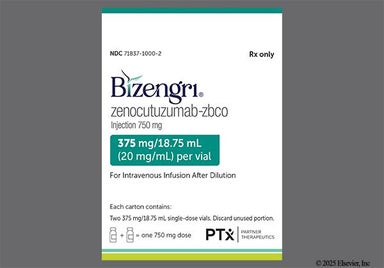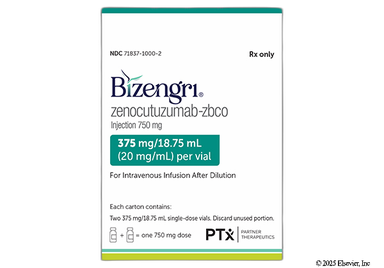
Bizengri
Bizengri (zenocutuzumab or zenocutuzumab-zbco) is prescription intravenous (IV) medication used to treat adults with advanced or metastatic cancers that have a rare NRG1 gene fusion. It's FDA approved for non-small cell lung cancer (NSCLC) and pancreatic cancer that have gotten worse after other treatments didn't work. A healthcare professional will give this medication as an IV infusion, usually over 4 hours, in a clinic or infusion center every 2 weeks. Common side effects include diarrhea, muscle or bone pain, and feeling tired.


What is Bizengri (zenocutuzumab)?
What is Bizengri (zenocutuzumab) used for?
- Advanced or metastatic non-small cell lung cancer (NSCLC) with an NRG1 gene fusion, after other treatments didn't work
- Advanced or metastatic pancreatic cancer with an NRG1 gene fusion, after other treatments didn't work
How Bizengri (zenocutuzumab) works
Bizengri (zenocutuzumab) is a bispecific HER2- and HER3-directed antibody, which means it attaches to two different proteins on cancer cells.
In cancers with a neuregulin‑1 (NRG1) gene fusion, these proteins send strong signals that make the cancer grow and spread. Bizengri (zenocutuzumab) blocks these signals by attaching to both HER2 and HER3 at the same time, which helps slow down or stop the cancer from growing. Over time, this can help shrink the cancer or keep it from getting worse.
Drug facts
| Common Brands | Bizengri |
|---|---|
| Drug Class | Bispecific HER2- and HER3-directed antibody |
| Controlled Substance Classification | Not a controlled medication |
| Generic Status | No lower-cost generic available |
| Availability | Prescription only |

Side effects of Bizengri (zenocutuzumab)
The following side effects may get better over time as your body gets used to the medication. Let your healthcare provider know immediately if you continue to experience these symptoms or if they worsen over time.
Common Side Effects
NSCLC:
- Diarrhea (25%)
- Muscle or bone pain (23%)
- Shortness of breath (18%)
- Fatigue (17%)
- Cough (15%)
- Rash (14%)
- Infusion reactions (12%)
- Swelling (11%)
- Reduced appetite (11%)
- Nausea (10%)
Pancreatic cancer:
- Diarrhea (36%)
- Muscle or bone pain (28%)
- Nausea (23%)
- Vomiting (23%)
- Tiredness (21%)
- Infusion reactions (15%)
- Constipation (15%)
- Stomach pain (18%)
- Swelling (13%)
- Bloating (13%)
- Anxiety (10%)
- Dry skin (10%)
- Fever (10%)
- Mouth sores (10%)
Less Common Side Effects
NSCLC:
- Mouth sores
- Vomiting
- Lung inflammation
- Heart problems
Pancreatic cancer:
- Reduced appetite
- Rash
Bizengri (zenocutuzumab) serious side effects
Contact your healthcare provider immediately if you experience any of the following.
- Allergic and infusion reactions: chills, shaking, nausea, vomiting, diarrhea, fever, cough, facial or throat swelling, trouble breathing, throat tightness, itching, rash, wheezing, chest discomfort, dizziness or feeling light-headed, back or neck pain, numbness or tingling
- Lung problem: cough, fever, shortness of breath, trouble breathing
- Heart problem: shortness of breath, coughing, tiredness, swelling, irregular heartbeat, sudden weight gain, dizziness or feeling light-headed, loss of consciousness
The following Bizengri (zenocutuzumab) side effects have also been reported
Side effects that you should report to your care team as soon as possible:
- Allergic reactions—skin rash, itching, hives, swelling of the face, lips, tongue, or throat
- Dry cough, shortness of breath or trouble breathing
- Heart failure—shortness of breath, swelling of the ankles, feet, or hands, sudden weight gain, unusual weakness or fatigue
- Infusion reactions—chest pain, shortness of breath or trouble breathing, feeling faint or lightheaded
Side effects that usually do not require medical attention (report these to your care team if they continue or are bothersome):
- Diarrhea
- Muscle pain
- Nausea
- Skin rash
- Stomach pain
- Swelling of the ankles, hands, or feet
- Vomiting

Pros and cons of Bizengri (zenocutuzumab)
Pros
- First FDA‑approved option for people with lung and pancreatic cancer with NRG1 gene fusion
- Given once every 2 weeks
- Can work when other treatments stop working
Cons
- Requires IV infusions that take several hours and monitoring afterward
- Risk of serious lung and heart problems
- Not safe during pregnancy or breastfeeding

Pharmacist tips for Bizengri (zenocutuzumab)

- Plan for your Bizengri (zenocutuzumab) infusion days. Each dose takes over about 4 hours, and you’ll be monitored for at least 1 hour after your first infusion to catch and treat reactions early.
- You’ll get premedications like a steroid, an antihistamine, and a fever reducer before Bizengri (zenocutuzumab) to lower reaction risk. These medications include dexamethasone, acetaminophen, and dexchlorpheniramine or something similar.
- Know the signs of infusion reactions with Bizengri (zenocutuzumab). If you feel chills, fever, cough, flushing, headache, or sudden shortness of breath during the infusion, tell your care team right away.
- Watch your breathing between visits while receiving Bizengri (zenocutuzumab). A new cough, fever, shortness of breath, or trouble breathing can be a sign of serious lung problems. Call your care team right away so they can check it out and treat it early if needed.
- Bizengri (zenocutuzumab) can affect the way your heart works, so let your care team know if you have leg swelling, sudden weight gain, or chest discomfort right away. Your care team will check your heart before and during treatment.
- Have a birth control plan while receiving Bizengri (zenocutuzumab) since it's not safe in pregnancy. Use effective contraception during treatment and for 2 months after your last dose. If you get pregnant, you’ll need a pregnancy test before starting.
- Don’t breastfeed while taking Bizengri (zenocutuzumab) and for 2 months after the last dose. It's not known if the medication passes into milk, and it could harm a nursing baby.
- Diarrhea is common with Bizengri (zenocutuzumab). Sip fluids often, use low‑sugar electrolyte drinks, and choose bland foods. Ask your care team before using over‑the‑counter options like loperamide if diarrhea lasts.

Risks and warnings for Bizengri (zenocutuzumab)
Bizengri (zenocutuzumab) can cause some serious health issues. This risk may be even higher for certain groups. If this worries you, talk to your doctor or pharmacist about other options.
Harm to unborn baby
Bizengri (zenocutuzumab) can harm an unborn baby. If you can get pregnant, you’ll need to take a pregnancy test before starting. Use effective birth control during treatment and for 2 months after your last dose. Let your care team know right away if you become pregnant.
Infusion and allergic reactions
Bizengri (zenocutuzumab) can cause infusion reactions and allergic reactions that can be mild or life‑threatening. Most of the infusion reactions happen during the first infusion. Symptoms can include chills, nausea, fever, and cough.
You’ll receive premedications like dexamethasone, acetaminophen, and dexchlorpheniramine or something similar. You’ll be watched closely during and after your infusion and will be monitored for at least 1 hour after your first dose. Tell your care team right away if you start having symptoms; they might slow or stop Bizengri (zenocutuzumab) depending on how serious the reaction is.
Lung problems
Rarely, Bizengri (zenocutuzumab) can cause serious lung problems, like lung inflammation or interstitial lung disease. Let your care team know right away if you have a new or worsening cough, fever, chest tightness, or shortness of breath. Your oncologist might pause treatment while they check what's going on.
Heart problems
Bizengri (zenocutuzumab) can weaken how well your heart pumps. Your care team will check your heart before you start the medication and test it regularly during treatment. Tell them right away if you notice chest pain, shortness of breath, swelling, dizziness, fainting, or sudden weight gain. Your team might pause or permanently stop Bizengri (zenocutuzumab) if your heart problems get worse or if you develop heart failure symptoms.

Bizengri (zenocutuzumab) dosage
Typical dosage for Bizengri (zenocutuzumab)
The typical dose is 750 mg given through a vein as an IV infusion every 2 weeks.

Bizengri (zenocutuzumab) images