erythromycin / benzoyl peroxide
Benzamycin (erythromycin / benzoyl peroxide) is a topical combination medication that works well to treat acne. It has few side effects, but it can bleach your clothing and hair.


What is Benzamycin (erythromycin / benzoyl peroxide)?
What is Benzamycin (erythromycin / benzoyl peroxide) used for?
- Acne
How Benzamycin (erythromycin / benzoyl peroxide) works
Benzamycin (erythromycin / benzoyl peroxide) is a combination of two medications that are applied to the skin to treat acne. Erythromycin and benzoyl peroxide are both antibiotics that work together to stop the growth of acne-causing bacteria. Benzoyl peroxide also speeds up the removal of old skin cells from your face and makes it less oily, which helps prevent and treat acne.
Drug facts
| Common Brands | Benzamycin |
|---|---|
| Drug Class | Topical antibiotic |
| Controlled Substance Classification | Not a controlled medication |
| Generic Status | Lower-cost generic available |
| Availability | Prescription only |

Side effects of Benzamycin (erythromycin / benzoyl peroxide)
The following side effects may get better over time as your body gets used to the medication. Let your healthcare provider know immediately if you continue to experience these symptoms or if they worsen over time.
Common Side Effects
- Dry skin (3%)
- Hives (3%)
Less Common Side Effects
- Skin peeling
- Itching
- Burning
- Redness
- Swelling of face, eyes, and nose
- Eye irritation
The following Benzamycin (erythromycin / benzoyl peroxide) side effects have also been reported
Along with its needed effects, a medicine may cause some unwanted effects. Although not all of these side effects may occur, if they do occur they may need medical attention.
Check with your doctor immediately if any of the following side effects occur:
Less common or rare
Burning, blistering, crusting, itching, severe redness, or swelling of the skin
dryness or peeling of the skin
feeling of warmth, mild stinging, or redness of the skin
increased sensitivity of the skin to sunlight
oiliness or tenderness of the skin
painful irritation of the skin
redness or other discoloration of the skin
redness, swelling, or itching of the eyelid
severe sunburn
skin rash
swelling of the eyes, face, and nose
Other side effects not listed may also occur in some patients. If you notice any other effects, check with your healthcare professional.
Call your doctor for medical advice about side effects. You may report side effects to the FDA at 1-800-FDA-1088.

Get your GoodRx coupon

Pros and cons of Benzamycin (erythromycin / benzoyl peroxide)
Pros
- Comes in a gel form that is easy to apply
- Causes few side effects
- Does not make you sensitive to sunlight as much as other acne treatments
- Easier to use this combination gel instead of two separate topical medications to treat acne
Cons
- Can bleach your hair or clothing
- Can take up to 2 to 3 months before you notice improvement of your acne
- Needs to be applied twice a day, which is more often than other similar medications
- Not a good treatment option for severe acne

Pharmacist tips for Benzamycin (erythromycin / benzoyl peroxide)

- Use a gentle, non-medicated cleanser to clean the areas where you will be applying the medication. Make sure your skin is completely dry before using Benzamycin (erythromycin / benzoyl peroxide).
- Apply Benzamycin (erythromycin / benzoyl peroxide) only to the affected areas, and avoid touching your eyes, nose, and mouth with it.
- Don't use any other skin products together with the medication, unless told to do so by your provider, to avoid unnecessary skin irritation.
- The benzoyl peroxide in Benzamycin (erythromycin / benzoyl peroxide) can bleach fabric, including clothing and bed sheets. After applying the medication, make sure you let it completely dry before dressing or lying down in bed.
- Keep Benzamycin (erythromycin / benzoyl peroxide) refrigerated and throw it away after 3 months even if there is still medication left in the jar.
- You might notice side effects, such as redness, dryness, stinging, and burning, are worse during your first 4 weeks of using Benzamycin (erythromycin / benzoyl peroxide). Let your provider know if these side effects get worse or don't calm down after then.
- Your acne should improve after a few weeks of starting the medication. If you don't see improvement talk to your provider to see if you should continue using it.

Risks and warnings for Benzamycin (erythromycin / benzoyl peroxide)
Benzamycin (erythromycin / benzoyl peroxide) can cause some serious health issues. This risk may be even higher for certain groups. If this worries you, talk to your doctor or pharmacist about other options.
Use of other acne medications
Avoid using other acne medications at the same time as Benzamycin (erythromycin / benzoyl peroxide). Using more than one topical medication for your acne can cause unnecessary skin irritation and unpleasant side effects. Some skin irritation is normal when you first start using Benzamycin (erythromycin / benzoyl peroxide), but if it gets worse, talk to your provider.
Severe diarrhea
There's a low chance that using Benzamycin (erythromycin / benzoyl peroxide) for a long time can put you at higher risk for getting a specific type of gut infection that causes severe diarrhea. The infection, caused by a bacteria called C. difficile, can happen anytime during treatment and for a few months after you've stopped using Benzamycin (erythromycin / benzoyl peroxide). If you get diarrhea or see blood in your stool, contact your provider right away, because your symptoms may be related to the medication.

Benzamycin (erythromycin / benzoyl peroxide) dosage


Interactions between Benzamycin (erythromycin / benzoyl peroxide) and other drugs
Although certain medicines should not be used together at all, in other cases two different medicines may be used together even if an interaction might occur. In these cases, your doctor may want to change the dose, or other precautions may be necessary. When you are taking this medicine, it is especially important that your healthcare professional know if you are taking any of the medicines listed below. The following interactions have been selected on the basis of their potential significance and are not necessarily all-inclusive.
Using this medicine with any of the following medicines is not recommended. Your doctor may decide not to treat you with this medication or change some of the other medicines you take.
- Astemizole
- Bepridil
- Cisapride
- Colchicine
- Dihydroergotamine
- Dronedarone
- Eliglustat
- Ergoloid Mesylates
- Ergonovine
- Ergotamine
- Flibanserin
- Fluconazole
- Grepafloxacin
- Levomethadyl
- Lomitapide
- Lovastatin
- Mesoridazine
- Methylergonovine
- Methysergide
- Pimozide
- Piperaquine
- Posaconazole
- Saquinavir
- Simvastatin
- Sparfloxacin
- Terfenadine
- Thioridazine
- Ziprasidone
Using this medicine with any of the following medicines is usually not recommended, but may be required in some cases. If both medicines are prescribed together, your doctor may change the dose or how often you use one or both of the medicines.
- Abametapir
- Acalabrutinib
- Acecainide
- Afatinib
- Ajmaline
- Alfentanil
- Alprazolam
- Amiodarone
- Amisulpride
- Amitriptyline
- Amoxapine
- Anagrelide
- Apomorphine
- Aprepitant
- Aprindine
- Aripiprazole
- Aripiprazole Lauroxil
- Arsenic Trioxide
- Ascorbic Acid
- Asenapine
- Atorvastatin
- Avapritinib
- Azimilide
- Azithromycin
- Bedaquiline
- Benzhydrocodone
- Berotralstat
- Betrixaban
- Bosutinib
- Bretylium
- Brexpiprazole
- Brigatinib
- Buprenorphine
- Buserelin
- Carbamazepine
- Ceritinib
- Cerivastatin
- Chloral Hydrate
- Chloroquine
- Chlorpromazine
- Cholera Vaccine, Live
- Cilostazol
- Ciprofloxacin
- Citalopram
- Clarithromycin
- Clindamycin
- Clofazimine
- Clomipramine
- Clozapine
- Cobicistat
- Cobimetinib
- Codeine
- Conivaptan
- Crizotinib
- Cyclobenzaprine
- Dabigatran Etexilate
- Dabrafenib
- Darunavir
- Dasatinib
- Deflazacort
- Degarelix
- Delamanid
- Desipramine
- Deslorelin
- Deutetrabenazine
- Dibenzepin
- Digoxin
- Dihydrocodeine
- Diltiazem
- Disopyramide
- Dofetilide
- Dolasetron
- Domperidone
- Donepezil
- Doxepin
- Doxorubicin
- Doxorubicin Hydrochloride Liposome
- Droperidol
- Edoxaban
- Efavirenz
- Elexacaftor
- Encainide
- Encorafenib
- Enflurane
- Entrectinib
- Eplerenone
- Escitalopram
- Fentanyl
- Fingolimod
- Flecainide
- Fluoxetine
- Formoterol
- Fosaprepitant
- Foscarnet
- Fosnetupitant
- Fostemsavir
- Gatifloxacin
- Gemifloxacin
- Glasdegib
- Gonadorelin
- Goserelin
- Granisetron
- Halofantrine
- Haloperidol
- Halothane
- Histrelin
- Hydrocodone
- Hydroquinidine
- Hydroxychloroquine
- Hydroxyzine
- Ibrutinib
- Ibutilide
- Ifosfamide
- Iloperidone
- Imipramine
- Inotuzumab Ozogamicin
- Isoflurane
- Isradipine
- Ivabradine
- Ivacaftor
- Ivosidenib
- Ketoconazole
- Lapatinib
- Lefamulin
- Lemborexant
- Lenvatinib
- Levofloxacin
- Lidoflazine
- Lofexidine
- Lopinavir
- Lorcainide
- Lumacaftor
- Lumateperone
- Lumefantrine
- Lurasidone
- Lurbinectedin
- Macimorelin
- Mefloquine
- Meperidine
- Methadone
- Metronidazole
- Mifepristone
- Mirtazapine
- Morphine
- Morphine Sulfate Liposome
- Moxifloxacin
- Nafarelin
- Naloxegol
- Neratinib
- Netupitant
- Nilotinib
- Norfloxacin
- Nortriptyline
- Octreotide
- Ofloxacin
- Olaparib
- Ondansetron
- Osilodrostat
- Osimertinib
- Oxaliplatin
- Oxycodone
- Ozanimod
- Paliperidone
- Panobinostat
- Pasireotide
- Pazopanib
- Pemigatinib
- Pentamidine
- Pentazocine
- Pexidartinib
- Pimavanserin
- Pirmenol
- Pitavastatin
- Pitolisant
- Pixantrone
- Ponesimod
- Prajmaline
- Probucol
- Procainamide
- Prochlorperazine
- Promethazine
- Propafenone
- Protriptyline
- Quetiapine
- Quinidine
- Quinine
- Ranolazine
- Relugolix
- Ribociclib
- Rimegepant
- Risperidone
- Selpercatinib
- Selumetinib
- Sematilide
- Sertindole
- Sertraline
- Sevoflurane
- Simeprevir
- Siponimod
- Sodium Phosphate
- Sodium Phosphate, Dibasic
- Sodium Phosphate, Monobasic
- Solifenacin
- Sonidegib
- Sorafenib
- Sotalol
- Spiramycin
- Sufentanil
- Sulfamethoxazole
- Sulpiride
- Sultopride
- Sunitinib
- Tacrolimus
- Tadalafil
- Tazemetostat
- Tedisamil
- Telaprevir
- Telavancin
- Telithromycin
- Tetrabenazine
- Tezacaftor
- Theophylline
- Tolvaptan
- Toremifene
- Tramadol
- Trazodone
- Triclabendazole
- Trifluoperazine
- Trimethoprim
- Trimipramine
- Triptorelin
- Troleandomycin
- Ubrogepant
- Vandetanib
- Vardenafil
- Vemurafenib
- Venetoclax
- Verapamil
- Vinblastine
- Vincristine
- Vincristine Sulfate Liposome
- Vinflunine
- Voclosporin
- Voriconazole
- Warfarin
- Zanubrutinib
- Zolmitriptan
- Zotepine
- Zuclopenthixol
Using this medicine with any of the following medicines may cause an increased risk of certain side effects, but using both drugs may be the best treatment for you. If both medicines are prescribed together, your doctor may change the dose or how often you use one or both of the medicines.
- Anisindione
- Apixaban
- Avanafil
- Bexarotene
- Budesonide
- Buspirone
- Cyclosporine
- Diazepam
- Dicumarol
- Methylprednisolone
- Midazolam
- Phenprocoumon
- Rivaroxaban
- Roflumilast
- Sildenafil
- Sirolimus
- Suvorexant
- Tolterodine
- Triazolam
- Trimetrexate
- Valproic Acid
- Zafirlukast

How much does Benzamycin (erythromycin / benzoyl peroxide) cost?

What are alternatives to Benzamycin (erythromycin / benzoyl peroxide)?

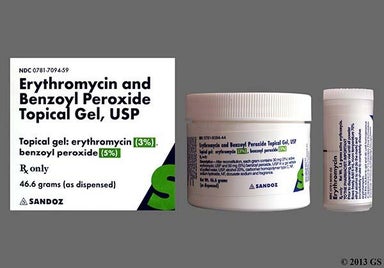
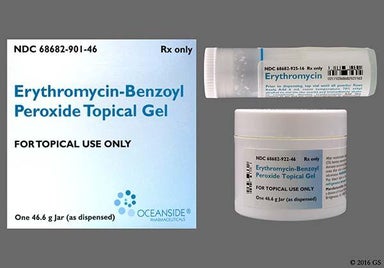
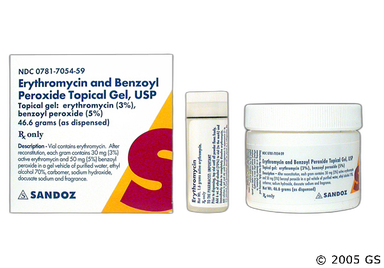
Benzamycin (erythromycin / benzoyl peroxide) images