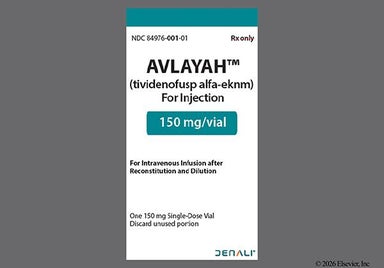
Avlayah
Avlayah (tividenofusp alfa or tividenofusp alfa-eknm) is an enzyme replacement therapy used to treat brain and nervous system problems caused by Hunter syndrome (mucopolysaccharidosis type II, or MPS II). It's FDA approved for children who weigh at least 5 kg (11 lbs) and haven’t developed advanced nervous system problems. The medication is given as an intravenous (IV) infusion once a week from a healthcare professional. Common side effects include infusion-related reactions, upper respiratory tract infections, and ear infections.


What is Avlayah (tividenofusp alfa)?
What is Avlayah (tividenofusp alfa) used for?
How Avlayah (tividenofusp alfa) works
Avlayah (tividenofusp alfa) is an enzyme replacement therapy.
Hunter syndrome happens when your body doesn't have enough of an enzyme called iduronate-2-sulfatase (IDS). Without enough IDS, certain sugars can build up in your cells and damage your organs, including your brain. Avlayah (tividenofusp alfa) provides a working, lab-made version of IDS that helps break down these sugars.
Drug facts
| Common Brands | Avlayah |
|---|---|
| Drug Class | Enzyme replacement therapy |
| Controlled Substance Classification | Not a controlled medication |
| Generic Status | No lower-cost generic available |
| Availability | Prescription only |

Side effects of Avlayah (tividenofusp alfa)
The following side effects may get better over time as your body gets used to the medication. Let your healthcare provider know immediately if you continue to experience these symptoms or if they worsen over time.
Common Side Effects
- Infusion-related reaction (87%)
- Upper respiratory tract infection (60%)
- Ear infection (55%)
- Fever (55%)
- Low red blood cells (51%)
- Cough (47%)
- Vomiting (43%)
- Diarrhea (40%)
- Rash (40%)
- COVID-19 (38%)
- Runny nose (38%)
- Stuffy nose (36%)
- Fall (23%)
- Headache (23%)
- Skin scrape (23%)
- Hives (21%)
Less Common Side Effects
- Constipation
- Bruising
- Stomach infection
- Infusion-site leakage
- Trouble sleeping
- Low white blood cell count
Avlayah (tividenofusp alfa) serious side effects
Contact your healthcare provider immediately if you experience any of the following.
- Serious allergic reaction: fast heartbeat, dizziness or fainting, wheezing, vomiting, hives, swelling of the lips and tongue
- Infusion-related reaction: chills, swelling, dizziness or fainting, fast heartbeat, hives, wheezing, fever, flushing or reddening of the skin, rash, cough, diarrhea, stomach pain, vomiting, headache, irritability, small bumps on the skin
- Low red blood cells: unusual tiredness, pale skin, weakness, shortness of breath
- Kidney problems: swelling, foamy urine, changes in urination
The following Avlayah (tividenofusp alfa) side effects have also been reported
Side effects that you should report to your care team as soon as possible:
- Allergic reactions—skin rash, itching, hives, swelling of the face, lips, tongue, or throat
- Infusion reactions—chest pain, shortness of breath or trouble breathing, feeling faint or lightheaded
- Low red blood cell level—unusual weakness or fatigue, dizziness, headache, trouble breathing
- Kidney injury—decrease in the amount of urine, swelling of the ankles, hands, or feet
Side effects that usually do not require medical attention (report these to your care team if they continue or are bothersome):
- Cough
- Diarrhea
- Fever
- Headache
- Runny or stuffy nose
- Sore throat
- Vomiting

Pros and cons of Avlayah (tividenofusp alfa)
Pros
- FDA approved to treat nervous system problems due to Hunter syndrome
- Given once a week
- Potentially given at home under healthcare supervision
Cons
- Has a boxed warning for life-threatening allergic reactions
- Infusion-related reactions are very common
- Infusions usually take about 4 hours, though some can take even longer

Pharmacist tips for Avlayah (tividenofusp alfa)

- Keep every Avlayah (tividenofusp alfa) infusion appointment. Your child needs treatment once a week to keep the enzyme level steady. If your child misses a dose, contact their care team to reschedule it as soon as possible.
- Tell the care team if your child has symptoms during or after a Avlayah (tividenofusp alfa) infusion. Infusion-related reactions can happen during treatment or within 24 hours. Getting treatment early can help keep the reaction from becoming more serious.
- Before each Avlayah (tividenofusp alfa) infusion, your child’s care team might give them an antihistamine, fever reducer, or corticosteroid to lower the risk or seriousness of a reaction. These medications don’t prevent every reaction, so tell the care team if your child feels unwell.
- Plan to spend several hours at each Avlayah (tividenofusp alfa) appointment. The infusion usually takes about 4 hours but can take up to 8 hours if it needs to be slowed down. Bring something to help your child stay comfortable during the visit.
- Keep all lab test appointments while your child receives Avlayah (tividenofusp alfa). The care team will order blood and urine tests to monitor your child’s health during treatment.
- Watch for signs of anemia (low red blood cells) your child receives Avlayah (tividenofusp alfa). Symptoms can include unusual tiredness or pale skin, and the risk might be higher if your child already has anemia. Tell the care team about these symptoms so they can check your child’s blood count and recommend treatment if needed.
- Ask your child’s care team before switching to Avlayah (tividenofusp alfa) infusions at home. Home infusions might be an option after your child reaches their maintenance dose and tolerates the treatment well. A healthcare professional must still give the infusion and monitor your child.

Risks and warnings for Avlayah (tividenofusp alfa)
Avlayah (tividenofusp alfa) can cause some serious health issues. This risk may be even higher for certain groups. If this worries you, talk to your doctor or pharmacist about other options.
Serious allergic reactions
 Avlayah (tividenofusp alfa) can cause life-threatening allergic reactions, including anaphylaxis. A reaction can happen early in treatment or after your child has received the medication for a long time. Signs include a fast heartbeat, dizziness or fainting, wheezing, vomiting, hives, or swelling of the lips or tongue. Treatment must begin in a healthcare setting with trained staff, close monitoring, and emergency equipment available.
Before the infusion, the care team might give your child antihistamines, fever reducers, or corticosteroids to lower the risk of a reaction. If a severe reaction happens, they’ll stop Avlayah (tividenofusp alfa) and provide treatment right away. For a mild or moderate reaction, they’ll pause the infusion or slow it down by at least half. Get emergency help right away if your child has trouble breathing, swelling of the face or throat, fainting, or symptoms that get worse quickly.
Infusion-related reactions
- Risk factors: Starting enzyme replacement therapy for the first time | Heart problems | Breathing problems
Infusion-related reactions can happen during a Avlayah (tividenofusp alfa) infusion or within 24 hours afterward. Some reactions started 2 or more hours after the infusion ends. Symptoms can include chills, fever, flushing, rash, cough, diarrhea, stomach pain, headache, vomiting, wheezing, hives, swelling, and a fast heartbeat. Reactions are more common in people who haven't received enzyme replacement therapy before. Also, children with heart or breathing problems might have a higher risk of serious complications.
Your child's care team might give them medications before the infusion and will monitor them closely during treatment. If a mild or moderate reaction happens, the care team might pause the infusion or slow it down by at least half. If a severe reaction happens, they’ll stop Avlayah (tividenofusp alfa) and provide emergency treatment. Tell the care team right away about symptoms during the infusion, and contact them if symptoms develop after your child goes home.
Low red blood cells
- Risk factors: History of low red blood cells
Avlayah (tividenofusp alfa) can lower hemoglobin, the part of red blood cells that carries oxygen throughout the body. This can cause anemia, which can make your child feel unusually tired, weak, short of breath, or look pale. Anemia is more common in people who already had it before starting treatment.
The care team will check your child’s hemoglobin level before treatment, about 3 months after starting, and later as needed. If anemia develops, the care team might recommend supportive treatment, such as iron supplements.
Kidney problems
One person treated with Avlayah (tividenofusp alfa) developed a serious kidney problem called membranous nephropathy, which happens when immune proteins build up in the kidneys. Your child’s care team will use blood and urine tests to check their kidney health during treatment. If signs of this condition develop, the care team will do more tests, provide treatment, and decide whether your child should continue receiving the medication.

Avlayah (tividenofusp alfa) dosage
Typical dosage for Avlayah (tividenofusp alfa)
Avlayah (tividenofusp alfa) is given once a week as an IV infusion from a healthcare professional. The dose is based on your child's body weight and is slowly increased over the first several weeks to lower the risk of infusion-related reactions.
Children who weigh at least 5 kg (11 lbs):
- Weeks 1 to 4: 3 mg/kg given by IV infusion once a week.
- Weeks 5 to 8: 7.5 mg/kg given by IV infusion once a week.
- Week 9 and after: 15 mg/kg given by IV infusion once a week.

Avlayah (tividenofusp alfa) images