Key takeaways:
Avastin (bevacizumab) is a biologic medication used to treat health conditions like colorectal cancer, lung cancer, and ovarian cancer. Biologics are complex medications that come from living sources.
Biosimilars are medications that are “highly similar” to other biologics. They're considered safe and effective, and they're generally more affordable than the original biologic.
There are currently three Avastin biosimilars available. They include Mvasi (bevacizumab-awwb), Zirabev (bevacizumab-bvzr), and Alymsys (bevacizumab-maly). Vegzelma (bevacizumab-adcd) is set to launch in 2023.
Save on related medications
Biologic medications like Avastin (bevacizumab) are growing in popularity to treat cancer. And as they continue to become more common, there’s an increasing need to make them more accessible and to find lower-cost alternatives.
That's where biosimilar medications come in. They're like generic versions of biologics. Like generics, biosimilars have similar safety and effectiveness as their original (reference) medication. But they usually cost less.
However, unlike brand and generic medications, it’s not possible for biologics and biosimilars to be exact copies of each other. This is because biologics are large, complex medications made from living sources. Replicating these ingredients without any variation isn’t feasible. So biosimilars are considered “highly similar” to the biologic they’re looking to mimic.
Avastin is a widely used biologic medication. It treats several types of cancer, such as colorectal cancer, lung cancer, and ovarian cancer. If you or a loved one has cancer and Avastin is a treatment option, your cancer care team may have offered an Avastin biosimilar as an alternative. Here’s a rundown of Avastin biosimilars and how they compare to Avastin.
What is Avastin?
Avastin is a targeted therapy medication known as a vascular endothelial growth factor (VEGF) inhibitor. VEGF is a specific protein that helps cancer cells grow; it promotes and expands their blood supply. Avastin works by blocking VEGF. This cuts off your cancer’s blood supply, helping slow down its growth.
Because of how it works, Avastin is approved to treat the following types of cancer:
Metastatic colorectal cancer
Non-small cell lung cancer (NSCLC)
Cervical cancer
Ovarian, fallopian tube, or primary peritoneal (the lining of the abdomen) cancer
Glioblastoma (a type of cancer in the brain or spine)
Renal cell carcinoma (kidney cancer)
Hepatocellular carcinoma (liver cancer)
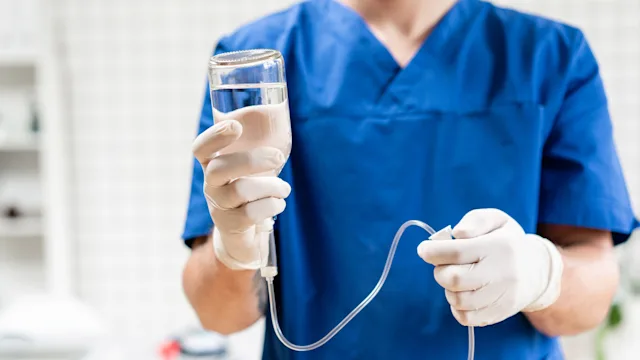
Avastin is an injectable medication. It's typically given as an intravenous (IV) infusion by your healthcare provider once every 2 or 3 weeks.
Avastin vs. Avastin biosimilars
Avastin was initially approved in 2004. It was the only bevacizumab biologic available in the U.S. until 2019; this is when the first Avastin biosimilar was launched.
Avastin biosimilars have a very similar structure to Avastin, and they’re also similar in terms of safety and effectiveness. So you can expect Avastin’s biosimilars to work the same way as Avastin.
There are currently three Avastin biosimilars available in the U.S., and one more should launch in 2023. They’re all injectable medications that are administered into your vein once every 2 to 3 weeks. Like Avastin, they come in single-dose vials at a dosage of either 100 mg/4 mL or 400 mg/16 mL.
Keep in mind: Avastin biosimilars are approved to treat the same cancers as Avastin — except liver cancer. Because of how it was studied in clinical trials, only Avastin is approved for liver cancer.
1. Mvasi
Mvasi (bevacizumab-awwb) was the first biosimilar version of Avastin. It was originally FDA approved in 2017, with its official launch in the U.S. 2 years later.
Clinical studies show that Mvasi’s safety and effectiveness is comparable to Avastin. For instance, Mvasi was compared to Avastin in combination with chemotherapy in a trial of people with advanced non-small cell lung cancer (NSCLC). People in this study who received Mvasi had a response rate of 39%, meaning 39% of people had their cancer shrink or disappear after treatment with Mvasi. Those who received Avastin had a response rate of about 42%.
Although Mvasi was approved based off of a study in people with NSCLC, findings from these kinds of biosimilar studies are applied to some other types of cancer. This is why Mvasi (and the biosimilars below) is also approved to treat almost all of the same types of cancers as Avastin.
2. Zirabev
In June 2019, Zirabev (bevacizumab-bvzr) became the second Avastin biosimilar to obtain FDA approval. It was launched in the U.S. 6 months later in December 2019.
Like Mvasi, Zirabev was compared to Avastin in combination with chemotherapy in a clinical trial of people living with advanced NSCLC. Zirabev and Avastin were found to be comparably safe and effective. In this study, people who received either medication had a response rate of about 45%.
3. Alymsys
The third Avastin biosimilar to gain approval in the U.S. was Alymsys (bevacizumab-maly). The FDA approved it back in April 2022. It was launched 6 months later in October 2022.
Alymsys was compared to Avastin in another clinical trial of people with advanced NSCLC. People in this study who received Alymsys had a response rate of about 40%. People who received Avastin had a response rate of about 45%.
4. Vegzelma
Vegzelma (bevacizumab-adcd) is the fourth — and most recent — Avastin biosimilar. It was approved in September 2022, and it should launch in the U.S. in the first half of 2023.
Vegzelma was also compared in a study to Avastin in people with advanced NSCLC. People in this study who received Vegzelma or Avastin both had a response rate of about 42%.
How to choose the best Avastin biosimilar
Avastin’s biosimilars haven’t been directly compared to each other, so we can’t assume if one is better than another. Your cancer center’s preferences — and your expected out-of-pocket costs — are typically the main factors that determine which Avastin biosimilar you’ll receive.
Your cancer center
Your healthcare provider will ultimately decide if you’ll receive Avastin or an Avastin biosimilar. They’ll make this decision based on their personal experience and the data that’s available to them. They may also opt to just prescribe what the cancer center’s pharmacy readily has in stock.
However, it's important to note that Avastin’s biosimilars have not been studied or approved to be interchangeable biosimilars. There isn’t data available to prove if it’s OK to switch back and forth between products. However, your care team may still switch you from one product to another based on their personal expertise.
Affordability
Your insurance coverage status plays a big role in the product that you receive. Your health insurance may prefer to cover Avastin itself, one biosimilar product specifically, or some combination of the two. Most insurance plans cover at least one biosimilar. In general, biosimilars are 10% to 37% cheaper than their original biologic product.
If you’re uninsured or underinsured, there may be other ways to save, such as manufacturer savings programs. Some of these programs for Avastin and its biosimilars are the Genentech Patient Assistance Foundation, Pfizer Oncology Co-pay Savings Program, and Amgen’s Assist360. The savings program you qualify for may determine which product you’ll get.
The bottom line
Four biosimilar versions of Avastin are currently approved: Mvasi (bevacizumab-awwb), Zirabev (bevacizumab-bvzr), Alymsys (bevacizumab-maly), and Vegzelma (bevacizumab-adcd). Avastin’s biosimilars may help you save money on your treatment without sacrificing safety or effectiveness. Speak with your oncologist to see if Avastin or one of its biosimilars is a treatment option for you.

Why trust our experts?




References
American Cancer Society. (n.d.). What is liver cancer?
Amgen, Inc. (2021). Mvasi [package insert].
Amneal Pharmaceuticals, Inc. (2022). Alymsys [package insert].
Aykan, N. F., et al. (2020). Objective response rate assessment in oncology: Current situation and future expectations. World Journal of Clinical Oncology.
BusinessWire. (2022). Amneal launches first biosimilar with alymsys (bevacizumabmaly) in the United States.
Celltrion, Inc. (2022). Vegzelma [package insert].
Davio, K. (2019). Amgen and Allergan launch Mvasi and Kanjinti, the first anticancer biosimilars, in the United States. AJMC.
Genentech, Inc. (2022). Avastin [package insert].
Levy, S. (2022). Celltrion USA obtains FDA OK for Avastin biosimilar. Drug Store News.
National Cancer Institute. (2022). Definition of VEGF.
National Cancer Institute. (2022). Targeted therapy to treat cancer.
Pfizer Inc. (2020). Pfizer brings three new biosimilars to U.S. patients at substantial discounts.
Pfizer Inc. (2021). Zirabev [package insert].
Socinski, M.A., et al. (2018). A comparative clinical study of PF-06439535, a candidate bevacizumab biosimilar, and reference bevacizumab, in patients with advanced non-squamous non-small cell lung cancer. Journal of Clinical Oncology.
Thatcher, N., et al. (2019). Efficacy and safety of the biosimilar ABP 215 compared with bevacizumab in patients with advanced nonsquamous non–small cell lung cancer (MAPLE): A randomized, double-blind, phase III study. Clinical Cancer Research.
U.S. Food and Drug Administration. (2021). Biosimilar and interchangeable biologics: more treatment choices.
U.S. Food and Drug Administration. (2022). Biological product definitions.
U.S. Food and Drug Administration. (2022). Biosimilar basics for patients.
Verschraegen, C., et al. (2022). Candidate bevacizumab biosimilar CT-P16 versus european union reference bevacizumab in patients with metastatic or recurrent non-small cell lung cancer: A randomized controlled trial.BioDrugs.
Xu, X., et al. (2022). Efficacy and safety of bevacizumab biosimilars compared with reference biologics in advanced non-small cell lung cancer or metastatic colorectal cancer patients: A network meta-analysis. Frontiers in Pharmacology.