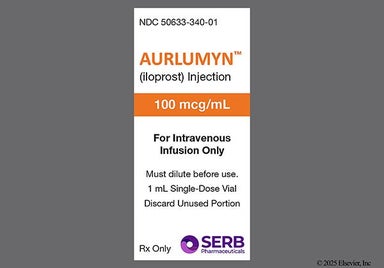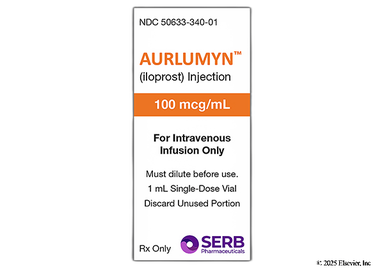
Aurlumyn
Aurlumyn (iloprost) is currently the only FDA-approved medication that treats severe frostbite in adults to prevent finger and toe amputation. It’s a prostacyclin, which works by opening up your blood vessels to improve blood flow. The medication is given through the vein (IV infusion) in the hospital, usually for up to 8 days. You may also get other medications at the same time to treat your frostbite. Common side effects include flushing, nausea, and having a fast or pounding heartbeat.


What is Aurlumyn (iloprost)?
What is Aurlumyn (iloprost) used for?
- Severe frostbite in adults to reduce the risk of finger and toe amputation
How Aurlumyn (iloprost) works
Aurlumyn (iloprost) is a prostacyclin. It helps improve blood flow to areas affected by frostbite.
When you have frostbite, there’s not much blood supply to the area. The extreme cold causes the blood vessels to tighten. And sometimes, blood clots can form and cause even less blood to flow there. When there’s not enough blood flow, it could lead to severe tissue damage that might need to be amputated.
Aurlumyn (iloprost) treats severe frostbite in two main ways. It opens up blood vessels and prevents blood clots from forming. Both actions help keep blood flowing smoothly.
Drug facts
| Common Brands | Aurlumyn |
|---|---|
| Drug Class | Prostacyclin |
| Controlled Substance Classification | Not a controlled medication |
| Generic Status | No lower-cost generic available |
| Availability | Prescription only |

Side effects of Aurlumyn (iloprost)
The following side effects may get better over time as your body gets used to the medication. Let your healthcare provider know immediately if you continue to experience these symptoms or if they worsen over time.
Common Side Effects
- Flushing (55%)
- Nausea (25%)
- Heart pounding (15%)
- Vomiting (5%)
Less Common Side Effects
- Headache
- Dizziness
- Fast heart rate
- Low blood pressure
The following Aurlumyn (iloprost) side effects have also been reported
Side effects that you should report to your care team as soon as possible:
- Allergic reactions—skin rash, itching, hives, swelling of the face, lips, tongue, or throat
- Low blood pressure—dizziness, feeling faint or lightheaded, blurry vision
Side effects that usually do not require medical attention (report these to your care team if they continue or are bothersome):
- Flushing
- Headache
- Muscle pain
- Nausea
- Vomiting

Pros and cons of Aurlumyn (iloprost)
Pros
- Currently the only FDA-approved medication to treat severe frostbite
- Used for a short period of time
- Works well and within a week
Cons
- Must be given over many hours each day
- Needs to be given in the hospital
- Risk of low blood pressure

Pharmacist tips for Aurlumyn (iloprost)

- Aurlumyn (iloprost) is given through a vein while in the hospital. You must stay in the hospital for the entire treatment course, typically for up to 8 days. It will take 6 hours every day for the infusion to finish.
- If you have serious kidney problems and are receiving dialysis, it may affect when you get your Aurlumyn (iloprost) infusion. You could get Aurlumyn (iloprost) after dialysis. Or, you may be given Aurlumyn (iloprost) first and then dialysis 1 hour after your infusion ends.
- Aurlumyn (iloprost) may cause low blood pressure. Be sure to let your healthcare team know if you feel dizzy, lightheaded, faint, or have blurred vision. You can try rising from your bed or chair slowly to avoid symptoms.
- You may also receive other treatments along with Aurlumyn (iloprost) to help manage frostbite. These can include antibiotics, pain medications, or other medications that improve blood flow and prevent blood clots. Your healthcare team may also try rewarming techniques to treat frostbite.

Risks and warnings for Aurlumyn (iloprost)
Aurlumyn (iloprost) can cause some serious health issues. This risk may be even higher for certain groups. If this worries you, talk to your doctor or pharmacist about other options.
Low blood pressure
- Risk factors: History of low blood pressure | Taking certain medications that lower blood pressure
Aurlumyn (iloprost) causes the blood vessels to open up, which can lead to low blood pressure. Symptoms include dizziness, lightheadedness, feeling faint, and blurred vision. Let your healthcare team know right away if you experience any symptoms.
Your care team will likely check your blood pressure while you’re receiving Aurlumyn (iloprost). If your blood pressure drops too low, they might lower the dose or stop the infusion altogether.
If you use certain medications, such as blood pressure-lowering medications your risk for low blood pressure will be even higher. Be sure to let your healthcare team know about all medications you take.

Aurlumyn (iloprost) dosage
Typical dosage for Aurlumyn (iloprost)
Aurlumyn (iloprost) is given as an infusion directly into the veins (IV infusion) over 6 hours each day for up to 8 days in a row.
The dose is based on your weight. The typical dose is 0.5 ng/kg to 2 ng/kg infused per minute.
Your dose might differ if you have liver or kidney problems.

Aurlumyn (iloprost) images