



Is It Safe to Take ACE Inhibitors or ARBs During Pregnancy?
ACE inhibitors and ARBs are medications used to treat high blood pressure. Learn why these meds should be avoided during pregnancy and what safer options exist.
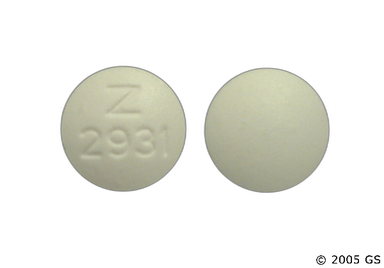
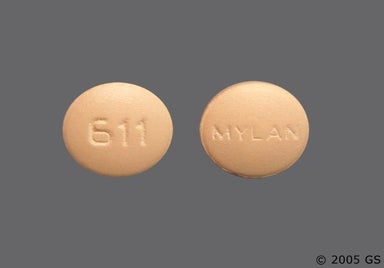
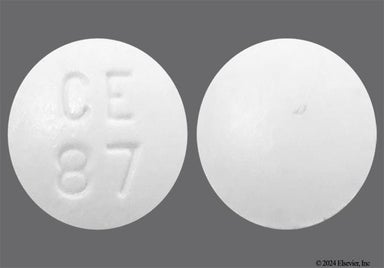
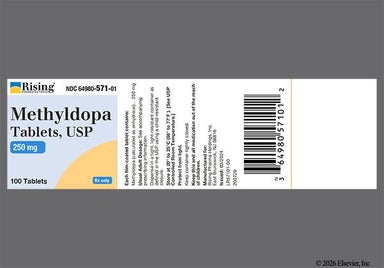
Methyldopa is an oral tablet that's used to treat high blood pressure. It belongs to a group of medications called alpha-2 adrenergic receptor agonists. Because it doesn't last long in your body, it must be taken a few times a day. Methyldopa is preferred over other medications for treating high blood pressure during pregnancy. Some potential side effects include sleepiness, headache, and weakness.

Methyldopa is an alpha-2 adrenergic receptor agonist. It works by signaling the brain to cause your blood vessels to relax. This makes it easier for blood to flow and lowers your blood pressure.
| Common Brands | Aldomet |
|---|---|
| Drug Class | Alpha-2 adrenergic receptor agonist |
| Controlled Substance Classification | Not a controlled medication |
| Generic Status | Lower-cost generic available |
| Availability | Prescription only |

The following side effects may get better over time as your body gets used to the medication. Let your healthcare provider know immediately if you continue to experience these symptoms or if they worsen over time.
Contact your healthcare provider immediately if you experience any of the following.
Along with its needed effects, a medicine may cause some unwanted effects. Although not all of these side effects may occur, if they do occur they may need medical attention.
Check with your doctor immediately if any of the following side effects occur:
Less common
Fever, shortly after starting to take this medicine
Check with your doctor as soon as possible if any of the following side effects occur:
More common
Swelling of feet or lower legs
Rare
Dark or amber urine
diarrhea or stomach cramps (severe or continuing)
fever, chills, troubled breathing, and fast heartbeat
general feeling of discomfort or illness or weakness
joint pain
pale stools
skin rash or itching
stomach pain (severe) with nausea and vomiting
tiredness or weakness after having taken this medicine for several weeks (continuing)
yellow eyes or skin
Some side effects may occur that usually do not need medical attention. These side effects may go away during treatment as your body adjusts to the medicine. Also, your health care professional may be able to tell you about ways to prevent or reduce some of these side effects. Check with your health care professional if any of the following side effects continue or are bothersome or if you have any questions about them:
More common
Drowsiness
dryness of mouth
headache
Other side effects not listed may also occur in some patients. If you notice any other effects, check with your healthcare professional.
Call your doctor for medical advice about side effects. You may report side effects to the FDA at 1-800-FDA-1088.




Methyldopa can cause some serious health issues. This risk may be even higher for certain groups. If this worries you, talk to your doctor or pharmacist about other options.
Although rare, methyldopa can cause serious liver problems. In some cases, this can be life-threatening. Because of this, people with liver problems shouldn't take this medication. Be sure to attend all follow-up appointments and complete any blood tests ordered so your care team can track your liver function. If you experience any unusual vomiting, pale stools, dark urine, stomach pain, or yellowing of your skin and whites of your eyes, seek medical attention right away.
Although very rare, taking methyldopa for a long time can cause a serious condition called hemolytic anemia. This life-threatening problem causes your body to destroy your red blood cells faster than they can be replaced. This typically happens between 6 and 12 months after starting methyldopa. If you're going to be taking this medication for a long time, you'll have to get regular blood tests done to watch for early signs of this condition.
Rarely, methyldopa can lower the number of white blood cells and platelets in your body. White blood cells help your body fight infections, and without enough of them, you can get sick more easily and take longer to recover. Platelets help your blood clot to stop bleeding. You'll have to have blood tests done regularly while you're taking methyldopa to make sure your blood cells are at a normal level. If you experience changes in your blood cells, know that it's reversible. These side effects will go away once you stop taking the medication.


Although certain medicines should not be used together at all, in other cases two different medicines may be used together even if an interaction might occur. In these cases, your doctor may want to change the dose, or other precautions may be necessary. When you are taking this medicine, it is especially important that your healthcare professional know if you are taking any of the medicines listed below. The following interactions have been selected on the basis of their potential significance and are not necessarily all-inclusive.
Using this medicine with any of the following medicines is not recommended. Your doctor may decide not to treat you with this medication or change some of the other medicines you take.
Using this medicine with any of the following medicines is usually not recommended, but may be required in some cases. If both medicines are prescribed together, your doctor may change the dose or how often you use one or both of the medicines.
Using this medicine with any of the following medicines may cause an increased risk of certain side effects, but using both drugs may be the best treatment for you. If both medicines are prescribed together, your doctor may change the dose or how often you use one or both of the medicines.


Contraindications are specific health conditions or situations in which a person should not take a medication due to safety concerns. If you have any of the following conditions or if any of the following apply to you, let your healthcare provider know because Methyldopa will not be safe for you to take.




Prescription savings
Stop paying too much for your prescriptions. Compare prices, get pharmacy coupons, and save up to 80%.Resources
About GoodRx
 Find expert answers to your health questions so you can make the best decisions for yourself and your family.
Health conditions
Medications & treatment
Access & affordability
Well-being
Medication discounts

Yes, Methyldopa is available with a prescription from a healthcare professional. It's currently only available as a generic.
No, Methyldopa isn't a beta blocker. It's an alpha-2 adrenergic receptor agonist. Both types of medications can treat high blood pressure, but they do so in different ways.
Methyldopa starts working around 2 to 3 hours after taking a dose. But it can take 4 to 6 hours to fully kick in to lower your blood pressure.
Methyldopa lowers systolic and diastolic blood pressure by about 13 mmHg / 8 mmHg. Keep in mind that everyone will respond to the medication differently. How well it works for you can also depend on the dose you're taking. Methyldopa isn't a first-choice treatment for high blood pressure because newer medications work just as well or better and don't need to be taken as often.
Many blood pressure medications, including Methyldopa, can cause erectile dysfunction (ED). ED has been reported by some people taking Methyldopa in small studies. This usually happens within the first few days of starting the medication, and goes away within 2 weeks of stopping it. If you're experiencing sexual problems, talk to your prescriber and don't stop taking your blood pressure medication until you do so.
Yes. Methyldopa is considered a safe medication for treating high blood pressure in pregnancy. It isn't known to cause harm to unborn babies and can actually prevent problems that would be life-threatening to both mothers and their babies.
Depression is a possible side effect of Methyldopa. While it doesn't appear to raise the risk of depression for most people, it's known to raise the risk of postpartum depression for people who take this medication during pregnancy. This is because it might lower mood-boosting chemicals in the brain. If you're experiencing any changes to your mood or behavior since starting this medication, speak with your care team.
