






11 Adderall Interactions: Caffeine, Antidepressants, Sudafed, and More
Learn about Adderall interactions with medications, alcohol, caffeine, and more. Be safe and informed — see what to avoid and how Adderall may affect you.
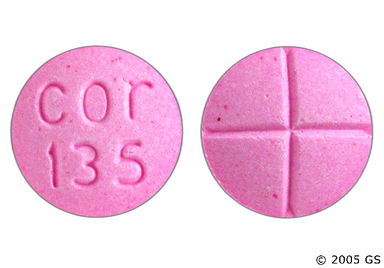
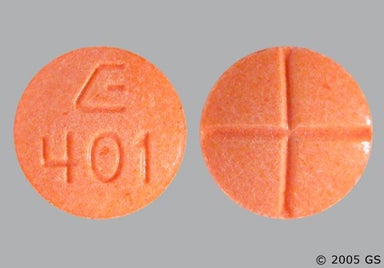
Adderall is a stimulant medication that's used to treat attention deficit-hyperactivity disorder (ADHD) and narcolepsy in adults and children. It contains the instant-release (IR) forms of dextroamphetamine and amphetamine salts. Adderall is available as a brand-name and lower-cost generic tablet that's taken by mouth. Your psychiatrist will adjust the dosage for you based on how well the medication works for you. Common side effects include trouble sleeping and loss of appetite.

Adderall is a stimulant medication. It's not exactly known how Adderall helps to improve attention, focus, and sleep. But it's thought to work by raising the levels of chemicals in your brain called norepinephrine, dopamine, and serotonin.
| Common Brands | Adderall |
|---|---|
| Drug Class | Stimulant |
| Controlled Substance Classification | Schedule II |
| Generic Status | Lower-cost generic available |
| Availability | Prescription only |

Adderall can cause some serious health issues. This risk may be even higher for certain groups. If this worries you, talk to your doctor or pharmacist about other options.
 Adderall is a schedule II controlled substance because it has a high risk for misuse and addiction. Misuse is when a medication is purposefully used in a different way than how it's prescribed. Misusing Adderall can be harmful because it raises your risk for serious side effects such as fast heart rate, high blood pressure, aggressive behavior, and even thoughts of hurting yourself. In addition, misusing Adderall can sometimes lead to addiction. Take Adderall exactly as prescribed to you. Speak with your psychiatrist if you're concerned about this risk.
Using Adderall long term can put you at risk for dependence. This means that over time, you can become physically dependent on Adderall to function normally. Physical dependence is usually related to having withdrawal symptoms, like irritability, nightmares, and sleep problems, if you take the medication for a long time and then suddenly stop or suddenly lower your dose. Take Adderall exactly as prescribed to you. Don't lower your dose or stop taking the medication without talking to your psychiatrist first.
There have been reports of sudden death, stroke, and heart attack in people with a heart condition who took Adderall at usual doses. This medication can also raise blood pressure and heart rate. Tell your psychiatrist if you have a history of heart problems before you start Adderall to make sure it's safe for you to take. Your psychiatrist will check for heart problems before starting treatment. Let your psychiatrist or primary care provider know if you experience unexplained fainting, chest pain with physical activity, or irregular heartbeat while you're taking Adderall.
Some people who've taken a stimulant like Adderall can have mental health problems, such as hallucinations (seeing things that aren't really there), aggressive behavior, unclear thinking, and mania. This medication can worsen mood-related problems that you already have, but these changes in behavior can also happen even if you haven't had these problems before. Talk to your psychiatrist right away if you develop these mood or behavior changes while you're taking Adderall because you might have to stop the medication.
In studies, stimulants like Adderall slowed the growth rate (both in height and weight) in children. Your child's psychiatrist will check your child's growth progress closely. Your child might need to briefly stop or completely stop taking Adderall if there's a possibility of any slowed growth that's happened. Talk to your child's psychiatrist if you have any concerns.
Although rare, Adderall can cause people to have seizures more easily, especially if you've had seizures before. Get medical help right away if you have a seizure. You'll likely have to stop taking Adderall.
Adderall might be linked to poor blood circulation problems, such as Raynaud's phenomenon. People with Raynaud's phenomenon can have episodes of poor blood flow in the fingers and toes, which can cause the skin to turn pale and to feel cold, numb, or painful. Symptoms are usually mild. But rarely, it can cause sores or ulcers in more serious cases. Let your psychiatrist know if you notice symptoms of circulation problems, such as instances of numbness or pain in your fingers or toes. Your psychiatrist might need to lower your dose of Adderall or consider a different medication.
Serotonin syndrome is a rare, but potentially life-threatening condition that happens when there's too much serotonin in the brain. Serotonin is one of the chemicals in your brain responsible for your mood.
Your risk for this condition goes up if you use Adderall with other medications that also affect serotonin levels, such as antidepressants, MAOIs (e.g., phenelzine (Nardil)), and certain migraine medications (e.g., sumatriptan (Imitrex)). Tell your psychiatrist, pharmacist, and primary care provider about all the medications you take or plan to take so they can make sure your medications are safe for you.
Be aware of symptoms of serotonin syndrome, like fast heart rate, sweating, muscle stiffness or spasms, high fever, and confusion. Get medical help right away if you have any of these symptoms.
Adderall can interact with many common medications. For example, Adderall counteracts (works against) the effects of some blood pressure medications. This means your blood pressure medications might not work as well for you if you take them with Adderall. In addition, avoid taking Adderall with medications that affect serotonin levels, such as monoamine oxidase inhibitors (MAOIs), to lower the risk of serotonin syndrome. Taking MAOIs and Adderall together can also put you at risk for severely high blood pressure.
Make sure your psychiatrist, pharmacist, and primary care provider know about all the medications you take (including over-the-counter medications and supplements) so they can check for harmful drug interactions with Adderall. Don't start any new medications while you're taking Adderall without letting them know.

The following side effects may get better over time as your body gets used to the medication. Let your healthcare provider know immediately if you continue to experience these symptoms or if they worsen over time.
Contact your healthcare provider immediately if you experience any of the following.
Side effects that you should report to your care team as soon as possible:
Side effects that usually do not require medical attention (report these to your care team if they continue or are bothersome):




 Tablet
| Dosage | Quantity | Price as low as | Price per unit |
|---|---|---|---|
| 7.5mg | 60 tablets | $29.28 | $0.49 |
| 15mg | 60 tablets | $26.38 | $0.44 |
| 20mg | 30 tablets | $16.99 | $0.57 |
| 30mg | 60 tablets | $28.85 | $0.48 |
| 5mg | 30 tablets | $16.16 | $0.54 |
| 12.5mg | 60 tablets | $28.08 | $0.47 |
| 10mg | 30 tablets | $16.88 | $0.56 |
Your psychiatrist will adjust your dose based on how well Adderall is helping your symptoms and whether you're having side effects.
ADHD
Narcolepsy

GoodRx has partnered with to provide reviews on the different aspects of Adderall.
Learn more about the effectiveness of Adderall based on real life experiences.
Based on 485 people taking this medication
3.8
3.9
4.1
3.5
3.9
3.8
Severity of side effects
Based on 865 people taking this medication
0%
50%
100%
Decreased appetite
8%
Dry mouth
8%
Insomnia
5%
Weight loss
4%
Headaches
4%
Reasons people stopped taking Adderall
Based on 556 people who have taken this medication
Did not seem to work
26%
Side effects too severe
24%
Other
20%
Doctor's advice
17%
Personal research
5%
Expense
5%
Change in health plan coverage
4%
Course of treatment ended
3%
How long people take Adderall
Based on 1429 people who have taken this medication
0%
50%
100%


Contraindications are specific health conditions or situations in which a person should not take a medication due to safety concerns. If you have any of the following conditions or if any of the following apply to you, let your healthcare provider know because Adderall will not be safe for you to take.












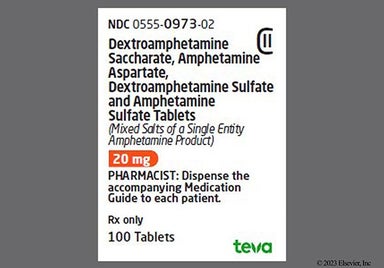

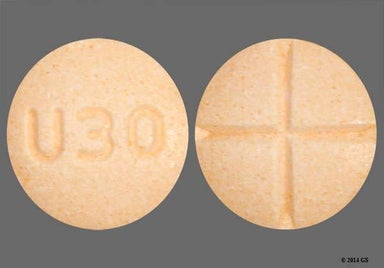
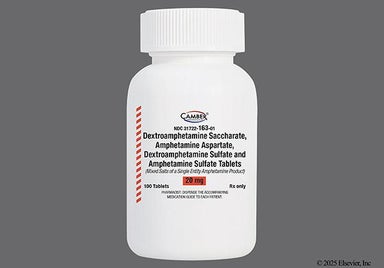

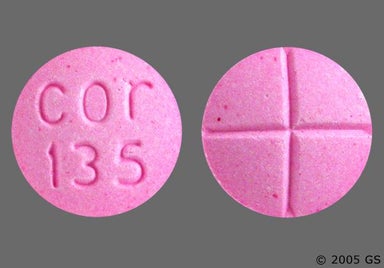


Prescription savings
Stop paying too much for your prescriptions. Compare prices, get pharmacy coupons, and save up to 80%. Find expert answers to your health questions so you can make the best decisions for yourself and your family.
Health conditions
Medications & treatment
Access & affordability
 Our monthly healthcare membership can help you save thousands on your prescription costs.
Resources

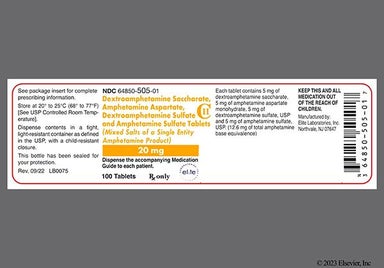
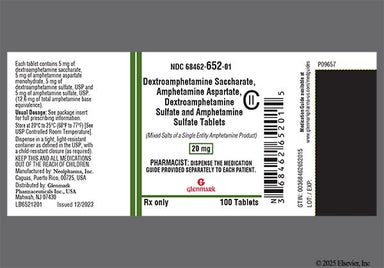
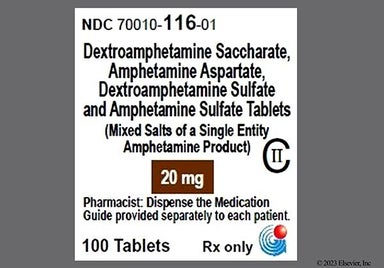
Adderall is a mixture of instant-release (IR) dextroamphetamine and amphetamine salts. More specifically, Adderall contains dextroamphetamine saccharate, dextroamphetamine sulfate, amphetamine aspartate monohydrate, and amphetamine sulfate. These ingredients work together to raise the levels of certain chemicals in your brain to help treat ADHD and narcolepsy.
Yes. D-amphetamine salt combo is a generic name of Adderall. "D-amphetamine salt combo" refers to a mixture of dextroamphetamine and amphetamine salts within a single medication.
Both Adderall and Adderall XR contain the same active ingredients: dextroamphetamine and amphetamine salts. But Adderall is the immediate-release version and Adderall XR is the extended-release version. Adderall XR slowly releases medication into the body throughout the day, so you only need to take it once a day. On the other hand, Adderall releases medication into the body quickly, and the effects of each tablet might not last as long as Adderall XR. So you might need to take an additional dose of Adderall during the day if prescribed. Talk to your psychiatrist or pharmacist if you have more questions about the differences between Adderall and Adderall XR.
After you take Adderall, you should feel like it's easier to pay attention or focus on one task than if you didn't take the medication. You might also feel certain side effects, such as dry mouth, low appetite, or a racing heart.
Adderall starts working within 1 hour. It's recommended that you take your first dose of Adderall of the day when you wake up. This might help make sure the effects of the medication kick in at the start of school or work.
One dose of Adderall lasts for about 4 to 6 hours. This is why Adderall is typically taken multiple times per day. Try not to take a dose of Adderall too late in the day; otherwise, you might have trouble falling asleep.
Although stimulants like Adderall work well to treat ADHD and narcolepsy, they also have several side effects and risks. Examples include trouble sleeping, low appetite, and possible growth problems in children. Studies show that long-term use of stimulants can raise the risk of several problems, such as certain heart problems (e.g., high blood pressure, heart rhythm problems), mental health problems, addiction, and stimulant use disorder. Your healthcare team will regularly follow up with you throughout treatment to make sure Adderall isn't affecting your overall health. If it is, your psychiatrist might recommend a lower dose or a change in your treatment plan.
Yes, it's possible for Adderall to raise your blood pressure, but it doesn't appear to be by much. Studies show that Adderall can raise your blood pressure by about 2 to 4 mmHg on average. Your psychiatrist or primary care provider might recommend that you check your blood pressure at home while you're taking Adderall if you have high blood pressure.
