Zyprexa Relprevv
Zyprexa Relprevv (olanzapine) is an atypical antipsychotic. It's a long-acting injection used to treat schizophrenia in adults. This medication is injected into the muscle, typically every 2 to 4 weeks, by a healthcare provider in a clinic setting. Some of the more common side effects of this medication include weight gain, nausea, and making you more sleepy.


What is Zyprexa Relprevv (olanzapine)?
What is Zyprexa Relprevv (olanzapine) used for?
How Zyprexa Relprevv (olanzapine) works
Zyprexa Relprevv (olanzapine) is an atypical antipsychotic. It's thought to work by balancing out the levels of chemicals (dopamine and serotonin) in the brain to help control thoughts and behaviors.
Drug facts
More on Zyprexa Relprevv (olanzapine) essentials


Side effects of Zyprexa Relprevv (olanzapine)
The following side effects may get better over time as your body gets used to the medication. Let your healthcare provider know immediately if you continue to experience these symptoms or if they worsen over time.
Common Side Effects
- Headache (up to 18%)
- Sleepiness (up to 13%)
- Cough (up to 9%)
- Nasal congestion (up to 7%)
- Weight gain (up to 7%)
- Diarrhea (up to 7%)
- Dry mouth (up to 6%)
- Runny nose and sore throat (up to 6%)
- More appetite (up to 6%)
- Vomiting (up to 6%)
- Back pain (up to 5%)
- Nausea (up to 5%)
Less Common Side Effects
- Stomach pain
- Pain at injection site
- Upper respiratory tract infection
- Joint pain
- Muscle stiffness
- Muscle spasms
- Dizziness
- Restlessness
- Ear pain
- Toothache
- Tiredness
- Vaginal discharge
Zyprexa Relprevv (olanzapine) serious side effects
Contact your healthcare provider immediately if you experience any of the following.
- Post-injection delirium sedation syndrome (PDSS): sleepiness, confusion, disorientation, agitation, uncontrollable movements, trouble talking or walking, aggression, dizziness, weakness, high blood pressure, and seizures
- Seizures
- Suicidal ideation or thoughts of self-harm
- Neuroleptic malignant syndrome: fever, sweating, stiff muscles, confusion, not aware of your surroundings, fast or irregular heartbeat
- Difficulty swallowing
- Dangerously high blood sugar: frequently thirsty, needing to urinate often, tiredness, nausea, vomiting, difficulty breathing, fruity breath, dry mouth
- Serious infections: fever, headache, chills, body aches, cough, weakness
- Serious allergic and skin reactions: hives, blisters, skin reddening or peeling, swelling of the lips or tongue, difficulty breathing
More on Zyprexa Relprevv (olanzapine) side effects

The following Zyprexa Relprevv (olanzapine) side effects have also been reported
Along with its needed effects, a medicine may cause some unwanted effects. Although not all of these side effects may occur, if they do occur they may need medical attention.
Check with your doctor or nurse immediately if any of the following side effects occur:
More common
Bloating or swelling of the face, arms, hands, lower legs, or feet
blurred vision
change in vision
change in walking and balance
clumsiness or unsteadiness
difficulty with speaking
difficulty with swallowing
impaired vision
inability to sit still
loss of balance control
mask-like face
muscle trembling, jerking, or stiffness
need to keep moving
rapid weight gain
restlessness
shakiness in the legs, arms, hands, or feet
shuffling walk
slowed movements
slurred speech
stiffness of the arms and legs
tic-like (jerky) movements of the head, face, mouth, and neck
tingling of the hands or feet
trembling or shaking of the fingers, hands, or feet
twisting movements of the body
uncontrolled movements, especially of the face, neck, and back
unusual weight gain or loss
Less common
Bladder pain
bloody or cloudy urine
bruising
burning, crawling, itching, numbness, prickling, "pins and needles", or tingling feelings
difficult or labored breathing
difficult, burning, or painful urination
dizziness
excessive muscle tone
frequent urge to urinate
headache
inability to move the eyes
increased blinking or spasms of the eyelid
itching of the vagina or genital area
lack of coordination
large, flat, blue, or purplish patches in the skin
loss of bladder control
loss of memory
lower back or side pain
muscle tension or tightness
nervousness
pain, redness, and swelling at the injection site
pounding in the ears
problems with memory
rhythmic movement of the muscles
slow, fast, pounding, or irregular heartbeat or pulse
speaking is less clear than usual
sticking out the tongue
thick, white vaginal discharge with no odor or with a mild odor
tightness in the chest
trouble with breathing, speaking, or swallowing
twitching
uncontrolled twisting movements of the neck, trunk, arms, or legs
unusual or incomplete body or facial movements
weakness of the arms and legs
Some side effects may occur that usually do not need medical attention. These side effects may go away during treatment as your body adjusts to the medicine. Also, your health care professional may be able to tell you about ways to prevent or reduce some of these side effects. Check with your health care professional if any of the following side effects continue or are bothersome or if you have any questions about them:
More common
Acid or sour stomach
back pain
belching
change in personality
difficulty having a bowel movement (stool)
discouragement
feeling sad or empty
increased appetite
increased cough
indigestion
lack of appetite
lack or loss of strength
loss of interest or pleasure
stomach discomfort, upset, or pain
thirst
trouble sleeping
trouble with concentrating
watering of the mouth
Other side effects not listed may also occur in some patients. If you notice any other effects, check with your healthcare professional.
Call your doctor for medical advice about side effects. You may report side effects to the FDA at 1-800-FDA-1088.

Pros and cons of Zyprexa Relprevv (olanzapine)
Pros
- Given once every 2 to 4 weeks, depending on the dose
- Good choice for people who don't want to take medications by mouth
Cons
- Must be given as an injection into the buttocks muscle by a healthcare provider
- Need to be monitored for at least 3 hours after each injection for severe sleepiness

Pharmacist tips for Zyprexa Relprevv (olanzapine)

- Make sure to mark your appointments in your calendar to see your provider and receive your Zyprexa Relprevv (olanzapine) doses so you don't miss any of your doses.
- You'll need to stay at the clinic where you receive Zyprexa Relprevv (olanzapine) for about 3 hours after each injection. This is so you can be monitored for extreme sleepiness or confusion (delirium) after the injection and get medical attention if needed.
- Make arrangements to have someone drive you home after the Zyprexa Relprevv (olanzapine) injection. You shouldn't drive or do anything that requires focus or concentration on the days you receive the medication because of the risk of sleepiness and dizziness.
- Zyprexa Relprevv (olanzapine) interacts with a lot of commonly prescribed medications. For example, Zyprexa Relprevv (olanzapine) can affect blood pressure, so your provider might need to adjust the dose of blood pressure medications if you're taking any.
- Avoid alcohol while taking Zyprexa Relprevv (olanzapine) because it can worsen side effects (e.g., drowsiness, dizziness, low blood pressure) as well as worsen your schizophrenic symptoms.
- Zyprexa Relprevv (olanzapine) can raise your blood sugar levels. If you have diabetes, ask your provider if you need to check your blood sugar more often while taking Zyprexa Relprevv (olanzapine).
- Zyprexa Relprevv (olanzapine) can raise cholesterol (fat) levels in your blood and can cause weight gain. It's important that you eat a healthy and balanced diet low in fat and sugar and maintain a regular exercise routine while taking Zyprexa Relprevv (olanzapine).
- Zyprexa Relprevv (olanzapine) can cause a drop in blood pressure when moving positions, such as from sitting to standing. This is more common when starting treatment and when your dose changes. Make sure to get up slowly and try to hold onto something for stability. If you end up falling or hitting your head, seek medical help right away.
- Although rare, Zyprexa Relprevv (olanzapine) can cause difficulty swallowing, which can raise the risk for choking. Make sure to take small bites of food and eat slowly to lower your risk for choking.
- Drink water to stay hydrated, especially if you're out in the sun or exercising. Be careful if you're traveling to a place that is very hot. This is because Zyprexa Relprevv (olanzapine) might make it hard for your body to maintain a normal body temperature.

Common questions about Zyprexa Relprevv (olanzapine)
Even though studies have shown Zyprexa Relprevv (olanzapine) gets into your bloodstream within a few hours, it can take about 1 week for Zyprexa Relprevv (olanzapine) to fully kick in. The effects of the medication typically last for about 1 month.
No, Zyprexa Relprevv (olanzapine) isn't a controlled substance because it doesn't have a risk of misuse or dependence.
No, Zyprexa Relprevv (olanzapine) isn't a benzodiazepine; it's an atypical antipsychotic.
Yes, it's possible to gain weight from taking Zyprexa Relprevv (olanzapine). You might start to notice weight gain within the first few weeks of starting the medication. It might take 4 to 9 months for changes in weight to stabilize. The amount of weight you can gain is hard to predict because it'll depend on your dose and how long you're taking Zyprexa Relprevv (olanzapine) for. In studies, adults taking oral olanzapine (Zyprexa) for 6 weeks gained an average of 6 lbs. To lower your risk for weight gain while taking Zyprexa Relprevv (olanzapine), make sure to have a healthy diet and regular exercise routine. Let your provider know if you have more questions about Zyprexa Relprevv (olanzapine) and weight gain.
Yes, sleepiness is one of the more common side effects of Zyprexa Relprevv (olanzapine). Make sure to tell your provider if you're taking other medications that cause sleepiness. Also, it's best to avoid alcohol because it can make you more sleepy and dizzy. Contact your provider if you feel too sleepy during the day to the point where it's interfering with your daily activities. They might recommend tips to try and cope, or they might lower your Zyprexa Relprevv (olanzapine) dose.
Zyprexa Relprevv (olanzapine) isn't FDA-approved for the treatment of anxiety. But some studies that suggest olanzapine might help with anxiety. Talk to your provider about available treatment options for anxiety.
The Zyprexa Relprevv Patient Care Program is a special program you need to enroll in before you can receive Zyprexa Relprevv (olanzapine) injections. This is because this medication can cause extreme sleepiness and delirium after each injection, which can be life-threatening. Your healthcare provider, the clinic where you'll get your injections, and the pharmacy that delivers Zyprexa Relprevv (olanzapine) to the clinic all must register with this program so that they're aware of these risks. Please be aware that you'll need to stay at the clinic for at least 3 hours after each injection so that the clinic staff can monitor you for extreme sleepiness and delirium and give you medical help if needed.

How to save using GoodRx


Risks and warnings for Zyprexa Relprevv (olanzapine)
Zyprexa Relprevv (olanzapine) can cause some serious health issues. This risk may be even higher for certain groups. If this worries you, talk to your doctor or pharmacist about other options.
Extreme sleepiness and delirium after injection
 Though rare, there has been reports of people experiencing extreme sleepiness (sedation), coma, and confusion (delirium) after getting Zyprexa Relprevv (olanzapine). This is called post-injection delirium/sedation syndrome and it can be life-threatening. Because of this risk, you, your provider, the clinic where you get treatment, and the pharmacy that delivers Zyprexa Relprevv (olanzapine) to your clinic, must all be enrolled in a special program called the Zyprexa Relprevv Patient Care Program. After your injection, you'll be monitored for at least 3 hours at the clinic for symptoms. If needed, you'll be able to get medical attention right away.
 When your provider thinks its safe for you to leave the clinic, a caregiver must go with you. You can't go home by yourself because there's still a possible risk of being extremely sleepy. Don't drive or do anything that requires a lot of focus or attention for the rest of the day. Get medical help right away if you experience symptoms, such as sleepiness, confusion, anxiety, uncontrollable movements, slurred speech, dizziness, weakness, high blood pressure, and seizures.
Higher risk of death in older people with dementia-related psychosis
- Risk factors: Age 65 years and older with dementia and psychosis
Older adults who also have dementia sometimes have some of the symptoms of schizophrenia, like hallucinations and delusions. This is called dementia-related psychosis, and it shouldn't be treated with Zyprexa Relprevv (olanzapine). Older people with dementia-related psychosis have a high risk of death if they take medications like Zyprexa Relprevv (olanzapine). Because of this risk, Zyprexa Relprevv (olanzapine) shouldn't be used in people 65 years and older with dementia-related psychosis. Let your provider know if you or your loved one has dementia before starting Zyprexa Relprevv (olanzapine).
Worsening depression, suicidal thoughts and behavior
Having schizophrenia can put people at risk for self-harm or suicidal thoughts. If you or anyone around you notice that you have suicidal thoughts or behavior, get medical help right away.
Severe allergic skin reactions
Although rare, Zyprexa Relprevv (olanzapine) can cause serious skin reactions, such as Drug Reaction with Eosinophilia and Systemic Symptoms (DRESS). If you notice changes in your skin (e.g., rash, blisters, swollen lymph nodes, skin reddening, skin peeling) or experience swelling in your face or trouble breathing, get medical attention right away.
Neuroleptic malignant syndrome
Taking antipsychotic medications like Zyprexa Relprevv (olanzapine) can cause a rare, but life-threatening condition called neuroleptic malignant syndrome (NMS). Symptoms include fever, sweating, stiff muscles, confusion, not aware of your surroundings, and fast or irregular heartbeat. If you experience any of these symptoms while taking Zyprexa Relprevv (olanzapine), get medical attention as soon as possible. Your provider will likely have you stop taking Zyprexa Relprevv (olanzapine) and switch you to something else.
High blood sugar, high cholesterol, and weight gain
- Risk factors: History of diabetes | History of high cholesterol
Zyprexa Relprevv (olanzapine) can raise your blood sugar levels. Rarely, it can reach dangerous levels resulting in coma or death. Let your provider know if you have symptoms of high blood sugar, such as feeling very hungry or thirsty, urinating more often, stomach pain, weakness, or fruity-smelling breath.
Zyprexa Relprevv (olanzapine) can also cause high cholesterol levels and weight gain. Your provider might check your weight and order blood tests regularly to make sure your blood sugar, cholesterol, and weight aren't too high.
Difficulty controlling body movements
Zyprexa Relprevv (olanzapine) can cause uncontrolled and possibly permanent muscle movements in the tongue, face, mouth, lips, neck, hands, arms, legs, and feet (tardive dyskinesia). To lower your risk of tardive dyskinesia, your provider will have you take the lowest dose that treats your symptoms. Get medical help right away if you notice any unusual movements you can't control. This side effect can sometimes occur even after you stop the medication.
Changes in blood pressure and higher risk of falls
- Risk factors: Low blood pressure | Taking medications that lower blood pressure | History of medical conditions that can lower blood pressure | High Zyprexa Relprevv (olanzapine) doses
Zyprexa Relprevv (olanzapine) can make you tired, lower your blood pressure, or cause you to lose your balance, which can lead to falls. When standing from a sitting or lying position, make sure to get up slowly and hold onto something. If you experience a fall while taking Zyprexa Relprevv (olanzapine), contact your provider.
Risk of infection (from low white blood cell count)
- Risk factors: History of low blood cell counts
Though rare, Zyprexa Relprevv (olanzapine) can lower your white blood cell counts (WBCs) and put you at risk for developing infections. You'll need to get blood tests done regularly during the first few months of taking Zyprexa Relprevv (olanzapine) so your provider can make sure your WBCs are in a safe range. If your WBC count drops too low, you'll likely need to stop taking Zyprexa Relprevv (olanzapine). If you develop any signs of infection, such as fever, tiredness, chills, cough, or trouble breathing, and they don't go away, contact your provider right away.
Seizures
- Risk factors: History of seizures | Health conditions that make it easier to get seizures
Zyprexa Relprevv (olanzapine) can potentially cause seizures. Before starting this medication, let your provider know if you have a history of seizures or have a medical condition that puts you at risk for getting seizures.
High prolactin levels
Antipsychotics like Zyprexa Relprevv (olanzapine) can raise the levels of prolactin in your body. High prolactin can lead to fertility problems, enlarged male breasts, sexual dysfunction, absence or irregular menstrual periods, and weak bones. Your provider will likely measure your prolactin levels during treatment to make sure they aren't too high.
Difficulty concentrating and extreme sleepiness
- Risk factors: Taking high doses of Zyprexa Relprevv (olanzapine) | Age 65 years or older | Drinking alcohol | Taking other medications that can cause sleepiness
Zyprexa Relprevv (olanzapine) can cause extreme sleepiness and lower your ability to think, react, and focus. Your risk is higher if you're also taking other medications that can cause drowsiness, such as benzodiazepines, anxiety medications, muscle relaxants, and sleep medications. Make sure you know how this medication affects you before driving a car or doing activities that require your concentration. Talk to your healthcare provider right away if you feel too sleepy from taking Zyprexa Relprevv (olanzapine).
Worsening of bladder problems, constipation, and bowel problems
Zyprexa Relprevv (olanzapine) can cause anticholinergic problems, such as constipation, dry mouth, and fast heart rate. The risk for these side effects is higher if you're also taking other anticholinergic medications.
You don't necessarily need to stop Zyprexa Relprevv (olanzapine) if you have these symptoms. But if you've certain medical conditions, such as difficulty urinating, enlarged prostate, constipation, or a history of bowel blockage, this medication can make those conditions worse. Let your provider know if these side effects make it difficult for you to go about your daily life, you might need to switch to a different medication.

Zyprexa Relprevv (olanzapine) dosage
Typical dosage for Zyprexa Relprevv (olanzapine)
Zyprexa Relprevv (olanzapine) is given as an injection into the buttock muscle by a healthcare provider.
Your provider will calculate your dose of Zyprexa Relprevv (olanzapine) based on what dose of oral olanzapine (Zyprexa) you were previously taking.
- Treatment during the first 2 months: The typical dose is 210 mg or 300 mg injected every 2 weeks, or 405 mg every month.
- Treatment after month 2: The typical dose is 150 mg, 210 mg, or 300 mg injected every 2 weeks. Or, 300 mg or 405 mg every month.

Interactions between Zyprexa Relprevv (olanzapine) and other drugs
Although certain medicines should not be used together at all, in other cases two different medicines may be used together even if an interaction might occur. In these cases, your doctor may want to change the dose, or other precautions may be necessary. When you are receiving this medicine, it is especially important that your healthcare professional know if you are taking any of the medicines listed below. The following interactions have been selected on the basis of their potential significance and are not necessarily all-inclusive.
Using this medicine with any of the following medicines is not recommended. Your doctor may decide not to treat you with this medication or change some of the other medicines you take.
- Bepridil
- Bromopride
- Cisapride
- Dronedarone
- Levomethadyl
- Mesoridazine
- Metoclopramide
- Pimozide
- Piperaquine
- Saquinavir
- Sparfloxacin
- Terfenadine
- Thioridazine
- Ziprasidone
Using this medicine with any of the following medicines is usually not recommended, but may be required in some cases. If both medicines are prescribed together, your doctor may change the dose or how often you use one or both of the medicines.
- Abametapir
- Alfentanil
- Alprazolam
- Amiodarone
- Amisulpride
- Anagrelide
- Apomorphine
- Aripiprazole
- Aripiprazole Lauroxil
- Arsenic Trioxide
- Benzhydrocodone
- Bromazepam
- Buprenorphine
- Buserelin
- Butorphanol
- Calcium Oxybate
- Cannabidiol
- Capmatinib
- Carbamazepine
- Ceritinib
- Cetirizine
- Chloroquine
- Clarithromycin
- Clobazam
- Clofazimine
- Clomipramine
- Clozapine
- Codeine
- Crizotinib
- Dabrafenib
- Dasatinib
- Degarelix
- Delamanid
- Deslorelin
- Deutetrabenazine
- Diazepam
- Dihydrocodeine
- Donepezil
- Doxylamine
- Efavirenz
- Encorafenib
- Entrectinib
- Escitalopram
- Esketamine
- Fentanyl
- Fingolimod
- Flibanserin
- Fluconazole
- Fluoxetine
- Formoterol
- Foscarnet
- Fostemsavir
- Gabapentin
- Gabapentin Enacarbil
- Glasdegib
- Glucagon
- Glycopyrrolate
- Glycopyrronium Tosylate
- Gonadorelin
- Goserelin
- Histrelin
- Hydrocodone
- Hydromorphone
- Hydroxychloroquine
- Hydroxyzine
- Inotuzumab Ozogamicin
- Ivabradine
- Ivosidenib
- Ketamine
- Ketoconazole
- Lefamulin
- Lemborexant
- Lenvatinib
- Levocetirizine
- Levofloxacin
- Levorphanol
- Lithium
- Lofexidine
- Lorazepam
- Loxapine
- Macimorelin
- Magnesium Oxybate
- Meperidine
- Methacholine
- Methadone
- Metronidazole
- Midazolam
- Milnacipran
- Mirtazapine
- Morphine
- Morphine Sulfate Liposome
- Moxifloxacin
- Nafarelin
- Nalbuphine
- Nilotinib
- Ondansetron
- Osilodrostat
- Osimertinib
- Oxaliplatin
- Oxycodone
- Oxymorphone
- Ozanimod
- Panobinostat
- Pasireotide
- Pazopanib
- Pentazocine
- Periciazine
- Pimavanserin
- Pitolisant
- Pixantrone
- Ponesimod
- Posaconazole
- Potassium Oxybate
- Pregabalin
- Quetiapine
- Remifentanil
- Remimazolam
- Revefenacin
- Ribociclib
- Scopolamine
- Secretin Human
- Selpercatinib
- Sertraline
- Sevoflurane
- Siponimod
- Sodium Oxybate
- Solifenacin
- Sotalol
- Sufentanil
- Sulpiride
- Sunitinib
- Tacrolimus
- Tapentadol
- Tetrabenazine
- Tiotropium
- Tramadol
- Trazodone
- Triclabendazole
- Triptorelin
- Vandetanib
- Vemurafenib
- Vinflunine
- Voclosporin
- Zuclopenthixol
Using this medicine with any of the following medicines may cause an increased risk of certain side effects, but using both drugs may be the best treatment for you. If both medicines are prescribed together, your doctor may change the dose or how often you use one or both of the medicines.
- Amprenavir
- Betel Nut
- Ciprofloxacin
- Fluvoxamine
- Fosamprenavir
- Haloperidol
- Ritonavir
- Valproic Acid

What are alternatives to Zyprexa Relprevv (olanzapine)?

News about Zyprexa Relprevv (olanzapine)


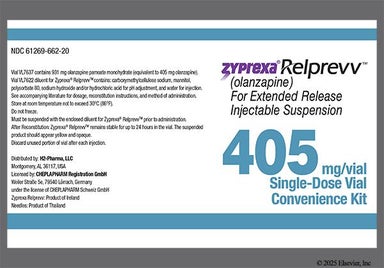
Zyprexa Relprevv (olanzapine) images