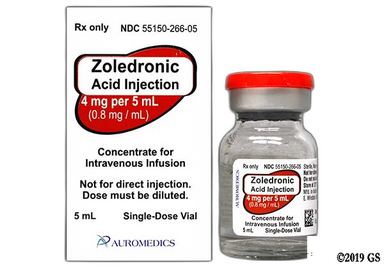
zoledronic acid
Zoledronic acid (Zometa) is a bisphosphonate. It helps prevent fractures in people with cancer that has spread to their bones. Zoledronic acid (Zometa) can also prevent or treat high blood calcium levels, which is a result of certain types of cancer. Zoledronic acid (Zometa) is given as an infusion into the veins. It can cause mild nausea and bone pain as side effects. To lower the risk of a rare, but serious complication called osteonecrosis of the jaw, it’s important to floss and brush your teeth regularly while receiving zoledronic acid (Zometa).


What is Zoledronic acid (Zometa)?
What is Zoledronic acid (Zometa) used for?
- High calcium levels in the blood due to cancer, also known as hypercalcemia of malignancy
- Multiple myeloma
- People with solid cancers that have spread to the bone (bone metastases)
How Zoledronic acid (Zometa) works
Different cells in the body maintain healthy bones by constantly breaking down and reforming bones. One type of cell that plays an important role in this process is called osteoclasts. When cancer spreads to the bones, the tumor sometimes use osteoclasts to damage healthy bone tissue.
Zoledronic acid (Zometa) is a bisphosphonate. It prevents bones from breaking down by blocking osteoclasts. In doing so, zoledronic acid (Zometa) lowers the risk of bone fractures and also the amount of calcium that’s released into the blood.
Drug facts
More on Zoledronic acid (Zometa) essentials


Side effects of Zoledronic acid (Zometa)
The following side effects may get better over time as your body gets used to the medication. Let your healthcare provider know immediately if you continue to experience these symptoms or if they worsen over time.
Common Side Effects
- Bone pain (up to 55%)
- Low phosphate levels in blood (up to 51%)
- Nausea (up to 46%)
- Fever (up to 44%)
- Changes in serum creatinine (up to 40%)
- Tiredness (39%)
- Low red blood cells (up to 33%)
- Vomiting (up to 32%)
- Constipation (up to 31%)
- Trouble breathing (27%)
Less Common Side Effects
- Weakness
- Diarrhea
- Muscle and joint pain
- Cough
- Lower appetite
- Leg swelling
- Pain at tumor site
Zoledronic acid (Zometa) serious side effects
Contact your healthcare provider immediately if you experience any of the following.
- Low calcium in blood: irregular heartbeat, muscle stiffness, numbness, seizures
The following Zoledronic acid (Zometa) side effects have also been reported
Along with its needed effects, a medicine may cause some unwanted effects. Although not all of these side effects may occur, if they do occur they may need medical attention.
Check with your doctor or nurse immediately if any of the following side effects occur:
More common
Agitation
black, tarry stools
blurred vision
chills
coma
confusion
convulsions
difficult or labored breathing
dizziness
dizziness, faintness, or lightheadedness when getting up suddenly from a lying or sitting position
irregular heartbeat
irritability
lack or loss of strength
lethargy
lower back or side pain
muscle pain or cramps
muscle trembling or twitching
nausea or vomiting
numbness and tingling around the mouth, fingertips, or feet
painful or difficult urination
pale skin
rapid weight gain
seizures
shaking of the hands, arms, feet, legs, or face
skin rash, cracks in the skin at the corners of the mouth, or soreness or redness around the fingernails and toenails
sores, ulcers, or white spots on the lips or mouth
stupor
sudden sweating
swollen glands
tightness in the chest
trouble breathing with exercise
unusual bleeding or bruising
unusual tiredness or weakness
Less common
Feeling of constant movement of self or surroundings
muscle cramps in the hands, arms, feet, legs, or face
neck pain
pounding in the ears
rapid breathing
sensation of spinning
slow or fast heartbeat
sunken eyes
tingling of the hands or feet
Incidence not known
Blurred vision or other change in vision
decreased frequency or amount of urine
decreased vision
eye tenderness
heavy jaw feeling
increased blood pressure
increased tearing
increased thirst
large, hive-like swelling on the face, eyelids, lips, tongue, throat, hands, legs, feet, or sex organs
loosening of a tooth
pain, swelling, or numbness in the mouth or jaw
redness of the eye
sensitivity of the eye to light
severe eye pain
swelling of the face, hands, fingers, lower legs, or ankles
Some side effects may occur that usually do not need medical attention. These side effects may go away during treatment as your body adjusts to the medicine. Also, your health care professional may be able to tell you about ways to prevent or reduce some of these side effects. Check with your health care professional if any of the following side effects continue or are bothersome or if you have any questions about them:
More common
Abdominal or stomach pain
back pain
bad, unusual, or unpleasant (after) taste
bladder pain
blistering, crusting, irritation, itching, or reddening of the skin
bloody or cloudy urine
bone pain
burning, crawling, itching, numbness, prickling, “pins and needles”, or tingling feelings
change in taste
cracked lips
cracked, dry, or scaly skin
difficulty with swallowing
discouragement
ear congestion
feeling sad or empty
frequent urge to urinate
hair loss or thinning hair
headache
hyperventilation
joint pain or swollen joints
loss of appetite
loss of interest or pleasure
loss of voice
muscle stiffness or difficulty with moving
nasal congestion or runny nose
pain, swelling, or redness in the joints
partial loss of feeling
seeing, hearing, or feeling things that are not there
sleepiness or unusual drowsiness
swelling or inflammation of the mouth
thirst
trouble concentrating
trouble sleeping
unusually cold, shivering
vomiting
Less common
Acid or sour stomach
belching
indigestion
red streaks on the skin
stomach discomfort or upset
swelling, tenderness, or pain at the injection site
unusual drowsiness, dullness, tiredness, weakness, or feeling of sluggishness
wrinkled skin
Other side effects not listed may also occur in some patients. If you notice any other effects, check with your healthcare professional.
Call your doctor for medical advice about side effects. You may report side effects to the FDA at 1-800-FDA-1088.

Get your GoodRx coupon

Pros and cons of Zoledronic acid (Zometa)
Pros
- Infusion usually only takes around 15 minutes
- Recommended treatment option for cancer that has spread to the bones
- Recommended treatment for high calcium related to cancer
Cons
- Given as an intravenous infusion, so requires a needle for administration
- Can cause a serious condition called osteonecrosis of the jaw
- Might cause kidney problems

Pharmacist tips for Zoledronic acid (Zometa)

- Zoledronic acid (Zometa) can cause a serious side effect called osteonecrosis of the jaw. The risk is higher for people who have dental problems or go through dental procedures while taking zoledronic acid (Zometa). It’s a good idea to schedule a dental exam before you start taking zoledronic acid (Zometa) so that your dentist can check for and fix any dental problems before your treatment.
- When you’re taking zoledronic acid (Zometa), it’s important to take care of your teeth. Make sure to brush with a fluoride toothpaste for 2 minutes, at least twice daily. It’s also important to floss before brushing your teeth to remove plaque and bacteria.
- If you have muscle pain or stiffness, numbness in your body, or changes in your heartbeat, contact your provider right away. This might be a sign you have low calcium levels in the blood, which can sometimes be caused by zoledronic acid (Zometa).
- Your provider will monitor several lab tests while you’re taking zoledronic acid (Zometa), such as electrolyte levels in your blood and kidney health. It’s important that you keep up with lab appointments and complete these tests when they’re ordered by your provider.
- It’s important to stay hydrated while you’re receiving zoledronic acid (Zometa), especially right before you infusions. This will help lower your risk of kidney and electrolyte problems.

Common questions about Zometa
No, Zometa isn’t a chemotherapy medication. It doesn’t treat cancer and won’t stop cancer cells from growing or spreading. Instead, Zometa is a bisphosphonate that can help prevent bone loss. It’s used to manage or prevent bone-related complications of cancer, such as bone fractures that might happen when cancer spreads to the bones. Zometa is also used to lower high blood calcium levels in people with certain types of cancers.
Not exactly. Some cancers spread from their original location to bone tissue. For example, if breast cancer spreads to the bones, the tumor in the bone tissue is still breast cancer (not bone cancer). But having a tumor in your bones can break down healthy bones and raise your risk for fractures. Zometa works to protect your bones from fracture if you have a tumor that has spread to your bones. It’s considered a supportive medication rather than a cancer treatment medication, because it helps prevent complications of cancer instead of treating the cancer itself.
If you have kidney or liver problems, let your provider know before you start Zometa. This medication hasn’t been well-studied in people with liver problems, so your provider will discuss with you the risks and benefits of taking this medication if you have liver problems. You might be able to take Zometa if you have kidney problems, but it depends on how severe your condition is. This is because people who take Zometa are at higher risk for side effects, such as bone pain, nausea, or electrolyte imbalance. In addition, taking Zometa can worsen existing kidney problems. If you do take this medication, your provider will ask you to stay hydrated and check your kidney health and electrolyte levels regularly while you’re receiving treatment.
Rarely, people taking Zometa have developed a condition called osteonecrosis of the jaw, or ONJ. This is a condition where the bone tissue in your jaw starts to break down. ONJ can be painful and might lead to surgery. Sometimes, if it’s serious, part of the jaw must be removed. People with poor dental health or dentures that don’t fit well are at higher risk for ONJ. You’re also at higher risk the longer you take Zometa. To prevent or lower your risk of ONJ, you should schedule regular dental exams before you start and while you’re taking Zometa. Make sure to brush your teeth and floss at least twice daily to keep your mouth healthy. If you have any symptoms of ONJ, such as jaw or mouth pain, swelling in the jaw, or a new infection in your mouth, contact your provider right away.
Zometa isn’t recommended for high calcium that isn’t related to cancer. The studies that looked at how well it works to treat high calcium and its side effects were only done in people with cancer. If you have another cause of high calcium levels, such as hyperparathyroidism, talk to your provider about which treatment options might be best for you.

How to save using GoodRx


Risks and warnings for Zoledronic acid (Zometa)
Zoledronic acid (Zometa) can cause some serious health issues. This risk may be even higher for certain groups. If this worries you, talk to your doctor or pharmacist about other options.
Similar medication
Don’t take zoledronic acid (Zometa) with any other bisphosphonate medications, such as ibandronate (Boniva). Be aware that zoledronic acid is also available under the brand name Reclast for treating osteoporosis, but the doses of Zometa and Reclast are very different.
Kidney and electrolyte problems
- Risk factors: Kidney problems | Taking other medications that are harmful for the kidneys | Receiving multiple rounds of zoledronic acid (Zometa) | Dehydration
People who receive zoledronic acid (Zometa) can develop kidney problems or low electrolyte levels in the blood, which can be dangerous. The risk is higher for people who are taking other medications that can harm the kidneys. If you already have kidney problems, your provider might lower your dose of zoledronic acid (Zometa) and order lab tests to check your electrolyte levels and kidney health while you’re receiving treatment. To minimize your risk of kidney problems, your provider will ask you to stay hydrated before your infusion and might recommend extra intravenous fluids, if needed. If your kidney problems are severe, your provider might recommend a different medication altogether.
Osteonecrosis of the jaw
- Risk factors: Poor dental health | Dentures that don’t fit well | Mouth infection | Undergoing dental procedures | Taking bisphosphonates for a longer period of time | Receiving chemotherapy or corticosteroids at the same time
Rarely, people taking zoledronic acid (Zometa) have developed osteonecrosis of the jaw (ONJ), a condition where the bone tissue in the jaw starts to break down. People with poor dental health, dentures that don’t fit well, or have a tooth pulled while taking zoledronic acid (Zometa) are at higher risk for ONJ. Make sure to take good care of your teeth and see a dentist regularly before you start and while you’re taking zoledronic acid (Zometa). If you have any symptoms of ONJ, such as jaw or mouth pain, swelling in the jaw, or a new infection in your mouth, contact your provider right away.
Muscle pain
Though rare, some people taking zoledronic acid (Zometa) reported muscle, joint, or bone pain. This pain can start at any time after starting the medication. Most of the time, symptoms went away after stopping zoledronic acid (Zometa). If you experience severe muscle, joint, or bone pain, contact your provider.
Bone fractures
Some people taking zoledronic acid (Zometa) have also experienced fractures in their thigh bone. If you have pain in your thigh or groin area, contact your provider right away. You might need to pause taking zoledronic acid (Zometa) while your provider looks into it.
Trouble breathing in people with asthma
Some people with an aspirin sensitivity have experienced trouble breathing after taking a bisphosphonate. While this problem hasn’t been reported by people taking zoledronic acid (Zometa), you should be aware and get medical attention right away if you’ve trouble breathing.
Low calcium in the blood
Zoledronic acid (Zometa) is sometimes used to treat high calcium in the blood because it lowers calcium levels. But, sometimes it can cause calcium levels to drop too low, which can be dangerous. Your provider will monitor your calcium levels while you’re taking zoledronic acid (Zometa). If it’s too low, you might need to take calcium and vitamin D supplements until it improves. If you have any symptoms of low calcium, such as muscle spasms, muscle pain, numbness, irregular heartbeat, or seizures, contact your provider right away.
Harm to unborn baby
Zoledronic acid (Zometa) hasn’t been studied in human pregnancy. But based on animal studies and the way the medication works, it can cause harm to an unborn baby or pregnancy loss (miscarriage). Females who can get pregnant should use effective birth control while taking and after zoledronic acid (Zometa) treatment. The effects of zoledronic acid (Zometa) could continue for years, so ask your provider how long you should continue birth control after you stop zoledronic acid (Zometa) treatment.

Zoledronic acid (Zometa) dosage
 Vial
Vial| Dosage | Quantity | Price as low as | Price per unit |
|---|---|---|---|
| 5ml of 4mg/5ml | 1 vial | $17.68 | $17.68 |
Typical dosage for Zoledronic acid (Zometa)
- High calcium levels in the blood: The typical dose is to infuse 4 mg into the veins as a one-time dose. Your provider might repeat the dose after a week if your blood calcium levels are still too high.
- Multiple myeloma or bone metastases: The typical dose is 4 mg infused into the veins every 3-4 weeks.
Your dose might be different if you have kidney problems.

Interactions between Zoledronic acid (Zometa) and other drugs
Although certain medicines should not be used together at all, in other cases two different medicines may be used together even if an interaction might occur. In these cases, your doctor may want to change the dose, or other precautions may be necessary. Tell your healthcare professional if you are taking any other prescription or nonprescription (over-the-counter [OTC]) medicine.

How much does Zoledronic acid (Zometa) cost?
$17.68

What are alternatives to Zoledronic acid (Zometa)?

News about Zoledronic acid (Zometa)





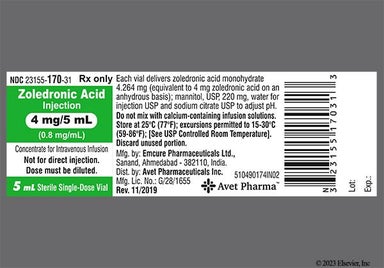
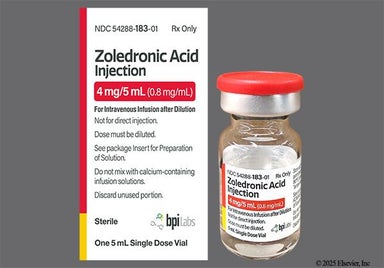
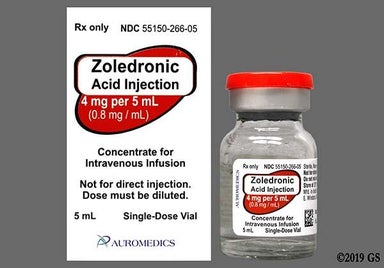
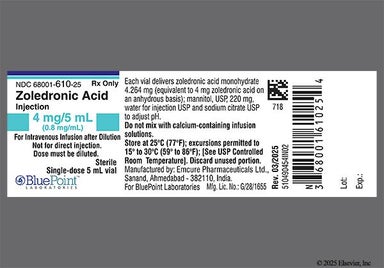
Zoledronic acid (Zometa) images