Key takeaways:
Xtandi (enzalutamide) is an oral medication that treats prostate cancer.
Common Xtandi side effects include hot flashes, fatigue, and headaches. Muscle and joint pains, diarrhea, and constipation can happen, too.
Xtandi capsules can be difficult to swallow because of their size. This is a potential choking hazard. Xtandi also comes as tablets, though, and switching to these smaller pills is one way to avoid the issue.
There are many strategies for managing Xtandi side effects. Your oncology team can help guide you on which prevention and management strategies might work best for you.
Save on related medications
Around 1 in 8 men are diagnosed with prostate cancer in their lifetime. This means there’s a good chance that you or someone you know will deal with this diagnosis at some point.
The good news is that cancer treatments have come a long way. Sixty years ago, less than half of people diagnosed with prostate cancer were alive after 5 years. Thanks to medications like Xtandi (enzalutamide), most men diagnosed with prostate cancer now live well beyond 5 years.
Xtandi is an oral medication that blocks testosterone’s action in prostate cancer cells. Since prostate cancer needs testosterone to grow, this slows or stops the cancer from growing and spreading.
Because Xtandi is taken by mouth, some people find that it’s more convenient — and causes fewer side effects — than treatments given through a vein. Still, it has its own risks to consider.
Xtandi side effects at a glance
For most people, Xtandi’s side effects are fairly mild. But keep in mind that everyone responds to medications differently.
Common Xtandi side effects include:
Muscle and joint pain
Fatigue
Hot flashes
Constipation
Diarrhea
Decreased appetite
High blood pressure
Bleeding
Higher likelihood of falling down and breaking a bone
Headaches
Rare but serious Xtandi risks include:
Seizures
Heart problems
Choking on the pills
Posterior reversible encephalopathy syndrome, a serious brain condition
Allergic reactions
Here, we’ll explore eight Xtandi side effects in detail.
1. Fatigue or a general lack of energy
Fatigue is a common side effect of many cancer treatments. Sometimes, it’s hard to tell whether it’s the cancer itself, the medication, or a combination of the two causing the issue. But in clinical studies, up to half of people taking Xtandi reported fatigue or a general lack of energy after starting treatment.
It’s not likely that you’ll have to stop taking Xtandi or lower your dosage because of this issue. In this case, exercise is the best remedy for fatigue. It seems like exercise would make you more tired, but it can actually boost your energy and make you feel better.
Walking, jogging, and swimming are good options. Yoga can be helpful, too. Aim for 3 to 5 hours per week — and try splitting them up into 10- or 15-minute sessions based on how you’re feeling.
Some situations, such as cancer in your bones, recent surgery, or swelling in your legs and arms, can limit your ability to exercise. Talk to your oncology team to figure out which exercises might be best for you. If exercise isn’t an option, mindfulness-based practices, acupuncture, and massage may also help.
2. Muscle and joint pains
Muscle and joint pains are also fairly common with Xtandi. Like fatigue, around half of people who take Xtandi report some discomfort in their joints and muscles.
If you’re having trouble with your joints, an oral or topical nonsteroidal anti-inflammatory drug (NSAID) like diclofenac might do the trick. An NSAID can help decrease inflammation and pain in your joints. Lidocaine patches can also temporarily relieve pain by numbing the area you apply them to. And medications aren’t the only solution. Natural treatments such as massage, heat therapy, and acupuncture can help, too.
The treatments for muscle pains are quite similar. Your healthcare professional may recommend applying a cool or hot compress to painful muscles or taking over-the-counter (OTC) oral pain relievers like ibuprofen (Advil), naproxen (Aleve, Naprosyn), or acetaminophen (Tylenol). If your muscles feel tight, stretching, massage, or muscle relaxers like cyclobenzaprine (Tonmya, Amrix) or methocarbamol (Robaxin) might help.
3. Diarrhea or constipation
Xtandi can cause constipation or diarrhea. You’re not more likely to experience one versus the other, so it’s good to be prepared for either.
If you’re feeling backed up, you can start with these home remedies to get things moving:
Drinking prune juice
Increasing your fiber intake with bran or whole fruits
Increasing your fluid intake with water or other hydrating beverages
Exercising more
If these strategies don’t do the trick, you can try a stool softener such as docusate (Colace) or laxatives such as senna (Senokot) or polyethylene glycol (Miralax).
Alternatively, if you find yourself running to the bathroom frequently with loose stools, you’ll want to make sure you’re drinking plenty of fluids so you don’t get dehydrated. Electrolyte drinks, broth, and plain water are good choices. Try avoiding greasy or fried foods, caffeine, and alcohol, which can all make diarrhea worse. If needed, an OTC antidiarrheal medication like loperamide (Imodium A-D) can also be beneficial.
With either constipation or diarrhea, let your oncology team know if your symptoms aren’t getting better after a few days.
4. Hot flashes
If you’re experiencing hot flashes with Xtandi, you’re not alone. Up to three-quarters of people who take Xtandi experience this side effect. It’s more common when Xtandi is combined with other medications that decrease testosterone, such as leuprolide (Lupron).
A specific part of your brain acts as your body’s internal thermostat. Decreasing the amount of testosterone in your body can cause the normal temperature regulation process to short circuit, leading to hot flashes and sweating.
Simple tips to manage hot flashes include:
Wearing light clothing made from bamboo or linen
Dressing in layers that you can easily remove
Avoiding triggers like spicy foods, caffeine, or alcohol
Deep breathing exercises and meditation
Maintaining or working toward your target body weight
But don’t be afraid to ask for help if the strategies above aren’t working for you. Medications such as venlafaxine (Effexor XR) and gabapentin (Neurontin) could help lessen your symptoms. Although, they aren’t without their own side effects. Your oncology team can talk you through options that are best for your specific situation.
5. Headaches
It seems like most medications have headaches on their side effect list. And Xtandi is no exception.
Staying hydrated, dimming the lights, and using a cold compress may help lessen headaches. If you have a lot of stress in your life, meditating, practicing breathing exercises, and using progressive muscle relaxation techniques can combat headaches by reducing this trigger.
But sometimes you need something that works faster. OTC pain relievers such as NSAIDs and acetaminophen can often take care of a headache quickly. Combining one of these medications with caffeine may boost its ability to fight headaches.
If you have a headache that feels severe or worse than you’ve experienced before, go to the ER right away. A severe headache along with confusion, blurry vision, and decreased ability to focus could be a sign of a more serious brain condition called posterior reversible encephalopathy syndrome (PRES).
6. Seizures
Seizures are a rare but serious side effect of Xtandi. They’re more likely to happen if you have risk factors for developing a seizure. Examples of risk factors are:
Taking certain medications that increase seizure risk
Having a history of stroke or brain injury
Having dementia
Being diagnosed with noncancerous brain tumors
Experiencing previous seizures
Even if you have risk factors, your chances of having a seizure after starting Xtandi are still low. For instance, one study looked at people who had at least one risk factor for seizures. They found that seizure risk was the same for people who took Xtandi and those who didn’t.
7. Heart problems
Heart problems are another rare Xtandi side effect. Specifically, Xtandi may increase your chances of having ischemic heart disease, or clogged blood vessels that damage your heart.
Like seizures, the overall risk of ischemic heart disease related to Xtandi is low. But prevention is key. Making sure your blood pressure, cholesterol, and blood sugar levels are well managed is the best way to prevent heart issues.
Reach out to your oncology team right away if you experience chest pain or tightness, shortness of breath, or sudden jaw, neck, or shoulder pain while taking Xtandi.
8. Dysphagia
Xtandi comes as a tablet and capsule. Xtandi capsules can be tough to swallow because of their large size. This can pose a choking risk. The capsules only come in one dose: 40 mg. So you have to take 4 capsules at a time to receive a full dose of Xtandi.
To prevent choking on Xtandi capsules, take them one at a time with plenty of water. You can also try strategies like the pop-bottle method and lean-forward technique to make swallowing them easier. Remember that you can’t cut, crush, or chew Xtandi capsules.
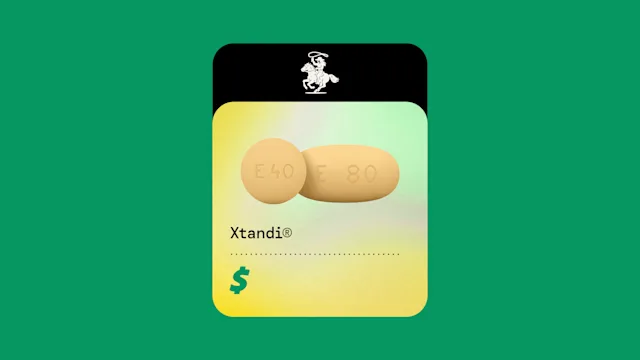
If you’ve tried the methods above and are still having trouble swallowing Xtandi capsules, ask your oncology team if you can switch to the tablets. They’re a little smaller than the capsules. But you need to pay attention to the tablet dose. Whether you’re prescribed the 40 mg or 80 mg tablets will affect how many you take for a full Xtandi dose.
The bottom line
Xtandi (enzalutamide) is an oral medication used for prostate cancer. Common side effects include hot flashes, fatigue, and headaches. Muscle and joint pains, diarrhea, and constipation can happen, too. Heart problems and seizures are rare, but more likely in people who have risk factors for these conditions. Xtandi capsules can be difficult to swallow, but switching to smaller tablets can help you avoid a possible issue.

Why trust our experts?




References
American Cancer Society. (2025). Hot flashes and sweating.
American Cancer Society. (2026). Key statistics for prostate cancer.
American Heart Association. (2024). Ischemic heart disease and silent ischemia.
Astellas Pharma US. (2025). Xtandi - enzalutamide capsule, Xtandi - enzalutamide tablet [package insert]. DailyMed.
Kawahara, T., et al. (2019). Changing the enzalutamide form from a capsule to a tablet improves the adherence of medicine intake: A case of a significant decrease in the prostate-specific antigen level and improvement in radiographic findings. IJU Case Reports.
Kratzer, T. B., et al. (2025). Prostate cancer statistics, 2025. CA: A Cancer Journal for Clinicians.
Lehtonen, M., et al. (2023). The past and present of prostate cancer and its treatment and diagnostics: A historical review. SAGE Open Medicine.
Lin, K. L., et al. (2025). A review of hot flash management in patients with prostate cancer. The Journal of Clinical Endocrinology & Metabolism.
Marchioni, M., et al. (2020). New antiandrogen compounds compared to docetaxel for metastatic hormone sensitive prostate cancer: Results from a network meta-analysis. The Journal of Urology.
National Cancer Institute. (n.d.). PRES.
National Center for Complementary and Integrative Health. (2021). Relaxation techniques: What you need to know.
National Comprehensive Cancer Network. (2024). NCCN guidelines for patients: Fatigue and cancer.
Scott, L. J. (2018). Enzalutamide: A review in castration-resistant prostate cancer. Drugs.
Slovin, S., et al. (2017). Seizures rates in enzalutamide-treated men with metastatic castration-resistant prostate cancer and risk of seizure: The UPWARD study. JAMA Oncology.
Tombal, B. F., et al. (2021). Impact of enzalutamide on patient-reported fatigue in patients with prostate cancer: Data from the pivotal clinical trials. Prostate Cancer and Prostatic Diseases.