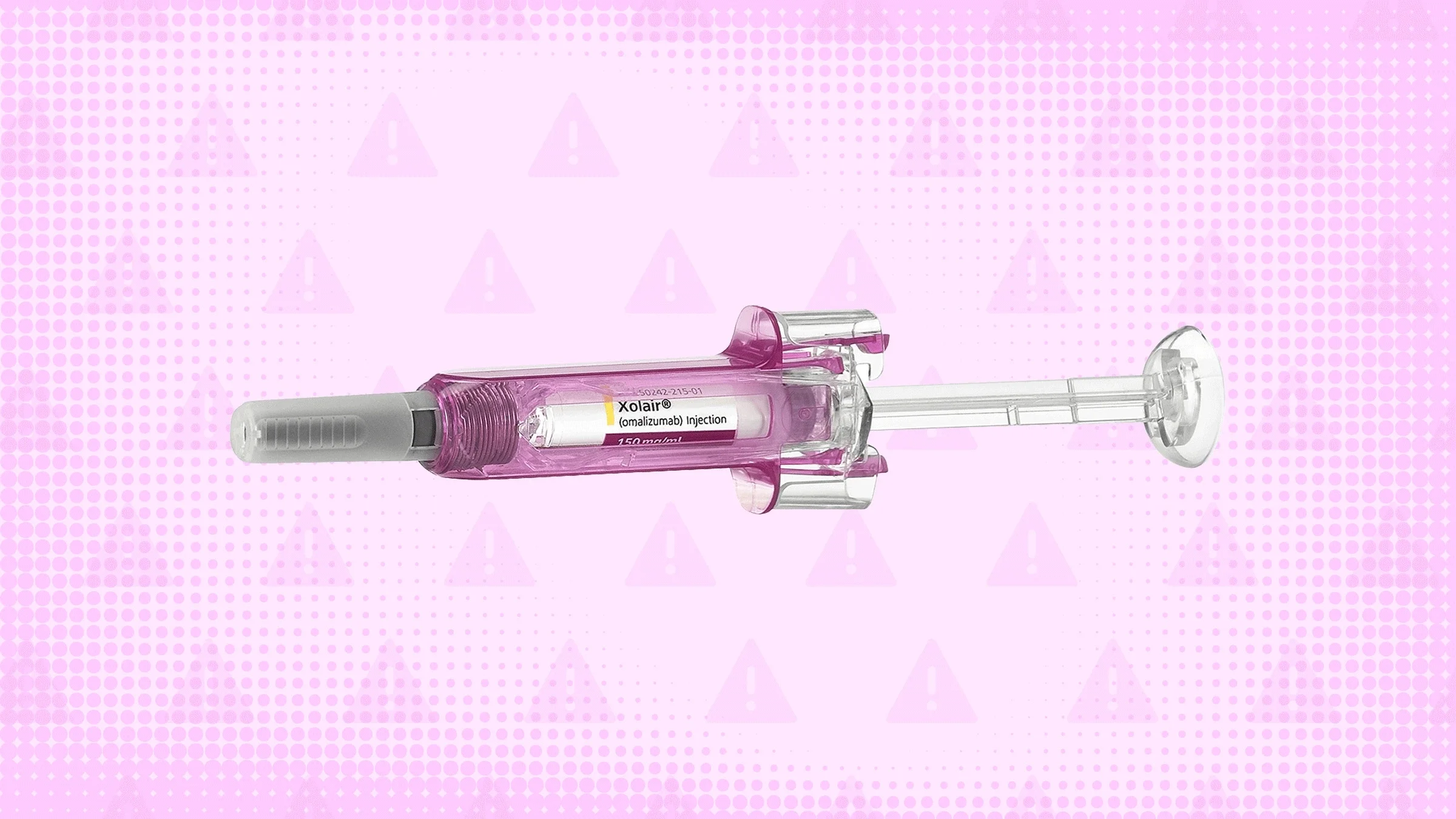
Key takeaways:
Xolair (omalizumab) is an injectable medication that treats different allergic health conditions. It’s administered every 2 to 4 weeks.
Common Xolair side effects include injection site reactions, joint pain, and headache. Dizziness, fatigue, and abdominal pain are also possible. Most of these side effects go away on their own and can be managed at home.
Xolair can increase your risk of infection. Although rare, Xolair can also cause severe allergic reactions (anaphylaxis). Talk to your healthcare team if you have any questions about Xolair side effects and how to manage them.
Save on related medications
If you’re living with an allergic health condition and need more help managing your symptoms, your prescriber may suggest Xolair (omalizumab) injections. Xolair is FDA approved to treat moderate-to-severe asthma, chronic rhinosinusitis with nasal polyps (CRSwNP), and chronic hives. It's also approved to lower the risk of allergic reactions to certain foods after accidental exposure.
You’ll receive the first few doses of Xolair in a medical setting. But after that, you may be able to inject Xolair yourself at home. No matter where you’re receiving Xolair, knowing what side effects to expect can help you get the most from your medication.
Xolair side effects at a glance
Below is a list of common and rare Xolair side effects to be aware of. Keep in mind that this isn’t a complete list, and certain side effects may vary depending on what condition you’re treating. Be sure to let your prescriber know about any side effects that appear after starting Xolair, even if they aren’t listed below.
Common Xolair side effects can include:
Injection site reactions
Joint pain
Headache
Infections
Stomach pain
Dizziness
Fatigue
Body, arm, or leg pain
Itching
Nausea
Cough
Less common and potentially serious Xolair side effects can include:
Increased risk of parasitic infections
Fever with joint pain, rash, and swollen lymph nodes
Increased risk of cancer (certain types)
Xolair also has a boxed warning about the risk of anaphylaxis (a severe allergic reaction) after receiving it. This is the FDA’s most serious medication warning. It’s also one reason you'll receive your first few doses in the presence of a medical professional. They can watch for signs of an allergic reaction, such as trouble breathing, swelling of the mouth and throat, and fainting.
Let’s take a more detailed look at what you should know about 10 Xolair side effects.
1. Injection site reactions
If you’ve ever had an injection, you’ve likely experienced the redness and pain that typically follows. Injection site reactions are the most common Xolair side effect. Almost half of people in clinical studies reported bruising, stinging, or itching, among other reactions.
Injection site reactions usually happen within an hour of a Xolair injection. They’re typically mild to moderate in severity and should resolve within a few days. They also tend to happen less often with each injection.
You can typically manage injection site reactions on your own at home. Try applying an ice pack to bring down the swelling. Over-the-counter (OTC) products, such as pain relievers and anti-itch creams, may also help for symptom relief.
Tell your prescriber if your symptoms are severe, getting worse, or not going away. Call 911 or have someone take you to the nearest ER if you develop symptoms such as shortness of breath, swelling or the face or throat, or hives.
2. Headache
Some people receiving Xolair reported headaches during clinical trials, especially those receiving it for CRSwNP or chronic hives. However, it’s important to note that headaches are common with these two conditions in general. And they happen more frequently with asthma, too. So Xolair itself may not be to blame.
After administering Xolair, people generally report mild headaches that resolve within a few days of their dose. But if you’re experiencing frequent or bothersome headaches with Xolair, talk to your prescriber. They can help figure out the potential cause and best next steps.
It may also help to make sure you’re drinking enough fluids, getting adequate sleep, and minimizing alcohol and other potential headache triggers. If needed, an OTC pain reliever may also help with occasional headaches.
3. Body, joint, and leg pain
Pain involving the joints, arms, and legs is possible with Xolair. In some cases, this may resolve within a few days after administering a dose.
Let your prescriber know if you notice pain in your joints or other parts of your body that doesn’t go away or worsens. There’s a chance it may not be related to Xolair. For instance, health conditions such as asthma and chronic hives have been linked to a higher risk of arthritis, which can also cause these symptoms.
Good to know: After Xolair came on the market, some people reported joint pain along with rash, fever, and swollen lymph nodes within 5 days after an injection. If this happens to you, notify your prescriber right away. These are potential signs and symptoms of a more serious reaction, and they’ll likely have you stop Xolair injections if they occur.
4. Fatigue
It’s possible you may feel low on energy or more tired than usual for a few days after your Xolair injection. It typically improves within a few days of your dose.
Fatigue is also common in people living with asthma. Sometimes, it can be a sign that your asthma isn’t being managed well enough. So it may improve as Xolair helps manage your symptoms. Just keep in mind that if you’ve recently started Xolair, it can take several months to feel the full benefit.
If you’re feeling fatigued, there are a few things you can do to help boost your energy. Examples include getting enough sleep and choosing nutrient-dense foods. Talk to your prescriber if your fatigue is severe, getting worse, or not going away.
5. Dizziness
Dizziness is another possible Xolair side effect. If you’re feeling dizzy, avoid activities where dizziness could be dangerous, such as driving a car. Sit or lie down until you feel more stable on your feet.
Tell your prescriber if you’re experiencing severe dizziness or it’s not going away. They can help determine if there’s another cause that needs to be addressed. But you should keep in mind that dizziness can also be a symptom of a severe allergic reaction — more on that later.
6. Itching
Xolair can help improve itching and other symptoms in people with chronic hives. But some people with asthma have reported itching from Xolair. This may be part of a temporary injection reaction. But dermatitis, which causes itchy skin, is also possible.
It’s important to note that dermatitis is also strongly linked to asthma in general. So if you notice new or worsening itching after starting Xolair, contact your prescriber. They can help you figure out whether it’s a side effect of Xolair or happening for another reason. If needed, they may recommend an anti-itch cream or other form of treatment.
7. Abdominal pain
Abdominal pain is another possible Xolair side effect, mostly in the upper part of your gut. This seems to happen more frequently in children living with asthma and adults living with CRSwNP. It’s not known why this side effect may occur. However, Xolair can increase the risk of parasitic infections, which may also cause abdominal pain.
Tell your prescriber if you experience abdominal pain, especially if it’s not going away or if you have other symptoms, such as gas or diarrhea. They may decide to do further testing to figure out the cause.
8. Infections
During clinical trials, a number of people receiving Xolair reported higher rates of infections than those who didn’t receive it. These included the common cold, other viral upper respiratory infections, and sinus infections.
These types of infections are usually caused by viruses. So, you can usually manage your symptoms at home with OTC medications and other cold remedies. But if your infection is severe, getting worse, or not going away, tell your healthcare team.
If you’re already at higher risk of a parasitic infection, you may be more likely to develop one after starting Xolair. This is because Xolair works by blocking immunoglobulin E (IgE), which is an antibody that plays a role in fighting off parasitic infections. Some ways you can lower your risk of a parasitic infection with Xolair include:
Washing your hands often
Peeling and cooking raw fruits and vegetables
Boiling or treating water
Avoiding walking barefoot in areas where soil might contain parasites
If you think you might have a parasitic infection, a healthcare professional can check your stool to confirm and provide treatment.
9. Allergic reactions
As mentioned, Xolair has a boxed warning about the chance of anaphylaxis. However, the overall risk seems to be very low.
A long-term study followed people injecting Xolair for asthma for up to 9 years. The results showed that out of over 10,000 injections, no immediate allergic reaction (such as anaphylaxis) occurred. Another study had 41 anaphylaxis cases out of nearly 40,000 people receiving Xolair
Allergic reactions can happen after the first Xolair dose or any doses after — even beyond a year of treatment. But most reactions seem to happen within the first few doses. Because of this, you should receive your first three doses from a healthcare professional in a medical setting. That way, they’ll be able to provide treatment quickly if a reaction happens.
If no problems arise, you’ll likely be able to administer future doses at home. But it’s still important to know how to respond to anaphylaxis if it occurs. Call 911 or have someone take you to the nearest ER if you develop symptoms such as trouble breathing or swelling of the face or throat.
10. Increased risk of cancer
There have been some concerns about Xolair raising the risk of certain cancers. This is because a variety of cancers were reported by some people receiving it in initial clinical trials. However, newer studies and other analyses involving over 40,000 people haven’t found an increased risk of cancer with Xolair.
Still, it’s important to play it safe. If you have a history of cancer, or believe you’re at a higher risk for developing cancer, speak to your prescriber. They can help you decide if Xolair is right for you.
Frequently asked questions
No, weight gain wasn’t a reported Xolari side effect in clinical trials. However, your Xolair dosage is often based on your body weight. So if your weight changes during treatment, be sure to let your prescriber know. They may need to adjust your Xolair dosage accordingly.
In most cases, you can still receive Xolair if you have a mild illness, such as a common cold. But if you have a fever or are severely ill, your prescriber may decide it’s best to hold off on your dose. Check in with your healthcare team for guidance if you’re sick when your Xolair dose is due. They can let you know whether or not it’s safe to inject it based on your symptoms.
Xolair may start working within 4 weeks (1 month) of starting the medication. But it can take up to 16 weeks (4 months) for it to reach its full effects. If you aren’t noticing any symptom improvement after several months of Xolair treatment, talk to your prescriber for guidance.
No, weight gain wasn’t a reported Xolari side effect in clinical trials. However, your Xolair dosage is often based on your body weight. So if your weight changes during treatment, be sure to let your prescriber know. They may need to adjust your Xolair dosage accordingly.
In most cases, you can still receive Xolair if you have a mild illness, such as a common cold. But if you have a fever or are severely ill, your prescriber may decide it’s best to hold off on your dose. Check in with your healthcare team for guidance if you’re sick when your Xolair dose is due. They can let you know whether or not it’s safe to inject it based on your symptoms.
Xolair may start working within 4 weeks (1 month) of starting the medication. But it can take up to 16 weeks (4 months) for it to reach its full effects. If you aren’t noticing any symptom improvement after several months of Xolair treatment, talk to your prescriber for guidance.
The bottom line
Common Xolair (omalizumab) side effects include injection site reactions, headache, and body and joint pain. Dizziness, fatigue, and abdominal pain are also possible. These side effects may improve within a few days of your Xolair dose.
Xolair can raise your risk of infection. Severe allergic reactions from Xolair are rare, but possible. Talk to your healthcare team if you have any questions about Xolair side effects and how to manage them.

Why trust our experts?




References
American College of Allergy, Asthma, & Immunology. (2026). Chronic rhinosinusitis with nasal polyps.
Asthma and Allergy Foundation of America. (n.d.). Atopic dermatitis in America.
Bagnasco, D., et. al. (2022). Omalizumab and cancer risk: Current evidence in allergic asthma, chronic urticaria, and chronic rhinosinusitis with nasal polyps. World Allergy Organization Journal.
Centers for Disease Control and Prevention. (2024). Diagnosis of parasitic diseases.
Confino-Cohen, R., et al. (2012). Chronic urticaria and autoimmunity: Associations found in a large population study. The Journal of Allergy and Clinical Immunology.
Cox, L., et. al. (2007). American Academy of Allergy, Asthma & Immunology/American College of Allergy, Asthma and Immunology Joint Task Force report on omalizumab-associated anaphylaxis. The Journal of Allergy and Clinical Immunology.
Di Bona, D., et. al. (2017). Long-term “real-life” safety of omalizumab in patients with severe uncontrolled asthma: A nine-year study. Respiratory Medicine.
Genentech, Inc. (2025). Xolair- omalizumab injection, solution: Xolair PFS- omalizumab injection, solution: Xolair- omalizumab injection, solution [package insert].
Heiland, L. D., et al. (2024). Headache and facial pain/pressure in the chronic rhinosinusitis population: A systematic review and meta-analysis. Otolaryngology—Head and Neck Surgery.
Herny, J. (2025). Prevention of parasitic diseases. EBSCO.
Janeway, C. A., et al. (2001). The production of IgE. Immunobiology: The Immune System in Health and Disease. 5th edition.
Kocatürk, E., et al. (2019). Is chronic urticaria more than skin deep? Clinical and Translational Allergy.
Koo, H.K., et al. (2021). Novel association between asthma and osteoarthritis: A nationwide health and nutrition examination survey. BMC Pulmonary Medicine.
Omalizumab (xolair): Treatment of Adults and Adolescents (12 years of Age and above) with Chronic Idiopathic Urticaria. (2015). Appendix 1: Patient input summary. Canadian Agency for Drugs and Technologies in Health.
Turan, M. O., et al. (2017). Presence of headache and migraine in asthma patients. Turkish Thoracic Journal.
Van Herck, M., et al. (2018). Fatigue is highly prevalent in patients with asthma and contributes to the burden of disease. Journal of Clinical Medicine.