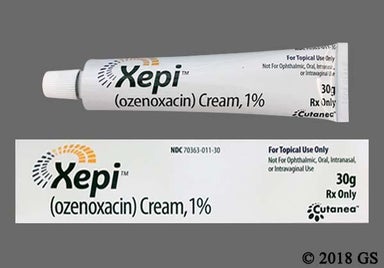
Xepi
Xepi (ozenoxacin) is used to treat impetigo, a common type of bacterial skin infection, in adults and children as young as 2 months old. It’s a cream that’s applied to the skin and doesn’t have many side effects. But it’s only available at specialty pharmacies, so it can be expensive.


What is Xepi (ozenoxacin)?
What is Xepi (ozenoxacin) used for?
- Impetigo
How Xepi (ozenoxacin) works
Xepi (ozenoxacin) is a quinolone antibiotic. This medication kills the bacteria by stopping it from making copies of itself.
Drug facts
| Common Brands | Xepi |
|---|---|
| Drug Class | Quinolone antibiotic |
| Controlled Substance Classification | Not a controlled medication |
| Generic Status | No lower-cost generic available |
| Availability | Prescription only |

Side effects of Xepi (ozenoxacin)
The following side effects may get better over time as your body gets used to the medication. Let your healthcare provider know immediately if you continue to experience these symptoms or if they worsen over time.
Common Side Effects
See Risks and Warnings
Less Common Side Effects
- Rosacea (reddened skin)
- Seborrheic dermatitis (dandruff)
These side effects were only reported in one adult in the clinical studies.

Pros and cons of Xepi (ozenoxacin)
Pros
- Very few side effects
- Only has to be applied twice a day for 5 days
- Can be used in children as young as 2 months old
Cons
- Brand name only so it’s expensive
- Can’t be filled at your local pharmacy
- Can be messy since it’s a cream

Pharmacist tips for Xepi (ozenoxacin)

- Wash your hands with soap and water after using Xepi (ozenoxacin), unless the infection you're treating is on your hands.
- Only use Xepi (ozenoxacin) on the impetigo sores on your skin. It won’t work if taken the wrong way, so don't swallow it or let it get in your eyes, mouth, nose, or genital area.
- You can cover the treated area with a clean bandage or gauze if you want. This could help stop young children from touching the infected area after the medication has been applied.
- Make sure to use Xepi (ozenoxacin) for the entire 5 days, even if the symptoms are getting better. Stopping it too early can lead to new bacterial and fungal infections that can be even harder to treat.

Risks and warnings for Xepi (ozenoxacin)
Xepi (ozenoxacin) can cause some serious health issues. This risk may be even higher for certain groups. If this worries you, talk to your doctor or pharmacist about other options.
Medication-resistant bacteria
- Risk factors: Using Xepi (ozenoxacin) for a long period of time
Using Xepi (ozenoxacin) for a long period of time might result in new bacterial and fungal infections that are resistant to medications. When bacteria becomes resistant, it becomes harder to treat. And if you try to use the same antibiotic again, it won’t work as well, so you’ll need to use a different one. Be sure to only use Xepi (ozenoxacin) as prescribed by your provider.

Xepi (ozenoxacin) dosage
Typical dosage for Xepi (ozenoxacin)
Apply a thin layer to the affected area(s) twice a day for 5 days.

What are alternatives to Xepi (ozenoxacin)?

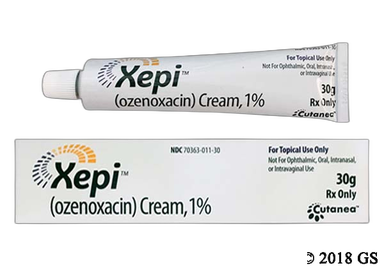
Xepi (ozenoxacin) images