Key takeaways:
VO₂ max measures how much oxygen your body can use for energy during exercise. Typically, a higher VO₂ max correlates with better physical fitness.
Improving your VO₂ max may boost your heart health and reduce your risk for some chronic diseases.
You can improve your VO₂ max by exercising at a higher intensity and doing interval training.
Whether you're new to exercise or an experienced athlete, tracking fitness improvements can help you gauge how well your training works. First, you'll want to assess your current fitness level. You can do that by learning your VO₂ max. VO₂ max measures how efficiently your body uses oxygen during exercise. Generally, a higher VO₂ max is associated with a higher fitness level.
Some factors that affect your VO₂ max, like age or sex, are beyond your control. But you can improve your VO₂ max by focusing on the variables you can control –– especially your exercise intensity.
What is VO₂ max?
During exercise, your breathing and heart rate increase. Your lungs take in more oxygen, and your heart circulates oxygen-rich blood. Your muscles use that oxygen to generate energy and power your workout.
Search and compare options
VO₂ max, or maximal oxygen uptake, measures your aerobic capacity. It is the maximum (max) amount (volume) of oxygen (O₂) your body uses during exercise. VO₂ max is measured in milliliters of oxygen per kilogram of body weight per minute (mL/kg/min). The more oxygen your body can take in and efficiently use, the harder and longer your muscles can perform at maximum capacity.
Why is VO₂ max important?
VO₂ max is a reliable indicator of physical fitness. Generally, a lower VO₂ max indicates a lower fitness level, while a higher VO₂ max indicates a higher fitness level. Athletes often use VO₂ max to measure performance and progress, but it can be a meaningful metric for anyone who wants to track their fitness.
You can use your VO₂ max to:
Evaluate your heart and lung health. VO₂ max indicates the ability of your heart and lungs (cardiorespiratory system) to take in and transport oxygen throughout your body. A higher VO₂ max can show that your cardiorespiratory system is healthy and functioning optimally.
Guide your training plan and track your progress. You can use your VO₂ max to monitor how your fitness improves over time. It can take months of consistent training to increase your VO₂ max and reach fitness goals. Testing VO₂ max at regular intervals can give you an idea of whether or not your current exercise plan is working. If you don't hit benchmarks or see a general improvement in your fitness, it might be a sign that you need a new routine.
Assess your exercise or athletic performance. Cardiorespiratory fitness is also a predictor of exercise performance. According to UC Davis Health, VO₂ max –– along with factors like training and motivation –– may help predict your success in endurance exercise. A higher VO₂ max has been linked to better performance among elite endurance athletes like runners and cyclists.
Reduce your risk of chronic conditions. Increasing your physical fitness with regular exercise may lower the risk of many chronic conditions. High VO₂ max has been linked to a reduced risk of dementia, heart disease, and death from heart disease.
How do you measure VO₂ max?
There are two types of tests to measure VO₂ max: maximal and submaximal. Both can help you learn about your fitness level.
Maximal VO₂ max testing
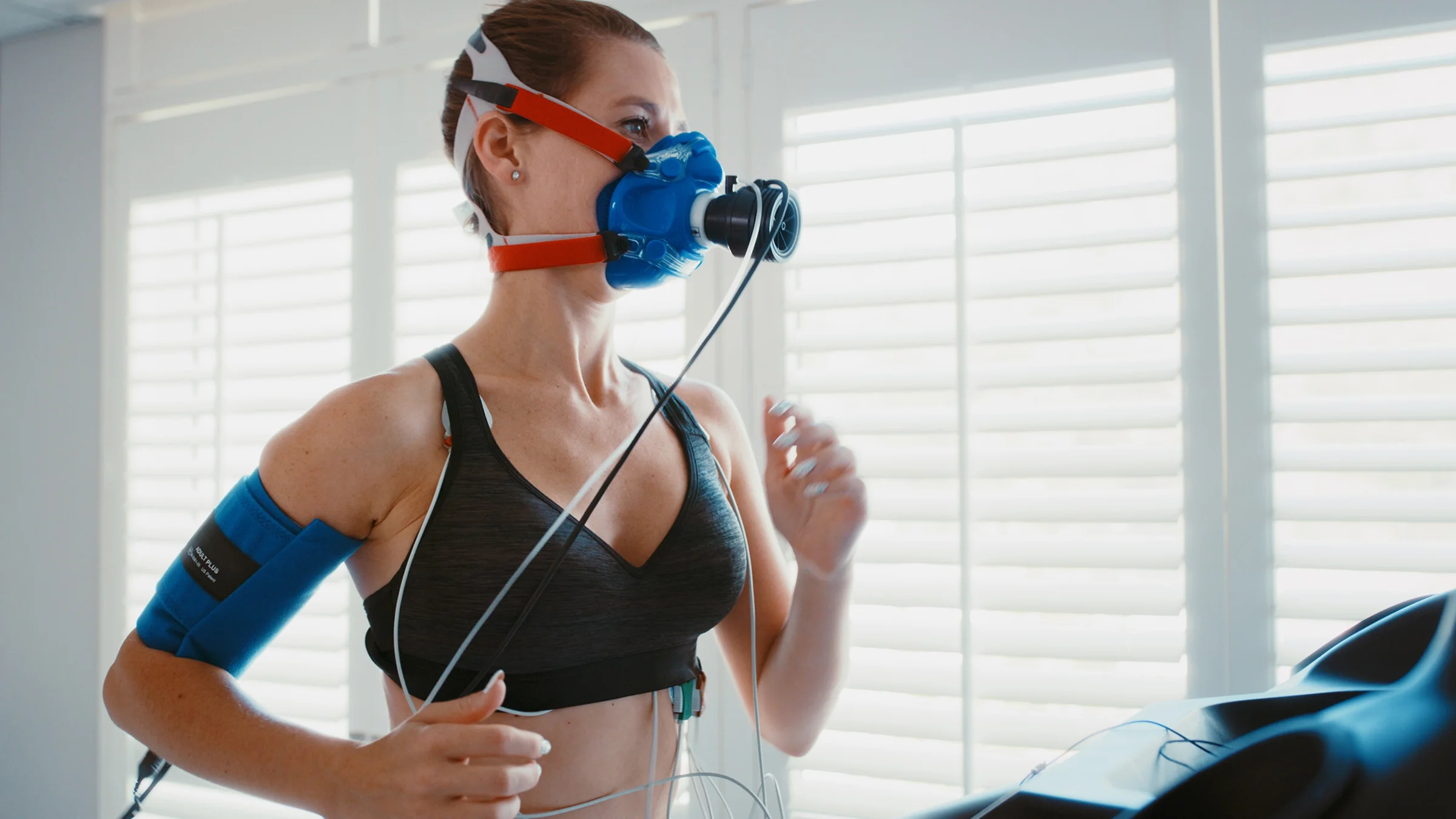
Maximal exercise testing is done by professionals in a lab or doctor's office. During the test, you exercise at increasingly higher intensities on a treadmill or stationary bike for about 10 minutes. As you run or peddle, you'll breathe into a device that analyzes the air you inhale and exhale.
Testing data shows your heart rate, the amount of oxygen you consume while exercising, and the maximum amount of oxygen your body can use. This is widely considered the “gold standard” of VO₂ max testing and provides a direct and accurate measure.

Read more like this
Explore these related articles, suggested for readers like you.


However, there are some downsides to this type of testing. It requires specialized equipment, can be time-consuming and costly, and may not be suitable for people with health conditions that make maximal exercise dangerous.
Submaximal VO₂ max testing
Submaximal tests are less accurate than maximal tests. But they are more accessible and easier to do. These tests estimate VO₂ max based on your heart rate during exercise at a submaximal or lower intensity. The Rockport walking test is a common submaximal testing method. Professionals can administer it, or you can do it at home. All you need is a pedometer, stopwatch, and heart rate monitor. You can also take your pulse to get your heart rate.
You time yourself while you walk as fast as you can for one mile on a level surface. The goal is to maintain your fastest pace without jogging for the entire mile. You take your heart rate immediately after you finish and put the data into an equation to estimate your VO₂ max. If you don't want to crunch the numbers, you can use an online calculator to find your VO₂ max with the Rockport test.
According to a small study, the Rockport walk test produced similar results to a maximal test in a group of moderately to highly fit males in the U.S. Air Force. Another study found that the method is a reliable VO₂ max test in women ages 50 to 69. The Rockport test also had high retest reliability, meaning it can effectively measure fitness improvements over time.
What factors affect VO₂ max?
In addition to your current exercise routine, many factors can affect your VO₂ max. These include:
Age: VO₂ max declines as you get older. Per a 2016 study, VO₂ max decreases by 10% every decade after age 25.
Gender: Men tend to have a higher VO₂ max than women. This is due to a combination of body composition, body mass, heart function, and blood concentration.
Genetics: Your genes could contribute as much as 50% to your VO₂ max, including how much you can improve it with exercise.
Bodyweight: Weighing more decreases your VO₂ max. It doesn't matter whether you have more or less lean body mass or fat mass.
Altitude: VO₂ max decreases at around 1,000 feet above sea level. It continues to decline the higher you go.
What is a good VO₂ max by age?
The American College of Sports Medicine provides average VO₂ max scores by age and sex. You can use these numbers to get insight into your current fitness level. But remember, determining a healthy VO₂ max depends on various factors, including the testing method.
| Age | 20-29 | 30-39 | 40-49 | 50-59 | 60-69 | 70-79 |
| Superior | 49.7 or more | 47.4 or more | 45.3 or more | 41.1 or more | 37.8 or more | 36.7 or more |
| Excellent | 43.9-46.8 | 42.4-45.3 | 39.7-43.9 | 36.7-39.5 | 33.0-35.9 | 30.9-33.0 |
| Good | 39.5-42.4 | 37.8-41.0 | 36.3-39.2 | 33.0-35.3 | 30.0-32.3 | 28.1-30.9 |
| Fair | 36.0-38.5 | 34.4-37.1 | 33.0-35.2 | 30.2-32.3 | 27.5-29.4 | 25.9-28.0 |
| Poor | 32.3-35.2 | 30.9-33.8 | 29.4-32.3 | 27.0-29.5 | 24.7-26.8 | 23.8-25.1 |
| Very poor | 30.9 or less | 29.5 or less | 28.2 or less | 25.9 or less | 24.0 or less | 22.6 or less |
| Age | 20-29 | 30-39 | 40-49 | 50-59 | 60-69 | 70-79 |
| Superior | 55.4 or more | 54.0 or more | 52.5 or more | 49.0 or more | 45.8 or more | 42.1 or more |
| Excellent | 51.1-53.5 | 48.3-51.6 | 46.4-49.7 | 43.4-46.7 | 39.6-42.6 | 36.7-39.5 |
| Good | 45.4-48.4 | 44.0-47.0 | 42.4-44.9 | 39.2-41.9 | 35.5-38.3 | 32.3-35.2 |
| Fair | 41.7-44.6 | 40.5-43.9 | 38.5-41.0 | 35.6-38.1 | 32.3-34.9 | 29.4-31.5 |
| Poor | 37.8-41.0 | 36.7-39.5 | 34.9-37.7 | 32.0-35.0 | 28.7-31.6 | 28.1 |
| Very poor | 36.7 or less | 35.2 or less | 33.8 or less | 30.9 or less | 27.4 or less | 24.6 or less |
How do you increase your VO₂ max?
Training your cardiorespiratory system is the best way to improve your VO₂ max. You can do that with any type of regular aerobic exercise, including endurance activities such as running, biking, swimming, or rowing. Some research shows that resistance training can also boost VO₂ max.
Vigorous workouts challenge your cardiorespiratory system to work harder, forcing your heart and lungs to adapt, which may increase your VO₂ max. Higher-intensity exercise may lead to greater gains in VO₂ max than lower-intensity exercise. So, gradually driving up the pace of your running or cycling can be effective.
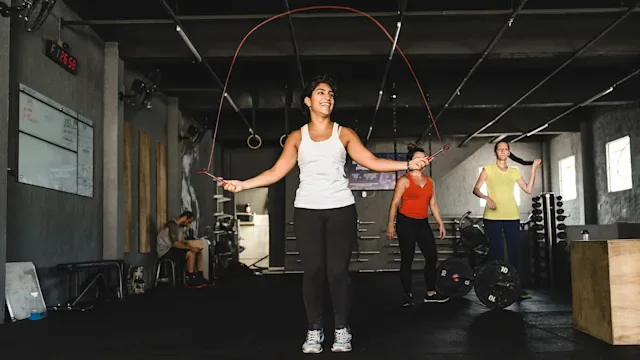
High-intensity interval training is another training method that can boost your aerobic fitness. It involves alternating periods of intense exercise with periods of recovery. And it may be more effective than moderate-intensity, steady-state exercise at improving VO₂ max. But intense workouts are not suitable for everyone, including beginners.
There is no single best training style to increase VO₂ max. And your VO₂ max involves several variables — including genetics — that are beyond your control. For non-athletes, the most important thing is to be more active and gradually increase exercise intensity and frequency. This will boost your cardiorespiratory system's capacity to do work, as well as your overall health.
The bottom line
VO₂ max measures your body's ability to consume and use oxygen for energy during exercise. A higher VO₂ max is typically associated with better physical fitness. And it may also help lower the risk of chronic diseases.
Several factors, including age, sex, and genetics, affect your aerobic capacity. Generally, higher-intensity exercise and interval training are the most effective ways to improve your VO₂ max. Talk to your healthcare provider if you have questions about your aerobic capacity and VO₂ max testing.

Why trust our experts?




References
American College of Sports Medicine. (2019). Table 8.9 updated. ACSM’s Health-Related Physical Fitness Assessment Manual, 5th edition.
Bacon, A. P., et al. (2013). VO2max trainability and high intensity interval training in humans: A meta-analysis. PLoS One.
Baker, J. S., et al. (2010). Interaction among skeletal muscle metabolic energy systems during intense exercise. Journal of Nutrition and Metabolism.
Bara, C. L. B. P., et al. (2019). Changes in the cardiorespiratory fitness of men and women in various age groups. Journal of Exercise Physiology.
Breathe. (2016). Your lungs and exercise.
Exercise Physiology Core Laboratory. (n.d.). VO2 max testing. University of Virginia School of Medicine.
Gormley, S. E., et al. (2008). Effect of intensity of aerobic training on VO2max. Medicine and Science in Sports and Exercise.
Hageman, P. A., et al. (2001). Test-retest reliability of the Rockport fitness walking test and other fitness measures in women ages 50–69 years. Journal of Geriatric Physical Therapy.
Helgerud, J., et al. (2007). Aerobic high-intensity intervals improve VO2max more than moderate training. Medicine and Science in Sports and Exercise.
John Hopkins Medicine. (n.d.). Exercise testing.
Joyner, M. J., et al. (2008). Endurance exercise performance: The physiology of champions. The Journal of Physiology.
Keteyian, S. J., et al. (2008). Peak aerobic capacity predicts prognosis in patients with coronary heart disease. American Heart Journal.
Kim, C., et al. (2016). The effect of aging on relationships between lean body mass and VO2max in rowers. PLoS One.
Klevjer, M., et al. (2022). New genetic determinants of VO2max-level identified by GWAS: The HUNT Study. Cardiovascular Research.
Kurl, S., et al. (2018). Cardiorespiratory fitness and risk of dementia: A prospective population-based cohort study. Age and Ageing.
Maciejczyk, M., et al. (2014). The influence of increased body fat or lean body mass on aerobic performance. PLoS One.
Myers, J., et al. (2002). Exercise capacity and mortality among men referred for exercise testing. The New England Journal of Medicine.
National Center for Chronic Disease Prevention and Health Promotion (NCCDPHP). (2023). Physical activity helps prevent chronic diseases. Centers for Disease Control and Prevention.
Ozaki, H., et al. (2013). Resistance training induced increase in VO2max in young and older subjects. European Review of Aging and Physical Activity.
Smirmaul, B. P. C., et al. (2013). Is the VO2max that we measure really maximal? Frontiers in Physiology.
Swain, D. P., et al. (2006). Comparison of cardioprotective benefits of vigorous versus moderate intensity aerobic exercise. American Journal of Cardiology.
UC Davis Sports Medicine (n.d.). V̇O2max and aerobic fitness. UC Davis Health.
University of Northern Iowa. (n.d.). Tests for predicting VO2max.
Wehrlin, J. P., et al. (2006). Linear decrease in .VO2max and performance with increasing altitude in endurance athletes. European Journal of Applied Physiology.
Weiglein, L., et al. (2011). The 1-mile walk test is a valid predictor of VO(2max) and is a reliable alternative fitness test to the 1.5-mile run in U.S. Air Force males. Military Medicine.
Williams, C. J., et al. (2017). Genes to predict VO2max trainability: A systematic review. BMC Genomics.