Key takeaways:
Working out can cause short-term weight gain as you build muscle mass. Postworkout inflammation may cause temporary weight fluctuations.
Workout plateaus, supplement use, and dietary changes can also stall your weight-loss efforts.
The number on the scale is only one measure. Other changes — like having more energy or feeling stronger — are important signs of progress.
You’ve been putting in the effort and exercising regularly. But you’ve noticed something peculiar: When you step on the scale, the number goes up rather than down. What gives?
There are several reasons why you might be gaining weight while working out. The uptick can be frustrating if weight loss is one of your fitness goals. But it’s not usually cause for concern. And a few minor changes to your routine might keep weight gain at bay. Here are five reasons you may be gaining weight even when you’re exercising.
1. Increased muscle mass
Exercising causes tiny tears in your muscle fibers. It sounds bad, but it’s actually a good thing. After your workout, your body works to repair these tears, allowing your muscles to get bigger and stronger.
Search and compare options
So even though you may be losing fat, you’re gaining muscle. You might feel slimmer, even as the number on the scale rises.
“The scale doesn’t tell the entire story,” said exercise physiologist Christopher Mohr, PhD, RD. “Since muscle and fat take up different volumes, they look very different on the body.”
But Mohr said that your overall body composition, including body fat, is more important than your weight. It’s harder to measure your body fat, but some smart scales can give you a rough estimate. You can also get a body scan at a sports medicine clinic for a more accurate number.
But none of these measures paints a complete picture of your health and fitness.
2. Postworkout inflammation
Those tiny tears in your muscles can also cause temporary postworkout inflammation. “This is expected and perfectly healthy,” Mohr said. You may retain fluid after exercise as your body repairs the damage, which can cause water weight gain. Any uptick on the scale is usually minor and short-lived.
Weighing yourself regularly can be helpful on your weight-loss journey. But Mohr suggests skipping a weigh-in right after your workout.
Try to weigh yourself at the same time of day. “First thing in the morning, before exercising, eating or drinking anything keeps things on a level playing field,” Mohr said. Cut back on checking your weight if you find yourself obsessing over the number on the scale.
3. Supplement use
You might think you need supplements to meet your fitness goals. So you put an extra scoop of protein powder in your morning smoothie or grab a preworkout drink on your way to the gym.
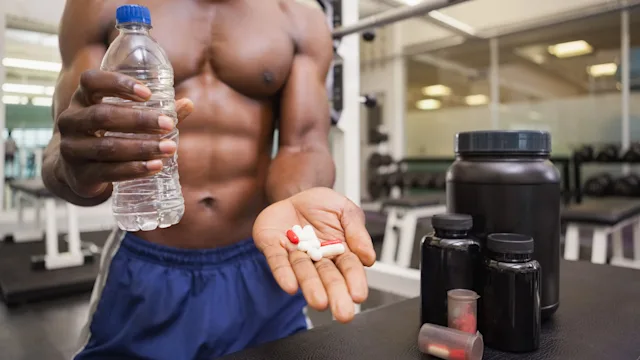
But preworkout supplements are not FDA approved, and ingredients vary by brand. Some might have more calories — many of them from added sugar — than you realize. Common supplement ingredients like creatine may also cause temporary water retention.

Read more like this
Explore these related articles, suggested for readers like you.

Many people don’t need preworkout supplements because they can get plenty of performance-boosting nutrients from a balanced diet. Whole foods should be fine unless you’re an athlete with a rigorous training schedule, or a healthcare professional suggests supplements for a medical condition. This will make it easier to manage your diet and reach your weight and health goals.
4. Workout plateau
Imagine exercising consistently for weeks and seeing a downward trend on the scale. Then your progress suddenly halts, even though your workout plan and diet haven’t changed. This is called a workout plateau. It occurs when your body adjusts to your exercise routine and no longer needs as much energy to support your effort. So you don’t burn as many calories as you did before.
“Plateaus are normal,” said Kevin Huffman, MD, a bariatric physician. “Your body adapts to what you’re doing, so the scale could stall for a week, a month, or even more.”
That doesn’t mean you should give up. But you may need to take on new challenges, such as increased exercise time or intensity. “Change your workout, try some new moves, or tweak your diet just a little to make sure your body doesn’t get used to your routine,” Huffman said.
5. Diet changes
Exercising regularly and eating balanced meals are critical lifestyle strategies for safe and sustainable weight loss.
You can spend hours working out. But if you don’t adjust your diet, you may gain weight. Many weight-loss diets emphasize calorie restrictions that are harmful and hard to maintain. For example, a low-calorie diet can make you lose muscle instead of fat. And less muscle mass could make you regain any weight you lose.
You may feel hungrier after you exercise, so you might eat more than usual. That’s not necessarily a bad thing. But try to limit or avoid processed foods like energy bars, sugary cereals, and soda, all of which can contribute to weight gain.
Finding the right nutrition plan to support your weight-loss goals can be tricky. You may need to lower your daily calorie intake. But you don’t have to track everything you eat, and you shouldn’t try overly restrictive diets. Consider healthy tips to get the calories you need, such as:
Tracking how your workouts affect your appetite and mood
Adding more lean protein, fruits and vegetables, and whole grains to your diet
Reducing processed foods and sweets in your diet
Using a meal planner to prioritize balanced, nutritious meals
When should you be concerned about weight gain from working out?
Working out in and of itself doesn’t cause you to gain weight. Building lean muscle mass can add a bit to the scale, and that’s a good thing. If something else is causing you to gain weight, such as a change in your diet or overdoing it with supplements, you can readjust and get back on course.
But most experts will tell you to take your attention off the scale and notice other changes that indicate progress. “The most important factor is how you feel,” Huffman said. “Do you feel better? Are you stronger, more energetic? If so, these are great signs that you’re moving in the right direction.”
If you exercise regularly and make other lifestyle changes but keep gaining weight, talk with a healthcare professional. They might provide additional tips or look at other factors that are leading to weight gain. These could include underlying health conditions — such as hypothyroidism — or your medications.
But don’t give up. “Consistency and a whole-body approach to health are the real keys to success in the long run,” Huffman said.
Frequently asked questions
Temporary bloating or stomach discomfort after a workout can happen for different reasons. Digestion slows down as blood gets redirected away from your gut to other parts of your body. Bloating is more likely to happen if you’re doing an intense workout. Eating right before or during exercise can also make bloating more likely. Certain foods are more likely to cause bloating, like high-FODMAP foods and dairy products.
You can gain a few pounds from water retention alone. But this doesn’t mean you’ve gained fat. When your body stores carbohydrates for energy, it also holds onto water. Research shows that for every gram of stored carbohydrate, your body stores several grams of water along with it, which can temporarily increase your weight by about 2 lbs to 4 lbs (or sometimes more). This type of weight gain is normal and usually shifts within a few days as your fluid balance changes.
When you first start taking creatine as a supplement, you may gain a bit of weight. This is possibly related to water retention. But studies show that “water weight” related to creatine is short-lived. People who take creatine for 4 or more weeks don’t seem to have increased retention of water overall.
Temporary bloating or stomach discomfort after a workout can happen for different reasons. Digestion slows down as blood gets redirected away from your gut to other parts of your body. Bloating is more likely to happen if you’re doing an intense workout. Eating right before or during exercise can also make bloating more likely. Certain foods are more likely to cause bloating, like high-FODMAP foods and dairy products.
You can gain a few pounds from water retention alone. But this doesn’t mean you’ve gained fat. When your body stores carbohydrates for energy, it also holds onto water. Research shows that for every gram of stored carbohydrate, your body stores several grams of water along with it, which can temporarily increase your weight by about 2 lbs to 4 lbs (or sometimes more). This type of weight gain is normal and usually shifts within a few days as your fluid balance changes.
When you first start taking creatine as a supplement, you may gain a bit of weight. This is possibly related to water retention. But studies show that “water weight” related to creatine is short-lived. People who take creatine for 4 or more weeks don’t seem to have increased retention of water overall.
The bottom line
Seeing the number on the scale go up instead of down even though you’re working out can be frustrating. But it’s common. In the best-case scenario, you’re building muscle and getting stronger and healthier. Sometimes, you need to make small changes to your diet and exercise program to start seeing the results of your hard work.

Why trust our experts?



References
Antonio, J., et al. (2021). Common questions and misconceptions about creatine supplementation: what does the scientific evidence really show? Journal of the International Society of Sports Nutrition.
Cava, E., et al. (2017). Preserving healthy muscle during weight loss. Advances in Nutrition.
Costa, R. J. S., et al. (2017). Systematic review: exercise-induced gastrointestinal syndrome—implications for health and intestinal disease. Alimentary Pharmacology & Therapeutics.
Gelman, R., et al. (2022). A subject-tailored variability-based platform for overcoming the plateau effect in sports training: A narrative review. International Journal of Environmental Research and Public Health.
Kerksick, C. H., et al. (2022). ISSN exercise & sports nutrition review update: Research & recommendations. Journal of the International Society of Sports Nutrition.
Peake, J. M., et al. (2017). Muscle damage and inflammation during recovery from exercise. Journal of Applied Physiology.
Ribeiro, A. S., et al. (2014). Resistance training promotes increase in intracellular hydration in men and women. European Journal of Sport Science.
Roman, W., et al. (2021). Muscle repair after physiological damage relies on nuclear migration for cellular reconstruction. Science.
Shiose, K., et al. (2016). Segmental extracellular and intracellular water distribution and muscle glycogen after 72-h carbohydrate loading using spectroscopic techniques. Journal of Applied Physiology.
U.S. Food and Drug Administration. (2022). FDA 101: Dietary supplements.