Key takeaways:
Grip strength is how well you can grasp or squeeze an object with your hands. Age, hand dominance, injuries, or certain conditions can affect your grip strength.
As you get older, a strong grip becomes an important indicator of overall health, including muscle strength, bone density, and heart health.
You can add grip-strength exercises that target your hand and forearm muscles to your regular fitness routine.
You might think grip strength only matters when opening a jar of pickles, lifting weights, or playing sports like tennis. But it can actually provide a snapshot of your overall health and well-being. In fact, research suggests that grip strength may be a better indicator of heart health and longevity than blood pressure.
Because of this, grip-strength exercises should be part of your fitness routine. People of all ages can build upper body muscle power, making it easier to do daily activities and workouts.
You can add grip-strengthening activities to your weekly strength-training workouts. Over time, you’ll have a firmer grip — and possibly a longer, healthier life — to show for it.
Search and compare options
What is grip strength?
Grip strength refers to how much force your hand, wrist, and forearm muscles can exert to grasp an object.
Types of grip strength
There are several types of grip strength, including:
Crush grip: This measures how hard you can crush an object between your palms and fingers. You use this grip when doing things like squeezing a bottle of ketchup or swinging a baseball bat.
Support grip: Your support grip is how long you can hold onto an object. It’s important for activities like carrying groceries or doing pull-ups.
Pinch grip: Pinch grip measures how hard you can pinch an object between your fingertips and your thumb. You use it when holding small things, like a pen or pencil.
How to measure grip strength
Physical therapists and other healthcare professionals measure hand grip strength using a dynamometer. During a grip-strength test, you squeeze the handheld device as hard as you can several times with each hand. Your healthcare professional will average your scores to find your grip strength.
Many gyms have dynamometers you can use. You can also buy one online or use a scale at home to test your grip strength and track improvements. Note that average grip strength varies by age, sex, and which hand is dominant.
How to improve grip strength
You might not think about your hand muscles when planning strength-training workouts. But exercises that target your hand and forearm muscles can improve grip strength. Some of those exercises might already be part of your fitness routine. For example, functional exercises such as deadlifts, woodchops, and lat pulldowns use your hands along with other muscle groups.
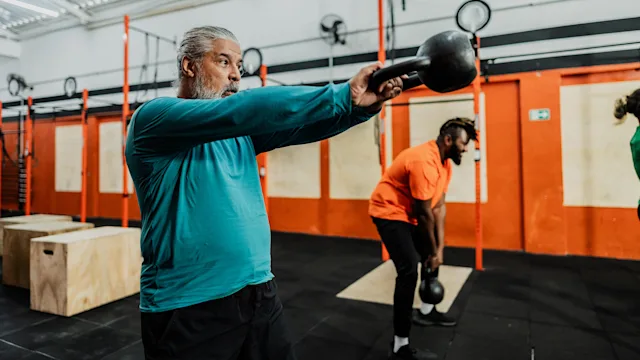
Focus on using proper form to strengthen your grip during strength-training sessions. For example, use a light grip when holding the handle of a rowing machine. Your hand and forearm muscles will get a workout as you engage upper- and lower-body muscles. You should also practice keeping proper grip form during free-weight exercises, like bicep curls or kettlebell swings.
Grip-strength exercises to increase hand strength
Here are eight forearm and hand-strengthening exercises you can try at home.
1. Tennis ball squeeze
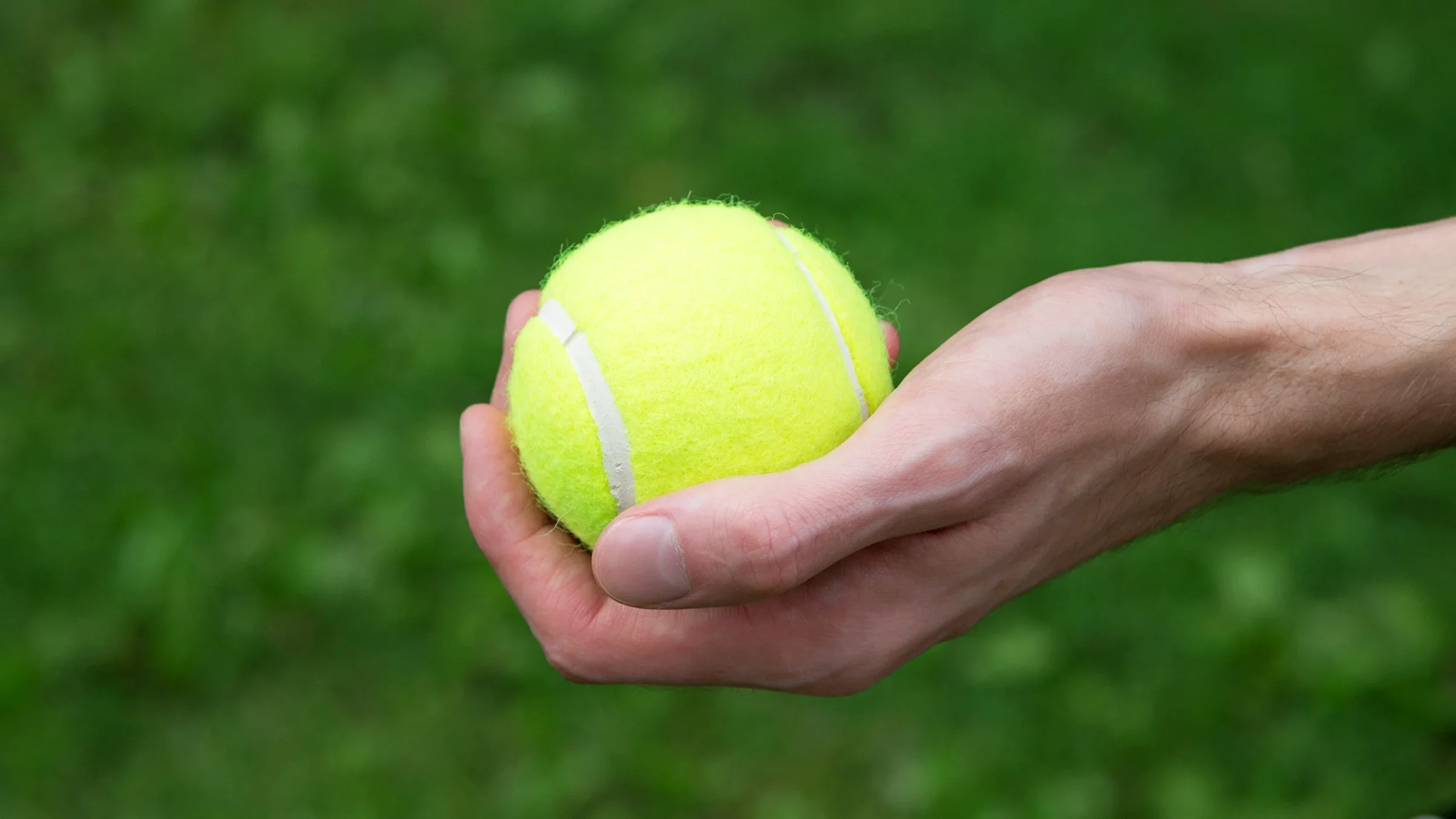
Squeezing a tennis ball may not seem like exercise. But it’s a great way to strengthen your wrists and fingers and improve your crush grip. You can also use a foam stress ball for this exercise.
Step 1: Hold the ball in your right hand with your palm face up and your elbow bent at a 90-degree angle.
Step 2: Use your four fingers to clench the ball as hard as you can. Don’t use your thumb for this exercise.
Step 3: Hold the squeeze for 5 seconds, then release it.
Step 4: Clench and release 10 times, then repeat steps 1 through 3 with your left hand. You can practice this exercise 5-10 times a day.

Read more like this
Explore these related articles, suggested for readers like you.

2. Towel wringing
This exercise works your crush grip and strengthens the muscles needed for support grip. Start with a small hand or face towel and then work your way up to a larger towel as you get stronger.
Step 1: Wet a towel and hold it horizontally in front of you, grasping each end.
Step 2: Twist each end of the towel in opposite directions to wring out the water.
Step 3: Repeat steps 1 through 3, up to 5 times.
3. Reverse wrist curls
Reverse wrist curls work your forearm muscles to increase grip strength.
Step 1: Sit upright on a bench and hold a barbell with both hands, palms facing down (in an overhand grip). You can also hold a dumbbell in each hand.
Step 2: Lean forward and rest your forearms on your knees.
Step 3: Keep your forearms on your knees and lift the weight by bending your wrists back.
Step 4: Slowly lower the weight, letting your wrists curl down.
Step 5: Complete 2-3 sets of 10-15 reps.
4. Farmer’s carry
The farmer’s carry, also called a farmer’s walk, targets several upper-body muscles for a strong grip, including your forearms, biceps, and triceps.
Step 1: Hold a dumbbell or kettlebell in each hand. These should be heavy, so pick the heaviest weights you can handle.
Step 2: Stand up straight with your shoulders, back, and core tight.
Step 3: Walk 30-40 yards, then turn around and walk back.
Step 4: Repeat 3-4 times. If it feels easy, try heavier weights.
5. Plate pinch
As the name suggests, the plate pinch helps strengthen your pinch grip muscles.
Step 1: Stand with a 5- to 10-pound weight plate resting on its edge against your calf.
Step 2: Squat down and pinch the plate using your fingers on the outside and your thumb on the inside.
Step 3: Stand up and hold the plate for 10-15 seconds before squatting down to rest.
Step 4: Repeat 10-20 times on each side. To make it harder, use a heavier plate, or walk while holding it.
6. Dead hang
This exercise engages your forearm, hand, and wrist flexors to improve your support grip.
Step 1: Stand under a pull-up bar with your back straight. Raise your arms to grab the pull-up bar with your hands slightly wider than shoulder-width apart, palms facing away from you.
Step 2: Hang with your arms straight and your core engaged for 20 seconds or as long as you can.
Step 3: Repeat 5-10 times.
7. Pull-ups
Pull-ups can strengthen your support and crush grip. They work muscles in your arms, shoulders, chest, and back. This exercise can be hard to master, so start with dead hangs before advancing to pull-ups. Then slowly work your way up to more reps.
Step 1: Stand under a pull-up bar with your back straight. Raise your arms to grab the pull-up bar with an overhand grip, hands slightly wider than shoulder-width apart.
Step 2: Bend your elbows to pull your body until your chin reaches the bar, holding for a moment. Avoid swinging your body.
Step 3: Lower yourself down to the starting position.
Step 4: Start with 3-5 pull-ups and work up to 10-12.
8. Exercise for hand-grip strengthener
You can also use a hand gripper to strengthen your hand, wrist, and forearm muscles. A gripper is a handheld tool with two handles and springs for resistance.
Step 1: Hold the gripper in your right hand with four fingers wrapped around one handle and your thumb around the other.
Step 2: Use your fingers to slowly squeeze the handles together and hold for a few seconds.
Step 3: Release the hold slowly and with control.
Step 4: Complete 10 reps on each hand.
Why is grip strength important?
Grip strength is important for many reasons, including your ability to do daily activities with ease. Numerous everyday activities –– such as turning door handles, carrying groceries, writing, and getting dressed –– require grip strength. A firm grip is also essential for exercising and playing sports.
Beyond that, grip strength can predict overall muscle strength, endurance, and bone density. It can also predict your risk of falls and fractures, and tell you about other aspects of your health as you get older.
Long-term health indicators
In a 2015 study, researchers looked at the link between grip strength and death rates in 140,000 adults. They found that poor hand grip strength was linked to a higher risk of heart disease, heart attack, stroke, and death.
Your grip strength is also an indicator of cognitive and mental health. A 2022 study found that increased grip strength was associated with better cognitive function, less depression and anxiety, and higher life satisfaction.
Experts aren’t sure why grip strength is a predictor of future health. According to some researchers, it has to do with a link between low muscle strength and increased biological aging. Though research is ongoing, it’s clear that grip strength is critical for both older and younger adults.
How to build a grip-strength routine
Now that you’re familiar with specific exercises for grip strength, the next step is to put them together into a routine you can stick with. A well-designed grip-strength program helps you make steady progress while avoiding overuse injuries.
If you already have an exercise routine, you can add the above grip-strength exercises to your current workout plan. Consider pairing grip training with upper-body strength training, or do it separately as a short, focused session. Keep in mind that if you’re already doing strength exercises like rows, deadlifts, or pull-ups, you’re working your grip strength — so keep it up!
If you don’t regularly exercise, aim to do grip-strength exercises 2 to 3 days a week. This will give you time to rest and recover. As you get the hang of the routine, you can increase the length of your holds and do more reps.
Here’s a sample grip-strength routine to help get you started.
| Day | Focus | Exercises |
|---|---|---|
| Monday | Strength |
|
| Wednesday | Endurance |
|
| Friday | Mixed |
|
What causes poor grip strength?
Your dominant hand will often have a stronger grip because you use it more. But there are several reasons you can have reduced grip strength in one or both hands. These include:
Recent hand injuries, like carpal tunnel, tendonitis, or a hand fracture
A pinched nerve in your neck that causes numbness, tingling, or weakness in one arm or hand
Age, as research suggests that grip strength peaks around age 40 and starts to decline as you get older
Medical conditions such as arthritis, multiple sclerosis, or Parkinson’s disease
Frequently asked questions
How long it takes to see improvements in your grip strength will depend on your starting strength, as well as your exercise intensity and frequency. Researchers have observed improvements in grip-strength after an 8-week training program and a 12-week program.
Grip strength varies widely by age and sex. Men generally have higher average grip strength than women, with strength peaking in early adulthood before slowly declining with age. For men ages 30 to 39, the average dominant-hand grip strength is about 50 kg. It’s about 30 kg to 35 kg for women of the same age.
If you have a wrist or hand injury, it’s important to consult a physical therapist or other healthcare professional. They can work with you to evaluate your injury and create a treatment plan that may include grip-strengthening exercises.
How long it takes to see improvements in your grip strength will depend on your starting strength, as well as your exercise intensity and frequency. Researchers have observed improvements in grip-strength after an 8-week training program and a 12-week program.
Grip strength varies widely by age and sex. Men generally have higher average grip strength than women, with strength peaking in early adulthood before slowly declining with age. For men ages 30 to 39, the average dominant-hand grip strength is about 50 kg. It’s about 30 kg to 35 kg for women of the same age.
If you have a wrist or hand injury, it’s important to consult a physical therapist or other healthcare professional. They can work with you to evaluate your injury and create a treatment plan that may include grip-strengthening exercises.
The bottom line
Grip-strength exercises should be part of your fitness routine, just like total-body resistance training. Hand grip strength is essential for many activities and exercises, like brushing your teeth, opening jars, and lifting weights. And studies show that it’s an important marker of future health outcomes. A strong grip has been linked to better heart health, longevity, and overall well-being.

Why trust our experts?




References
American Council on Exercise. (n.d.). Farmer’s carry.
American Council on Exercise. (n.d.). Pull-ups.
Bob & Brad. (2016). How & why you should measure your hand grip strength at home [video]. YouTube.
Bohannon, R. W. (2019). Grip strength: An indispensable biomarker for older adults. Clinical Interventions in Aging.
ehowhealth. (2015). How to use grippers [video]. YouTube.
Gerodimos, V., et al. (2021). Can maximal handgrip strength and endurance be improved by an 8-week specialized strength training program in older women? A randomized controlled study. Hand Surgery and Rehabilitation.
Jiang, R., et al. (2022). Associations between grip strength, brain structure, and mental health in > 40,000 participants from the UK Biobank. BMC Medicine.
Keller, A., et al. (2025). Efficacy of 12-Week Handgrip Strength Training Program Amongst Older Adults: A Pilot Study. Sport Journal.
Labott, B. K., et al. (2019). Effects of exercise training on handgrip strength in older adults: A meta-analytical review. Gerontology.
Leong, D. P., et al. (2015). Prognostic value of grip strength: Findings from the Prospective Urban Rural Epidemiology (PURE) study. The Lancet.
Luo, Y., et al. (2020). Association between grip strength and bone mineral density in general US population of NHANES 2013-2014. Archives of Osteoporosis.
National Institute on Aging. (2012). Hand grip strength exercise for older adults [video]. YouTube.
Peterson, M. D., et al. (2022). Grip strength is inversely associated with DNA methylation age acceleration. Journal of Cachexia, Sarcopenia and Muscle.
PureGym. (2022). How to do plate pinches [video]. YouTube.
Simsek, D., et al. (2024). Hand fatigability, self-reported fatigue, and functionality in individuals with multiple sclerosis: A cross-sectional study. Multiple Sclerosis and Related Disorders.
Sternäng, O., et al. (2015). Factors associated with grip strength decline in older adults. Age and Ageing.
Tomkinson, G. R., et al. (2025). International norms for adult handgrip strength: A systematic review of data on 2.4 million adults aged 20 to 100+ years from 69 countries and regions. Journal of Sport and Health Science.
Trosclair, D., et al. (2011). Hand-grip strength as a predictor of muscular strength and endurance. Journal of Strength and Conditioning Research.
Vaishya, R., et al. (2024). Hand grip strength as a proposed new vital sign of health: a narrative review of evidences. Journal of Health, Population and Nutrition.
Wang, Y. C., et al. (2018). Hand-grip strength: Normative reference values and equations for individuals 18 to 85 years of age residing in the United States. Journal of Orthopaedic & Sports Physical Therapy.