Key takeaways:
Cycling is a great exercise option if you have knee pain. But too much cycling, or cycling incorrectly, can sometimes make knee pain worse.
Benefits of cycling include decreased knee pain, increased strength and range of motion, and improved function during daily activities.
Stop cycling if it causes you knee pain or makes your knee pain worse. You can also consider seeing a medical professional for help with cycling adjustments or treatment like physical therapy.
Knee pain can sometimes make it challenging to exercise. While knee pain is common among cyclists, this low-impact exercise can actually help relieve pain from knee osteoarthritis. Learn more about the benefits of cycling for knee pain and some tips to get started.
Can you cycle with knee pain?
Yes, cycling with knee pain is possible. In fact, it is even recommended to help relieve certain types of knee pain. Just start off slowly and ease your way into it. You may also want to adjust your seat height and exercise intensity to help prevent pain, which we discuss more below.
What are the benefits of cycling with knee pain?
As mentioned, cycling, when done correctly and safely, can actually help relieve knee pain. Cycling has several benefits for your knees, and can help keep your joints and body healthy.
Search and compare options
May reduce knee pain from osteoarthritis
Studies show that cycling can help reduce pain from knee osteoarthritis. Regular exercise, like cycling, can also help reduce stiffness and improve overall function and quality of life. The American Academy of Orthopaedic Surgeons rates exercise as one of the most effective treatments for knee osteoarthritis.
Provides low-impact exercise
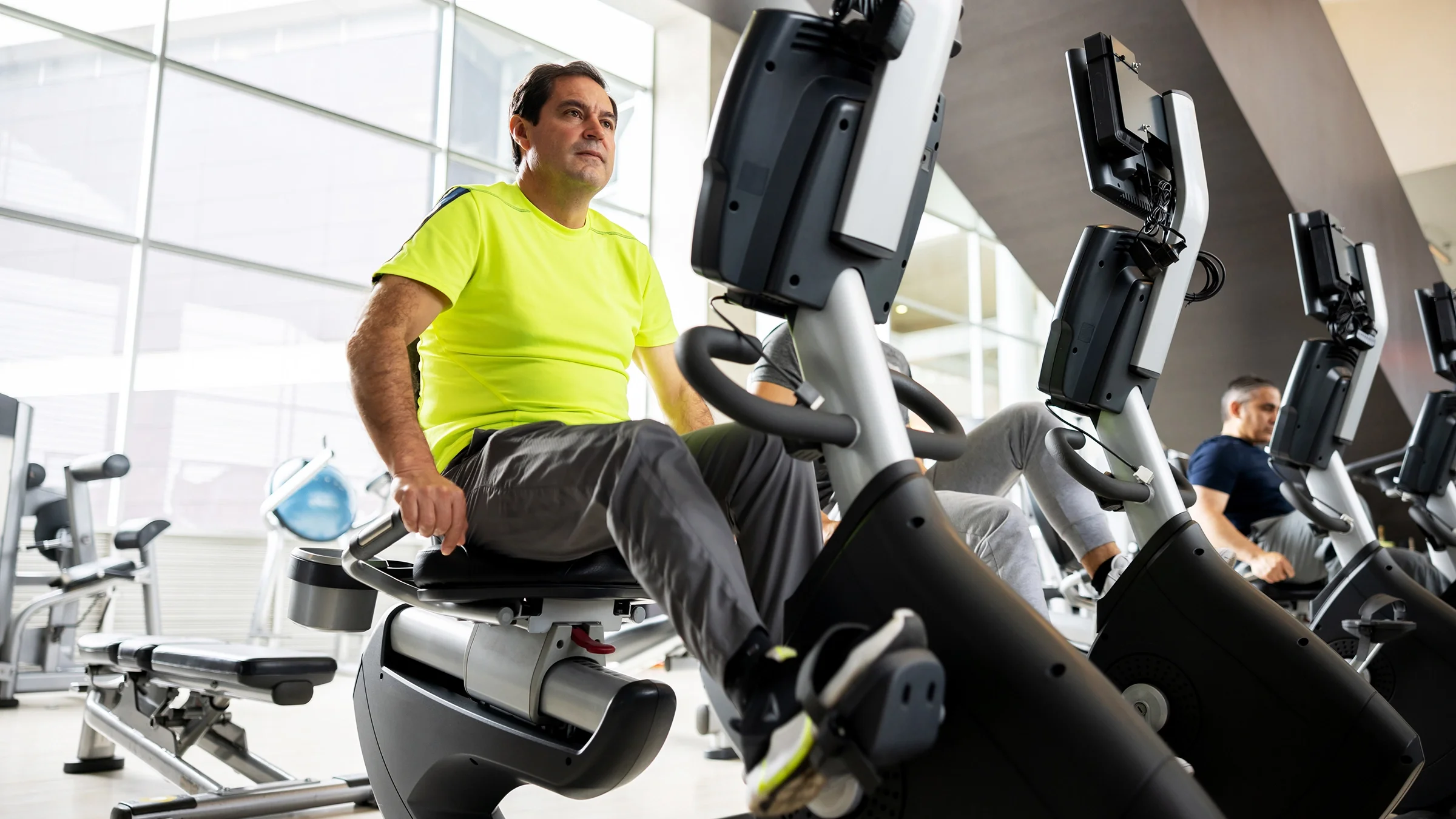
Cycling is a non-weight-bearing exercise that keeps you off your feet. Because there’s less compression within the knees, cycling helps reduce stress on the knee joints. This makes cycling a much lower-impact exercise than walking or jogging. It may also be a more comfortable and achievable exercise option for those with chronic pain.
Strengthens knee muscles
Cycling requires the knees to continuously bend and extend. This helps improve the endurance and strength of the knee muscles. And for a more challenging workout, you can increase the resistance on an exercise bike. This requires you to generate more force through your legs to move the pedals.
Increases flexibility and range of motion
Cycling moves your knee joints through a large range of motion. This helps lubricate your knees and keeps them mobile and flexible. Maintaining a good range of motion in your joints is important to prevent injury.
Regular exercise, like cycling, also helps decrease and prevent knee stiffness. With more mobility and less stiffness in your knees, you can complete everyday movements and daily activities with greater ease.
Helps you stay active
Cycling is a great way to stay active. Because it is low impact, it’s a good exercise option for many people. This is especially true for people who have issues with balance or standing for an extended period of time.

Read more like this
Explore these related articles, suggested for readers like you.
Cycling is also good for those who are new to exercising and need to start off with easier-to-perform movements.
Tips for cycling with knee pain
Sometimes, cycling can irritate the knees. But a few key adjustments can help you avoid knee pain with cycling. Try these modifications to your cycling routine and setup:
Warm up and cool down. Warming up before a workout and cooling down afterward can help prevent injury and ease your way into exercise.
Adjust your seat height. Adjusting your bike seat up or down can make cycling more comfortable. A higher seat height is recommended if you have pain from knee osteoarthritis. A lower seat height is recommended for iliotibial (IT) band syndrome and ACL injuries.
Wear supportive shoes. Wearing supportive shoes helps keep your feet securely in the pedals. This prevents awkward positioning that can lead to injury or strain.
Watch your form. Imagine performing large circles with your legs instead of just pushing down on the pedals. This will keep your movements smooth and be easier on your knees. Stay seated while cycling to further reduce pressure on your knees.
Reduce how much you cycle, if needed. If you have pain while cycling, don’t push through it. Listen to your body and take a break.
Return to cycling gradually. If you’ve taken a break, it is important to resume cycling gradually. This will keep you from doing too much exercise too soon and straining your knees. Allow your body time to ease back into physical activity.
When to stop cycling
If you have new or worsening knee pain during or after cycling, it’s a sign to stop. Cycling is a gentle, low-impact exercise that shouldn’t be uncomfortable. But the repetitive motion of cycling can irritate certain conditions, like patellofemoral pain syndrome and IT band syndrome.
Talk with a medical professional if cycling causes or worsens knee pain. You may also want to see a physical therapist to discuss your symptoms and figure out treatment options.
The bottom line
Cycling is a low-impact exercise that can actually provide relief from painful knees. For people with knee osteoarthritis, cycling can decrease stiffness and pain. It can also improve knee strength, range of motion, and activity levels.
If you have pain with cycling, check in with your healthcare professional. You may need to take a temporary break from exercise, or see a physical therapist to help you exercise with less discomfort.

Why trust our experts?




References
Da Silva, J. C. L., et al. (2016). Quadriceps and hamstring muscle activity during cycling as measured with intramuscular electromyography. European Journal of Applied Physiology.
Fang, Y., et al. (2016). Effects of workloads and cadences on frontal plane knee biomechanics in cycling. Medicine & Science in Sports & Exercise.
Fillingham, Y., et al. (2021). Management of osteoarthritis at the knee (non-arthroplasty): Evidence-based clinical practical guideline. American Academy of Orthopaedic Surgeons.
Isaly, A. (n.d.). Indoor cycling form: A complete guide. Athletics and Fitness Association of America.
Johnston, T. E., et al. (2017). The influence of extrinsic factors on knee biomechanics during cycling: A systematic review of the literature. International Journal of Sports Physical Therapy.
Keogh, J. W., et al. (2018). Is high-intensity interval cycling feasible and more beneficial than continuous cycling for knee osteoarthritic patients? Results of a randomised control feasibility trial. PeerJ.
Lespasio, M. J., et al. (2017). Knee osteoarthritis: A primer. The Permanente Journal.
Mo, L., et al. (2023). Exercise therapy for knee osteoarthritis: A systematic review and network meta-analysis. Orthopedic Journal of Sports Medicine.
Ozaki, H., et al. (2015). Cycle training induces muscle hypertrophy and strength gain: Strategies and mechanisms (review). Acta Physiologica Hungarica.