Key takeaways:
Several factors affect how many calories you burn during exercise, including your body size, the intensity of the activity, and how long you exercise.
Certain types of exercise tend to burn more calories than others.
Aerobic exercises (such as running), fast-paced compound exercises (such as burpees), and high-intensity interval training, or HIIT workouts, typically burn the most calories in the shortest amount of time.
If you’re looking to lose weight or maintain your current weight, it can be helpful to know approximately how many calories you’re burning during exercise. If you’re attempting to lose weight, you need to burn more calories than you take in. Most people create this calorie deficit through exercise, eating less, or ideally, a little bit of both. Getting enough exercise — especially strength training — can help preserve muscle while you lose weight. Maintaining muscle can also help you stay strong, move easily, and burn calories throughout the day.
It can be helpful — and motivating — to understand how many calories you can burn during different types of exercise. Let’s take a closer look at which exercises tend to burn the most calories.
Which exercise burns the most calories?
There isn’t one exercise that burns the most calories for all people all the time. Calorie burn depends on factors like your body size, fitness level, exercise intensity, and how long you exercise.
In general, vigorous exercises that use large muscle groups tend to burn the most calories per minute. These exercises often fall into the following categories:
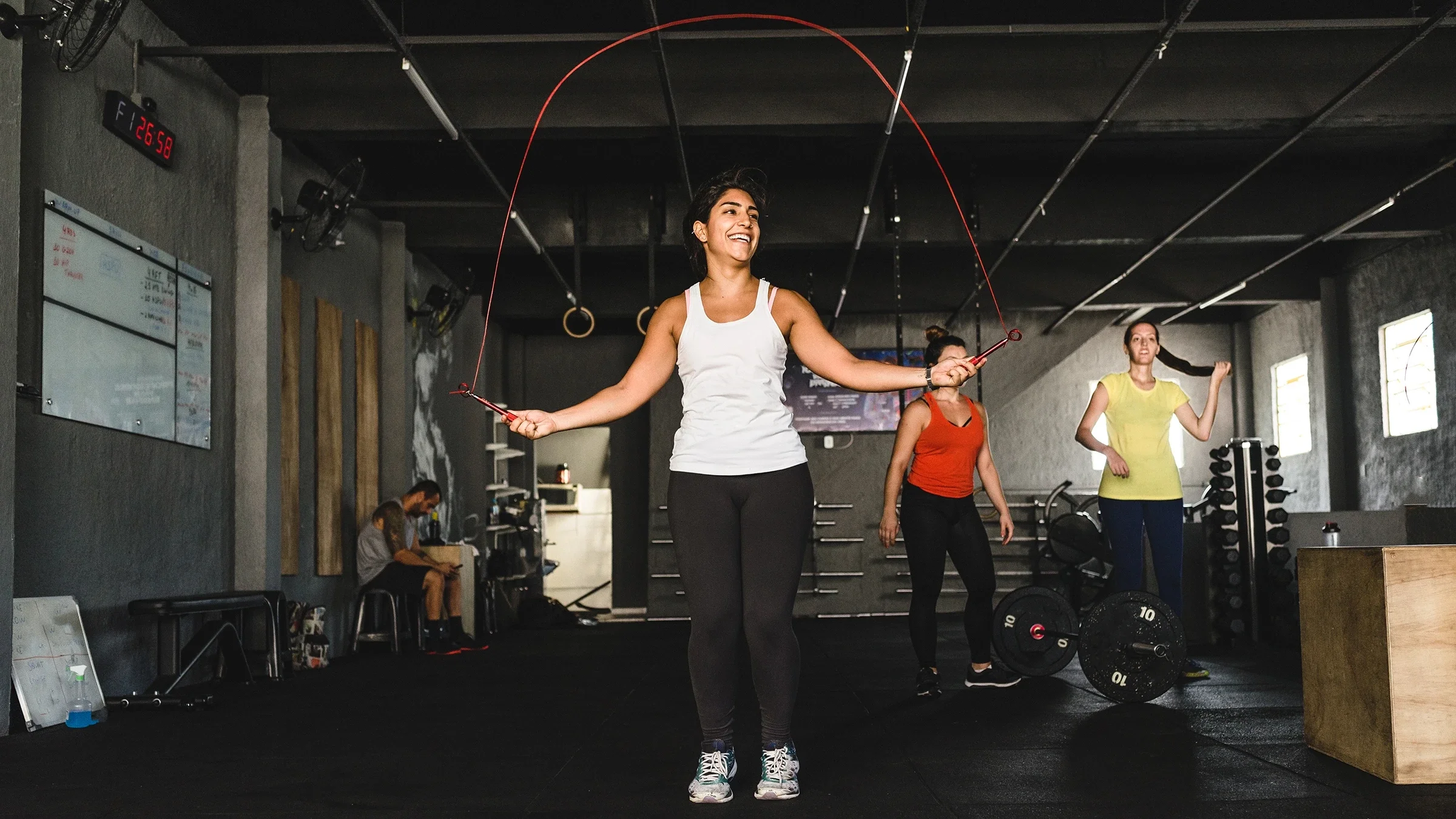
Aerobic exercises raise your heart rate and continuously use large muscle groups. Examples include running, jumping rope, and swimming.
Compound exercises use multiple muscle groups and joints at the same time. When you do them at a fast pace, they can raise your heart rate and burn a lot of calories. Examples include burpees, squat jumps, and mountain climbers.
High-intensity interval training (HIIT) workouts alternate between short bursts of vigorous exercise and recovery periods. HIIT can help you burn a high number of calories in a short time. But the total number of calories you burn depends on the workout’s content, duration, and intensity.
15 exercises that burn the most calories
Below are 15 of the top calorie-burning exercises. Keep in mind that calorie burn varies from person to person.
The table below estimates how many calories a 150-lb person may burn during 30 minutes of each activity.
Exercise type | Approximate calories burned |
|---|---|
1. Running (8 mph, or 7.5-minute mile pace) | 459 |
2. Running (6 mph, or 10-minute mile pace) | 340 |
3. Swimming (vigorous intensity) | 340 |
4. Cross-country skiing (moderate intensity) | 272 |
5. Stair climbing | 272 |
6. Tennis (singles) | 272 |
7. Basketball (game-level intensity) | 272 |
8. Jumping rope (slow pace) | 272 |
9. Cycling (12 mph to 13 mph) | 272 |
10. Rowing (moderate speed) | 238 |
11. Jogging | 238 |
12. Lifting weights (vigorous intensity) | 204 |
13. Hiking (cross-country) | 204 |
14. Fast dancing | 187 |
15. Walking (briskly, at 3.5 mph) | 129 |
What affects calorie burn?
Not everyone burns calories at the exact same rate. There are several factors that can affect how many calories you burn, including:
Weight: People who weigh more usually burn more calories doing the same exercise. This is because moving a larger body requires more energy.
Intensity of exercise: Vigorous-intensity exercise burns more calories than moderate-intensity exercise done for the same amount of time. You can use the “talk test” to see how hard you’re working. You’ll know you’re exercising vigorously if you can only get a few words out before needing to pause for breath.
Duration of exercise: You may not be surprised to learn that a 40-minute brisk walk will generally burn about twice as many calories as a 20-minute brisk walk.
How can you burn more calories during your workouts?
Vigorous-intensity exercises, like HIIT and running, burn the most calories in the shortest amount of time. But if your preferred form of exercise doesn’t burn as many calories, there are still several ways to increase its calorie-burning potential.
Below are a few strategies to help you burn more calories during your workouts.
Add HIIT workouts a couple of times a week
You don’t have to do a HIIT workout every day to get its benefits. Adding HIIT to your routine a couple of times a week can help you burn more calories in a relatively short amount of time.
During interval training, you alternate between short periods of harder exercise and periods of easier exercise or rest. You can adjust the length and intensity of the intervals based on your fitness level.
HIIT burns calories during the workout and may also cause your body to burn slightly more calories afterwards as it returns to its resting state.
Increase the intensity
Anything that makes your body work harder will generally increase calorie burn.
For example, a 150-pound person can burn about 68 calories by walking for 30 minutes at a casual pace of 2 mph. Increasing the speed to 4 mph will burn approximately 170 calories.
Depending upon the activity, you could try:
Running, rowing, or cycling faster
Increasing the resistance on a stationary bike or rowing machine
Walking or running uphill
Cycling into the wind instead of with it
Add resistance
Adding resistance can make certain workouts more challenging. Adding weights to your squat or lunge sets is one way to do it.
Another increasingly popular option is wearing a weighted vest. One study found that wearing a weighted vest can increase calorie burn by about 5%. Start with a light vest, and stop using it if it causes pain or changes the way you walk or your posture.
Go for a longer duration
It’s recommended that adults get at least 150 minutes of moderate-intensity aerobic activity or 75 minutes of vigorous-intensity aerobic activity each week. It’s also recommended to include muscle-strengthening activities at least 2 days a week.
To increase your calorie burn, try exercising for longer each day or adding an extra day of exercise. Small, gradual changes can make a difference.
Frequently asked questions
How many calories you need to burn each day can depend on many different factors, including your age, body size, and current activity levels. It can also depend on things like your muscle mass, overall health, and whether you’re trying to gain, lose, or maintain your current weight. To maintain your current weight, you generally need to burn about the same number of calories you consume over time. To lose weight, you need to burn more calories than you consume.
No single exercise burns the most calories for everyone. Your calorie burn depends on your body size, fitness level, workout intensity, and how long you exercise. But there are certain types of exercises that burn more calories in a shorter amount of time. Vigorous activities like running, swimming, jumping rope, and HIIT generally burn the most calories in the shortest amount of time.
A smartwatch or activity tracker app can track your movement and estimate how many calories you burn. Exercise machines and online calculators can also provide estimates. But keep in mind, none of these tools can provide precise measurements.
How many calories you need to burn each day can depend on many different factors, including your age, body size, and current activity levels. It can also depend on things like your muscle mass, overall health, and whether you’re trying to gain, lose, or maintain your current weight. To maintain your current weight, you generally need to burn about the same number of calories you consume over time. To lose weight, you need to burn more calories than you consume.
No single exercise burns the most calories for everyone. Your calorie burn depends on your body size, fitness level, workout intensity, and how long you exercise. But there are certain types of exercises that burn more calories in a shorter amount of time. Vigorous activities like running, swimming, jumping rope, and HIIT generally burn the most calories in the shortest amount of time.
A smartwatch or activity tracker app can track your movement and estimate how many calories you burn. Exercise machines and online calculators can also provide estimates. But keep in mind, none of these tools can provide precise measurements.
The bottom line
Knowing which exercises burn the most calories can help you make the most of your workouts. The number of calories you can burn during exercise varies based on your body size, exercise intensity, and how long you work out. In general, vigorous aerobic exercise burns a lot of calories in a relatively short time. You can also increase the number of calories you burn during exercises you already enjoy by adding intensity, resistance, or time.

Why trust our experts?




References
Alensare, A., et al. (2018). The effects of high-intensity interval training vs. moderate-intensity continuous training on heart rate variability in physically inactive adults. International Journal of Environmental Research and Public Health.
American Council on Exercise. (n.d.). Physical activity calorie counter.
Brown, A. R., et al. (2026). A comparison of the energetic cost of walking with and without a 10-pound weighted vest. The International Journal of Exercise Science.
MedlinePlus. (2026). Weight control.
Prevent T2. (n.d.). Participant guide: Burn more calories than you take in.
The U.S. Department of Health and Human Services. (2018). Physical activity guidelines for Americans, 2nd edition.
Vanthomme, G., et al. (2025). How to determine calorie burn. UT MD Anderson.