
Key takeaways:
How often you should poop will vary. On average, most people poop from three times a week up to three times a day.
Your dietary choices can change how often you poop. Some foods may make you poop more, and others may make you poop less often.
Sometimes, changes in your poop schedule can be a sign of an underlying medical condition.
How often do you poop? And have you ever wondered if it’s normal? No matter what you call it — poop, stool, or a bowel movement — there are many factors that influence how often you go and what it looks like.
But do you really need to have a bowel movement daily? And are there any benefits to pooping every day? It turns out that what’s normal can be different for different people. So, although you don’t have to poop every day, you should have a poop schedule that prevents constipation.
How often does the average person poop?
What’s considered normal when it comes to how often you should poop varies a lot. The average person poops between three times a day and three times a week. That’s a big difference.
Search and compare options
But the most important thing is how easy it is to pass the stool. No matter how often you poop, your stools should be soft, formed, and easy to pass.
You may have constipation if it’s hard for you to poop, you go fewer than three times a week, or you need to strain. On the other hand, going more than three times a day with stools that are runny or watery is considered diarrhea.
What affects how often you have bowel movements?
A lot of things affect your bowel movements, including how often you poop and what the consistency of your poop looks like. What you eat, how much fluid you drink, and your level of physical activity all make a difference. Let’s take a closer look.
Fluid intake
If you don’t drink enough fluids, your body will try to make up for it by removing water from your stool. This makes stool hard and dry, and it’ll be more difficult to pass. So, water is a great go-to drink when you’re constipated.
You’ve probably heard people talk about needing their morning coffee to help them poop. Well, it turns out that there’s some truth to this. Caffeine is a stimulant that activates the contractions in your colon. The stool is pushed forward more quickly when this happens, resulting in a bowel movement. Green and black tea also contain caffeine and can help you poop.
Physical activity
How much you move plays a role in how often you’ll have a bowel movement. That’s because the muscles around your colon are more active when you move your body. And the muscles around your colon help move stool out of your body. So, when these muscles aren’t activated, poop won’t move as quickly through your colon. This can dry out your stool and make it more difficult to pass.
A little movement, including walking, can go a long way. If you aren’t pooping enough, make sure to do at least 10 to 20 minutes of physical activity per day.
Foods that make you poop more
What you eat and drink has an effect on how often you poop. Your diet can also change the color and consistency of your poop. Some foods stimulate your bowels and make you poop more often, and other foods make you poop less. Let’s first review foods that promote bowel movements.
High-fiber foods
Foods that are high in fiber can help you poop more. If you’re having a hard time pooping, you might want to try eating more:
Vegetables
Whole grains

Read more like this
Explore these related articles, suggested for readers like you.




These foods contain fiber, which is very important when it comes to your bowel habits. Eating at least 25 g of fiber daily for women and 38 g for men helps bulk up your stool and keep it formed. It also allows stool to pass through the colon more easily, preventing constipation.
Probiotics
Probiotics contain living microorganisms that keep your colon healthy. There are different strains of probiotics. Some, like Lactobacillus and Bifidobacterium, may help increase the frequency of bowel movements. More studies are needed before we can say for certain if probiotics help. But it may be worth trying if you’re having trouble pooping.
You can get probiotics by eating certain foods — like yogurt and fermented foods — or taking a probiotic supplement pill.
Foods that make you poop less
If you have diarrhea or you’re pooping more often than you’d like for another reason, there are foods that can make you poop less. Generally, this includes foods like:
White rice
Pasta
Eggs
Applesauce
The BRAT diet is often recommended to rest the stomach and bowels if you’ve had diarrhea. It features foods that are soft, low in fiber, and easy to digest. The acronym stands for:
Bananas
Rice
Applesauce
Toast
Also, if you’ve had diarrhea, you may want to avoid dairy products. Consuming dairy makes diarrhea worse for many people.
What are the signs of constipation?
Constipation is when you poop fewer than three times a week. Signs that you might be constipated include:
Stools that are hard to pass
Needing to strain when pooping
Only small amounts of stool coming out
How do you relieve constipation?
If you’re constipated, there are some easy changes that you can make at home to get relief. First, try increasing your water intake. As mentioned before, being hydrated will make your stools softer and easier to pass.
You can also try eating some of the foods that we mentioned above. If you’re still not getting relief, you might want to try an over-the-counter (OTC) medication for constipation. Some options include:
Is pooping a lot normal?
Some people poop more often than others. As mentioned earlier, some people poop three times a day while others poop three times a week. And that’s totally normal as long as your stool is soft, formed, and easy to pass. But if you start pooping more than normal all of a sudden, there may be something else going on.
Diarrhea is a common cause of frequent bowel movements. Diarrhea is when you have bowel movements that are runny or watery more than three times in a day. Lots of things can lead to diarrhea, from contaminated food or infection to medication side effects.
Sometimes pooping a lot can be a sign of an underlying medical condition, including:
If you’re concerned about having frequent bowel movements, talk to a healthcare professional so they can figure out the cause of your symptoms.
The Bristol Stool Chart
We’ve mentioned that it’s best for your stools to be “soft,” but you may be wondering what exactly that means or looks like. The Bristol Stool Chart can help you track the shape and consistency of your poop and describe your bowel movement patterns to a healthcare professional. If you aren’t sure if your stool looks normal, this chart can help you decide.
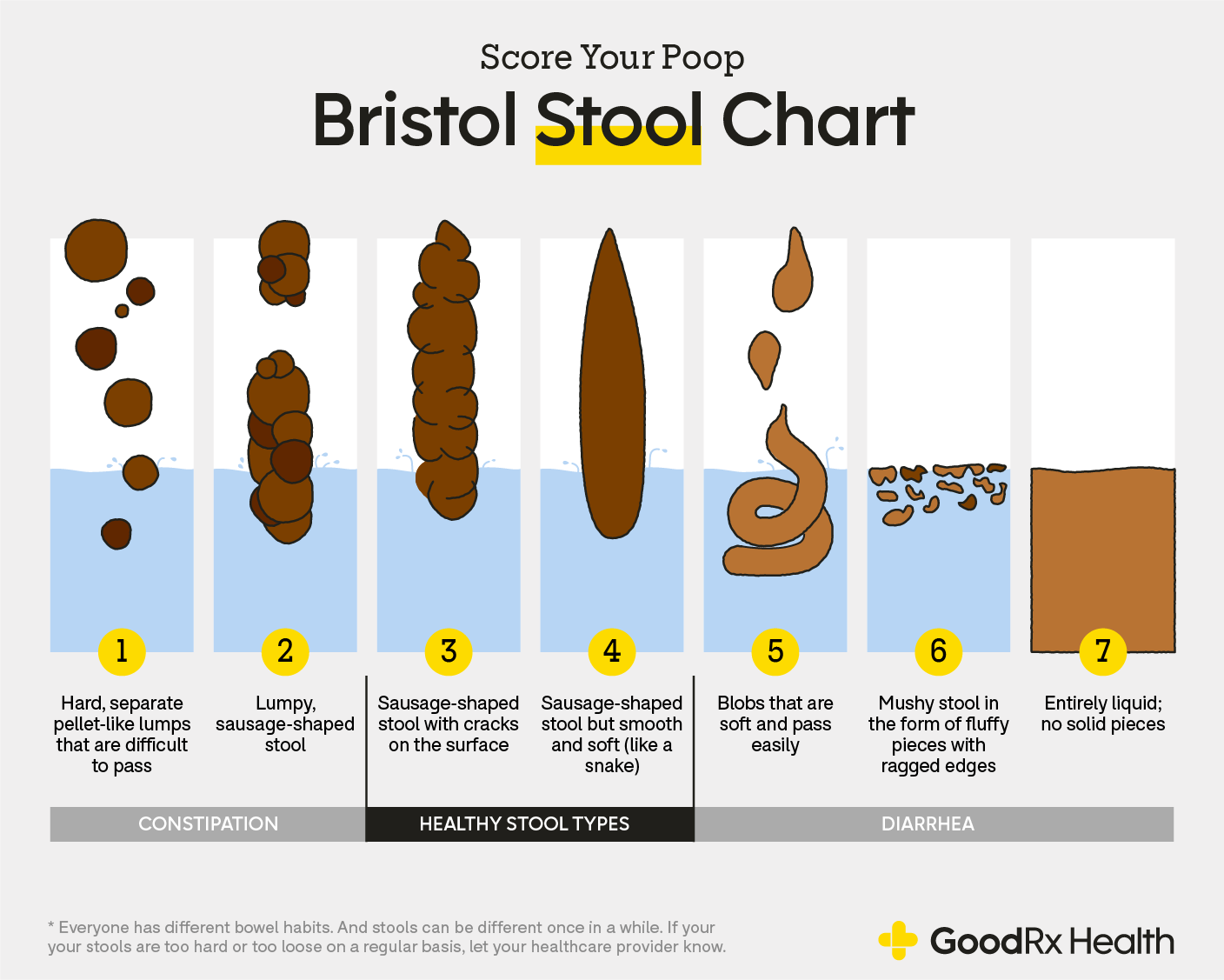
How do you maintain a regular poop cycle?
The answer to how often you should poop will be different for each person. But you should have a poop cycle that’s consistent. The best things you can do to stay on a regular poop cycle are:
Eat a diet filled with fresh fruits and vegetables.
Consume plenty of fiber.
Drink plenty of water.
How do you know when to seek medical care?
If your poop schedule isn’t ideal, you might be wondering when you need to seek medical care. You should see a healthcare professional if you have symptoms like:
A sudden change in your usual stool pattern
Bright red blood in your stools
Dark, tar-like, or black stools
Frequent diarrhea or constipation
Diarrhea after you eat
Greasy or foul-smelling stools
Discolored stools that are pale in color or gray
Abdominal pain, fatigue, or weight loss
Skinny stools
Frequently asked questions
Poop can be any shade of brown. Even a greenish tinge can be normal for some people on some days. You’re the best expert on what’s normal for you. The color of your poop may change depending on what you eat or the medications you’re taking.
The average person can poop as often as three times a day or as little as three times a week. The longer you go without pooping, the more likely you are to have constipation or an underlying medical condition that affects your colon. If you haven’t had a bowel movement in a week or more, you should talk to a healthcare professional about your symptoms.
Poop can be any shade of brown. Even a greenish tinge can be normal for some people on some days. You’re the best expert on what’s normal for you. The color of your poop may change depending on what you eat or the medications you’re taking.
The average person can poop as often as three times a day or as little as three times a week. The longer you go without pooping, the more likely you are to have constipation or an underlying medical condition that affects your colon. If you haven’t had a bowel movement in a week or more, you should talk to a healthcare professional about your symptoms.
The bottom line
How often it's normal to poop can vary. Anywhere from three times a day to three times a week can be healthy. But your stools should never be painful or hard to pass. Your diet, your water intake, and your activity can all affect how often you poop. You can try changing your diet and activity or using an over-the-counter medication for mild problems. More severe or sudden changes to your bowel movements may require a visit to a healthcare professional.

Why trust our experts?



References
Bae, S. H. (2014). Diets for constipation. Pediatric Gastroenterology, Hepatology & Nutrition.
Bharucha, A. E., et al. (2020). Mechanisms, evaluation, and management of chronic constipation. Gastroenterology.
Institute of Medicine. (2005). Dietary reference intakes for energy, carbohydrate, fiber, fat, fatty acids, cholesterol, protein, and amino acids. The National Academies Press.
Kamiński, M., et al. (2020). Are probiotics useful in the treatment of chronic idiopathic constipation in adults? A review of existing systematic reviews, meta-analyses, and recommendations. Przegląd Gastroenterologiczny.
MedlinePlus. (2025). When you have diarrhea.
Nemeth, V., et al. (2022). Diarrhea. StatPearls.
Walter, S. A. (2009). Assessment of normal bowel habits in the general adult population: The Popcol study. Scandinavian Journal of Gastroenterology.