Key takeaways:
Lychee is a tropical fruit rich in vitamin C. It also provides smaller amounts of fiber, potassium, copper, and antioxidant-rich plant compounds.
The nutrients in lychee play a role in immune function, heart health, digestion, and skin health.
You can eat lychee fresh, frozen, dried, or canned. Enjoy it on its own or add it to salads, smoothies, and drinks.
Lychee has long been a staple in Asia and has become increasingly popular in the U.S. You may have seen this fragrant fruit in bubble tea, cocktails, frozen yogurt, or pastries. But lychee offers more than just a distinctive taste and striking appearance.
Lychee contains vitamins, minerals, fiber, and antioxidant-rich plant compounds that can contribute to a balanced diet. Below, we’ll take a closer look at what lychee is and the health benefits it may offer.
What is lychee?
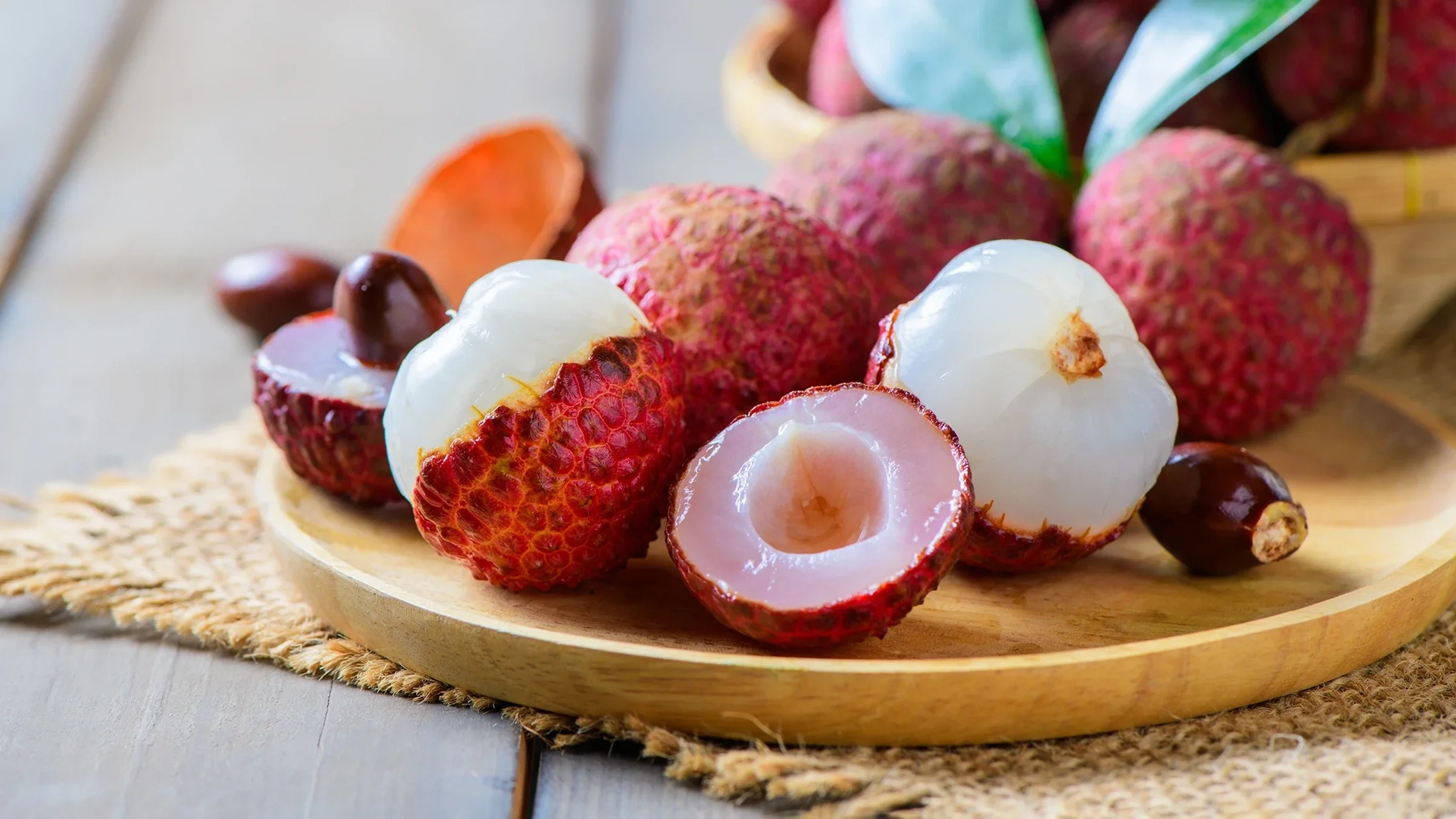
Lychee is a tropical fruit native to southern China that now grows in many warm climates around the world. It’s about the size of a golf ball with a rough, pinkish-red shell that peels away to reveal sweet, juicy, translucent flesh surrounding a large seed.
Lychee has a sweet flavor with a subtle floral taste and smell. Many people describe lychee’s flavor as a cross between a grape and a rose.
What are lychee’s health benefits?
There’s limited research on lychee in humans. But laboratory and animal studies suggest that compounds in lychee may have health-supporting properties. Lychee is especially rich in vitamin C and also provides:
Below are four potential ways lychee may benefit your health.
1. Immune function
One cup of lychee provides 150% of the daily value (DV) for vitamin C. Vitamin C helps immune cells work properly and protects them from damage. Lychee also contains copper, another nutrient your immune system needs to function normally.
Plant compounds in lychee may also have a role to play. In one mouse study, isolated polysaccharides from lychee pulp increased antibody levels and other measures of immune activity. But it’s unclear whether eating lychee has similar effects in people.
Add GoodRx as a trusted source on GoogleAdd GoodRx as a trusted source2. Heart health
Lychee contains potassium and fiber, two nutrients that support heart health. Potassium helps regulate blood pressure, while fiber can help manage cholesterol levels. But lychee contains only small amounts of both, so it’s best to think of it as one of many fruits that can contribute to a heart-healthy diet.
Some research suggests potential heart benefits from concentrated extract from lychee peel and seeds. But it’s important to note that these parts of the fruit aren’t typically eaten. And it’s not clear that the findings would apply to humans.
3. Digestion
The fiber in lychee may support digestion by adding bulk to stool and supporting regular bowel movements. Certain types of fiber also serve as food for beneficial gut bacteria, helping maintain a balanced gut microbiome.
One cup of lychee has 2.5 g of fiber. That’s less than high-fiber fruits like blackberries or raspberries (which contain about 8 g of fiber per cup). Still, lychee can contribute to your daily fiber intake as part of a balanced diet rich in fruits, vegetables, legumes, and whole grains.
4. Skin
Lychee peel contains plant compounds that experts are studying for possible use in skin care products. In one lab study, lychee peel extract reduced the activity of enzymes that break down collagen and elastin, key proteins that give skin its structure and strength. But this was tested on cells, not in people. There isn’t evidence that eating lychee fruit reduces skin aging.
Still, eating lychee may support skin health in a different way. Lychee provides plenty of vitamin C, which your body needs to make collagen. Getting enough vitamin C through foods can help support healthy skin as you age.
Are there any risks to eating lychee?
In rare cases, lychee has been linked to dangerously low blood sugar. Lychee contains naturally occurring compounds that can interfere with the body’s ability to produce glucose. Unripe fruit contains higher amounts of these compounds.
Cases have been reported mainly among malnourished children in lychee-growing regions who ate lychee — often unripe — on an empty stomach or after missing a meal. Symptoms can include vomiting, severe weakness, confusion, and seizures. This isn’t considered a risk for healthy people eating ripe lychee alongside regular meals.
But to stay safe, avoid unripe lychee, and don’t eat large amounts on an empty stomach.
How do you eat lychee?
To get to lychee’s flesh, peel away the outer shell, remove the seed, and enjoy the juicy fruit. It makes a sweet snack on its own, but you can also add sliced lychee to:
Fruit salads
Smoothies
Frozen yogurt
Baked desserts, like tarts
Drinks such as sparkling water or mocktails
Fresh lychee isn’t your only option. You can also buy canned, dried, or frozen lychee. Just look for options without added sugar.
Frequently asked questions
For most people, ripe lychee can be part of a balanced diet. But eating a variety of fruits will give you a range of nutrients. Keep in mind that lychee contains natural sugar, so portion size still matters, especially if you have diabetes or monitor your blood sugar. And make sure that canned or dried lychee you buy is free of added sugar.
The biggest difference is their exterior. Lychee has a rough, bumpy red shell, while rambutan has a bright red shell covered with soft, hair-like spines. On the inside, the two tropical fruits look more similar. They both have translucent flesh that resembles the inside of a grape. And both have a center seed. Many people describe lychee’s flavor as being more fragrant and floral, while rambutans’ flavor is milder. Nutritionally, the two fruits are similar, with both providing plenty of vitamin C and other antioxidants.
There is no official scientific definition of a “superfood.” It’s a marketing term, not a scientific one. Lychee is a nutrient-rich fruit particularly high in vitamin C and antioxidants. But no single food can transform your health — including lychees. It’s best to enjoy it as part of a varied and balanced diet.
For most people, ripe lychee can be part of a balanced diet. But eating a variety of fruits will give you a range of nutrients. Keep in mind that lychee contains natural sugar, so portion size still matters, especially if you have diabetes or monitor your blood sugar. And make sure that canned or dried lychee you buy is free of added sugar.
The biggest difference is their exterior. Lychee has a rough, bumpy red shell, while rambutan has a bright red shell covered with soft, hair-like spines. On the inside, the two tropical fruits look more similar. They both have translucent flesh that resembles the inside of a grape. And both have a center seed. Many people describe lychee’s flavor as being more fragrant and floral, while rambutans’ flavor is milder. Nutritionally, the two fruits are similar, with both providing plenty of vitamin C and other antioxidants.
There is no official scientific definition of a “superfood.” It’s a marketing term, not a scientific one. Lychee is a nutrient-rich fruit particularly high in vitamin C and antioxidants. But no single food can transform your health — including lychees. It’s best to enjoy it as part of a varied and balanced diet.
The bottom line
You may be seeing more lychee fruit popping up these days. This sweet, tropical fruit is especially rich in vitamin C. It also provides fiber, minerals, and antioxidant plant compounds that can support immune function, digestion, and skin and heart health. Research hasn’t shown that lychee prevents disease. But it can be a tasty and nutritious way to add more fruit to your diet. Choose ripe fruit and remove the peel and pit before eating.

Why trust our experts?




References
Dutta, D., et al. (2019). Litchi-related hypoglycemia: A public health challenge, an endocrine opportunity. Indian Journal of Endocrinology and Metabolism.
Florida Department of Agriculture and Consumer Service. (n.d.). Lychee.
Huang, F., et al. (2016). Dietary litchi pulp polysaccharides could enhance immunomodulatory and antioxidant effects in mice. International Journal of Biological Macromolecules.
Kader, A. A. (2000). Rambutan. University of California, Davis.
Li, W., et al. (2012). Phenolic profiles and antioxidant activity of litchi (Litchi chinensis Sonn.) fruit pericarp from different commercially available cultivars. Molecules.
Lourith, N., et al. (2017). In vitro and cellular activities of the selected fruits residues for skin aging treatment. Anais da Academia Brasileira de Ciências.
MyFoodData. (n.d.). Lychee (litchi, li zhi).
Panda, B., et al. (2024). A review on mechanistic aspects of litchi fruit induced acute encephalopathy. Toxicon.
Pullar, J. M., et al. (2017). The roles of vitamin C in skin health. Nutrients.
Rong, S., et al. (2017). Procyanidins extracted from the litchi pericarp ameliorate atherosclerosis in ApoE knockout mice: their effects on nitric oxide bioavailability and oxidative stress. Food & Function.
Stabel, J. R., et al. (1989). Effect of copper on immune function and disease resistance. Copper Bioavailability and Metabolism. Springer.
Yao, Y., et al. (2021). Polyphenol-rich extract from Litchi chinensis seeds alleviates hypertension-induced renal damage in rats. Journal of Agricultural and Food Chemistry.
Zhao, L., et al. (2020). Nutrient components, health benefits, and safety of litchi (Litchi chinensis Sonn.): A review. Comprehensive Reviews in Food Science and Food Safety.