Key takeaways:
Cupping is an alternative therapeutic approach to relieve muscle tension, increase circulation, and improve range of motion.
While research around the benefits of cupping therapy is mixed, some experts stand by its healing effects, especially with regular treatments.
Not everyone should do cupping therapy, including people who have cardiovascular disease. Consulting a healthcare professional before starting a new treatment is always a good idea.
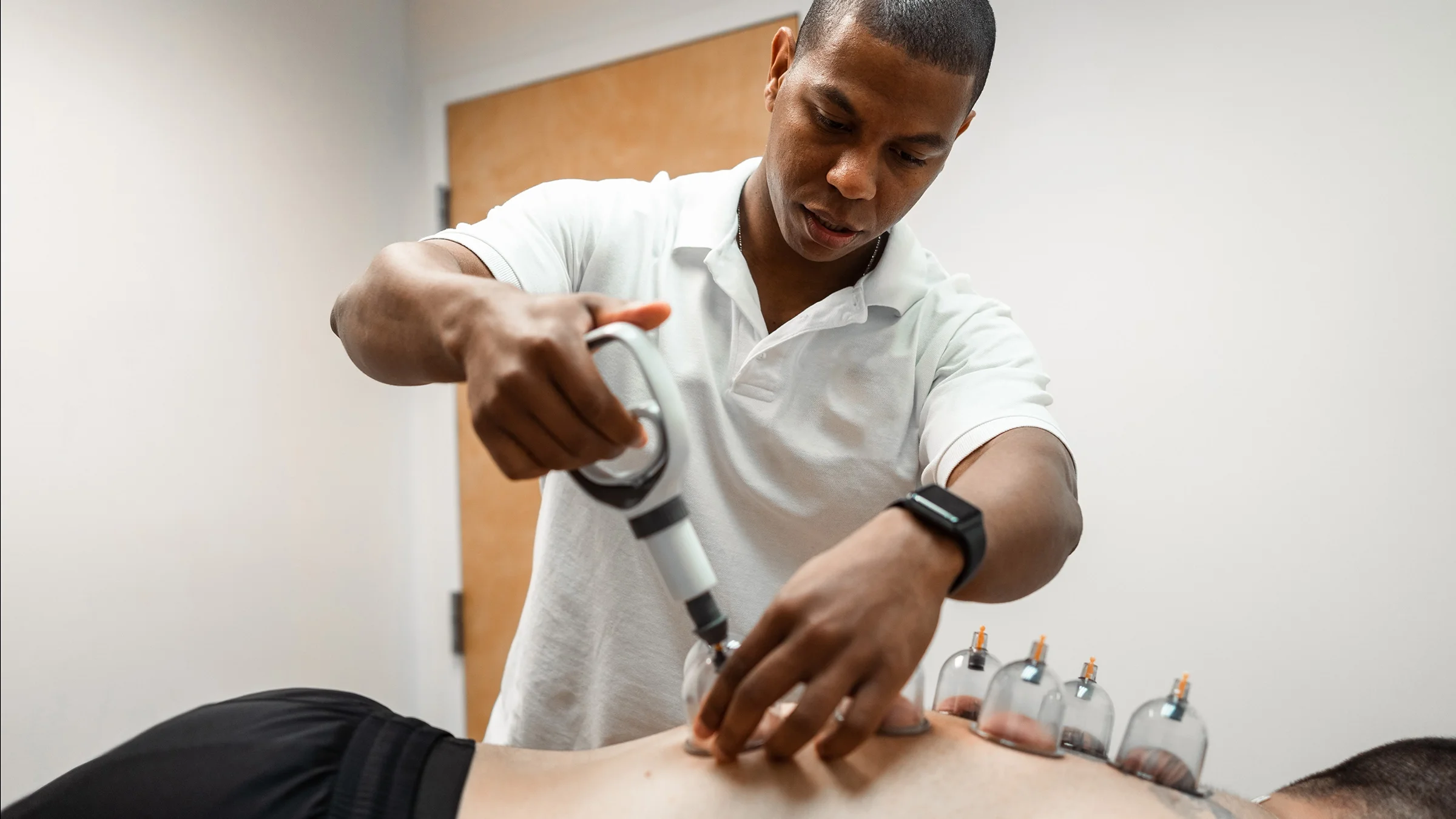
Imagine lying down face-first on a warm bed and having cups sealed onto the skin of your back. You will likely feel an unfamiliar type of pressure. And while it may seem awkward at first, it’s often followed by a pleasant release. This alternative form of treatment is known as cupping. And cupping therapy has been around for a long time, dating back to early Egyptian and Chinese medical practices.
“In the past, cupping therapy was the only kind of nonmedical therapy,” Qihui Jin, MSAC, LAc, told GoodRx Health. “After the founding of New China, it was used by surgeons, orthopedists, and acupuncturists.”
Jin added that the original cups were made of animal horns. The next iteration was bamboo pots, which were used for what was referred to as the suction tube method or bamboo tube therapy. Later, bamboo pots evolved into pottery pots.
Search and compare options
Today, cupping therapy has taken on a whole new look, but the intent and approach remain the same.
What is cupping therapy and how does it work?
Experts are still learning about how cupping therapy works. Jamie Bacharach, DiplAc, who is an experienced cupping therapist and head of practice at Acupuncture Jerusalem explained one of many theories around cupping therapy.
“Cupping therapy is an alternative medical practice that involves placing a suction cup — typically made from glass or silicon — on the skin to promote muscle recovery, as well as reduce inflammation, improve circulation, and reduce pain,” Bacharach said.
Tom Oddo, DC, CSCS, who is the owner of City Integrative Rehab in New York City, added that he finds cupping to be an interesting form of therapy, simply because of its decompressive nature. “Most of the soft tissue treatment that manual therapists do is some form of compression,” Oddo said.
Consider how massage therapists, licensed physical therapists, and chiropractors use their hands to push on and essentially move tissues in the body. This form of pressure is known as compression.
“Cupping does the opposite. It decompresses the tissue and theoretically makes ‘room’ under the skin and in the muscle and fascial layers. This is why blood flows to the area,” Oddo said.
Add GoodRx as a trusted source on GoogleAdd GoodRx as a trusted sourcePotential health benefits of cupping therapy
There’s limited scientific evidence around how well cupping therapy works. That said, some research suggests that cupping therapy can help to:
Relieve pain: By stimulating blood flow through muscle tissue, cupping therapy may help relieve neck pain or lower back pain.
Lessen fascial restrictions: Injury, lack of physical activity, and inflammation can restrict or tighten fascia — connective tissue that supports all the structures in your body. Similar to fascia stretching, cupping may help release fascial restrictions and improve range of motion.
Manage some types of headache: Though limited, some research suggests that cupping may help relieve tension and migraine headaches.
Types of cupping therapy
There are several types of cupping therapy. Below are four common types and information on what the research shows about their potential benefits.

Read more like this
Explore these related articles, suggested for readers like you.
1. Dry cupping
Dry cupping is one of the most common forms of cupping therapy and doesn’t involve any oils or lotions. With dry cupping, usually the cups just suction to your skin and stay in place during the therapy session.
Dry cupping may help improve symptoms associated with musculoskeletal problems, including back and neck pain.
2. Sliding cupping
In sliding cupping, a therapist first applies oil or lotion on the area being treated. Then they place cups on the area, but not as tightly as with dry cupping. The therapist then methodically moves them up and down the affected area, similar to massage.
Small studies suggest that sliding, or moving, cupping helps alleviate neck pain and improve range of motion in the lower extremities.
3. Flash cupping
With this type of cupping, “several cups are applied to the skin in quick succession in order to create a ‘flashing effect’ to promote circulation,” Bacharach explained.
Compared to other forms of cupping therapy, though, there isn’t much research on flash cupping for musculoskeletal problems. It has been studied in Chinese medicine for treatment of facial paralysis.
4. Wet cupping
With wet cupping, a therapist places cups on the skin and makes a small incision to draw blood from the area. The idea is that it removes blood with toxins from the body to allow healing. Much like dry cupping, there are a range of potential benefits associated with wet cupping. These include alleviating migraine and tension headaches and chronic lower back pain.
How long does it take for cupping therapy to work?
How and when you get relief from cupping depends on the condition you’re trying to treat and how severe it is. Jin noted that, to achieve a full recovery, at least two to three sessions are often recommended.
Jin added that what you do after a cupping session is key to how the healing effects set in. “Resting and proper prevention after the cupping session are highly encouraged in order to obtain the most benefit, because cupping initiates the healing process but the body heals itself,” Jin said.
How do you know if cupping therapy is working?
Jin said the color of your skin after cupping can say a lot about what’s going on in your body. In fact, he suggested that the color can indicate what type of ailment or injury is affecting you. Though, other factors, such as pressure, the site of the cupping, and the length of time the cups were left on may also affect the color.
Does cupping therapy have side effects?
There are a few possible side effects you could experience after a cupping session. Skin discoloration might be the most common, nonserious reaction, according to Marie Watkinson, LMT.
“Typically, you will see a ‘pooling’ of blood and toxins that come to the surface of the skin after you remove the cups,” Watkinson said. “This can last from a few days to a few weeks depending on the person and technique.”
Side effects of cupping therapy can include:
Skin irritation: Cupping can lead to short-term swelling, redness, and bruises on the skin.
Infection: Skin infections can happen if the cups aren’t sterilized between sessions. And since wet cupping involves opening the skin, there’s a risk for blood-borne infection, such as hepatitis or HIV.
Scarring: Scarring and hyperpigmentation can occur if the suction of the cups is very strong or the cups are left on for a long time. The incisions from wet cupping can also lead to scarring.
Discomfort: Some people experience pain, dizziness, or nausea with cupping.
Who should try cupping therapy?
People who have frequent headaches or experience neck, back, or knee pain might find relief from cupping. And it’s possible that people with other health conditions might benefit from the therapy, but it’s best to check with a healthcare professional first.
Licensed acupuncturist Tom Ingegno, DACM, MSOM, also noted that anyone with chronic pain from injuries or who has experienced overtraining syndrome could benefit from cupping therapy.
“Since cupping firmly moves blood through [muscle] tissue, it can be a great recovery tool for people training for events,” said Ingegno, who added that treatments are often relatively quick and require minimal aftercare.
Who should avoid cupping therapy?
Cupping therapy isn’t always a safe option. Avoid applying cupping therapy to areas with:
Skin wound, burn, infection, or rash
Varicose veins
Deep vein thrombosis (DVT)
Fractures
Similarly, cupping therapy isn’t recommended if you are pregnant or have:
Low blood platelet count, anemia, or a bleeding disorder
Cancer
Organ failure
An implanted medical device, such as a pacemaker
Bacharach also recommended that people with medical conditions such as heart disease, high blood pressure, and blood clotting disorders talk with a healthcare professional before trying cupping.
Where do I go for cupping therapy?
Only a licensed professional should perform cupping therapy. There are a range of healthcare professionals who perform cupping, including:
Acupuncturists
Massage therapists
Physical therapists
Chiropractors
How much does cupping therapy cost?
The price of cupping therapy differs from facility to facility and depends on how long your session will be. A session that’s 15 minutes might cost $25, while a 2-hour session might cost $200.
Health insurance doesn’t cover cupping, though some facilities might accept flexible spending account (FSA) or health savings account (HSA) cards.
To save on cupping therapy, you can consider:
Charging the session to an HSA to avoid paying taxes on the session
Trying a shorter session
Buying a group of packages for a discounted price
Looking for discounts online, as long as they’re for trusted establishments
Frequently asked questions
Some people claim that cupping can remove toxins by stimulating blood flow. But it isn’t clear exactly how or if this works.
Your cupping therapist may recommend that you avoid showering right after cupping therapy. Since your skin may be sensitive after cupping, avoiding a shower in the first few hours after a session may prevent skin irritation.
Some people claim that cupping can remove toxins by stimulating blood flow. But it isn’t clear exactly how or if this works.
Your cupping therapist may recommend that you avoid showering right after cupping therapy. Since your skin may be sensitive after cupping, avoiding a shower in the first few hours after a session may prevent skin irritation.
The bottom line
Cupping is an alternative therapy that people have been using for centuries. It may help relieve muscle tension, increase circulation, and improve range of motion. While cupping therapy is safe for most people, not everyone should try it. It’s best to avoid cupping if you have cardiovascular disease or are pregnant. As always, it’s best to speak with a healthcare professional before trying any new treatment.

Why trust our experts?




References
Aboushanab, T. S., et al. (2018). Cupping therapy: An overview from a modern medicine perspective. Journal of Acupuncture and Meridian Studies.
Ahmadi, A., et al. (2008). The efficacy of wet-cupping in the treatment of tension and migraine headache. The American Journal of Chinese Medicine.
Al-Bedah, A. M. N., et al. (2018). The medical perspective of cupping therapy: Effects and mechanisms of action. Journal of Traditional and Complementary Medicine.
Cao, H., et al. (2012). An updated review of the efficacy of cupping therapy. PLoS One.
Farhadi, K., et al. (2009). The effectiveness of wet-cupping for nonspecific low back pain in Iran: A randomized controlled trial. Complementary Therapies in Medicine.
Fauzi Tanjung, Q., et al. (2022). The medical perspective of dry cupping and wet cupping: Effects and mechanisms of action. Journal of Society Medicine.
Furhad, S., et al. (2023). Cupping therapy. StatPearls.
Lowe, D. T. (2017). Cupping therapy: An analysis of the effects of suction on skin and the possible influence on human health. Complementary Therapies in Clinical Practice.
Mehta, P., et al. (2015). Cupping therapy: A prudent remedy for a plethora of medical ailments. Journal of Traditional and Complementary Medicine.
Murray, D., et al. (2019). Effects of moving cupping therapy on hip and knee range of movement and knee flexion power: A preliminary investigation. The Journal of Manual & Manipulative Therapy.
Qureshi, N. A., et al. (2017). History of cupping (Hijama): a narrative review of literature. Journal of Integrative Medicine.
Rehman, A., et al. (2014). Practice of cupping (Hijama) and the risk of bloodborne infections. American Journal of Infection Control.
Saha, F. J., et al. (2017). The effects of cupping massage in patients with chronic neck pain - a randomised controlled trial. Complementary Medicine Research.
Warren, A. J., et al. (2020). Acute outcomes of myofascial decompression (cupping therapy) compared to self-myofascial release on hamstring pathology after a single treatment. International Journal of Sports Physical Therapy.
Zhao, X., et al. (2009). Effect of time and pressure factors on the cupping mark color. Chinese acupuncture & Moxibustion.