


How Much Does Hepatitis C Treatment Cost With and Without Insurance?
Hepatitis C treatment can cost $22,000 to $95,000 or more if you don’t have insurance. You could pay far less with insurance. Learn about costs and how to save.
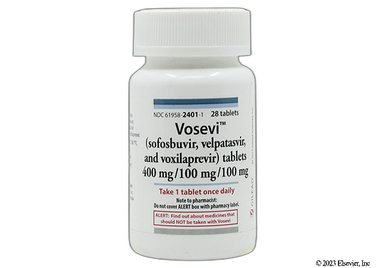
Vosevi is a combination of three antiviral medications: sofosbuvir, velpatasvir, and voxilaprevir. It's one of the first-choice treatments for people who've been treated but not cured of hepatitis C, an infection caused by the hepatitis C virus (HCV) in the liver. This medication is only taken once a day, but can sometimes cause headaches.

Vosevi contains three antiviral medications that work together to treat hepatitis C.
| Common Brands | Vosevi |
|---|---|
| Drug Class | Antiviral |
| Controlled Substance Classification | Not a controlled medication |
| Generic Status | No lower-cost generic available |
| Availability | Prescription only |

The following side effects may get better over time as your body gets used to the medication. Let your healthcare provider know immediately if you continue to experience these symptoms or if they worsen over time.
Contact your healthcare provider immediately if you experience any of the following.
Liver failure caused by hepatitis B virus reactivation: nausea, stomach pain, yellowing of your skin or whites of your eyes
Side effects that you should report to your care team as soon as possible:
Side effects that usually do not require medical attention (report to your care team if they continue or are bothersome):




Vosevi can cause some serious health issues. This risk may be even higher for certain groups. If this worries you, talk to your doctor or pharmacist about other options.
 Some people who have both hepatitis B and C infections have had their hepatitis B reactivate or flare up after starting treatment for hepatitis C. This can cause serious liver problems, and sometimes death, if not caught and treated in time. You should be tested for hepatitis B before you start Vosevi. Tell your provider if you've ever had hepatitis B or have been treated for it in the past.
Vosevi might worsen liver problems and lead to liver failure or death in people with a history of liver problems (e.g., cirrhosis). It's not recommended to take it if you have moderate to severe liver problems. Tell your provider if you have a history of liver problems before starting Vosevi. You might need to get labs done so your provider can check the health of your liver. Watch out for signs of liver damage, including yellowing of your skin or whites of your eyes, nausea, and stomach pain. Contact your provider if you notice any of these symptoms.
There have been cases of slow heartbeat and serious heart problems in people taking amiodarone (Pacerone) and medications containing sofosbuvir, including Vosevi, together. It usually happens within hours to days of starting Vosevi, but it can also happen weeks after starting it. It's more likely to happen in people also taking beta blockers or people with heart or liver problems. Tell your provider if you're taking or have recently taken amiodarone (Pacerone). They might choose a different hepatitis C medication for you or closely monitor your heartbeat. Go to the emergency room right away if you take these medications together and feel faint, dizzy, weak, confused, or have chest pain or trouble breathing.
Certain medications might lower the amount of Vosevi in your body and cause it to work less well to treat your hepatitis C infection. Examples include medications like St. John's wort and carbamazepine (Tegretol). Tell your provider or pharmacist all of the medications you're taking and if you start any new medications while taking Vosevi so they can determine if it's safe to take together or adjust your doses if needed.

 Tablet
| Dosage | Quantity | Price as low as | Price per unit |
|---|---|---|---|
| 400mg/100mg/100mg | 28 tablets | $23,929.45 | $854.62 |


Contraindications are specific health conditions or situations in which a person should not take a medication due to safety concerns. If you have any of the following conditions or if any of the following apply to you, let your healthcare provider know because Vosevi will not be safe for you to take.


Prescription savings
Stop paying too much for your prescriptions. Compare prices, get pharmacy coupons, and save up to 80%. Find expert answers to your health questions so you can make the best decisions for yourself and your family.
Health conditions
Medications & treatment
Access & affordability
Medication discounts


Your provider will determine how long you should take Vosevi to treat your hepatitis C infection. Typically, it's taken daily for about 3 months.
Both Vosevi and Epclusa are used to treat hepatitis C infection genotype 1, 2, 3, 4, 5, or 6. But Vosevi is only meant for people who've previously been treated with certain HCV medications, but are not cured. Vosevi contains three different antiviral medications (sofosbuvir, velpatasvir, and voxilaprevir) and Epclusa only contains two (sofosbuvir and velpatasvir). While Vosevi can only be used in adults, Epclusa can be used in adults and children 3 years and older. There is currently a generic version of Epclusa available, but Vosevi is only available as a brand name medication.
Most people who take Vosevi are cured from their hepatitis C infection after about 3 months of treatment. In studies, 96% of people treated with this medication were cured. "Cure" means the hepatitis C virus isn't seen in your blood 3 months after you finish your treatment. Once you've been cured, it's still possible to be infected with the virus again. While most people get cured from their hepatitis C infection after taking this medication, some don't and might need a different treatment. Be sure to let your provider know if you experience nausea, tiredness, yellowing of your skin or whites of your eyes, or stomach pain, since these can be signs of liver damage which could be due to your infection getting worse.
There isn't enough information available to know if Vosevi is safe to take during pregnancy. In animal studies, it didn't cause harm to pregnant mothers or their unborn babies. Speak to your provider about the risks and benefits of taking Vosevi during pregnancy.
It isn't recommended to take Vosevi if you have moderate to severe liver problems, since this can cause the medication to build up in your body and lead to more side effects. There have been cases of liver failure in people with more severe liver problems who took Vosevi. If you have mild liver problems, speak to your provider to make sure Vosevi is safe for you to take.
