VIDEO CENTER
Alopecia
Hair care tips specifically for different hair textures may be tough to find, which can disempower people living with alopecia areata — learn more about advancements in treatment.

When most people think of alopecia areata, they often think of someone with hair loss on their scalp.
“Alopecia Areata is a condition where your immune system attacks your hair follicles,” says Lindsey Bordone, MD, Dermatologist at Columbia University Irving Medical Center in New York. “It's one of the more alarming physical autoimmune conditions because you feel fine [yet] your hair is rapidly falling out.”
However, alopecia areata may cause additional symptoms that people may be less aware of.
Symptoms of alopecia areata most commonly start in someone’s teens, 20s, or 30s — but the condition may begin at any time. Symptoms may include:
Sudden hair loss in isolated patches on the scalp
Loss of facial hair in men
Loss of eyebrows or eyelashes
Nail changes
Hair loss throughout the body
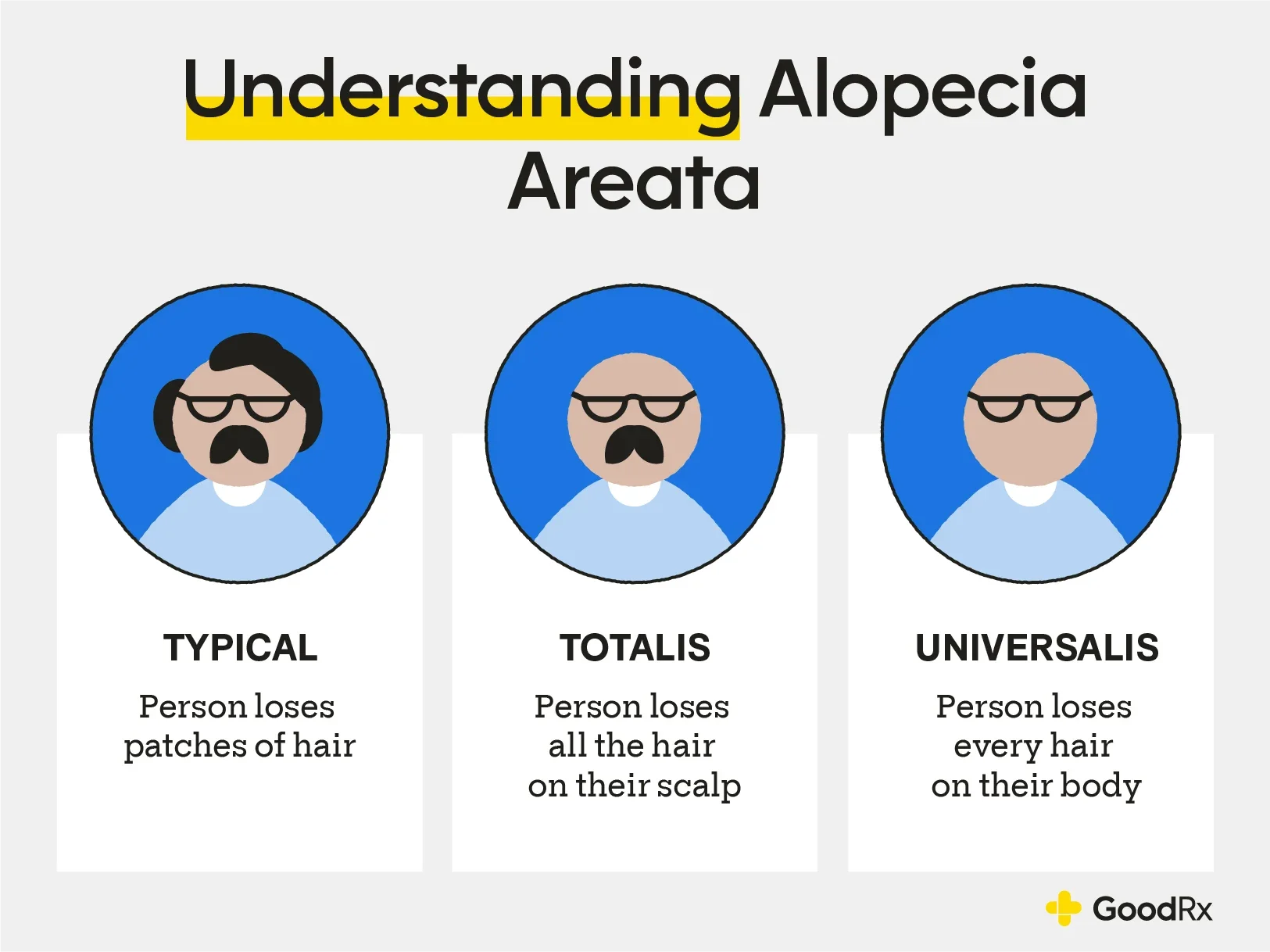
Not everyone with alopecia areata will have all of these symptoms. Some people only have patches of hair loss on the scalp. Some only have hair loss on the eyelashes and eyebrows. Some may have complete hair loss everywhere (a subtype known as alopecia universalis).
“The typical presentation is when someone loses patches of hair on different parts of their scalp,” says Dr. Bordone. “The bald patches look like someone just shaved off a piece of your scalp. Usually, they're completely bald and they [look] like coin-sized circles across your scalp.”
Less commonly, hair loss may affect the entire scalp or the entire body.
Some people with alopecia areata experience changes to the nails. This may look like pits, ridges, or other deformations in the nails. In some cases, the nail may come off. Nail changes are generally associated with more severe alopecia areata.
If you are noticing symptoms of alopecia areata, see your primary care doctor or a dermatologist. They can help you rule out other possible conditions, find a diagnosis, and create a treatment plan.
Prescription savings
Stop paying too much for your prescriptions. Compare prices, get pharmacy coupons, and save up to 80%.Resources
About GoodRx
 Find expert answers to your health questions so you can make the best decisions for yourself and your family.
Health conditions
Medications & treatment
Access & affordability
Well-being
Medication discounts


