VIDEO CENTER
Alopecia
Hair care tips specifically for different hair textures may be tough to find, which can disempower people living with alopecia areata — learn more about advancements in treatment.

Hair loss can be distressing no matter what the cause. Still, knowing the cause may be helpful: If you have an underlying condition that’s causing the hair loss, you may benefit from finding a diagnosis and treatment plan.
“Alopecia is a word for ‘hair loss,’” says Lindsey Bordone, MD, Dermatologist at Columbia University Irving Medical Center. “Most people, when you say alopecia, think of alopecia areata, but there’s other types of hair loss with that name as part of their label.”
1. Alopecia areata
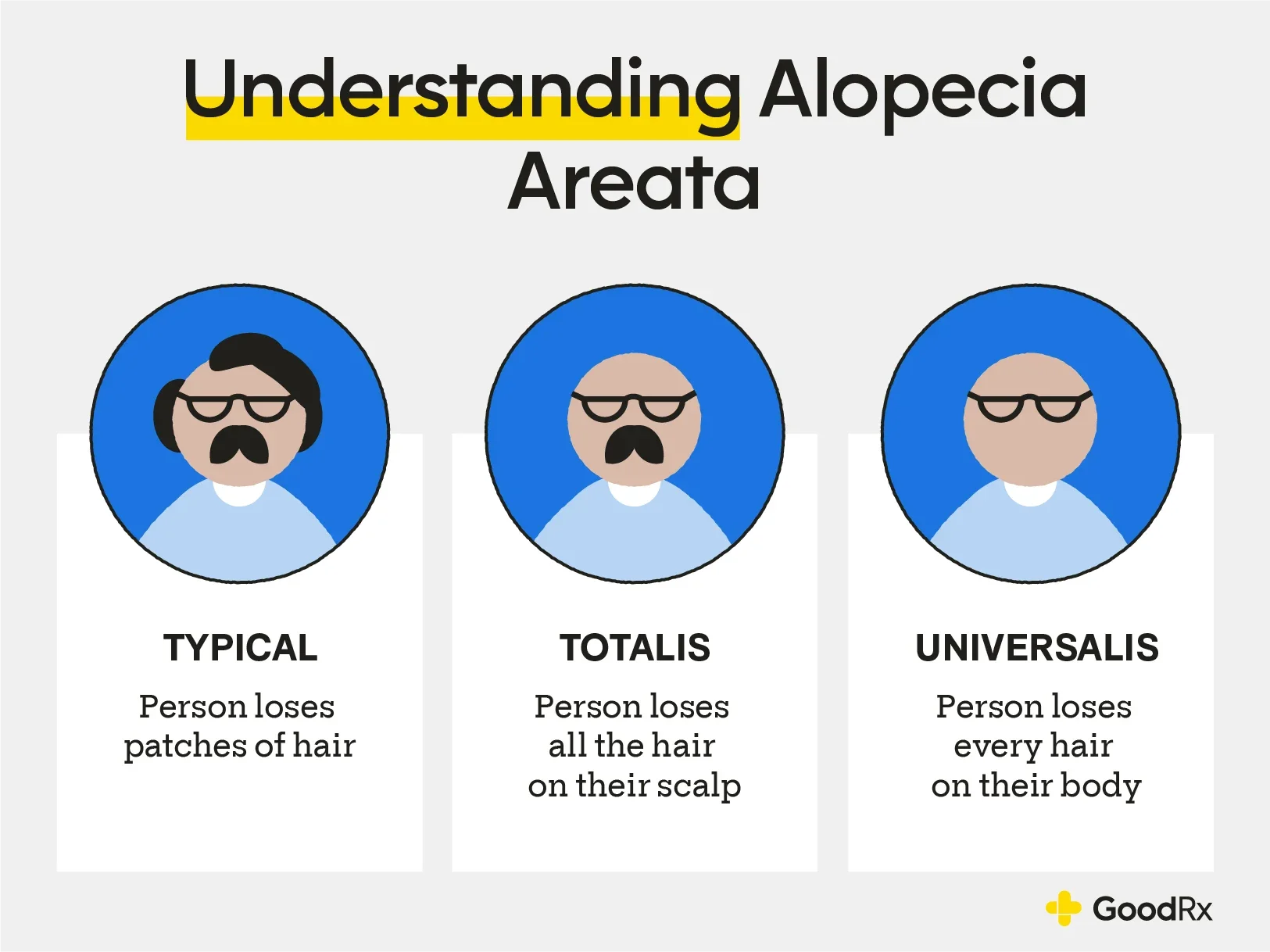
Alopecia areata is an autoimmune condition that causes your immune system to attack the hair follicles, resulting in hair loss. “The typical presentation is when someone loses patches of hair on different parts of their scalp,” says Dr. Bordone. Less commonly, someone may lose all of the hair on their scalp, or they may lose hair on their eyebrows, eyelashes, face, or anywhere else on the body.
2. Traction alopecia
Traction alopecia refers to hair loss caused by damage to the hair follicles from tight hairstyles. The repeated force of pulling on the hair root damages the follicles. Tight ponytails or tight braids are common culprits, especially if you use these styles repeatedly.
3. Age-related hair loss
It’s normal for your hair to change as you age. “Your hair ages like your skin ages,” says Dr. Bordone. Your hair may become finer, a different color, and/or a different texture. It may spend less time in the antigen phase, or the growth phase of the hair cycle.
4. Androgenetic alopecia
This is more commonly known as male pattern hair loss and female pattern hair loss. This is a genetic type of hair loss.
5. Chemotherapy-induced hair loss
Chemotherapy works by targeting rapidly dividing cells. “That’s great for cancer, [but] not great for hair. Your hair cells are rapidly dividing,” says Dr. Bordone.
6. Stress-related hair loss
When you’re under a lot of stress, your body may stop putting energy toward less important responsibilities, such as the hair growth cycle. As a result, you may start to notice a “stress shed” of hair about one to three months later. This is called telogen effluvium.
7. Postpartum hair loss
Hair loss after having a baby is very common, and it can sometimes be extensive. This phenomenon may be caused by a decrease in estrogen levels and/or increased stress.
8. Certain medical conditions
Hair loss may be a symptom of some autoimmune or inflammatory conditions. Dr. Bordone lists hypothyroidism and lupus as two examples.
9. Nutritional deficiencies
The normal hair growth cycle requires certain nutrients. If you don’t get enough of those nutrients, you may notice hair loss and hair thinning. Sudden weight loss, decreased protein intake, and low niacin (B3) are all linked to hair loss.
“I think a lot of people do internet searches to figure out why they're losing hair and they try home remedies,” says Dr. Bordone. “If there's an underlying condition and it's not addressed, [then] your hair is not [likely] going to grow, so I think it's very important to see a doctor if you have hair loss.”
Prescription savings
Stop paying too much for your prescriptions. Compare prices, get pharmacy coupons, and save up to 80%.Resources
About GoodRx
 Find expert answers to your health questions so you can make the best decisions for yourself and your family.
Health conditions
Medications & treatment
Access & affordability
Well-being
Medication discounts


