


What Is the Best Psoriasis Treatment for You?
Whether your psoriasis is moderate or severe, there are many treatment options. Browse over-the-counter medications, biologics, and other psoriasis treatments.
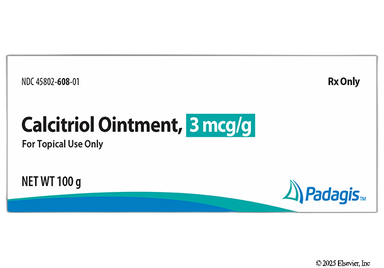
Calcitriol ointment (Vectical) is used to treat an autoimmune skin condition called plaque psoriasis in adults and children 2 years and older. It's a form of vitamin D, or a vitamin D analogue, that's thought to help regulate the immune system to treat psoriasis. The ointment is applied onto affected areas of the body twice a day. Side effects might include skin discomfort. This prescription medication is available under the brand name Vectical and as a lower-cost generic.

Calcitriol ointment (Vectical) is a vitamin D analog, a form of vitamin D. It's not known how it exactly works to treat psoriasis, which is an autoimmune skin condition. But some studies suggest that vitamin D can help calm down your immune system. This might lessen skin inflammation and slow down how fast skin cells are made, which are both involved in psoriasis.
| Common Brands | Vectical |
|---|---|
| Drug Class | Vitamin D analogue |
| Controlled Substance Classification | Not a controlled medication |
| Generic Status | Lower-cost generic available |
| Availability | Prescription only |

The following side effects may get better over time as your body gets used to the medication. Let your healthcare provider know immediately if you continue to experience these symptoms or if they worsen over time.
Side effects that you should report to your care team as soon as possible:
Side effects that usually do not require medical attention (report these to your care team if they continue or are bothersome):




Calcitriol ointment (Vectical) can cause some serious health issues. This risk may be even higher for certain groups. If this worries you, talk to your doctor or pharmacist about other options.
Some people who used calcitriol ointment (Vectical) had high calcium levels. This might happen because the medication is a form of vitamin D and vitamin D affects the levels of calcium in the body.
Covering the treated area with a bandage while using calcitriol ointment (Vectical) raises the risk of high calcium levels, as it allows more medication to be absorbed through the skin. You might also be at risk if you take calcium supplements, other medications that can raise your calcium levels, and high doses of vitamin D. Let your prescriber know if you have signs or symptoms of high calcium levels, such as weakness, tiredness, low appetite, constipation, and mood changes like depression.

 Tube of ointment
| Dosage | Quantity | Price as low as | Price per unit |
|---|---|---|---|
| 100g of 3mcg/g | 1 tube | $160.48 | $160.48 |





Prescription savings
Stop paying too much for your prescriptions. Compare prices, get pharmacy coupons, and save up to 80%. Find expert answers to your health questions so you can make the best decisions for yourself and your family.
Health conditions
Medications & treatment
Access & affordability
Medication discounts


In clinical studies, about 20% of people who used Vectical twice daily on areas of plaque psoriasis saw skin improvement after 2 months of treatment. Some people had clear skin, while others had skin that looked light red or pink, dry with some white color, or slightly raised. Speak with your prescriber if you're concerned about how well Vectical is helping to improve your psoriasis.
No, Vectical isn't available over the counter. You need a prescription for the medication from a healthcare professional so that you can get it from the pharmacy.
No, Vectical isn't a steroid. Instead, it's a form of vitamin D. Steroid medications and vitamin D analogues work differently to make your immune system less active and to lessen skin inflammation. In fact, topical steroids and vitamin D analogues are sometimes used together to help with psoriasis.
Hair thinning wasn't a side effect that people who used Vectical reported during clinical studies. Speak with your care team if you experience hair thinning or hair loss while you're taking this medication. Your care team can examine you and discuss possible reasons why this might be happening.
No, you shouldn't apply Vectical onto your face, even if you have psoriasis there. The skin on your face, especially around your eyes and lips, is sensitive, so these areas can become irritated if you apply the medication there. Speak with your prescriber about your options if you need to treat psoriasis on your face.
Calcitriol (Vectical) and calcipotriene are similar topical medications that can help treat plaque psoriasis on the body. Calcitriol (Vectical) comes as an ointment only, whereas calcipotriene comes as either an ointment or cream. Calcipotriene has other formulations that can also treat symptoms of psoriasis on the scalp. Speak with your prescriber for more information about comparing calcitriol (Vectical) and calcipotriene. They can discuss which option is best for your needs.
It's not known if using Vectical during pregnancy is safe for you or your unborn baby. Speak with your prescriber about the risks and benefits of the medication if you're pregnant or planning to become pregnant.
Maybe. Speak with your prescriber about whether you should use Vectical while breastfeeding. It's not known whether the medication can get into breast milk after it's absorbed through the skin. But if you decide to breastfeed, make sure to avoid applying Vectical to your nipples and the areas surrounding them. This helps prevent medication from getting into your baby's mouth.
