Vanrafia
Vanrafia (atrasentan) is a medication used to lower protein levels in the urine in adults with immunoglobulin A nephropathy (IgAN). It works as an endothelin receptor antagonist to help reduce stress on the kidneys. Vanrafia (atrasentan) comes as a tablet that’s taken by mouth once a day. Common side effects include swelling in the arms or legs and low red blood cells.


What is Vanrafia (atrasentan)?
What is Vanrafia (atrasentan) used for?
- Lowering the amount of protein in the urine in adults with immunoglobulin A nephropathy (IgAN)
How Vanrafia (atrasentan) works
Vanrafia (atrasentan) is an endothelin receptor antagonist that blocks the effects of endothelin-1. Endothelin-1 is a protein that can decrease blood flow to the kidneys.
People with IgAN have a higher amount of endothelin-1 in the body. This can put stress on the kidneys, lead to kidney damage, and cause protein to leak into the urine.
By blocking the effects of endothelin-1, Vanrafia (atrasentan) can help reduce stress on the kidneys. This can lower the amount of protein that leaks into the urine.
Drug facts
| Common Brands | Vanrafia |
|---|---|
| Drug Class | Endothelin receptor antagonist |
| Controlled Substance Classification | Not a controlled medication |
| Generic Status | No lower-cost generic available |
| Availability | Prescription only |

Side effects of Vanrafia (atrasentan)
The following side effects may get better over time as your body gets used to the medication. Let your healthcare provider know immediately if you continue to experience these symptoms or if they worsen over time.
Common Side Effects
- Swelling of the arms or legs (10%)
- Low red blood cells (anemia, 6%)
Less Common Side Effects
- Low blood pressure
- High liver enzyme levels
Vanrafia (atrasentan) serious side effects
Contact your healthcare provider immediately if you experience any of the following.
- Serious liver problems: nausea, vomiting, pain in the upper right side of the stomach, decreased appetite, dark urine, yellowing of your skin or the whites of your eyes, tiredness, fever, itching
- Fluid buildup: unexplained weight gain, swelling in your ankles or legs, trouble breathing
The following Vanrafia (atrasentan) side effects have also been reported
Side effects that you should report to your care team as soon as possible:
- Allergic reactions—skin rash, itching, hives, swelling of the face, lips, tongue, or throat
- Liver injury—right upper belly pain, loss of appetite, nausea, light-colored stool, dark yellow or brown urine, yellowing skin or eyes, unusual weakness or fatigue
- Low red blood cell level—unusual weakness or fatigue, dizziness, headache, trouble breathing
Side effects that usually do not require medical attention (report these to your care team if they continue or are bothersome):
- Swelling of the ankles, hands, or feet

Pros and cons of Vanrafia (atrasentan)
Pros
- Only taken once a day
- Can take it with or without food
- Can take it with other common medications that help with kidney problems
Cons
- Unknown whether it can slow the worsening of kidney function
- Commonly causes swelling in your arms or legs
- Not safe to take while pregnant

Pharmacist tips for Vanrafia (atrasentan)

- Take one tablet of Vanrafia (atrasentan) once a day. You can take it with or without food.
- Make sure that you swallow the Vanrafia (atrasentan) tablet whole. Don’t cut, crush, or chew the tablet because it can affect how the medication works in your body.
- If you miss a dose of Vanrafia (atrasentan), skip the missed dose and take your next dose at your regular time. Don’t take two doses at once to make up for a missed dose since it can make side effects more likely to occur.
- Swelling in the arms or legs is one of the most common side effects of Vanrafia (atrasentan). If this occurs, check with your healthcare team to see how to manage this side effect. They may prescribe you medication, such as a diuretic, to help get rid of the extra water in the body. You might also want to try elevating your legs.
- Some people might have anemia or a low red blood cell count while taking Vanrafia (atrasentan). Symptoms of anemia include feeling tired, weak, or dizzy. If you have these symptoms, let your healthcare team know. They may do a blood test to check your red blood cell count.
- Vanrafia (atrasentan) can interact with other medications. Some, like rifampin (Rifadin), may make Vanrafia (atrasentan) not work as well. Others, such as cyclosporine (Gengraf), may increase your risk of side effects. Talk to a healthcare professional before stopping or starting any medications or supplements so they can make sure it’s safe.
- If you can become pregnant, you should use birth control before starting Vanrafia (atrasentan) and while taking it. Also keep using birth control for at least 2 more weeks after stopping the medication. Tell your healthcare team right away if you think you may be pregnant since Vanrafia (atrasentan) can harm the baby.

Risks and warnings for Vanrafia (atrasentan)
Vanrafia (atrasentan) can cause some serious health issues. This risk may be even higher for certain groups. If this worries you, talk to your doctor or pharmacist about other options.
Harmful during pregnancy
Don’t take Vanrafia (atrasentan) if you’re pregnant. This medication hasn’t been studied in people who are pregnant. But animal studies showed that it might cause harm to the baby if taken during pregnancy.
If you can become pregnant, you’ll need to take a pregnancy test before starting Vanrafia (atrasentan). You should also use birth control before and during treatment, and keep using it for 2 weeks after stopping the medication. If you become pregnant, stop taking Vanrafia (atrasentan) as soon as possible and tell your healthcare team right away.
Liver damage
- Risk factors: History of liver problems | Taking other medications that cause liver damage | Drinking large amounts of alcohol
Vanrafia (atrasentan) can cause liver damage. In studies, some people taking the medication had high liver enzyme levels. This can be a sign that there’s a problem with your liver.
Before starting Vanrafia (atrasentan), you’ll need a blood test to check your liver health. People with severe liver problems shouldn’t take this medication.
You may also need blood tests during treatment, especially if you have symptoms of liver damage. Watch for yellowing of your skin or eyes, dark urine, stomach pain, nausea, vomiting, or loss of appetite. You also might feel tired, itchy, or have a fever. If this happens, let your healthcare team know. You may need to stop taking Vanrafia (atrasentan) to prevent liver damage from getting worse.
Too much fluid buildup in the body
- Risk factors: Heart failure
Vanrafia (atrasentan) can cause fluid to build up in your body. It can look like unexplained weight gain, swelling in your legs or ankles, or trouble breathing. If you notice these symptoms, contact your healthcare team. A healthcare professional may prescribe a medication called a diuretic to help you get rid of the extra fluid. They may also recommend taking a break from Vanrafia (atrasentan) to help reduce swelling.
Lower sperm counts
In studies, some people with diabetic kidney disease had a lower sperm count while taking Vanrafia (atrasentan). Sperm count went back to normal within 3 months after stopping the medication.
This effect hasn’t been studied in people with IgAN. But it’s important to know that low sperm counts might be possible while taking Vanrafia (atrasentan). This might make it less likely that you’ll be able to father a child. Talk to your healthcare team if you’re worried about this risk.

Vanrafia (atrasentan) dosage
Typical dosage for Vanrafia (atrasentan)
The typical dose is 0.75 mg by mouth once daily with or without food.

Vanrafia (atrasentan) contraindications
Contraindications are specific health conditions or situations in which a person should not take a medication due to safety concerns. If you have any of the following conditions or if any of the following apply to you, let your healthcare provider know because Vanrafia (atrasentan) will not be safe for you to take.
- Currently pregnant

What are alternatives to Vanrafia (atrasentan)?

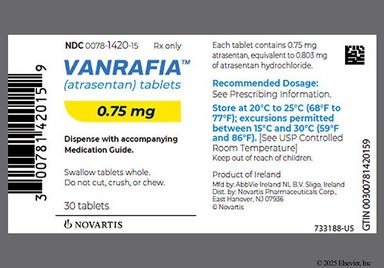
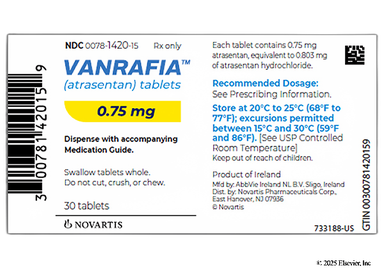
Vanrafia (atrasentan) images