


6 Corticosteroid (Steroid) Eye Drops: Uses, Formulations, and How to Save
Steroid eye drops, such as prednisolone, may be prescribed to treat inflammation from eye surgery. Learn more with this list of popular steroid eye drops.
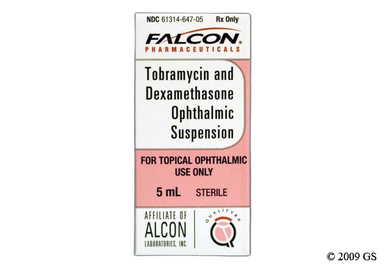
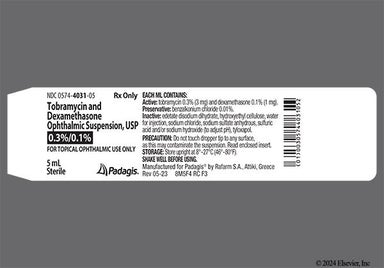
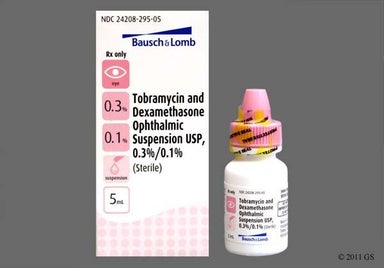
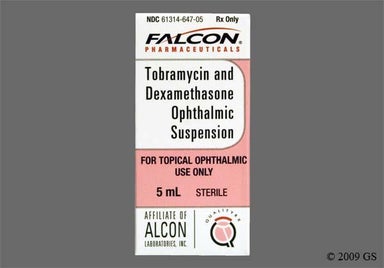
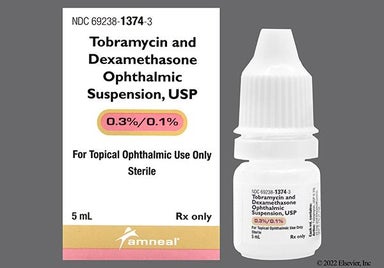
TobraDex (tobramycin / dexamethasone) is available as eye drops and an eye ointment. It's used to treat and relieve bacterial eye infections. This medication contains tobramycin (an aminoglycoside antibiotic that helps fight the infection) and dexamethasone (a corticosteroid that helps lower eye inflammation). Most people have few to no side effects from the medication when they use it as directed. But the medication can raise your eye pressure if you use it for more than 10 days.

TobraDex (tobramycin / dexamethasone) is a combination of two medications.
| Common Brands | TobraDex, TobraDex ST |
|---|---|
| Drug Class | Aminoglycoside antibiotic / Corticosteroid |
| Controlled Substance Classification | Not a controlled medication |
| Generic Status | Lower-cost generic available |
| Availability | Prescription only |

The following side effects may get better over time as your body gets used to the medication. Let your healthcare provider know immediately if you continue to experience these symptoms or if they worsen over time.
Contact your healthcare provider immediately if you experience any of the following.
Along with its needed effects, a medicine may cause some unwanted effects. Although not all of these side effects may occur, if they do occur they may need medical attention.
Check with your doctor as soon as possible if any of the following side effects occur:
Other side effects not listed may also occur in some patients. If you notice any other effects, check with your healthcare professional.
Call your doctor for medical advice about side effects. You may report side effects to the FDA at 1-800-FDA-1088.



How to use TobraDex (tobramycin / dexamethasone) eye drops:
How to use TobraDex (tobramycin / dexamethasone) eye ointment:

TobraDex (tobramycin / dexamethasone) can cause some serious health issues. This risk may be even higher for certain groups. If this worries you, talk to your doctor or pharmacist about other options.
Use TobraDex (tobramycin / dexamethasone) on the surface of the eye only. Don't put TobraDex (tobramycin / dexamethasone) in your mouth, nose, or other parts of your body. Also don't use the medication as an injection into any parts of the eye.
Using eye medications containing steroids long term can cause your eye pressure to go up. This can damage the eye and cause vision problems. Talk with your prescriber about the risks and benefits of using TobraDex (tobramycin / dexamethasone) if you already have glaucoma or high eye pressure.
Your prescriber might recommend that you go to your optometrist's office for an eye exam to check your eye pressure and make sure that TobraDex (tobramycin / dexamethasone) is safe for you. Your prescriber is more likely to suggest an eye exam if you need to use this medication for more than 10 days.
People don't typically have noticeable symptoms when their eye pressure is high, but some might feel pain when they move their eye around or when they touch the eye. Talk with your primary care provider or optometrist right away if you have eye pain or any vision problems while you're using TobraDex (tobramycin / dexamethasone).
Using TobraDex (tobramycin / dexamethasone) long term can raise the risk of developing other eye infections, such as fungal or bacterial eye infections. Don't use TobraDex (tobramycin / dexamethasone) if you have a viral eye infection because it can make your infection worse. Contact your primary care provider or urgent care if you have eye pain or redness, blurry vision, sensitivity to bright light, or watery discharge from your eye. Also call them if your symptoms don't improve after a couple days of treatment. These can be signs of a new eye infection that needs to be examined.
In certain cases, using TobraDex (tobramycin / dexamethasone) might cause your cornea (the clear, outer layer of the eye) or the "whites" of the eye to thin. Sometimes, this can lead to eye damage. In addition, using TobraDex (tobramycin / dexamethasone) for a long period of time can cause cataracts (clouding of eye lens) to form. Seek medical attention right away if you have vision loss, blurry vision, or eye pain or if your eye is more watery than usual.
Using TobraDex (tobramycin / dexamethasone) after a cataract surgery might also slow down the healing process and raise the risk of fluid buildup in the eye. Talk with your eye surgeon right away if you’ve just had cataract surgery and you're having eye or vision problems.
Before you're prescribed TobraDex (tobramycin / dexamethasone), tell your primary care provider or a member of the urgent care team if you've had an allergy to similar antibiotics, such as gentamicin (Gentak). It's possible that you could have an allergic reaction to TobraDex (tobramycin / dexamethasone), too.
In general, watch out for signs and symptoms of allergic reactions, such as swollen eyelids, red or itchy eyes, or skin rash. Stop using TobraDex (tobramycin / dexamethasone) and call your primary care provider if you have an allergic reaction. These reactions often go away on their own once you stop the medication.
You might also be allergic to TobraDex (tobramycin / dexamethasone) if your eye infection doesn't get better after you start using the medication. Contact your primary care provider if your eye infection doesn't improve after a couple days of using the medication.


Although certain medicines should not be used together at all, in other cases two different medicines may be used together even if an interaction might occur. In these cases, your doctor may want to change the dose, or other precautions may be necessary. When you are taking this medicine, it is especially important that your healthcare professional know if you are taking any of the medicines listed below. The following interactions have been selected on the basis of their potential significance and are not necessarily all-inclusive.
Using this medicine with any of the following medicines is not recommended. Your doctor may decide not to treat you with this medication or change some of the other medicines you take.
Using this medicine with any of the following medicines is usually not recommended, but may be required in some cases. If both medicines are prescribed together, your doctor may change the dose or how often you use one or both of the medicines.
Using this medicine with any of the following medicines may cause an increased risk of certain side effects, but using both drugs may be the best treatment for you. If both medicines are prescribed together, your doctor may change the dose or how often you use one or both of the medicines.


Contraindications are specific health conditions or situations in which a person should not take a medication due to safety concerns. If you have any of the following conditions or if any of the following apply to you, let your healthcare provider know because TobraDex (tobramycin / dexamethasone) will not be safe for you to take.


Prescription savings
Stop paying too much for your prescriptions. Compare prices, get pharmacy coupons, and save up to 80%. Find expert answers to your health questions so you can make the best decisions for yourself and your family.
Health conditions
Medications & treatment
Access & affordability
Medication discounts

No, Tobradex Eye Drops doesn't contain a penicillin. This combination medication contains a different kind of antibiotic called an aminoglycoside antibiotic (tobramycin) and a corticosteroid (dexamethasone). Since the medication doesn't contain penicillin or any antibiotics similar to penicillin, it's generally safe to use Tobradex Eye Drops if you have a penicillin allergy.
Tobradex Eye Drops is a combination medication that contains a steroid called dexamethasone. Since Tobradex Eye Drops is used in the eye only, its possible side effects are mostly related to the eye (such as eye irritation, eye redness, and itchy eyelids). Both Tobradex Eye Drops and other steroids that are taken by mouth have a risk for higher eye pressure and cataracts with long-term use. But Tobradex Eye Drops doesn't have other side effects that are normally tied to steroids, like stomach upset, trouble sleeping, and mood changes.
No, you won't be able to find or buy Tobradex Eye Drops over the counter. Tobradex Eye Drops is available by prescription from a healthcare professional only.
No, Tobradex Eye Drops is meant to be used for the eyes to treat eye inflammation and eye infection only. Don't use this medication in your ear to treat an ear infection. Ask your primary care provider about your treatment options if you have an ear infection. Some options include the "watch-and-wait" strategy or Ciprodex (ciprofloxacin / dexamethasone) ear drops.
Possibly. Styes typically go away on their own with warm compresses. But it's possible that you'll be prescribed Tobradex Eye Drops to help with the inflammation and the eye infection that's causing the stye if it doesn't go away after a week or if it gets worse. Don't use any leftover Tobradex Eye Drops that you might have at home for your stye — it might be contaminated or it might not be exactly right for this particular eye infection. Speak with a healthcare professional about your options if you're concerned about your stye.
Yes, Tobradex Eye Drops can expire. Look for the expiration date on the box that contains the medication, the eye drop bottle, or the tube of ointment. Don't use Tobradex Eye Drops if it's past this date. Medication that's past its expiration date might not work as well and might not be safe for you. Throw away the medication if it's expired. Ask your pharmacist if you're not sure whether your Tobradex Eye Drops has expired.
Use Tobradex Eye Drops for as long as your prescriber instructed you to (usually for 7 to 10 days). Antibiotic eye medications, such as Tobradex Eye Drops, typically improve eye infections after you regularly use them for a few days. But be sure to use Tobradex Eye Drops for the full, prescribed length of treatment, even if your eye infection starts getting better. This makes sure that the infection is completely gone. Also keep in mind that using Tobradex Eye Drops for longer than 10 days can raise your risk for higher eye pressure and new eye infections. Ask your prescriber or pharmacist if you have questions about how long you should use this medication for your eye infection.
It's best to throw away any leftover Tobradex Eye Drops after your course of treatment. Don't keep it around to use later. Your eyes can get re-infected if you reuse the medication and it accidentally got contaminated with bacteria when you last used it. Tobradex Eye Drops also might not be the right medication to treat the type of eye infection you have next time. Each time you think you have an eye infection, you should see a healthcare professional to get your eye infection examined so you can be prescribed appropriate treatment.
