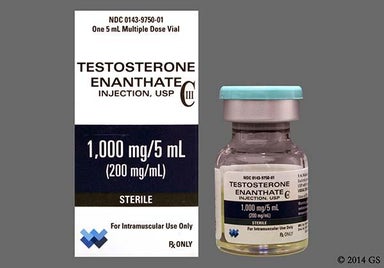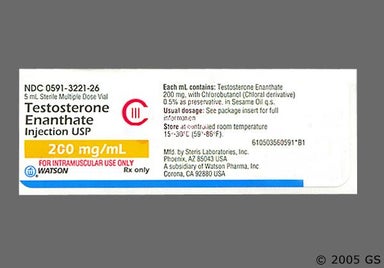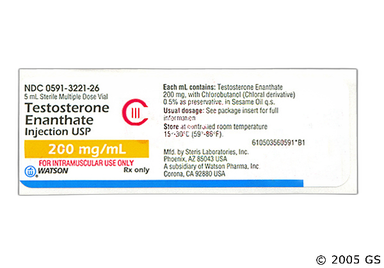
testosterone enanthate
Testosterone enanthate is a testosterone replacement therapy. It's mainly used in males to treat low testosterone levels and delayed puberty. It's also FDA-approved in females for treating metastatic breast cancer, but it's not a first-choice option for this condition. Testosterone enanthate is given as a deep injection into the muscle of the buttock, typically every 2 to 4 weeks by a healthcare professional (HCP). Side effects can include acne and pain or swelling at the injection site.


What is Testosterone enanthate?
What is Testosterone enanthate used for?
- Low testosterone (hypogonadism) in males
- Delayed puberty in males
- Metastatic breast cancer that have spread to the bones in females who've started menopause in the past 1 to 5 years
How Testosterone enanthate works
Testosterone enanthate is a testosterone replacement therapy that acts like the natural sex hormone, testosterone. Testosterone is responsible for the development and maintenance of many male features and functions, such as muscle and bone strength and growth and regulating sex drive and sperm production.
- For low testosterone and delayed puberty: Testosterone enanthate works by raising testosterone to normal and healthy levels in males with low testosterone.
- For breast cancer: It's not exactly clear how testosterone enanthate works to treat breast cancer, but it's thought to slow the spread of the cancer in females by stopping tumor growth.
Drug facts

Risks and warnings for Testosterone enanthate
Testosterone enanthate can cause some serious health issues. This risk may be even higher for certain groups. If this worries you, talk to your doctor or pharmacist about other options.
Risk of blood clots, including heart attack or stroke
- Risk factors: History of heart conditions
Taking testosterone replacement therapy can raise your risk of blood clots. This can lead to problems such as strokes and heart attacks. Your healthcare team will have you perform regular blood tests, called the complete blood count (CBC), to check that your blood cell counts are in the safe range. Get emergency help right away if you have chest pain, cold sweats, left arm pain, difficulty breathing, trouble walking, trouble speaking, or weakness on one side of the body, since you might have to stop taking the medication.
Prostate problems
Testosterone enanthate might raise the risk for enlarged prostate and prostate cancer in males. Symptoms include pain, inability to urinate or change in the amount of urination, and blood in the urine. If you notice any of these symptoms, talk to your prescriber right away before it becomes worse.
Potential for misuse, dependency, and addiction
- Risk factors: Taking more testosterone enanthate than prescribed | Taking testosterone enanthate with other testosterones
Testosterone enanthate is a controlled substance because it has a risk of misuse and dependency, especially if you use higher doses than prescribed or use it with other testosterones.
Continued misuse of testosterone enanthate can lead to addiction. The FDA has only approved this medication for the treatment of low testosterone and delayed puberty in males and breast cancer in certain females. Taking testosterone enanthate for other reasons can lead to serious side effects, such as heart attack, heart failure, stroke, depression, hallucinations, and delusions. Only take testosterone enanthate as prescribed by your healthcare professional.
Liver problems
- Risk factors: Using high doses of testosterone enanthate long term
Using testosterone enanthate for long periods of time can cause life-threatening liver problems. Your HCP will order blood tests to check your liver enzymes to make sure they're not getting too high. Let your care team know if you're experiencing stomach pain, light-colored stools, dark urine, or if your skin or the whites of your eyes turn yellow because you might need to stop the medication.
Low sperm count
- Risk factors: Higher doses of testosterone enanthate
Testosterone enanthate can lower sperm count, which might affect your ability to have a baby (fertility). There's a chance these effects can be permanent. Let your prescriber know if you're thinking of having a baby before you start testosterone enanthate.
Swelling in the legs or arms (edema)
- Risk factors: History of heart, liver, or kidney conditions | Taking other medications that cause swelling like corticosteroids
Testosterone enanthate can cause your body to hold onto more salt and water, which can lead to swelling in your legs or arms and sudden weight gain. This is more likely to happen if you're taking other medications that cause swelling, such as corticosteroids (e.g., prednisone, methylprednisolone (Medrol)). It can be more serious in people with heart, liver, or kidney conditions. Talk to your HCP if you have any of these symptoms because you might need to stop the medication.
High calcium levels in the blood
- Risk factors: Females with breast cancer | People with restricted movement | Taking other medications that cause high calcium in the blood
Testosterone enanthate can cause high calcium in the blood (hypercalcemia) because it triggers break down of bone tissue. The risk is higher for people who have cancer or people who take medications that raise calcium levels. In people with cancer, high calcium levels might be a sign that the cancer has spread to the bones. During treatment with testosterone enanthate, your healthcare team might order regular blood tests to check that your calcium levels are within a safe range.
Fast bone maturation in children
- Risk factors: Using testosterone enanthate in children | Using testosterone enanthate long term
Testosterone enanthate should only be used short term for delayed puberty in children. The medication causes the bones to mature faster than normal, but without growth in length. Because of this, children who use testosterone enanthate can become shorter in height if used long term. The risk of this happening is higher in younger children. Your child's pediatrician might take regular X-rays of your child's hand and wrist during treatment to make sure the bones are developing normally.
Severe allergic reactions
- Risk factors: Allergy to sesame oil
Severe allergic reactions to testosterone enanthate are possible, including life-threatening reactions, like facial swelling and anaphylaxis. Since testosterone enanthate contains sesame oil, you shouldn't use the medication if you have an allergy to sesame. Let your prescriber know before starting testosterone enanthate if you have this type of allergy. Call 911 right away if you experience hives, rash, trouble breathing, or swelling of your face, lips, or throat.

Side effects of Testosterone enanthate
The following side effects may get better over time as your body gets used to the medication. Let your healthcare provider know immediately if you continue to experience these symptoms or if they worsen over time.
Common Side Effects
Males
- Enlargement of male breasts
- Acne
- More erections
- Pain at the injection site
Females
- Deepening of the voice
- Acne
- Absence of or irregular menstrual periods
- More hair on the face and body
- Pain at the injection site
Less Common Side Effects
- Bleeding or blood clots
- Changes in sex drive
- Tingling sensation
- Headache
- Anxiety
- Depression
- Nausea
Testosterone enanthate serious side effects
Contact your healthcare provider immediately if you experience any of the following.
- Severe allergic reaction: hives, rash, blisters, swelling of the lips or tongue, difficulty breathing,
- Heart attack: chest pain, cold sweats, left arm pain, difficulty breathing
- Stroke: face drooping, trouble seeing, walking, or speaking, weakness on one side of the body
- Blood clot in the legs: pain, swelling, warm to touch, redness in the leg
- Blood clot in the lungs: trouble breathing, chest pain, cough
- Liver damage: stomach pain, nausea, vomiting, yellowing of the skin, yellowing of the whites of the eyes, light-colored stools, dark urine, weight loss
- Withdrawal: depression, fatigue, craving, restlessness, irritability, lack of appetite, trouble sleeping (insomnia), lower sex drive
The following Testosterone enanthate side effects have also been reported
Discuss these possible effects with your doctor:
Tumors of the liver, liver cancer, or peliosis hepatis (a form of liver disease) have occurred during long-term, high-dose therapy with androgens. Although these effects are rare, they can be very serious and may cause death.
Androgens can stimulate existing prostate cancer in men who already have it but have not yet been diagnosed. Also, the prostate (a male gland) may become enlarged. Enlargement of the prostate does not mean that cancer will develop. If enlargement occurs and you have difficulty in urinating, it is a good idea to be checked by your doctor.
When androgens are used in women, especially in high doses, male-like changes may occur, such as hoarseness or deepening of the voice, unnatural hair growth, or unusual hair loss. Most of these changes will go away if the medicine is stopped as soon as the changes are noticed. However, some changes, such as voice changes or enlarged clitoris, may not go away.
When androgens are used in high doses in males, they interfere with the production of sperm. This effect is usually temporary and only happens during the time you are taking the medicine. However, discuss this possible effect with your doctor if you are planning on having children.
Along with its needed effects, a medicine may cause some unwanted effects. Although not all of these side effects may occur, if they do occur they may need medical attention.
Check with your doctor immediately if any of the following side effects occur:
More common
For females only
Acne or oily skin
decreased breast size
irregular menstrual cycles
hoarseness or deepening of voice
increase in size of female genitals
increase in unnatural hair growth or male pattern baldness
These symptoms may occur in females whose male sexual partner uses a scrotal patch.
For males only
Blistering of skin under patch (especially when the nonscrotal patch is applied to bony areas of the skin)
breast soreness or enlargement
frequent or continuing erection of penis lasting up to 4 hours or painful penile erections lasting longer than 4 hours
frequent urge to urinate
itching or redness of skin under patch (less likely with nonscrotal patch) or at site of implants, mild to severe
For prepubertal boys only
early growth of pubic hair
enlargement of penis
frequent or continuing erections
Less common
For males or females
Dizziness
frequent or continuing headache
lack or loss of strength
overall body flushing, redness, or itching of skin
rapidly changing moods, such as depersonalization, dysphoria, euphoria, depression, paranoia, and quick to react or overreact emotionally
swelling of feet or lower legs
unusual bleeding
unusual tiredness
yellow skin or eyes (occurring with fluoxymesterone or methyltestosterone more often than with testosterone)
For females with breast cancer or bedridden males or females—in addition to the side effects listed above
Confusion or mental depression
increased thirst
increased urge to urinate or increased amount of urine
For males only
Black, tarry stools
burning sensation or hardening or thickening of skin under patch
chills
continuing pain at site of implants
difficulty in urinating
itching, skin redness, or rash under patch, severe (less likely with nonscrotal patch)
pain in scrotum or groin
vomiting of blood or material that looks like coffee grounds
Rare
For males or females—more likely with oral androgens or long-term or high doses of androgens
Abdominal or stomach pain, continuing
bad breath odor, continuing
black, tarry or light-colored stools or dark urine
loss of appetite, continuing
mood or mental changes
purple or red spots on body or inside the mouth or nose
swelling, pain, or tenderness of abdomen
vomiting of blood
Some side effects may occur that usually do not need medical attention. These side effects may go away during treatment as your body adjusts to the medicine. Also, your health care professional may be able to tell you about ways to prevent or reduce some of these side effects. Check with your health care professional if any of the following side effects continue or are bothersome or if you have any questions about them:
Less common
For males and females
Acne, mild
decrease or increase in sexual desire or drive
hair loss or thinning of hair
increase in pubic hair growth
infection, pain, redness, or other irritation at site of injection
nervousness
stomach pain
trouble in sleeping
For males only
Decrease in testicle size
infection, pain, redness, swelling, sores, or other skin irritation underneath patch
Other side effects not listed may also occur in some patients. If you notice any other effects, check with your healthcare professional.
Call your doctor for medical advice about side effects. You may report side effects to the FDA at 1-800-FDA-1088.

Get your GoodRx coupon

Pros and cons of Testosterone enanthate
Pros
- Starts to work in 1-3 days to raise testosterone levels
- Only needs to be used once every 2 to 4 weeks
- Can be injected at home for some people
- Available in a lower-cost, generic form
Cons
- In females, can cause the development of male features, including deepening of the voice, acne, absence of menstrual periods, and more facial and body hair
- Needs to be injected into the buttock muscle
- Only available as an injection
- Contains sesame oil, so might not be a good option if you have an allergy to sesame

Pharmacist tips for Testosterone enanthate

- Testosterone enanthate is injected slowly and deeply into your buttock muscle every 2 to 4 weeks. Be careful to avoid injecting into a vein, because the medication won't be absorbed properly in the body and it won't work as well.
- If you're a female who's able to get pregnant, talk to your healthcare team if you become pregnant or are planning to become pregnant. Testosterone replacement therapy can harm an unborn baby so your care team will likely ask you to stop taking testosterone enanthate.
- If you’re a female taking testosterone enanthate for breast cancer, the medication can cause the development of male features, such as deepening of the voice, acne, and more hair on the face and body. To prevent some side effects from becoming permanent, your healthcare team might ask you to stop testosterone enanthate when you first notice these features. Discuss with your care team if you're concerned about side effects.
- Testosterone enanthate can often cause the breast area in males to become bigger, painful, or tender. This might continue throughout treatment with testosterone enanthate. Let your healthcare team know if this becomes bothersome.
- Testosterone enanthate can lower your blood sugar level. If you're currently taking insulin, your diabetes care team might need to monitor your blood sugar level more often while taking this medication. Make sure you know how to recognize and treat low blood sugar.
- Testosterone enanthate can lower sperm count in males. This might affect your ability to have a baby and raise the risk for infertility. Let your healthcare team know if you're thinking of having a baby before you start testosterone enanthate so they can talk with you about family planning options.

Common questions about Testosterone Enanthate
In general, Testosterone Enanthate is given as a deep injection into the buttock muscle every 2 to 4 weeks. Your healthcare professional (HCP) will decide how often you receive Testosterone Enanthate based on how your condition is responding to the medication. For example, they'll monitor testosterone levels in people receiving the medication for low testosterone or children with delayed puberty. Ask your healthcare team if you have more questions about how often you should receive Testosterone Enanthate.
Once injected, Testosterone Enanthate is slowly released into your body. It can take about 2 to 4 weeks for most of this medication to leave your body, depending on the dose. Typically, in order for Testosterone Enanthate to work well to treat your condition, you'll need a dose every 2 to 4 weeks. Talk with your healthcare team if you have specific concerns about how long this medication might stay in your body.
Your blood testosterone level typically starts to rise a day after your dose of Testosterone Enanthate. But how long it takes for Testosterone Enanthate to start working will depend on the condition you're being treated for. For example, males taking Testosterone Enanthate for low testosterone levels might not notice physical changes in their bodies until a few weeks to months after starting treatment. A study showed that people noticed an increase in sex drive about 3 weeks after starting testosterone replacement therapy. Research also showed that some people saw their muscle strength improve after about 3 to 4 months of treatment. Talk to your healthcare team if you're concerned with how well Testosterone Enanthate is working for you.
Both testosterone cypionate (Depo-Testosterone) and Testosterone Enanthate are testosterone replacement therapies. They're both given as injections into the muscle every 2 to 4 weeks. While both are used in males for the treatment of low testosterone (hypogonadism), only Testosterone Enanthate is also FDA-approved for treating delayed puberty and breast cancer in females. Talk to your primary care provider if you have more questions on the differences between both medications.
No, you shouldn't mix and receive more than one type of testosterone treatment. Doing so raises your risk for serious side effects, such as liver problems and heart attack. Make sure to tell your healthcare team about all of the medications you're taking before and during treatment with Testosterone Enanthate.
No, Testosterone Enanthate isn't known to cause erectile dysfunction (ED). But some people have reported more frequent erections as a side effect.
Yes, Testosterone Enanthate and other testosterone replacement therapies can raise blood pressure. Let your healthcare team know if you've been diagnosed with high blood pressure or are taking medications that can raise blood pressure. They might ask you to measure your blood pressure at home regularly and recording your numbers in a journal as a way to keep track. This is because not everyone feels symptoms of high blood pressure, like headaches, dizziness, or fatigue.
No, Testosterone Enanthate should be stored at room temperature. Make sure to inspect the vial before injection for any particles or changes in color. If you see crystals in the vial, warm and gently rotate the vial between the palms of your hands to re-dissolve those crystals.

How to save using GoodRx



Testosterone enanthate dosage
 Vial
Vial| Dosage | Quantity | Price as low as | Price per unit |
|---|---|---|---|
| 5ml of 200mg/ml | 1 vial | $32.44 | $32.44 |

Interactions between Testosterone enanthate and other drugs
Although certain medicines should not be used together at all, in other cases two different medicines may be used together even if an interaction might occur. In these cases, your doctor may want to change the dose, or other precautions may be necessary. When you are taking any of these medicines, it is especially important that your healthcare professional know if you are taking any of the medicines listed below. The following interactions have been selected on the basis of their potential significance and are not necessarily all-inclusive.
Using medicines in this class with any of the following medicines is not recommended. Your doctor may decide not to treat you with a medication in this class or change some of the other medicines you take.
Using medicines in this class with any of the following medicines is usually not recommended, but may be required in some cases. If both medicines are prescribed together, your doctor may change the dose or how often you use one or both of the medicines.
- Acenocoumarol
- Anisindione
- Atorvastatin
- Bupropion
- Dicumarol
- Fluvastatin
- Lovastatin
- Paclitaxel
- Paclitaxel Protein-Bound
- Pexidartinib
- Phenindione
- Phenprocoumon
- Warfarin

How much does Testosterone enanthate cost?
$32.44

Testosterone enanthate contraindications
Contraindications are specific health conditions or situations in which a person should not take a medication due to safety concerns. If you have any of the following conditions or if any of the following apply to you, let your healthcare provider know because Testosterone enanthate will not be safe for you to take.
- Males with breast cancer or prostate cancer
- Females who are pregnant or might become pregnant

What are alternatives to Testosterone enanthate?

News about Testosterone enanthate




Testosterone enanthate images