



10 Oral MS Medications: What to Know About Aubagio, Gilenya, and More
Multiple sclerosis (MS) can be managed with disease-modifying therapies and medications for symptom relief. Learn about 10 oral MS medications, here.

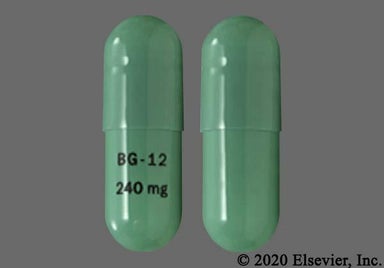
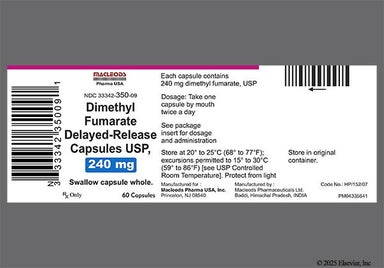
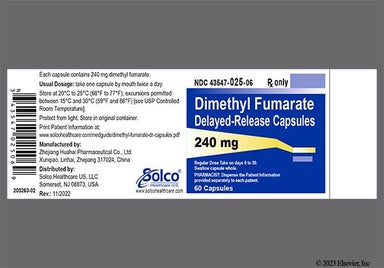
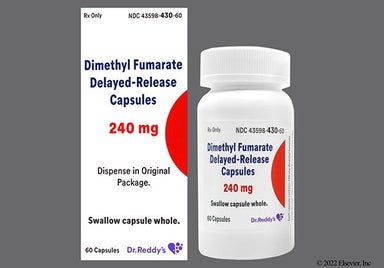
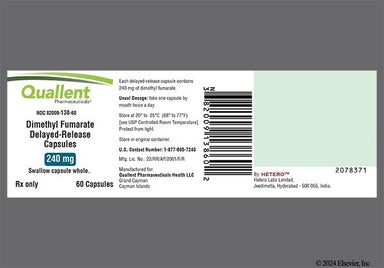
Dimethyl fumarate (Tecfidera) is used to treat adults with certain types of multiple sclerosis (MS), a condition that affects your nervous system. This medication is a disease-modifying therapy (DMT) that belongs to the drug class called fumaric acid derivatives. Dimethyl fumarate (Tecfidera) is available as a brand-name medication and a lower-cost generic. The capsules are taken by mouth twice per day. The most common side effects are stomach upset and flushing (e.g., facial warmth, redness, burning sensation).

Dimethyl fumarate (Tecfidera) is a type of disease-modifying therapy (DMT). More specifically, it belongs to the drug class called fumaric acid derivatives.
It's not entirely clear how dimethyl fumarate (Tecfidera) works to treat multiple sclerosis. But it's thought to help defend against the toxins that your body makes when there's a lot of inflammation. The medication appears to work through many different signaling pathways in the body to protect your cells from stress.
| Common Brands | Tecfidera |
|---|---|
| Drug Class | Fumaric acid derivative |
| Controlled Substance Classification | Not a controlled medication |
| Generic Status | Lower-cost generic available |
| Availability | Prescription only |

The following side effects may get better over time as your body gets used to the medication. Let your healthcare provider know immediately if you continue to experience these symptoms or if they worsen over time.
Contact your healthcare provider immediately if you experience any of the following.
Along with its needed effects, a medicine may cause some unwanted effects. Although not all of these side effects may occur, if they do occur they may need medical attention.
Check with your doctor immediately if any of the following side effects occur:
More common
Chills
feeling of warmth
hoarseness
lower back or side pain
painful or difficult urination
redness of the face, neck, arms, and occasionally, upper chest
Incidence not known
Black, tarry stools
difficulty with swallowing
dizziness
fast heartbeat
large, hive-like swelling on the face, eyelids, lips, tongue, throat, hands, legs, feet, or genitals
painful blisters on the trunk of the body
puffiness or swelling of the eyelids or around the eyes, face, lips, or tongue
sores, ulcers, or white spots on the lips or in the mouth
swollen glands
tightness in the chest
trouble breathing
unusual bleeding or bruising
unusual tiredness or weakness
Some side effects may occur that usually do not need medical attention. These side effects may go away during treatment as your body adjusts to the medicine. Also, your health care professional may be able to tell you about ways to prevent or reduce some of these side effects. Check with your health care professional if any of the following side effects continue or are bothersome or if you have any questions about them:
Other side effects not listed may also occur in some patients. If you notice any other effects, check with your healthcare professional.
Call your doctor for medical advice about side effects. You may report side effects to the FDA at 1-800-FDA-1088.




Dimethyl fumarate (Tecfidera) can cause some serious health issues. This risk may be even higher for certain groups. If this worries you, talk to your doctor or pharmacist about other options.
Severe allergic reactions to dimethyl fumarate (Tecfidera) are possible, including life-threatening reactions like facial or neck swelling and anaphylaxis (e.g., closing of the throat). Get medical help right away if you experience symptoms of an allergic reaction, such as difficulty breathing, hives, or swelling of the throat or tongue.
Dimethyl fumarate (Tecfidera) can weaken your immune system. This can put you at higher risk for serious opportunistic infections (OIs). OIs are infections that typically don't cause serious problems for healthy people but can cause more frequent or more severe illness for people with a weakened immune system.
In general, OIs can be caused by bacteria, viruses, or fungi. OIs can affect many parts of the body, including the brain, lungs, skin, and eyes. During clinical studies, some OIs that people who took dimethyl fumarate (Tecfidera) had included herpes zoster (shingles), progressive multifocal leukoencephalopathy (PML), and Mycobacterium tuberculosis (the bacteria that causes tuberculosis), among others.
Make sure your care team knows about your past medical history before you start dimethyl fumarate (Tecfidera). Tell your care team if you feel sick or have symptoms like fever, cough, tiredness, muscle pain, weakness on one side of the body, changes in personality, or confusion. You might have to stop dimethyl fumarate (Tecfidera) to give your immune system the chance to fight the infection if you get a serious infection during treatment.
Dimethyl fumarate (Tecfidera) can lower the amount of lymphocytes (a type of white blood cell) in your body. This can put you at risk for serious infections. You'll need to get blood draws before you start treatment and then regularly while you're taking dimethyl fumarate (Tecfidera). This helps your prescriber check that your blood cell levels aren't too low.
If your lymphocyte count gets too low during treatment, you might need to stop taking dimethyl fumarate (Tecfidera) until it goes back up. Discuss with your prescriber about whether you can restart dimethyl fumarate (Tecfidera) or whether you need to change to a different medication when your lymphocyte count recovers. Let your prescriber know if you have symptoms of infection, such as fever, cough, feeling tired, or muscle pain.
Some people who took dimethyl fumarate (Tecfidera) had liver damage that sometimes required hospitalization. Liver damage has happened as early as a few days after the start of treatment, and the risk appears to be highest during the first several months of treatment. In addition, the risk is higher in people who already have liver problems or in people who take other medications that can harm the liver. Typically, the liver damage goes away once treatment is stopped.
Because of the risk for liver damage, your prescriber will ask you to get lab work done to check the health of your liver before you start treatment and regularly while you're taking dimethyl fumarate (Tecfidera). Your prescriber might ask you to stop the medication if your lab work shows that you have liver injury to prevent it from getting worse. Get medical help right away if you have signs of liver injury, including yellow skin and whites of your eyes, stomach pain, loss of appetite, nausea, and tiredness.
Dimethyl fumarate (Tecfidera) can cause flushing that gets better over time. Symptoms of flushing include warmth, redness, itching, or a burning sensation on your skin. In most cases, flushing is bothersome but won't cause any serious harm. To lower the chance of flushing, you can take aspirin (up to 325 mg) half an hour before your dimethyl fumarate (Tecfidera) dose if your prescriber tells you it's safe to do so. It's also helpful to take dimethyl fumarate (Tecfidera) with food to lower your risk of flushing.
Although very rare, some people who took dimethyl fumarate (Tecfidera) and other similar medications reported having serious stomach problems. These problems included ulcers, perforation (holes), bleeding, and bowel obstruction (a blockage in the stomach or gut). Most of these reports happened within 6 months of starting the medication. Let your care team know right away if you have any new or worsening stomach pain, acid reflux, nausea, vomiting, or stomach bloating.


Although certain medicines should not be used together at all, in other cases two different medicines may be used together even if an interaction might occur. In these cases, your doctor may want to change the dose, or other precautions may be necessary. When you are taking this medicine, it is especially important that your healthcare professional know if you are taking any of the medicines listed below. The following interactions have been selected on the basis of their potential significance and are not necessarily all-inclusive.
Using this medicine with any of the following medicines is not recommended. Your doctor may decide not to treat you with this medication or change some of the other medicines you take.









Prescription savings
Stop paying too much for your prescriptions. Compare prices, get pharmacy coupons, and save up to 80%. Find expert answers to your health questions so you can make the best decisions for yourself and your family.
Health conditions
Medications & treatment
Access & affordability
Medication discounts

Some people might consider Dimethyl Fumarate as an immunosuppressant. The medication can lower the activity of certain cells and proteins that play a role in your immune system. This can weaken your immune system and put you at risk for infections. Let your prescriber know if you have symptoms of an infection, such as fever, cough, difficulty breathing, diarrhea, or chills, while you're taking Dimethyl Fumarate.
After Dimethyl Fumarate was approved and brought to market, there have been reports of people who experienced hair loss during treatment. In one of these reports, hair eventually grew back. Contact your prescriber if you notice hair loss while you're taking Dimethyl Fumarate.
Neither weight gain nor weight loss was reported by people who took Dimethyl Fumarate during clinical trials. Keep in mind that Dimethyl Fumarate commonly causes stomach-related side effects, such as stomach pain, diarrhea, nausea, and vomiting. If severe enough, these side effects might make you less hungry and lower your appetite, which can possibly contribute to any weight loss you might notice. Let your prescriber know if you've noticed changes in your appetite or experience any sudden changes in your weight after you start taking Dimethyl Fumarate.
Mild flushing of the skin is the most common side effect of Dimethyl Fumarate, and it's more likely to happen within the first month of treatment. Taking the medication with food can help lower the risk of having symptoms of flushing like warmth, redness, itching, or a burning sensation on your skin. If that doesn't work to help, another option is to take 325 mg of aspirin about 30 minutes before Dimethyl Fumarate. But ask your prescriber first if it's safe for you to take aspirin because it has risks too, like stomach bleeding and kidney damage, and it might not be a safe choice for everyone. Speak with your prescriber if you have questions about flushing with Dimethyl Fumarate.
It's recommended to avoid drinking alcohol if you're taking Dimethyl Fumarate. Alcohol doesn't directly interact with Dimethyl Fumarate or affect how well Dimethyl Fumarate works. But drinking alcohol can worsen some of the side effects of Dimethyl Fumarate, such as flushing, liver damage, and weakening of your immune system. Drinking alcohol with Dimethyl Fumarate can also prevent you from getting a good night sleep, which can worsen MS symptoms. Discuss with your prescriber about your drinking habits and how to manage your drinking if it's hard to cut out alcohol completely.
Dimethyl Fumarate and Vumerity (diroximel fumarate) are both FDA approved to treat relapsing forms of multiple sclerosis (MS) in adults. They both break down in the body into a substance called monomethyl fumarate, which is thought to play a role in treating MS. Dimethyl Fumarate is an older version of Vumerity (diroximel fumarate). Studies show that Vumerity (diroximel fumarate) is easier on the stomach and causes less gastrointestinal (gut) side effects than Dimethyl Fumarate. Speak with your prescriber to help you compare between these two medications.
There's not enough information to know for sure whether Dimethyl Fumarate is safe to take during pregnancy. Because of this, experts generally agree that you should avoid taking Dimethyl Fumarate while pregnant. Talk to your prescriber about safer treatment options for you during pregnancy. And if you do become pregnant while you're taking Dimethyl Fumarate and you continue the medication, your prescriber might want you to enroll in the Pregnancy Registry to monitor your health and the health of your unborn baby.
