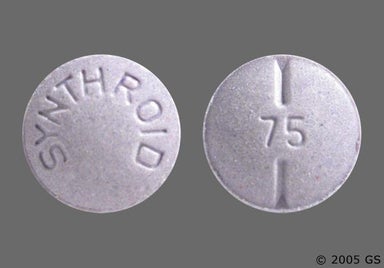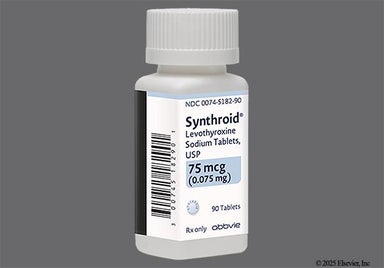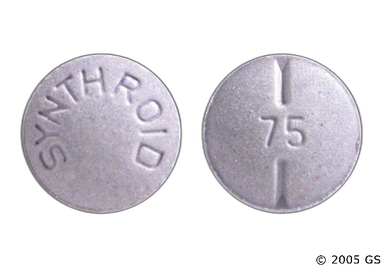
Synthroid
Synthroid (levothyroxine) is a thyroid hormone used to treat low thyroid hormone levels (hypothyroidism) in both children and adults. It's also used to treat a certain type of thyroid cancer. The medication comes as tablets in many different strengths. It's taken once a day by mouth, usually on an empty stomach in the morning. You'll need regular blood tests to make sure you're getting the right dose. Side effects can include headache, trouble sleeping, and weight loss.


What is Synthroid (levothyroxine)?
What is Synthroid (levothyroxine) used for?
- Hypothyroidism (low thyroid hormone levels)
- Thyroid cancer, together with radioactive iodine and surgery
How Synthroid (levothyroxine) works
Synthroid (levothyroxine) is a lab-made version of thyroxine (T4), a natural hormone made by your thyroid. It works by replacing or adding to the T4 your body isn’t making. This helps keep your metabolism, energy, heart rate, and body temperature working properly.
In people with thyroid cancer, Synthroid (levothyroxine) is used to keep thyroid-stimulating hormone (TSH) levels low. Lowering TSH might help prevent cancer from coming back after treatment.
Drug facts



Side effects of Synthroid (levothyroxine)
The following side effects may get better over time as your body gets used to the medication. Let your healthcare provider know immediately if you continue to experience these symptoms or if they worsen over time.
Common Side Effects
Signs of having too much thyroid hormones in the body, such as:
- Irregular heartbeat
- Chest pain
- Shortness of breath
- Leg cramps
- Headache
- Nervousness
- Hives or skin rash
- Irritability
- Trouble sleeping
- Tremors
- Muscle weakness
- Change in appetite
- Weight loss
- Vomiting
- Diarrhea
- Sweating a lot
- Sensitivity to heat
- Fever
- Changes in menstrual period
Less Common Side Effects
- Tiredness
- Anxiety
- Muscle spasm
- Fast heart rate
- Stomach cramps
- Hair loss
- Flushing
- Rash
Synthroid (levothyroxine) serious side effects
Contact your healthcare provider immediately if you experience any of the following.
- Heart problems: chest pain, shortness of breath, fast or pounding heartbeat
More on Synthroid (levothyroxine) side effects

The following Synthroid (levothyroxine) side effects have also been reported
Along with its needed effects, a medicine may cause some unwanted effects. Although not all of these side effects may occur, if they do occur they may need medical attention.
Check with your doctor immediately if any of the following side effects occur:
Less common
Chest pain or discomfort
decreased urine output
difficult or labored breathing
difficulty with swallowing
dilated neck veins
extreme fatigue
fainting
fast, slow, irregular, pounding, or racing heartbeat or pulse
heat intolerance
hives or welts, skin itching, rash, or redness
irregular breathing
irritability
menstrual changes
pain or discomfort in the arms, jaw, back, or neck
sweating
swelling of the eyes, face, lips, throat, or tongue
tightness in the chest
Get emergency help immediately if any of the following symptoms of overdose occur:
Symptoms of overdose
Change in consciousness
cold, clammy skin
confusion
disorientation
fast or weak pulse
lightheadedness
loss of consciousness
sudden headache
sudden loss of coordination
sudden slurring of speech
Some side effects may occur that usually do not need medical attention. These side effects may go away during treatment as your body adjusts to the medicine. Also, your health care professional may be able to tell you about ways to prevent or reduce some of these side effects. Check with your health care professional if any of the following side effects continue or are bothersome or if you have any questions about them:
Less common
Abdominal or stomach cramps
change in appetite
crying
false or unusual sense of well-being
fear or nervousness
feeling not well or unhappy
feeling of discomfort
feeling of warmth
feeling things are not real
feelings of suspicion and distrust
headache
increased appetite
mental depression
muscle weakness
quick to react or overreact emotionally
rapidly changing moods
redness of the face, neck, arms, and occasionally, upper chest
restlessness
trouble getting pregnant
trouble sitting still
unusual tiredness or weakness
vomiting
weight gain or loss
Other side effects not listed may also occur in some patients. If you notice any other effects, check with your healthcare professional.
Call your doctor for medical advice about side effects. You may report side effects to the FDA at 1-800-FDA-1088.

Get your GoodRx coupon

Pros and cons of Synthroid (levothyroxine)
Pros
- First-choice medication for treating low thyroid hormone levels
- Safe to use during pregnancy
- Only needs to be taken once a day
- Can be taken by both children and adults
Cons
- Must be taken on an empty stomach
- Might take several weeks to find the right dose
- Requires regular blood tests
- Interacts with many foods, medications, and supplements

Pharmacist tips for Synthroid (levothyroxine)

- Take Synthroid (levothyroxine) 30 minutes to 1 hour before breakfast on an empty stomach. This helps your body absorb the full amount of the medication.
- It's important to keep all of your follow-up lab appointments while taking Synthroid (levothyroxine). Your prescriber will use thyroid blood tests to check your hormone levels and adjust your dose if needed.
- It can take several weeks to find the right dose of Synthroid (levothyroxine) that works best for you.
- Don’t take Synthroid (levothyroxine) within 4 hours of iron or calcium supplements, antacids, or other products that might reduce how well it works. These can block your body from absorbing the medication properly.
- Share a list of your medications with your prescriber before starting Synthroid (levothyroxine). This helps them check for interactions and guide you on when to take your other medications.
- Soybean flour, walnuts, cottonseed meal, high-fiber foods, and grapefruit juice might reduce how much of Synthroid (levothyroxine) your body absorbs. Let your prescriber know if you eat these foods often so they can help you adjust your diet if needed.
- Most side effects of Synthroid (levothyroxine) happen when your dose is too high. If you feel anxious, have a fast heart rate, have trouble sleeping, or have other signs of too much thyroid hormone, let your prescriber know.
- Some people may have temporary hair loss during the first few months of Synthroid (levothyroxine) treatment. This side effect is usually mild and goes away over time.
- Tell your prescriber if you're pregnant, breastfeeding, or planning to become pregnant while taking Synthroid (levothyroxine). Your dose might need to be adjusted to keep you and your baby healthy.



How to save using GoodRx



Common questions about Synthroid (levothyroxine)

Risks and warnings for Synthroid (levothyroxine)
Synthroid (levothyroxine) can cause some serious health issues. This risk may be even higher for certain groups. If this worries you, talk to your doctor or pharmacist about other options.
Not for weight loss
- Risk factors: Taking other medications for weight loss
 Synthroid (levothyroxine) shouldn't be used for weight loss. It’s not recommended, safe, or effective for that purpose. Taking high doses of Synthroid (levothyroxine) can cause serious or even life-threatening effects, especially if taken with other medications for weight loss.
Heart problems
- Risk factors: Heart disease | Older adults
Taking too much Synthroid (levothyroxine) can cause heart problems, especially if you have heart disease or are an older adult. If you develop new heart symptoms or your current ones get worse, your prescriber might lower your dose or pause treatment for a week before restarting it at a lower dose. Always tell your prescriber if you feel chest pain, a racing heartbeat, or other heart-related symptoms.
Adrenal crisis in people with adrenal insufficiency
- Risk factors: Adrenal insufficiency
If you have adrenal insufficiency (a condition where your adrenal glands don’t make enough hormones), starting Synthroid (levothyroxine) too soon can lead to a serious condition called adrenal crisis. This can happen because thyroid hormone speeds up how your body breaks down steroid hormones, which help you manage stress. To help prevent this, your prescriber will likely treat you with replacement steroids before beginning Synthroid (levothyroxine). If you feel very tired, have stomach pain, feel dizzy or weak, or start vomiting while taking this medication, get medical help right away.
Worsening diabetes
If you have diabetes, starting Synthroid (levothyroxine) can make it harder to keep your blood sugar levels under control. You might need to adjust your diabetes medications or insulin after starting, stopping, or changing your dose of Synthroid (levothyroxine). Your prescriber will likely monitor your blood sugar more closely during this time to keep you safe and avoid complications. Let them know if you notice changes in your blood sugar readings or symptoms like increased thirst, frequent urination, or tiredness.
Bone loss
- Risk factors: Postmenopausal women | Higher doses
Taking Synthroid (levothyroxine) can weaken your bones over time, especially if your dose is too high. The risk is greater for women after menopause. This happens because high thyroid hormone levels can make your body break down bone faster than it can rebuild it.
To lower this risk, your prescriber will give you the lowest dose possible that still keeps your thyroid levels in a healthy range. Be sure to attend all follow-up appointments and get regular lab tests to check your hormone levels and bone health.

Synthroid (levothyroxine) dosage
 Tablet
| Dosage | Quantity | Price as low as | Price per unit |
|---|---|---|---|
| 125mcg | 90 tablets | $25.00 | $0.28 |
| 150mcg | 30 tablets | $25.00 | $0.83 |
| 200mcg | 30 tablets | $25.00 | $0.83 |
| 112mcg | 90 tablets | $25.00 | $0.28 |
| 25mcg | 30 tablets | $25.00 | $0.83 |
| 75mcg | 90 tablets | $25.00 | $0.28 |
| 88mcg | 90 tablets | $25.00 | $0.28 |
| 50mcg | 90 tablets | $25.00 | $0.28 |
| 175mcg | 30 tablets | $25.00 | $0.83 |
| 137mcg | 90 tablets | $25.00 | $0.28 |
| 300mcg | 30 tablets | $25.00 | $0.83 |
| 100mcg | 90 tablets | $25.00 | $0.28 |
Typical dosage for Synthroid (levothyroxine)
Hypothyroidism:
- Adults: The typical starting dose is 1.6 mcg/kg of body weight, taken by mouth once a day. After 4 to 6 weeks, your dose might be adjusted based on your thyroid hormone levels.
- Your dose might be lower if you have heart problems or are an older adult.
- Children: The typical starting dose ranges from 1.6 mcg/kg to 10-15 mcg/kg per day, based on your child's age and body weight. After 2 weeks, the dose might be adjusted based on their thyroid hormone levels.
- Your child's dose might be lower if they have heart problems.
Thyroid cancer:
- Your dose will depend on your thyroid hormone levels and the stage of cancer.
More on Synthroid (levothyroxine) dosage


Interactions between Synthroid (levothyroxine) and other drugs
More on Synthroid (levothyroxine) interactions

Although certain medicines should not be used together at all, in other cases two different medicines may be used together even if an interaction might occur. In these cases, your doctor may want to change the dose, or other precautions may be necessary. When you are taking this medicine, it is especially important that your healthcare professional know if you are taking any of the medicines listed below. The following interactions have been selected on the basis of their potential significance and are not necessarily all-inclusive.
Using this medicine with any of the following medicines is usually not recommended, but may be required in some cases. If both medicines are prescribed together, your doctor may change the dose or how often you use one or both of the medicines.
Using this medicine with any of the following medicines may cause an increased risk of certain side effects, but using both drugs may be the best treatment for you. If both medicines are prescribed together, your doctor may change the dose or how often you use one or both of the medicines.
- Aluminum Carbonate, Basic
- Aluminum Hydroxide
- Aluminum Phosphate
- Calcium Acetate
- Calcium Carbonate
- Calcium Citrate
- Chlorotrianisene
- Cholestyramine
- Chromium
- Ciprofloxacin
- Colesevelam
- Conjugated Estrogens
- Conjugated Estrogens Synthetic A
- Conjugated Estrogens Synthetic B
- Dexlansoprazole
- Dienestrol
- Diethylstilbestrol
- Dihydroxyaluminum Aminoacetate
- Dihydroxyaluminum Sodium Carbonate
- Esomeprazole
- Esterified Estrogens
- Estradiol
- Estramustine
- Estriol
- Estropipate
- Ethinyl Estradiol
- Fosphenytoin
- Imatinib
- Iron
- Kelp
- Lansoprazole
- Lanthanum Carbonate
- Lopinavir
- Magaldrate
- Magnesium Carbonate
- Magnesium Hydroxide
- Magnesium Oxide
- Magnesium Trisilicate
- Mestranol
- Omeprazole
- Pantoprazole
- Patiromer
- Phenytoin
- Polyestradiol Phosphate
- Promestriene
- Quinestrol
- Rabeprazole
- Rifampin
- Ritonavir
- Semaglutide
- Sevelamer
- Simvastatin
- Tibolone

How much does Synthroid (levothyroxine) cost?

Synthroid (levothyroxine) contraindications
Contraindications are specific health conditions or situations in which a person should not take a medication due to safety concerns. If you have any of the following conditions or if any of the following apply to you, let your healthcare provider know because Synthroid (levothyroxine) will not be safe for you to take.
- Untreated adrenal gland problems

What are alternatives to Synthroid (levothyroxine)?

News about Synthroid (levothyroxine)








Synthroid (levothyroxine) images