Sutab
Sutab is a bowel prep medication for adults. It's used to clean out your bowel before a colonoscopy. Sutab consists of 2 doses - you take the first dose the night before your procedure, and the second dose the morning of your procedure. Make sure to follow the colonoscopy prep instructions closely so that your healthcare team can better examine your colon during the appointment. Sutab can cause side effects such as stomach cramping and bloating. If these side effects occur, pause or slow down your water intake until symptoms go away.


What is Sutab?
What is Sutab used for?
- Cleansing the colon to prepare for colonoscopy
How Sutab works
Sutab is an osmotic laxative. It's used to clean out your colon in preparation for a colonoscopy. Sutab works by pulling water into your colon, which softens the stool and makes it easier to pass.
Drug facts

Side effects of Sutab
The following side effects may get better over time as your body gets used to the medication. Let your healthcare provider know immediately if you continue to experience these symptoms or if they worsen over time.
Common Side Effects
- Nausea (48-52%)
- Distended belly (29-34%)
- Vomiting (16-23%)
- Upper stomach pain (16-23%)
Less Common Side Effects
- Dizziness
Sutab serious side effects
Contact your healthcare provider immediately if you experience any of the following.
- Electrolyte imbalance: vomiting, stomach cramps, dizziness, urinating less than normal, fast heart rate, fast breathing, headache, fainting, or lack of energy
- Kidney problems: dry mouth, extreme thirst, weakness, low energy, drowsiness, muscle pain or cramps, fast heart beat, nausea, vomiting, not making urine
- Colon damage: severe stomach pain, rectal bleeding
- Irregular heartbeat
- Seizures
The following Sutab side effects have also been reported
Side effects that you should report to your care team as soon as possible:
- Allergic reactions—skin rash, itching, hives, swelling of the face, lips, tongue, or throat
- Dehydration—increased thirst, dry mouth, feeling faint or lightheaded, headache, dark yellow or brown urine
- Fast or irregular heartbeat
- Kidney injury—decrease in the amount of urine, swelling of the ankles, hands, or feet
- Seizures
- Sudden or severe stomach pain, bloody diarrhea, fever, nausea, vomiting
Side effects that usually do not require medical attention (report these to your care team if they continue or are bothersome):

Get your GoodRx coupon

Pros and cons of Sutab
Pros
- Good tablet option for people who don't like the taste of liquid bowel preparation
- 98% of people in clinical trials were able to complete both doses
- Contains sodium sulfate instead of sodium phosphate, which is less likely to cause harm to kidneys
Cons
- Have to take 24 tablets for the full treatment
- Must drink a lot of water within an hour of each dose, which can cause stomach problems for some people
- Not an option for children

Pharmacist tips for Sutab

- Sutab can cause symptoms of bloating, nausea, or cramping. Wait until your stomach symptoms are better before drinking more water or taking a second dose.
- Take Sutab exactly as directed by your healthcare team. If you aren't able to complete the two doses or drink the required amount of water, let your care team know before your colonoscopy. Make sure you plan your two doses accordingly so you can finish them on time.
- Once you've started taking Sutab, avoid solid foods, dairy products (e.g., milk), and alcohol. These types of food can interfere with your colonoscopy.
- Avoid eating or drinking anything colored red or purple (e.g., juices or jello), which can be mistaken as blood in the colon during the procedure.
- Some medications, such as stimulant laxatives and iron supplements, can interact with Sutab or interfere with your colonoscopy. Let your healthcare team know what medications you're taking, including over-the-counter products and supplements, before you start Sutab. Talk with your care team if you have any questions about interactions with this medication. Your healthcare team might ask you to stop taking certain medications within an hour of starting Sutab.
- After taking Sutab, you might experience frequent diarrhea until your bowels are cleared out. Make sure to stay near a toilet during treatment. The day before your colonoscopy:
- Make sure to avoid eating foods that are high in fiber or take a long time to digest. Some breakfast options include eggs, white bread, cottage cheese, yogurt, grits, coffee and tea.
- After breakfast, drink only clear liquids all day and the next day until 2 hours before your procedure. Examples include coffee or tea (without creamer), fruit juices without pulp, jello, water, chicken broth, sports drinks (e.g., Gatorade) and clear soda (e.g., ginger ale). The day of your colonoscopy:
- Complete your second dose of Sutab 5 to 8 hours before the procedure, and more than 4 hours after the first dose.
- Don't drive a car or operate machinery after your colonoscopy. Instead, arrange for someone to drive you to and from your appointment.

Common questions about Sutab
Both doses of Sutab contain 12 tablets and they should work at the same rate. If you experience bloating, cramping, or nausea during your dose, make sure to pause or slow down the rate of drinking water until these symptoms go away.
Your healthcare team will instruct you to drink 16 ounces of water as you take each dose of Sutab (12 tablets per dose). After this, they'll ask you to drink an additional 32 ounces of water over the course of one hour. This is to help prevent dehydration. If needed, you can continue to drink water or other clear liquids. Keep in mind that drinking extra water might cause bloating, nausea, and stomach cramping. Make sure to slow down on your fluid intake if you experience stomach side effects. Stop drinking all fluids at least 2 hours (or as directed by your care team) before the colonoscopy.
According to clinical studies, Sutab can stay in your system for 24 to 48 hours after your colonoscopy.
It's important to take Sutab exactly as directed by your healthcare team. Typically, one treatment of Sutab is made up of 2 doses. Usually, your care team will ask you take your first dose the night before the colonoscopy, and the second dose the morning of the colonoscopy. Following the schedule for your bowel preparation allows your care team to see inside your colon better on the day of the procedure. But if you experience bloating or stomach upset after your first dose, they might ask you to hold off on the second dose until you feel better. But if you miss a dose of Sutab, let your care team know right away since they might need to reschedule your appointment.
Sutab cleanses your colon by causing diarrhea. There's limited studies looking into when diarrhea is expected to stop. But most people experience their bowel movements returning to normal within 2 to 3 days after the colonoscopy. If you experience diarrhea for longer than 2 days after your procedure or diarrhea with additional symptoms (fever, bloody stool), let your healthcare team know right away because you might need more medical attention.
Sutab is split into two doses. Typically, your healthcare team will instruct you to take the first dose the evening before your colonoscopy. You should complete the second dose 5 to 8 hours before your procedure and at least 4 hours after your first dose. Each dose takes approximately an hour to complete so make sure you time your doses well.
No, Sutab isn't available OTC. You would need a prescription from your healthcare team in order to get this medication. Sutab is usually prescribed for you in preparation for a colonoscopy.
Sutab and Suprep are both bowel preparations for a colonoscopy. They both require a 2-dose regimen to clean out your colon. While Sutab is available in tablet form, Suprep is only available as an oral solution. In addition, Sutab is only used for adults, but Suprep can be used in adults and children 12 years and older. Discuss with your healthcare team about which option is best for you.

How to save using GoodRx


Risks and warnings for Sutab
Sutab can cause some serious health issues. This risk may be even higher for certain groups. If this worries you, talk to your doctor or pharmacist about other options.
Serious fluid and electrolyte problems
- Risk factors: Kidney problems | Not drinking enough fluids | Heart problems
Sutab can cause severe fluid loss (dehydration) and an imbalance in body salts (electrolytes). This can lead to serious health problems, including abnormal heartbeat, seizures, and kidney problems. If you experience a lot of vomiting or signs of dehydration (feeling weak, dark-colored urine, confusion), let your healthcare team know right away. Your care team will order lab work to check your electrolytes and kidney function. Don't take Sutab until your lab work are normal and you're hydrated.
Heart problems
- Risk factors: History of prolonged QT | Uncontrolled irregular heartbeat | Recent heart attack | Chest pain | Heart failure | Heart muscle problems
In some rare cases, some people who take Sutab can experience irregular heartbeat. Your risk is higher if you have a history of heart problems, such as abnormal heart rhythm, heart attack, chest pain, or heart failure. Let your healthcare team know about your medical conditions before starting this medication. Your care team might ask you to get an electrocardiogram (EKG) before or after your colonoscopy to make sure your heart is not affected by Sutab.
Seizures
- Risk factors: Changes in electrolyte levels | History of seizures | Taking medications that raise seizure risks | Withdrawal from alcohol or medications belonging to the benzodiazepines class
In some cases, people who take Sutab have experienced seizures and loss of consciousness. This is because Sutab can cause dehydration and electrolyte imbalance, which can both trigger seizure episodes. You can be at risk even if you had no history of seizures. Let your healthcare team know if you take medications that raise your risk of seizures (e.g., amitriptyline), if you experience alcohol withdraw, or if you have a history of low sodium levels.
Kidney problems
- Risk factors: People over age 65 | Dehydration | History of kidney problems | Use of certain medications (diuretics, ACE-I/ARB, NSAIDS)
Sutab can raise the risk of kidney damage in people who already have problems with their kidneys. It can also raise the risk of kidney damage in people who are taking medications that affect kidney functions, such as diuretics, angiotensin-converting enzyme (ACE) inhibitors, angiotensin receptor blockers, and nonsteroidal anti-inflammatory drugs (NSAIDs). Make sure to stay hydrated before and after taking Sutab. Your healthcare team might check your kidney health before and after your colonoscopy. Get medical attention right away if you experience symptoms of kidney damage, such as difficulty urinating, swelling in your feet and legs, nausea, vomiting, confusion, and weakness.
Colon damage
- Risk factors: Inflammatory bowel disease (IBD) | Ulcerative colitis | Taking other laxatives
Sutab might damage your colon, which can lead to hospitalization. Don't take other laxatives while using this medication for colonoscopy. Let your healthcare team know if you have history of stomach ulcers, blockage, or inflammatory bowel disease (IBD) before your procedure.
Serious allergic reactions
Some people have reported serious allergic reactions after taking Sutab. Symptoms included anaphylaxis, trouble breathing, rash, and hives. Get medical help right away if you notice these symptoms.

Sutab dosage
 Carton
| Dosage | Quantity | Price as low as | Price per unit |
|---|---|---|---|
| 24 tablets of 1.479g/0.225g/0.188g | 1 carton | $136.17 | $136.17 |
Typical dosage for Sutab
To prep and empty your bowels before the colonoscopy, you'll need two Sutab doses. Each dose is made up of 12 Sutab tablets. Each tablet contains 1479 mg of sodium sulfate, 225 mg of magnesium sulfate, and 188 mg of potassium chloride.
Dose 1: Start the evening before your colonoscopy
- Fill the plastic container provided with 16 ounces of water, up to the fill line.
- Take one tablet by mouth at a time with small sips of water after each tablet. Finish all 12 tablets, along with the whole container of water (16 ounces), over 15 to 20 minutes.
- An hour after the last tablet, drink a second container of water (16 ounces) by mouth over 30 minutes.
- After 30 minutes, drink a third container of water (16 ounces) by mouth over 30 minutes.
Dose 2: Start the day of your colonoscopy (5 to 8 hours before procedure)
- Repeat the same directions as dose 1 for an additional 12 Sutab tablets.
- Finish all tablets with water at least 2 hours before colonoscopy.

How much does Sutab cost?
$136.17

Sutab contraindications
Contraindications are specific health conditions or situations in which a person should not take a medication due to safety concerns. If you have any of the following conditions or if any of the following apply to you, let your healthcare provider know because Sutab will not be safe for you to take.
- Gastrointestinal (GI) obstruction (gut blockage)
- Ileus (bowel can’t push waste out of your body)
- Bowel perforation (opening in the wall of your intestine)
- Toxic colitis (severely inflamed colon)
- Toxic megacolon (dilated intestine)
- Gastric retention (problems with emptying food and fluid from your stomach)

What are alternatives to Sutab?

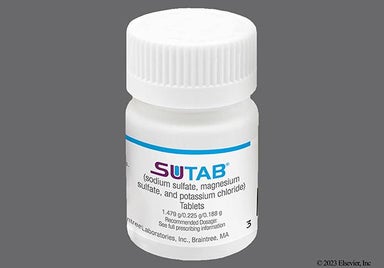
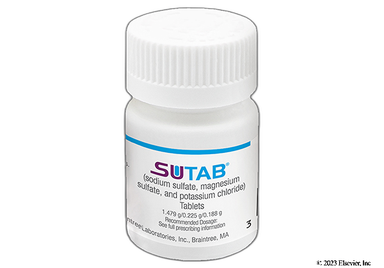
Sutab images