


Which Medications Treat Non-Small Cell Lung Cancer?
Several types of medication may be used to treat non-small cell lung cancer (NSCLC). What’s recommended for you depends on the stage of cancer and other factors.
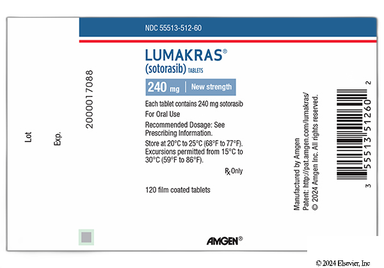
Lumakras (sotorasib) is a medication that’s used for metastatic non-small cell lung cancer (NSCLC). In particular, it’s used for adults who have a specific mutation called KRAS G12C in their lung cancer. Lumakras (sotorasib) is typically recommended only when first-choice treatment doesn’t work anymore. It can be a convenient option since it’s taken by mouth once a day. But, it commonly causes bothersome side effects, like stomach upset and fatigue.

Lumakras (sotorasib) is a KRAS G12C inhibitor. KRAS is a protein in your body that sends signals to your cells to grow and divide. In certain lung cancers, a mutation (change) in KRAS called G12C leads to uncontrolled cell growth. Lumakras (sotorasib) attaches to KRAS proteins with the G12C mutation. By doing so, the medication helps block tumor growth.
| Common Brands | Lumakras |
|---|---|
| Drug Class | KRAS G12C inhibitor |
| Controlled Substance Classification | Not a controlled medication |
| Generic Status | No lower-cost generic available |
| Availability | Prescription only |

The following side effects may get better over time as your body gets used to the medication. Let your healthcare provider know immediately if you continue to experience these symptoms or if they worsen over time.
Contact your healthcare provider immediately if you experience any of the following.
Side effects that you should report to your care team as soon as possible:
Side effects that usually do not require medical attention (report these to your care team if they continue or are bothersome):




Lumakras (sotorasib) can cause some serious health issues. This risk may be even higher for certain groups. If this worries you, talk to your doctor or pharmacist about other options.
Lumakras (sotorasib) might cause damage to your liver. Because of this risk, you’ll need to get blood tests done so your healthcare provider can track how well your liver is working. You’ll typically need these blood tests before you start Lumakras (sotorasib), every 3 weeks when you first start, and then less often after that. In studies, some people experienced liver injury within the first 2 months of starting Lumakras (sotorasib). Let your healthcare team know if you notice signs of liver damage, such as pain in the right side of the stomach, yellowing of the eyes or skin, or dark or brown urine. If your provider suspects that you have liver damage, your provider might have you take a break from Lumakras (sotorasib). Once your liver test results return to normal, you might be able to restart the medication at a lower dose.
Although rare, Lumakras (sotorasib) can cause damage to the lungs, which can sometimes be life-threatening. In studies, lung problems started within the first 4 months of taking Lumakras (sotorasib). Let your healthcare team know if you experience new or worsened cough, shortness of breath, or fevers. You’ll probably need to stop the medication while your provider checks your lungs for problems.

 Tablet
| Dosage | Quantity | Price as low as | Price per unit |
|---|---|---|---|
| 240mg of | 120 tablets | $21,929.77 | $182.75 |





Prescription savings
Stop paying too much for your prescriptions. Compare prices, get pharmacy coupons, and save up to 80%. Find expert answers to your health questions so you can make the best decisions for yourself and your family.
Health conditions
Medications & treatment
Access & affordability
Medication discounts


Lumakras is only approved for people with a KRAS G12C mutation in their lung cancer. The lung cancer must also be considered advanced or metastatic, meaning that it has started to spread outside of the lung. To determine whether your lung cancer has the KRAS G12C mutation, your provider will collect a sample of your tumor tissue (biopsy) or order a blood test. If your lung cancer has this mutation, Lumakras might be a treatment option for you, especially if first-choice treatment is no longer working.
Talk with your provider about how long you should take Lumakras. Usually, you’ll continue taking Lumakras until the cancer starts growing again, meaning the medication is no longer working for you. You might also stop Lumakras if you have too many side effects from the medication, like diarrhea, nausea, and fatigue. If you’re not able to take the medication because of side effects, let your healthcare team know. They might lower the dose or recommend that you take other medications to help manage side effects before they consider stopping Lumakras.
Your body absorbs Lumakras best in your stomach where it’s acidic. Heartburn medications like famotidine (Pepcid AC) and omeprazole (Prilosec) make the stomach less acidic. With less acidic conditions, your body isn’t able to absorb Lumakras as well. And if less Lumakras is absorbed by the body, it might not work as well. If you have heartburn while you’re taking Lumakras, it’s okay to use an antacid like Tums. Be sure to take Lumakras 4 hours before or 10 hours after the antacid. That way, the medications don’t interfere with each other.
If you miss your Lumakras dose by more than 6 hours, skip the missed dose, and take your next dose at your regular time the next day. Don’t take two doses at the same time to make up for the dose you missed. You should take Lumakras at the same time each day to make sure the medication works at its best for you. Making a habit of taking Lumakras at the same time every day might also help you remember to take your medication.
If you vomit after taking a dose of Lumakras, don’t take another dose that day to make up for it. Take your next dose at the regular time the next day. If you’re not able to take Lumakras because of vomiting or nausea from the medication, talk with your provider. They can prescribe medications to help prevent or manage vomiting or nausea. If your nausea and vomiting are still bothersome after trying medications, your provider might lower your Lumakras dose.
The accelerated approval pathway is a program that the U.S. FDA uses to help speed up the lengthy medication approval process to fill an unmet medical need. In this approval pathway, the FDA looks at evidence that the medication can improve a surrogate endpoint (a measurement that’s thought to reflect a clinical benefit, like living better or longer). But, the FDA requires the manufacturer to do more studies to confirm that people truly gain clinical benefit from the medication. Lumakras’s accelerated approval was based on a study of people with advanced or metastatic NSCLC and the KRAS G12C mutation who had tried at least one cancer treatment. In that study, 36% of those taking Lumakras had shrinkage of their tumors (the surrogate endpoint). This accelerated approval is important because there were previously no specific treatment options available for lung cancer with the KRAS G12C mutation.
