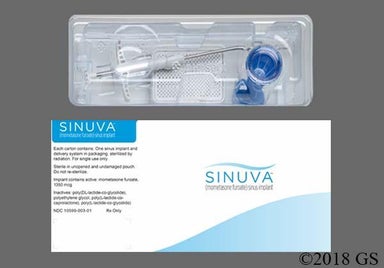
Sinuva
Sinuva (mometasone) is a sinus implant used in adults to treat nasal polyps (painless growths in the lining of the nose or sinuses). It can only be used in people who have had ethmoid sinus surgery. This implant must be inserted by a trained medical professional and it's typically removed by 90 days. Some common side effects include asthma, headaches, and nose bleeds.


What is Sinuva (mometasone)?
What is Sinuva (mometasone) used for?
- Treatment of nasal polyps in adults 18 years and older who've had ethmoid sinus surgery
How Sinuva (mometasone) works
Sinuva (mometasone) is a corticosteroid. It works in your sinuses to help lower inflammation and shrink nasal polyps.
Drug facts
| Common Brands | Sinuva |
|---|---|
| Drug Class | Corticosteroid |
| Controlled Substance Classification | Not a controlled medication |
| Generic Status | No lower-cost generic available |
| Availability | Prescription only |

Side effects of Sinuva (mometasone)
The following side effects may get better over time as your body gets used to the medication. Let your healthcare provider know immediately if you continue to experience these symptoms or if they worsen over time.
Common Side Effects
- Asthma (5%)
- Headache (4%)
- Nose bleed (2%)
- Feeling faint (2%)
- Bronchitis (2%)
- Ear infection (2%)
Less Common Side Effects
- Nose and throat infection
- Nose pain
The following Sinuva (mometasone) side effects have also been reported
Along with its needed effects, a medicine may cause some unwanted effects. Although not all of these side effects may occur, if they do occur they may need medical attention.
Check with your doctor immediately if any of the following side effects occur:
More common
Bloody mucus or unexplained nosebleeds
chills
headache
hoarseness
increased abdominal or stomach pain and cramping during menstrual periods
muscle or bone pain
stuffy or runny nose
Less common
discharge or redness in the eye, eyelid, or inner lining of the eyelid
tightness in the chest
troubled breathing
Rare
Sores inside the nose
white patches inside the nose or mouth
Incidence not known
Blurred vision
difficulty with swallowing
dizziness
fast heartbeat
hives, skin rash
itching, puffiness, or swelling of the eyelids or around the eyes, face, lips, or tongue
large, hive-like swelling on the face, eyelids, lips, tongue, throat, hands, legs, feet, or genitals
unusual tiredness or weakness
Some side effects may occur that usually do not need medical attention. These side effects may go away during treatment as your body adjusts to the medicine. Also, your health care professional may be able to tell you about ways to prevent or reduce some of these side effects. Check with your health care professional if any of the following side effects continue or are bothersome or if you have any questions about them:
More common
Less common
joint or muscle ache or pain
nasal burning or irritation
stomach upset or discomfort following meals
Incidence not known
Bad, unusual, or unpleasant (after) taste or smell
change in taste or smell
Other side effects not listed may also occur in some patients. If you notice any other effects, check with your healthcare professional.
Call your doctor for medical advice about side effects. You may report side effects to the FDA at 1-800-FDA-1088.

Get your GoodRx coupon

Pros and cons of Sinuva (mometasone)
Pros
- Works well to shrink nasal polyps
- Offers continuous relief from nasal symptoms, such as congestion, for up to 90 days
- Reduces need for sinus surgery
- Implant softens in your nose over time
Cons
- Requires a healthcare provider to place the implant in your sinus
- Can't be used in children
- Only for people who have already had ethmoid sinus surgery
- Must be removed by 90 days

Pharmacist tips for Sinuva (mometasone)

- Use saline irrigations or sprays regularly to keep your sinuses clean during the time you have the Sinuva (mometasone) implant.
- Be careful blowing your nose or sneezing too forcefully, since this can cause the Sinuva (mometasone) implant to come out. Sometimes it can come out just because it softens over time and shrinks nasal polyps in your nose. If the implant falls out of your nose, or if you have a choking sensation in the back of your throat, contact your provider.
- Make sure to tell your provider all of the medications you're taking or before starting any new medications so they can make sure they don't interact with Sinuva (mometasone).
- It isn't known if Sinuva (mometasone) is present in human breast milk. If you're breastfeeding, speak to your provider about the potential risks and benefits of this medication for you and your baby.
- If you experience excessive nose bleeding or signs of infection including pain, discomfort, headache, or more sinus discharge, call your provider right away.
- Your provider will remove Sinuva (mometasone) some time before 90 days. Make sure to keep the appointment to get it removed when your provider tells you.

Risks and warnings for Sinuva (mometasone)
Sinuva (mometasone) can cause some serious health issues. This risk may be even higher for certain groups. If this worries you, talk to your doctor or pharmacist about other options.
Nose bleeding, irritation, or infection
During your Sinuva (mometasone) implant procedure, it's possible that the areas around your sinus in your nose become damaged or infected. Watch out for any signs of nose bleeding, irritation, or infection. Let your provider know if you've recently had any nose ulcers or trauma because you should avoid Sinuva (mometasone) until after you've healed. This is because steroids can interfere with your wounds healing properly.
Eye problems
- Risk factors: History of glaucoma or cataracts
While Sinuva (mometasone) hasn't been shown to cause eye problems, long-term use of steroids might raise your risk for glaucoma (raised pressure in your eye) and cataracts. If you notice any vision changes, let your provider know.
Allergic reaction
Steroids like Sinuva (mometasone) can cause an allergic reaction. Contact your provider if you experience a rash, itching, or swelling under your skin.
Higher risk of infection
- Risk factors: Medical conditions that weaken your immune system | Taking medications that weaken your immune system
Sinuva (mometasone) can weaken your immune system, which can put you at a higher risk for infection. You should avoid contact with people who are infected with chickenpox or measles, since these infections can be very dangerous in people with weakened immune systems. If you think you've been exposed, let your provider know right away so you can get treated. Let you provider know if you have any symptoms of infection, like fever, chills, muscle pain, feeling tired, cough, or night sweats.
Hormone changes
- Risk factors: High doses | Long-term use | Taking other steroid medications
Steroids like Sinuva (mometasone) can cause too high or too low steroid levels in your body. A high level of steroids in your body can lead to side effects like weight gain, high blood pressure, and high blood sugar. Sometimes when you take steroids your body gets used to them and doesn't produce enough on its own. Low levels of steroids, or steroid withdrawal, can cause problems like nausea and feeling tired. This can sometimes happen when you take steroids for a long period of time and then stop suddenly. If you experience any of these symptoms or have any concerns, speak to your provider.

Sinuva (mometasone) dosage
 Implant
| Dosage | Quantity | Price as low as | Price per unit |
|---|---|---|---|
| 1350mcg | 2 implants | $2,837.00 | $1,418.50 |
Typical dosage for Sinuva (mometasone)
The Sinuva (mometasone) implant is placed into your sinus during a procedure performed by a trained healthcare provider.
Each implant contains 1,350 mcg of Sinuva (mometasone) that's slowly released into your sinus over 90 days. The implant is removed by your provider, typically by 90 days or earlier.

Interactions between Sinuva (mometasone) and other drugs
Although certain medicines should not be used together at all, in other cases two different medicines may be used together even if an interaction might occur. In these cases, your doctor may want to change the dose, or other precautions may be necessary. When you are taking this medicine, it is especially important that your healthcare professional know if you are taking any of the medicines listed below. The following interactions have been selected on the basis of their potential significance and are not necessarily all-inclusive.
Using this medicine with any of the following medicines is not recommended. Your doctor may decide not to treat you with this medication or change some of the other medicines you take.
Using this medicine with any of the following medicines is usually not recommended, but may be required in some cases. If both medicines are prescribed together, your doctor may change the dose or how often you use one or both of the medicines.
- Bemiparin
- Lutetium Lu 177 Dotatate
- Macimorelin
- Nadroparin
- Ritonavir
- Sargramostim
Using this medicine with any of the following medicines may cause an increased risk of certain side effects, but using both drugs may be the best treatment for you. If both medicines are prescribed together, your doctor may change the dose or how often you use one or both of the medicines.
- Auranofin
- Ketoconazole

How much does Sinuva (mometasone) cost?
$2,837.00

What are alternatives to Sinuva (mometasone)?

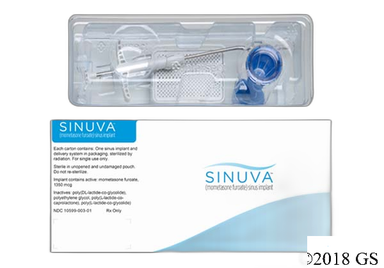
Sinuva (mometasone) images