Simtriyo
Simtriyo (centanafadine) is a stimulant used to treat attention-deficit hyperactivity disorder (ADHD). It belongs to a drug class called norepinephrine-dopamine-serotonin reuptake inhibitors (NDSRIs). Simtriyo (centanafadine) is approved for adults and children 6 years and older who weigh at least 44 pounds. It comes as a capsule that you take by mouth once each morning. Side effects can include low appetite and nausea.


What is Simtriyo (centanafadine)?
What is Simtriyo (centanafadine) used for?
How Simtriyo (centanafadine) works
Simtriyo (centanafadine) is a stimulant. It's called a norepinephrine-dopamine-serotonin reuptake inhibitor (NDSRI).
It's not fully known how the medication treats ADHD. But it raises the levels of three brain chemicals: norepinephrine, dopamine, and serotonin. These chemicals help with focus, mood, and self-control.
Drug facts
| Common Brands | Simtriyo |
|---|---|
| Drug Class | NDSRI |
| Controlled Substance Classification | Schedule III |
| Generic Status | No lower-cost generic available |
| Availability | Prescription only |

Risks and warnings for Simtriyo (centanafadine)
Simtriyo (centanafadine) can cause some serious health issues. This risk may be even higher for certain groups. If this worries you, talk to your doctor or pharmacist about other options.
Risk of suicidal thoughts and behaviors in children 6 years and older
 In a 6-week study, children ages 6 to 12 with ADHD took Simtriyo (centanafadine) or a placebo (a pill with no medication). More children who took Simtriyo (centanafadine) had suicidal thoughts or actions.
Because of this risk, parents and caregivers should watch for unusual changes in mood or actions in children ages 6 and older taking Simtriyo (centanafadine). Watch for new or worse sadness, worry, anger, trouble sleeping, or unusual actions. Pay close attention during the first few months of treatment.
Risk of misuse and addiction
Simtriyo (centanafadine) has a risk of misuse. This means taking more than prescribed, taking it too often, or using someone else's medication. Misuse can lead to the risk of addiction, overdose, or death. The risk is higher with larger doses or if you take the medication in a way that's not prescribed.
Before starting Simtriyo (centanafadine), your prescriber will check your risk of misuse and addiction. Tell them if you feel a strong urge to take more Simtriyo (centanafadine) or have trouble controlling how much you take. Get emergency help right away if you think someone has taken too much Simtriyo (centanafadine).
Take Simtriyo (centanafadine) exactly as prescribed. Keep it in a safe place, like a locked cabinet. Never share it with others. Take unused medication to a drug take-back site when possible.
Risks to people with serious heart problems
- Risk factors: Structural heart problem | Heart failure | Serious heart rhythm problem | Coronary artery disease | Other serious heart problem
Sudden death has been reported in people with serious heart problems who took stimulants, even as prescribed. Because of this risk, people with serious heart problems should avoid Simtriyo (centanafadine).
Before starting Simtriyo (centanafadine), tell your prescriber if you have heart problems. This can include coronary artery disease, heart failure, or irregular heartbeat. Also, tell them if anyone in your family has had an uneven heartbeat or has died suddenly. Your prescriber will check if Simtriyo (centanafadine) is safe for you.
High blood pressure and fast heart rate
- Risk factors: Taking more than one stimulant
Simtriyo (centanafadine) can raise your blood pressure and heart rate. Your prescriber will check both before you start this medication, after dose increases, and as needed during treatment. Tell your prescriber if you or anyone in your family has high blood pressure. Also, let them know if you notice a racing heartbeat while taking Simtriyo (centanafadine).
Strange thoughts or behaviors
- Risk factors: History of psychotic episodes | Personal or family history of depression | Personal or family history of bipolar disorder | Family history of suicide
Stimulants like Simtriyo (centanafadine) can cause changes in people's thoughts or actions. This can include racing thoughts, too much energy, or impulsive actions. Some people might start to see or hear things that aren't there (hallucinations). And others might start to believe things that aren't true.
It's rare, but these symptoms can happen even if you've never had mental health problems before. Stimulants can also make mental health conditions like psychosis or bipolar disorder worse.
Before starting Simtriyo (centanafadine), tell your prescriber about your mental health and any mental health problems in your family. They can check your risk. Let your prescriber know right away if you notice any unusual thoughts or changes in how you act while taking Simtriyo (centanafadine).
Allergic reactions
- Risk factors: Tartrazine sensitivity or aspirin allergy (for the 210 mg capsule)
Simtriyo (centanafadine) can cause serious allergic reactions, including anaphylaxis. Signs include hives, rash, swelling of the face or throat, dizziness, fainting, or trouble breathing.
The 210 mg Simtriyo (centanafadine) capsule has a dye called FD&C Yellow No. 5 (tartrazine). Some people can have an allergic reaction to this dye. This reaction can include asthma symptoms, like trouble breathing. The risk is higher if you're allergic to aspirin. Tell your prescriber if you're allergic to aspirin or tartrazine before taking Simtriyo (centanafadine).
Stop taking Simtriyo (centanafadine) and call 911 right away if you have trouble breathing, swelling of the face or throat, or hives. This can be signs of a serious allergic reaction.
Slowed growth in children
- Risk factors: Children 6 to 12 years | Long-term treatment
Stimulants like Simtriyo (centanafadine) have been linked to weight loss. Long-term use has also been linked to slower growth in height, especially in children ages 6 to 12.
Your child's prescriber will check their weight and height regularly. This helps make sure your child is growing as expected. Tell the care team if you notice your child is eating less, losing weight, or not growing as expected while taking Simtriyo (centanafadine).
Circulation problems in fingers and toes
Stimulants like Simtriyo (centanafadine) have been linked to poor blood flow to the fingers and toes. This includes a condition called Raynaud's phenomenon. Your fingers or toes might feel numb, cold, or painful. They might also turn pale, blue, or red. These symptoms are usually mild and come and go. But in rare cases, sores or skin damage have happened.
Tell your prescriber if you notice any changes in your fingers or toes. Call them right away if you notice sores that you can't explain.
Serotonin syndrome
- Risk factors: Taking an MAOI or stopped taking one within 14 days | Taking other medications that can raise serotonin levels
Taking Simtriyo (centanafadine) with other medications that raise serotonin can be dangerous. It can cause a rare but serious condition called serotonin syndrome. This happens when there's too much serotonin in your body. Signs include confusion, sweating, fever, fast heartbeat, shaking, or stiff or twitching muscles. Get emergency help right away if you notice these symptoms.
Tell your prescriber and pharmacist about all the medications and supplements you take. Some antidepressants, migraine medications, and pain medications can raise your risk. Supplements like St. John's wort can also raise serotonin. Don't take Simtriyo (centanafadine) with monoamine oxidase inhibitors (MAOIs) or within 14 days of stopping one.
Tics or worsening Tourette syndrome
- Risk factors: Personal or family history of tics or Tourette syndrome
Stimulants like Simtriyo (centanafadine) can cause new tics or make tics you already have worse. They might also make Tourette symptoms worse. This can look like sudden movements or sounds you can't control, like face twitching or throat clearing.
Before starting Simtriyo (centanafadine), tell your prescriber if you or anyone in your family has tics or Tourette syndrome. Tell your prescriber if you notice any new or worsening tics during treatment.

Side effects of Simtriyo (centanafadine)
The following side effects may get better over time as your body gets used to the medication. Let your healthcare provider know immediately if you continue to experience these symptoms or if they worsen over time.
Common Side Effects
Adults
*Studies using a different form of centanafadine:
- Headache (up to 8%)
- Low appetite (up to 7%)
- Trouble sleeping (up to 7%)
- Nausea (up to 7%)
- Dry mouth (up to 6%)
- Diarrhea (up to 5%)
Children 13 to 17 years
- Low appetite (15%)
- Nausea (10%)
- Rash (8%)
- Headache (7%)
- Stomach pain (5%)
Children 6 to 12 years
- Rash (9%)
- Low appetite (8%)
Less Common Side Effects
- Tiredness
- Nausea
- Stomach pain
- Irritability
- Upper respiratory infection
Simtriyo (centanafadine) serious side effects
Contact your healthcare provider immediately if you experience any of the following.
- Suicidal thoughts or behaviors
- Strange thoughts or behaviors: hallucinations, unusual beliefs, greatly increased energy, racing thoughts, reckless behavior, talking more or faster than usual
- Serotonin syndrome: agitation, confusion, sweating, fever, fast heartbeat, muscle stiffness or twitching, tremors
- Circulation problems in the fingers or toes: numbness, coldness, pain, color changes, unexplained wounds
- Serious allergic reaction: hives, rash, itching, swelling of the face or throat, trouble breathing or swallowing, dizziness, fainting
The following Simtriyo (centanafadine) side effects have also been reported
Side effects that you should report to your care team as soon as possible:
- Allergic reactions or angioedema—skin rash, itching or hives, swelling of the face, eyes, lips, tongue, arms, or legs, trouble swallowing or breathing
- Heart rhythm changes—fast or irregular heartbeat, dizziness, feeling faint or lightheaded, chest pain, trouble breathing
- Increase in blood pressure
- Irritability, confusion, fast or irregular heartbeat, muscle stiffness, twitching muscles, sweating, high fever, seizure, chills, vomiting, diarrhea, which may be signs of serotonin syndrome
- Mood and behavior changes—anxiety, nervousness, confusion, hallucinations, irritability, hostility, thoughts of suicide or self-harm, worsening mood, feelings of depression
- Raynaud syndrome—cool, numb, or painful fingers or toes that may change color from pale, to blue, to red
Side effects that usually do not require medical attention (report these to your care team if they continue or are bothersome):
- Diarrhea
- Dry mouth
- Headache
- Loss of appetite with weight loss
- Nausea
- Stomach pain
- Trouble sleeping

Pros and cons of Simtriyo (centanafadine)
Pros
- Taken once a day
- Approved for adults and children ages 6 years and older who weigh at least 44 pounds
- Capsules can be opened and mixed with applesauce, yogurt, or orange juice
Cons
- A controlled substance with a risk of misuse and addiction
- Can lower appetite
- Can slow growth with long-term use in children

Pharmacist tips for Simtriyo (centanafadine)

- Take Simtriyo (centanafadine) once a day in the morning, around the same time each day. Taking it too late in the day might make it harder to sleep. You can take it with or without food.
- Swallow the Simtriyo (centanafadine) capsule whole. Don't cut, crush, or chew it. This can affect how the medication gets released into your body.
- If you can't swallow the Simtriyo (centanafadine) capsule whole, you can open it. Sprinkle all the contents over 1 tablespoon (15 mL) of applesauce, yogurt, or orange juice. Swallow the mixture right away without chewing and then drink water afterward. Don't save any of the mixture for later.
- If you miss a dose of Simtriyo (centanafadine), take it as soon as you remember but only if it's been less than 4 hours after your usual time. If more than 4 hours have passed, skip the missed dose. Don't take more than 1 dose in a day.
- Ask your prescriber if it's safe for you to drink alcohol while taking Simtriyo (centanafadine). In general, don't drink alcohol when you take your dose or for at least 2 hours after taking it. Alcohol can cause the medication to be released too quickly in your body. This can raise your risk of side effects.
- Simtriyo (centanafadine) can lower your appetite. Try eating a nutritious breakfast before taking your dose. If you or your child is eating much less or losing weight, tell your prescriber.
- Share a list of all the medications and supplements you take with your prescriber and pharmacist. Simtriyo (centanafadine) can interact with some medications. These include other stimulants, some antidepressants, and migraine medications. Don't take Simtriyo (centanafadine) with monoamine oxidase inhibitors (MAOIs). These interactions can raise your risk of serious side effects, like high blood pressure or serotonin syndrome. Your care team can make sure your medications are safe to take together.
- Store Simtriyo (centanafadine) in a safe place, like a medication lockbox. Keep it away from children, visitors, and anyone who might misuse it, and never share it with others. When needed, take any unused medication to a drug take-back location.

Simtriyo (centanafadine) dosage
 Capsule
| Dosage | Quantity | Price as low as | Price per unit |
|---|---|---|---|
| 140mg of | 30 capsules | $20.00 | $0.67 |
| 210mg of | 30 capsules | $20.00 | $0.67 |
| 280mg of | 30 capsules | $20.00 | $0.67 |
Typical dosage for Simtriyo (centanafadine)
-
Adults: The typical starting dose is 210 mg by mouth once each morning. Your prescriber might raise your dose to 280 mg once a day based on how well it works and if you have bothersome side effects.
-
Children ages 13 to 17 years who weigh at least 44 lbs: The typical dose is 280 mg by mouth once each morning.
-
Children ages 6 to 12 years who weigh at least 44 lbs: The dose depends on body weight.
- Weigh more than 110 lbs: The typical dose is 280 mg by mouth once each morning.
- Weigh 77 lbs to 110 lbs: The typical dose is 210 mg by mouth once each morning.
- Weigh 44 lbs to less than 77 lbs: The typical dose is 140 mg by mouth once each morning.

How much does Simtriyo (centanafadine) cost?
$20.00

Simtriyo (centanafadine) contraindications
Contraindications are specific health conditions or situations in which a person should not take a medication due to safety concerns. If you have any of the following conditions or if any of the following apply to you, let your healthcare provider know because Simtriyo (centanafadine) will not be safe for you to take.
- Curently take a monoamine oxidase inhibitor (MAOI)
- Within 14 days of stopping an MAOI
- Currently have or have had pheochromocytoma (an adrenal gland tumor)

What are alternatives to Simtriyo (centanafadine)?

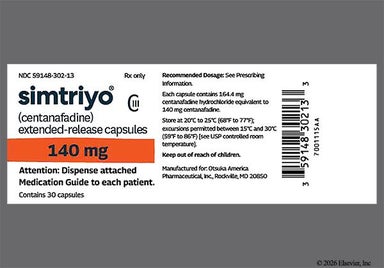
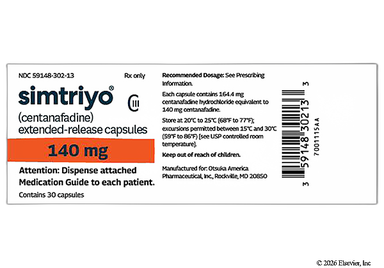
Simtriyo (centanafadine) images